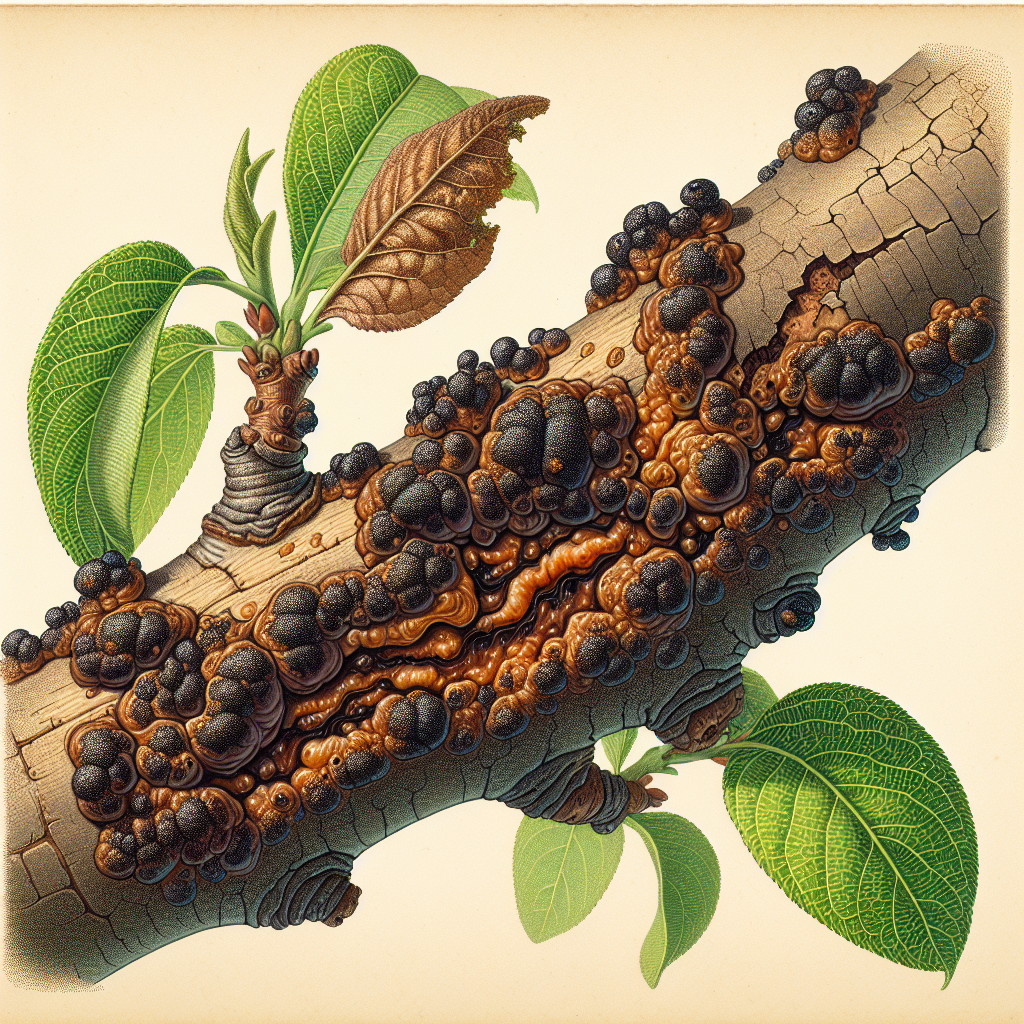
Introduction to branch canker
Branch canker represents one of the most pervasive threats to woody crops worldwide, manifesting as necrotic lesions that encircle branches and disrupt vascular flow. Primarily driven by fungal pathogens such as Cytospora species, Nectria (now often classified under Neonectria), and Botryosphaeria spp., this disease thrives in stressed plants, leading to significant economic losses in orchards and vineyards. Understanding branch canker is crucial for growers, as it not only compromises structural integrity but also serves as an entry point for secondary infections like borers. This guide provides comprehensive diagnostics, lifecycle insights, organic management strategies, and prevention tactics tailored for small-scale and commercial operations. With proper intervention, yields can be protected, and tree longevity extended.
Identifying Symptoms & Damage
Accurate identification of branch canker begins with recognizing its hallmark signs on affected branches. Initial symptoms include small, sunken, discolored areas on the bark, often appearing as reddish-brown to black lesions with irregular margins. As the canker expands, it girdles the branch, causing wilting of distal leaves, shoot dieback, and premature leaf drop. Advanced stages reveal cracked bark, amber-colored gum or ooze exuding from fissures, and fruiting bodies (pycnidia) resembling tiny black dots or pimples on the surface.
Damage assessment involves peeling back the bark to expose the underlying cambium, which appears dark brown or black with a characteristic 'wedding ring' pattern of alternating healthy and necrotic tissue. In severe cases, branches become brittle, snapping easily under wind load. Differentiate from mechanical injury or sunscald by the presence of fungal structures and lack of callus formation. On stone fruits like peach, cankers often target pruning wounds, while in apple orchards, they correlate with fire blight susceptibility. Regular scouting during spring and fall reveals early infections, preventing canopy-wide spread.
Lifecycle and Progression of branch canker
The lifecycle of branch canker pathogens is tightly synchronized with environmental cues and host vulnerability. Fungi overwinter as mycelium in infected bark or as pycnidia on dead wood. Spores (conidia) are released in spring rains, splashing onto fresh wounds or lenticels. Infection establishes within 24-48 hours under moist conditions, with mycelium colonizing the cambium.
Progression accelerates in summer heat, expanding cankers radially and longitudinally. By autumn, acervuli produce new spore masses, perpetuating the cycle. Multiple infection cycles occur annually, with Cytospora favoring cool, wet springs and Botryosphaeria thriving in drought-stressed tissues. Latent infections can persist for years, activating under stress like drought or Phytophthora co-infections. Full girdling takes 1-3 years, leading to branch death. In cherry trees, progression from small lesion to limb loss can occur within one season if unchecked.
Environmental Triggers & Risk Factors
Branch canker epidemics are rarely random, hinging on environmental stressors that weaken host defenses. High humidity (>80%) combined with temperatures of 15-25°C (59-77°F) optimal for spore germination. Drought stress predisposes trees by closing stomata and reducing resin flow, while excessive nitrogen fertilization promotes succulent growth vulnerable to infection.
Risk factors include poor pruning hygiene—using dull tools spreads spores—and mechanical damage from hail, mowers, or deer rubbing. Overcrowded canopies trap moisture, exacerbating spread. Soil compaction and root rot limit water uptake, compounding susceptibility. In Hass Avocado groves, irrigation mismanagement triggers outbreaks, as seen in California studies where 30% yield losses correlated with wet-dry cycles. Climate change intensifies risks through erratic weather; read more on predictive strategies in Why 80% of Small Farms Battle Weather Disasters - And How Hyper-Local AI Forecasts Can Save Your Harvest.
Organic Control & Treatment Plans
Organic management of branch canker emphasizes cultural practices over curative sprays, as no fungicide fully eradicates established infections. Prune affected branches 10-15 cm below visible cankers during dry weather, sterilizing tools with 10% bleach between cuts. Dispose of debris by burning or solarization to break the spore cycle.
Enhance tree vigor with balanced nutrition: apply compost teas rich in mycorrhizae to boost immunity. Mulch bases with 5-10 cm wood chips to retain moisture without excess wetness. Beneficial microbes like Trichoderma spp. (applied as biofungicides) compete with pathogens; drench trunks quarterly. For plum and pear, copper-based sprays (e.g., Bordeaux mixture) in dormant season prevent wound infections, compliant with organic standards.
Integrated plans include resistance breeding—select scab-resistant rootstocks—and stress mitigation via drip irrigation. In trials, silicon amendments reduced Cytospora severity by 40% in almond orchards. Monitor with sticky traps for vectors like scale insects. Aggressive early removal halts 70-90% of orchard losses.
Preventing branch canker in the Future
Prevention is the cornerstone of branch canker management, focusing on resilience-building practices. Select resistant cultivars: 'Honeycrisp Apple' shows tolerance over 'Red Delicious'. Prune judiciously in late summer, avoiding spring flush periods. Promote airflow with 60-70% canopy openness via thinning.
Soil health underpins prevention; incorporate cover crops like clover to enhance drainage and suppress Fusarium. Avoid wounding during wet seasons and protect trunks with wraps against rodents. Annual inspections paired with wound paints containing Bacillus subtilis seal entry points. In high-risk areas, diversify plantings to buffer losses. Long-term, integrate biodiversity: interplant with thyme for natural antifungal volatiles. These strategies have sustained walnut groves for decades without chemical intervention.
Crops Most Affected by branch canker
Branch canker plagues a wide array of woody crops, with stone fruits bearing the brunt. Peach, cherry, plum, and apricot suffer annual losses exceeding 20% in humid regions. Pome fruits like apple and pear rank high, especially in stressed orchards. Nut crops including almond, walnut, and pecan face girdling that halves nut production.
Vines such as grapes develop cankers on cordons, impacting yields by 15-30%. Avocados, notably Hass Avocado, exhibit limb dieback in subtropical zones. Ornamentals like maples and oaks suffer aesthetic and structural damage. Emerging threats hit mango and citrus, where co-infections with anthracnose amplify devastation. Global surveys indicate $500M+ annual losses, underscoring the need for vigilant management across these staples.