Introduction to Stem borers
Stem borers represent one of the most devastating pest groups in global agriculture, particularly targeting cereal and grass crops by boring into stems and disrupting nutrient and water transport. These pests, primarily larvae of moths from families like Crambidae and Noctuidae, include notorious species such as the European Corn Borer (Ostrinia nubilalis), rice stem borers (Chilo suppressalis, Scirpophaga incertulas), and maize stem borers (Busseola fusca). Infestations lead to 'dead hearts' in young plants, stem breakage (lodging), and reduced grain fill, causing yield losses up to 60% in severe cases.
Farmers worldwide, from smallholder rice paddies in Asia to cornfields in Africa and the Americas, face annual battles against stem borers. These pests thrive in warm, humid conditions and can complete multiple generations per season, making timely intervention critical. Understanding their biology and implementing diagnostic and management strategies is essential for sustainable crop protection. This guide equips growers with professional-grade advice to identify, control, and prevent stem borer damage, optimizing yields without synthetic chemicals. For more on early pest detection, check this Spring Pest Patrol blog.
Identifying Symptoms & Damage
Stem borer damage manifests progressively, starting subtly and escalating to obvious signs. Early indicators include yellowing or wilting of the central leaf whorl, known as the 'dead heart' symptom in young tillers or seedlings. This occurs 2-4 weeks after planting when first-instar larvae bore into the growing point, killing it and causing the plant to stop growing.
In older plants, look for longitudinal cracks or splits in stems, frass (insect excrement) pellets at entry holes (pinholes 1-2 mm diameter), and pith discoloration (brown or reddish tunnels inside stems). Stems may show sawdust-like frass extrusion from holes. Severe infestations cause lodging—plants bending or breaking at the base due to weakened stems—leading to poor head emergence and empty panicles or ears.
Diagnostic tips:
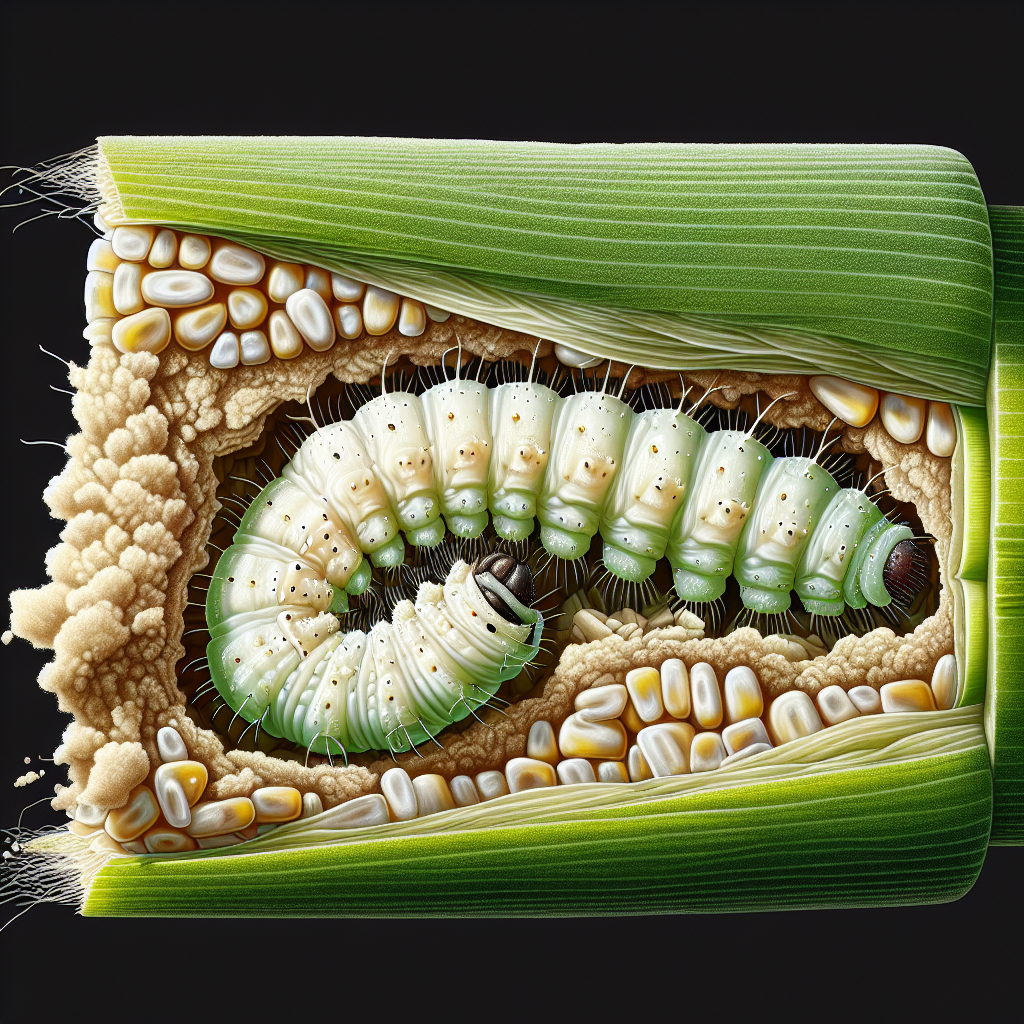
- Split stems lengthwise: Reveal creamy-white caterpillars (10-25 mm long) with dark heads, often coiled inside.
- Check for 'whiteheads': In rice or wheat, panicles emerge white and sterile due to borer disruption.
- Differentiate from diseases: Unlike stalk rots, borer damage shows live larvae and clean tunnels without fungal growth.
Yield impacts: 20-30% grain loss from tunneled stems; up to 100% in dead hearts. Scout weekly from tillering stage, using a 'zigzag' pattern across fields. Threshold: 5-10% dead hearts or 1 borer per 2 plants.
Lifecycle and Progression of Stem borers
Stem borers undergo complete metamorphosis: egg, larva (4-7 instars), pupa, adult moth. Lifecycle varies by species and climate: 30-60 days, with 3-6 generations yearly in tropics.
- Eggs: Tiny (0.5-1 mm), flat, yellowish-white scales laid in clusters (20-100) on leaf undersides or sheaths, 7-14 days incubation.
- Larvae: Progress from tiny (1 mm) to full-grown (20-40 mm), boring into whorl then stem. They feed internally, molting inside tunnels. Young larvae cause dead hearts; older ones tunnel base, surviving as 'diapause' larvae in crop residue over winter.
- Pupa: Silken cocoon (10-15 mm) inside stem or leaf sheath, 7-14 days.
- Adults: Nocturnal moths (20-40 mm wingspan), pale brown with white zigzag lines (e.g., rice yellow stem borer). Females lay 200-500 eggs over 5-10 days; lifespan 5-15 days.
Progression: Moths emerge at dusk, mate, lay eggs on 10-30 day-old plants. Larvae enter stems within 3 days, feeding 20-30 days. Overlap generations complicate control. In corn, peak activity aligns with tasseling; in rice, tillering to panicle initiation.
Environmental Triggers & Risk Factors
Stem borers exploit specific conditions for outbreaks:
- Temperature: Optimal 25-35°C; activity drops below 15°C.
- Humidity: >70% RH favors egg hatch and larval survival.
- Monsoon/rainy seasons: Moist sheaths aid egg-laying; flooding fields delay parasitoids.
- Crop factors: Susceptible varieties, dense planting (>50 plants/m²), excessive nitrogen (lush stems attract moths).
- Agronomic risks: Late planting (overlaps generations), ratooning (harbored in stubble), continuous monocropping.
Risk hotspots: Tropical/subtropical zones; overlapping crops like rice-corn rotations. Climate change extends generations northward. Weeds like sorghum and volunteer plants serve as reservoirs. Monitor with pheromone traps: 5-10 moths/trap/week signals risk.
Organic Control & Treatment Plans
Integrated organic management combines cultural, biological, and mechanical tactics:
1. Cultural Controls (Foundation):
- Plant early-maturing, resistant varieties (e.g., IR36 rice, Bt corn hybrids).
- Space properly (25x25 cm for rice) to improve ventilation.
- Apply balanced NPK; split nitrogen to avoid lush growth.
- Destroy stubble post-harvest; flood fields 2-3 weeks to drown diapause larvae.
2. Biological Controls:
- Conserve parasitoids (Trichogramma wasps, Cotesia ichneumonids) via nectar plants like marigold.
- Release Trichogramma chilonis (1,00,000/ha) at egg stage.
- Promote predators: spiders, ants, birds.
3. Mechanical/Physical:
- Pheromone traps (10/ha) for monitoring/mass trapping.
- Hand-pick egg masses/dead hearts weekly.
- Use light traps at night during moth flights.
4. Organic Sprays (Targeted):
- Neem oil (5 ml/L) or azadirachtin (0.03%) at egg hatch; repeat 7-10 days.
- Bacillus thuringiensis (Bt) kurstaki (1-2 g/L) for young larvae; apply evenings.
- Silica sprays (potassium silicate) to toughen stems.
Treatment Plan:
- Scout weekly; act at 5% dead hearts.
- Week 1: Bt/neem + remove dead hearts.
- Week 2: Trichogramma release + traps.
- Monitor; rogue infested plants. Avoid broad-spectrum sprays to protect beneficials.
Preventing Stem borers in the Future
Long-term prevention builds resilient systems:
- Crop Rotation: Alternate with legumes (soybeans, chickpeas) 1-2 years to break cycles.
- Trap Crops: Border rows of susceptible Sudan grass.
- Sanitation: Deep plow residues; solarize soil.
- Varietal Resistance: Plant borer-tolerant hybrids.
- Intercropping: With thai-basil or nasturtium repels moths.
- Timing: Synchronize planting to avoid peak moth flights.
- Monitoring Tech: Use sticky traps, apps for degree-day models.
IPM Thresholds: Preventive if prior infestation >20%. Annual audits reduce populations 70-90%.
Crops Most Affected by Stem borers
Stem borers attack >20 crops, prioritizing Poaceae:
- Cereals: Rice (yellow/white/pink stem borers, 20-60% loss), corn (European Corn Borer, southwestern corn borer), wheat, sorghum, sugarcane.
- Others: cassava, pearl millet, wild rice, forage grasses.
Regional hotspots: Asia (rice), Africa (maize, sorghum), Americas (corn). Secondary hosts include barnyard grass, johnsongrass. Diversify to non-hosts like potato or legumes.