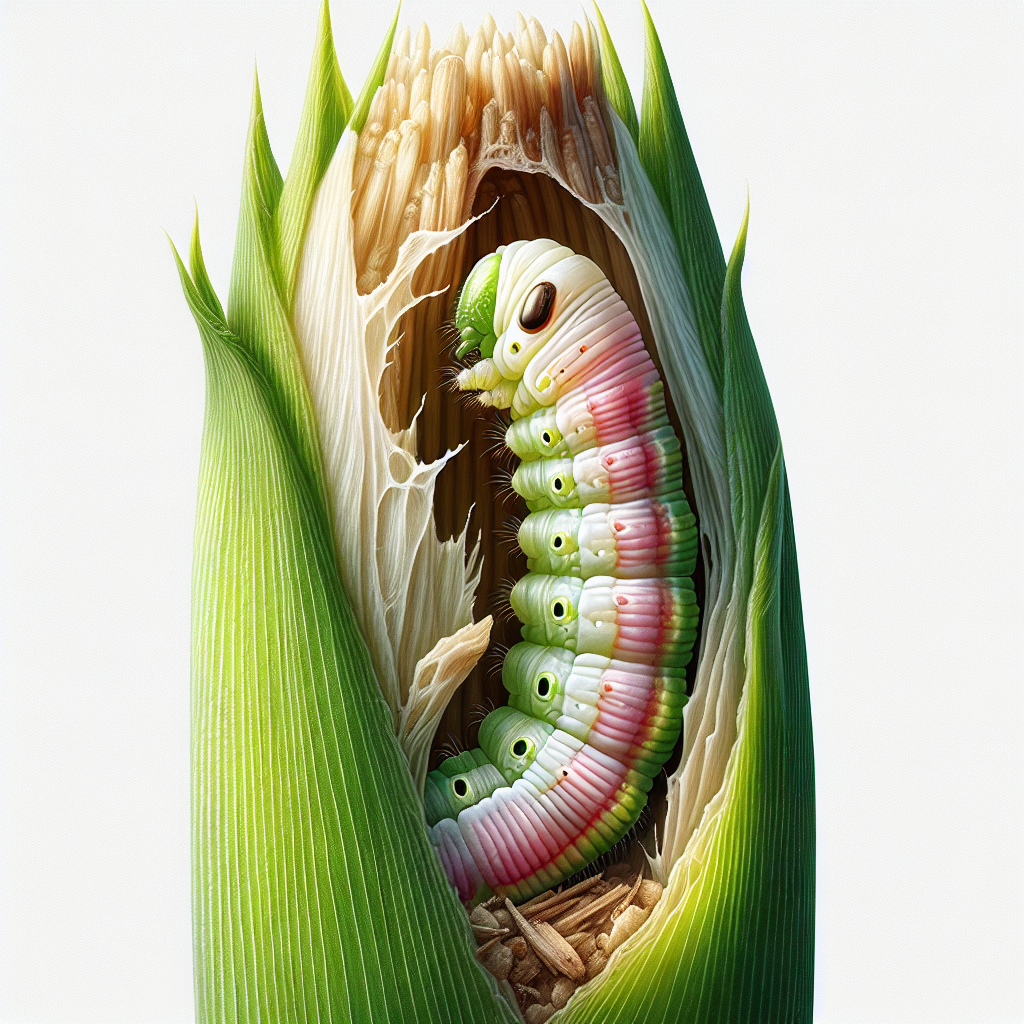
Introduction to Shoot borers
Shoot borers represent a diverse group of lepidopteran pests notorious for infesting tender shoots and stems of cereal, vegetable, and horticultural crops. These larvae bore into plant tissues, disrupting nutrient and water flow, leading to dead hearts, wilting, and up to 60-80% yield reductions in severe infestations. Common in tropical and subtropical regions, shoot borers thrive in warm, humid conditions, making them a persistent threat to small-scale and commercial agriculture alike.
Understanding shoot borers is crucial for timely intervention. Species like the maize stem borer (Chilo partellus) and rice stem borer (Scirpophaga incertulas) exemplify the group, with similar biology across corn, rice, and sorghum. Early detection prevents escalation, as larvae feed internally, evading surface inspections. This guide equips farmers with diagnostic tools, lifecycle knowledge, and organic strategies to safeguard harvests. For integrated pest management insights, check this Spring Pest Patrol blog post.
Shoot borers differ from surface feeders like caterpillars or armyworms by their concealed habits, complicating control. Economic impacts are profound in developing regions, where they devastate food security crops. Proactive scouting and organic treatments can mitigate damage effectively.
Identifying Symptoms & Damage
Diagnosing shoot borer infestations requires keen observation of subtle early signs progressing to overt damage. Initial symptoms include small entry holes at the base of young shoots, often with frass (insect excrement) resembling sawdust. Affected shoots exhibit 'dead hearts'—central leaves turning yellow, wilting, and dying while outer leaves remain green. This is hallmark damage in grasses like wheat and maize.
As larvae tunnel deeper, stems weaken, causing lodging (plants falling over) and multiple tiller formation as plants compensate. In severe cases, bore holes exude gummy sap or ooze, attracting secondary pests like fungal gnats. Cross-sections of infested stems reveal pinkish-white caterpillars up to 2-3 cm long, with a dark head and longitudinal stripes.
Damage varies by crop: in sugarcane, internodes shorten and split; in vegetables like eggplant, shoots droop and fruit set fails. Differentiate from cutworms by frass presence and tunneling vs. clean cuts. Use a knife to split shoots—live larvae confirm active infestation. Yield losses correlate with infestation timing: early attacks (seedling stage) reduce stand by 30-50%, while later ones diminish grain fill.
Monitor weekly during flush growth. Symptoms mimic drought or root-knot nematodes, so confirm via dissection. Economic thresholds: 5-10% dead hearts warrant action.
Lifecycle and Progression of Shoot borers
Shoot borers undergo complete metamorphosis: egg, larva, pupa, adult. Females lay 200-500 eggs in clusters on leaf undersides near shoots, hatching in 3-5 days at 25-30°C. Larvae (1-4 instars) bore immediately, feeding 20-30 days before pupating inside stems as silk-lined cocoons. Adults emerge in 7-10 days, restarting the cycle.
Multiple generations (3-8/year) align with crop growth. Diapause in dry seasons allows overwintering. In rice, yellow stem borer peaks at tillering; maize borer synchronizes with whorl stage. Lifecycle spans 30-45 days, influenced by temperature—optimal 27-32°C, halting below 15°C.
Progression: Eggs microscopic, cream-colored; neonates tiny, enter shoots undetected; mature larvae exit to pupate. Adults are straw-colored moths with wingspan 20-30 mm, nocturnal, dispersing via flight. Understanding timing enables targeted interventions, like egg parasitoid release.
Environmental Triggers & Risk Factors
Warm temperatures (25-35°C) and high humidity (>70%) trigger egg hatch and larval vigor. Monsoon seasons amplify outbreaks, as overlapping generations build populations. Risk escalates in continuous monocultures, poor drainage fields, and excessive nitrogen favoring succulent growth.
Weedy fields harbor alternate hosts, while drought-stressed plants resist better. High planting density (>50,000 plants/ha) promotes spread. Climate change extends seasons, increasing generations. Soil type matters—loamy soils retain moisture, aiding survival.
Associated risks: secondary fungi invade bore holes, worsening stalk rots. Scout after rains; avoid late planting aligning with peak moth flights.
Organic Control & Treatment Plans
Organic management integrates cultural, biological, and mechanical tactics. Cultural: Destroy stubble post-harvest to kill pupae (80% reduction). Intercrop with marigold or trap crops like Napier grass. Early planting evades peak infestations.
Biological: Release Trichogramma wasps (egg parasitoids, 50-70% control). Apply NPV virus sprays (10^9 OB/ha) on young larvae—safe, species-specific. Promote predators like birds and spiders.
Mechanical: Hand-pick and crush larvae from 10-20% infested plants. Use light traps (4-6/ha) for moths. Neem oil (5 ml/L) or Bacillus thuringiensis (Bt, 1-2 g/L) as foliar sprays at egg hatch—repeat 7-10 days, 3 applications.
Treatment Plan:
- Scout weekly; threshold: 10% dead hearts.
- Apply Bt + neem at dusk.
- Release Trichogramma (1-2 lakh/ha/week).
- Rogue infested plants. Success rates: 60-85% with IPM vs. 30% solo methods.
Preventing Shoot borers in the Future
Prevention hinges on cultural resilience. Rotate crops (cereals-legumes, 2-3 years) disrupts cycles. Use resistant varieties like maize hybrid HQPM1. Balanced fertilization avoids lush growth; mulch suppresses weeds.
Field sanitation: deep plow (15-20 cm) buries pupae. Border traps with Pherocon lures reduce moth entry 40%. Monitor with pheromone traps (8-12/ha), forecasting sprays. For more on predictive tools, see Stem borers.
Long-term: enhance biodiversity with hedges (thai-basil). Solarize soil pre-planting kills soil stages. Annual planning minimizes risks.
Crops Most Affected by Shoot borers
Shoot borers plague cereals foremost: rice (yellow/white stem borers), corn (European/Asian corn borers), sorghum, wheat, sugarcane. Vegetables like tomato, eggplant, okra suffer shoot damage. Millets (pearl millet) and fiber crops (cotton) also vulnerable. Tropical fruits (mango, banana) face related fruit-shoot borers.