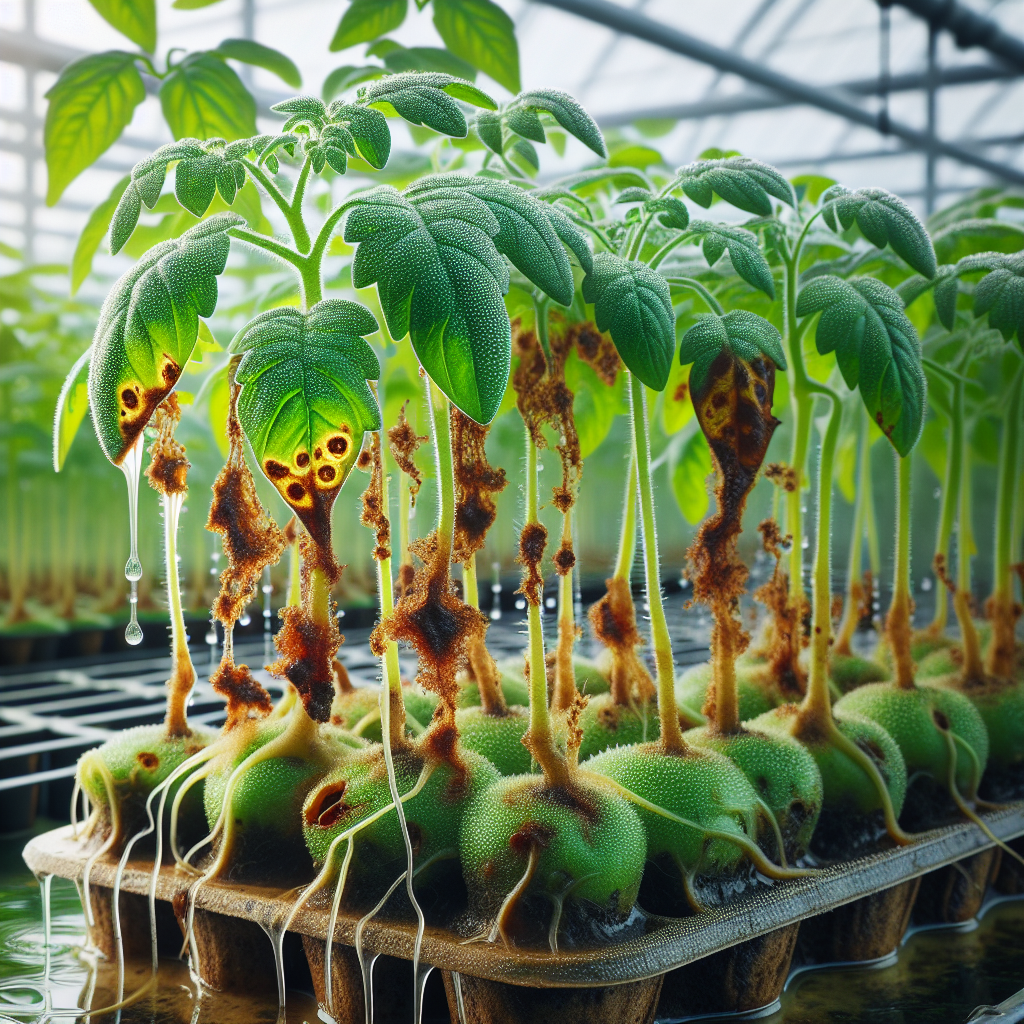
Introduction to Damping-off
Damping-off represents one of the most devastating challenges in seedling production, striking tender young plants just as they emerge from the soil. This fungal disease, caused primarily by soil-borne pathogens like Pythium, Rhizoctonia, and Fusarium, manifests as rapid wilting, stem lesions, and complete seedling collapse at the soil line. Affecting virtually all crops from tomato and pepper to lettuce and cabbage, damping-off can wipe out entire trays overnight, costing small farms thousands in lost starts and replanting efforts.
Understanding damping-off requires recognizing its dual phases: pre-emergence (seed rot) and post-emergence (stem girdling). Cool, wet soils exacerbate outbreaks, with pathogens thriving in compacted, poorly aerated media. Prevention hinges on sanitation, optimal moisture control, and strategic sowing—essential knowledge for commercial growers scaling nursery operations. This guide delivers battle-tested protocols from seed treatment to transplant hardening, empowering you to achieve 95%+ seedling survival rates. For deeper insights into related seedling challenges, explore our Spring Pest Patrol: Organic AI Strategies to Shield Your Crops from Common Invaders.
Botanical Profile of Damping-off
Damping-off isn't a single plant species but a syndrome driven by aggressive soil fungi targeting hypocotyls and roots of germinating seeds. Primary culprits include Pythium ultimum (cool-weather specialist), Rhizoctonia solani (prefers warmer conditions), and Fusarium oxysporum (opportunistic invader). These oomycetes and fungi produce zoospores or mycelia that infect at the soil-water interface, releasing enzymes that dissolve cell walls.
Life cycles vary: Pythium swims via motile spores in saturated soils, while Rhizoctonia spreads via hardy sclerotia surviving years in dry conditions. Symptoms appear 2-10 days post-sowing—pre-emergence shows rotting seeds failing to sprout; post-emergence reveals water-soaked lesions at the soil line, followed by toppling 'wirestem' seedlings. Lesions turn brown, constrict stems, and plants topple like dominoes. Secondary invaders like Fusarium follow, causing root rots.
Globally, damping-off claims 50-90% of seedlings in unmanaged nurseries, hitting high-value starts like eggplant hardest. Pathogen diversity demands integrated management, as no single resistant variety exists across all hosts. Microscopic diagnosis reveals Pythium's coenocytic hyphae and Rhizoctonia's right-angle branching—key for lab confirmation.
Soil, pH, and Climate Requirements for Damping-off
Ironically, 'growing' damping-off thrives in conditions ideal for weak seedlings: wet, cold, compacted soils with pH 5.5-6.5. Pythium peaks at 55-65°F (13-18°C), Rhizoctonia at 75-85°F (24-29°C), both exploding in waterlogged media above 60% volumetric moisture. Optimal prevention flips this: use sterile soilless mixes (peat-perlite 1:1) at pH 6.0-6.8, maintaining 40-50% moisture and air porosity >20%.
Climate control is non-negotiable—germinate at 70-80°F (21-27°C) day/65°F (18°C) night with 70-80% humidity tapering to 50%. Avoid outdoor sowing below 60°F soil temp. Test media with slurry method for pathogens pre-use. Amend with 10% compost for microbial competition, but steam-pasteurize at 180°F for 30min to kill 99.9% propagules. Raised benches improve drainage; bottom-heat cables stabilize root-zone temps. In greenhouses, ventilation prevents leaf wetness >12hrs, slashing infection risk 80%.
Step-by-Step Planting & Propagation
1. Seed Selection & Treatment: Choose pathogen-free F1 hybrids; hot-water treat at 122°F (50°C) for 25min against Fusarium, or 1% hypochlorite 15min for surface sterilization. Biologicals like Trichoderma harzianum (2g/kg seed) colonize roots preemptively.
2. Media Prep: Blend 50% peat, 30% perlite, 20% vermiculite; pH to 6.2 with lime. Pasteurize via aerated steam or microwave (wet, 160°F/71°C, 45min). Cool 72hrs before use.
3. Sowing Protocol: Fill trays level, firm gently. Sow 1/4" deep for large seeds (pea), 1/8" for small (lettuce). Space 1-2" apart; cover lightly. Water with fine mist (H2O2 0.5ml/L prevents splash).
4. Germination Chamber: Black plastic dome at 75°F, high RH. Vent daily. Emerge in 3-7 days.
5. Hardening: Day 7+, reduce moisture 30%, lower temp to 65°F, increase airflow. Thin aggressively.
6. Transplant: At 2-4 true leaves, when stems >pencil-thick. Acclimate 7 days outdoors.
Care & Maintenance regimes for Damping-off
Daily scouting: inspect bases for lesions. Water bottom-only, morning timings; allow surface dry between. Fans 2-3mph prevent condensation. Fertilize sparingly—0.5x strength 20-10-20 at first true leaf. Scout for fungus gnats, which vector pathogens; sticky traps + Bti drench.
Rotate trays weekly; discard >5% infected. UV-C lights (254nm, 10min/day) suppress sporulation. Mycorrhizal inoculants (Glomus intraradices) boost root vigor 40%. Monitor EC <1.0 mS/cm, pH drift. Prune crowded seedlings to curb humidity pockets.
Pests, Diseases & Organic Management
Damping-off synergizes with fungus gnats, cutworms, and slugs—gnat larvae chew roots, opening infection courts. Combat with yellow sticky cards (1/sq yd), nematodes (Steinernema feltiae), and diatomaceous earth.
Organic fungicides: Actinovate (Streptomyces lycii) drench q7d, Serenade (Bacillus subtilis) foliar. Prevent via biofumigants—mustard seed meal (4lb/cu yd) releases isothiocyanates. Companion microbes: Pseudomonas fluorescens seed dip outcompetes pathogens 70%. Solarization (clear plastic, 6wks summer) kills 95% soil inoculum. Avoid overhead irrigation; use ebb-flow benches.
For seedling damping-off specifics, see linked resources. Copper oxychloride (Label rates) as last resort, but rotate to prevent resistance.
Harvesting, Curing & Optimal Storage
No 'harvest' for damping-off itself, but robust seedlings are your yield. Cull infected at first sign—bag, solarize, or bury deep. Cure trays by drying media 48hrs pre-transplant, hardening off under 50% shade cloth. Store healthy plugs at 50°F, 60% RH up to 14 days in breathable crates. Pre-treat storage media with ProMix + Trichoderma for next cycle. Track survival metrics to refine protocols—aim <2% loss.
Companion Planting for Damping-off
Strategic companions suppress damping-off via antagonism. Marigold roots exude alpha-terthienyl, toxic to nematodes and Pythium—interplant 1:10. Thyme volatiles inhibit Rhizoctonia 60%. Garlic alliums deter gnats. Avoid clustering susceptible like tomato + basil; diversify trays. Cover crops: mustard green manure pre-nursery fumigates naturally. Read more on Why Companion Planting Feels Like Guesswork for Small Farms - And How AI Makes It Foolproof.