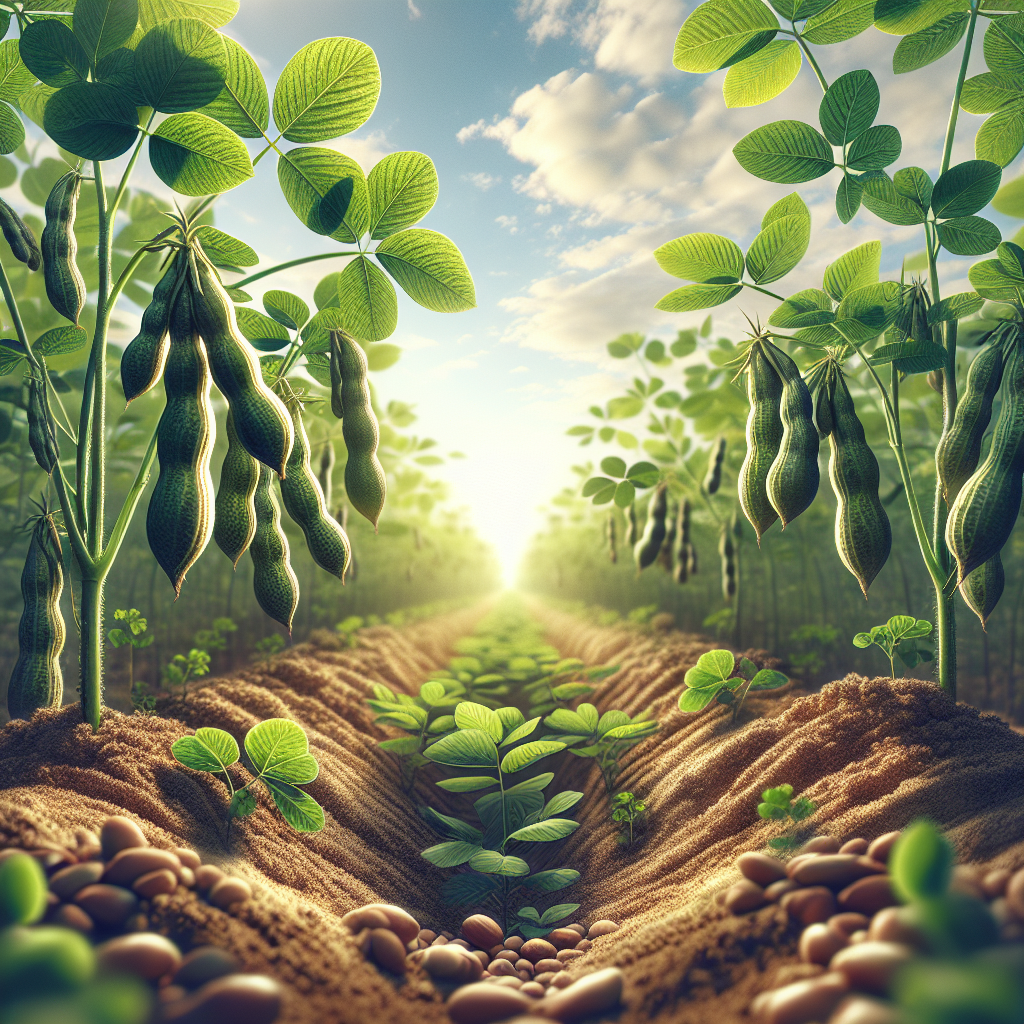
Introduction to Runner Peanuts
Runner-type peanuts are among the most economically important peanut market classes in modern agriculture, especially in the southeastern United States, where they dominate commercial production for confectionery processing and peanut butter. They are known for a prostrate to semi-prostrate growth habit, relatively uniform pods, and excellent roasting quality. Compared with Spanish or Valencia types, runners generally have a longer maturity window and often produce higher yields under favorable conditions.
This crop has an unusual reproductive biology that makes its cultivation distinct from many other legumes. After pollination, the fertilized ovary elongates into a structure called a peg, which grows downward and pushes into the soil. Pods then develop underground, which means soil structure, calcium availability in the pegging zone, and surface moisture management are as important as above-ground plant vigor. For growers familiar with Peanuts, runner selections represent the workhorse class for broad-acre production, but they can also be grown very successfully in gardens and small farms where the soil is sandy, friable, and warm.
Historically, runner types gained prominence because of their suitability for mechanized production, consistent pod size, and strong processor demand. Modern runner cultivars have also been selected for improved disease resistance, higher oleic acid content in some lines, and more stable yields under variable field conditions. Common commercial runner cultivars include Florida and Georgia-bred lines, many of which mature in roughly 130 to 155 days depending on climate, planting date, and management intensity.
Botanical Profile of Runner Peanuts
Runner peanuts belong to the Fabaceae family and are annual legumes. Although often casually grouped simply as “groundnuts,” they are botanically specialized and differ from beans and peas in several important ways. The plant typically grows 30 to 50 cm tall but spreads wider than its height, with lateral branches extending across the soil surface. Leaves are alternate and tetrafoliate, usually carrying two pairs of opposite leaflets. Flowers are small, yellow to orange-yellow, and self-pollinating.
The species is geocarpic, meaning fruit develops underground. After a flower is fertilized, the peg elongates and penetrates the soil, where the pod enlarges. If the soil surface is cRusted, compacted, or excessively dry at the wrong time, peg penetration can fail, directly reducing yield. This single characteristic explains why peanut production practices emphasize loose seedbeds and careful moisture control more than many other field legumes.
Runner types are distinguished from Virginia, Spanish, and Valencia peanuts primarily by branching habit, pod arrangement, seed size, and end use. Runners usually have a spreading habit, pods borne along runners rather than in tight clusters, and medium-sized kernels with relatively uniform shape. This uniformity is highly valued in processed products. Many runner cultivars also have indeterminate flowering, so the crop can carry flowers, pegs, immature pods, and nearly mature pods at the same time. That complicates harvest timing and is why maturity assessment is more nuanced than simply waiting for top foliage to yellow.
Biologically, runner peanuts form symbiotic relationships with nitrogen-fixing rhizobia, especially Bradyrhizobium species suited to peanut production. In properly inoculated or historically peanut-grown soils, this reduces the need for nitrogen fertilizer. However, calcium, boron, sulfur, and potassium management can be critical for pod quality and kernel fill.
Soil, pH, and Climate Requirements for Runner Peanuts
Runner peanuts perform best in deep, loose, sandy loam or loamy sand soils with excellent drainage. The ideal soil is friable enough that pegs can enter easily and pods can expand without deforming. Heavy clay soils are usually problematic because they impede peg penetration, increase harvest losses, hold excessive moisture around pods, and raise the risk of pod rot and other soilborne diseases.
Optimal soil pH is generally 5.8 to 6.5. They can tolerate slightly more acidic conditions than some legumes, but below about pH 5.5 nutrient imbalance becomes more likely, and calcium availability may decline. Liming should be done several months before planting if pH correction is needed. Dolomitic lime may be useful where magnesium is also low, but excessive magnesium relative to calcium can worsen soil tightness in some soils, so base amendments on a soil test.
Temperature is a major driver of success. Seeds germinate best when soil temperatures at planting depth are consistently above 18 to 20°C, and vegetative growth is strongest in air temperatures around 25 to 32°C. Cold soils delay emergence and increase seed rot risk. Frost is highly damaging, and runner peanuts need a long frost-free season, usually 130 to 150 or more days depending on cultivar.
Rainfall or irrigation requirements are moderate but timing-sensitive. Total seasonal water demand is commonly around 500 to 700 mm. The most critical moisture periods are flowering, pegging, and pod fill. Soil should be kept evenly moist, not saturated. In practical terms, aim for moisture in the top 5 to 10 cm during emergence, then maintain adequate subsoil moisture through pod development. A good target is soil that forms a weak ball in the hand but does not smear or shine with free water. If the field remains tacky, emits sour odors, or shows persistent standing water after irrigation or rainfall, conditions are too wet.
Overwatering causes several recognizable problems: pale foliage from root stress, increased disease pressure, poor nodulation, blackened or decaying pegs, and a surge in leaf spot or stem rot incidence. Underwatering during pegging often shows up as flower abortion, pegs failing to enter the soil, and reduced pod set. During pod fill, drought can result in lightweight kernels, pops (empty pods), and uneven maturity.
Full sun is essential. Shading reduces flower production and lowers carbohydrate supply to developing pods. Wind exposure is usually less of a concern than in tall crops, but strong drying winds can desiccate the upper soil layer during pegging. In diversified fields, a wind-moderating border of Corn at a distance can help reduce surface drying without heavily shading the peanut stand.
For broader fertility planning, principles such as organic matter building, cover cropping, and careful nutrient balancing are similar to those used in many soil-improvement systems; see soil health strategies for complementary ideas on improving tilth and moisture retention.
Step-by-Step Planting & Propagation
Runner peanuts are propagated by seed, specifically by planting raw, viable peanut kernels that have not been roasted. Use high-quality, disease-free seed from a reputable source, ideally shelling just before planting if seed is purchased in-shell. Damaged seed coats reduce germination and increase infection risk.
Prepare the field thoroughly. Create a fine, weed-free seedbed at least 10 to 15 cm deep. The surface should be loose, level, and free of clods. Clods interfere with peg entry and complicate digging at harvest.
Test the soil before planting. Correct pH, phosphorus, potassium, sulfur, calcium, and boron according to test results. Do not apply excessive nitrogen; peanuts produce better when encouraged to nodulate rather than remain dependent on soluble nitrogen.
Inoculate seed if peanuts have not been grown recently in the field. Use a peanut-specific rhizobial inoculant. This is especially important in new ground. Plant promptly after inoculation and avoid exposing treated seed to direct sun.
Time planting correctly. Sow only after danger of frost has passed and the soil has warmed to at least 18°C, preferably closer to 20°C in the morning. Cold planting often leads to erratic emergence.
Set spacing based on system. In home gardens, sow seeds 3 to 5 cm deep, 10 to 15 cm apart in rows 75 to 90 cm apart. In field systems, in-row populations vary, but the goal is a full canopy without overcrowding. Excessively dense stands can trap humidity and encourage foliar disease.
Water after planting if needed. The seed zone should be moist but not waterlogged. A light irrigation that moistens the top 7 to 10 cm is usually sufficient. If cRusting soils are expected, use smaller, more frequent applications rather than one heavy irrigation.
Monitor emergence. Seedlings typically emerge in 7 to 14 days under warm conditions. Gaps should be replanted quickly because late plants rarely synchronize well with the rest of the crop.
Manage the soil surface before flowering. Keep it loose and free of weeds. Once flowering starts and pegs begin to form, avoid deep cultivation because even shallow root and peg damage can reduce yield.
Peanut transplants are rarely used because taproot disturbance and altered plant architecture can impair performance. Direct seeding is the standard and superior method.
Care & Maintenance regimes for Runner Peanuts
Early growth is often deceptively slow, so weed control in the first 4 to 6 weeks is critical. Once runners spread and the canopy closes, weed suppression improves naturally. Use shallow cultivation only before pegging begins. After that stage, switch to hand weeding or very careful spot management to avoid burying stems excessively or severing pegs.
Irrigation should be adjusted by growth stage. During emergence, keep the topsoil uniformly damp, roughly equivalent to 60 to 70% of field capacity in the upper root zone. During vegetative expansion, allow mild drying between irrigations to encourage rooting, but do not let the topsoil harden into a cRust. During flowering and pegging, moisture consistency becomes essential; a dry-hard surface layer can prevent peg penetration even when deeper soil retains moisture. During pod fill, maintain moderate, even soil moisture to a depth of 20 to 30 cm. In sandy soils, this may require 20 to 30 mm of water every 4 to 6 days in hot weather, while heavier loams may need less frequent irrigation.
Stop or sharply reduce irrigation as harvest approaches, usually 7 to 14 days before digging depending on soil type and weather. The goal is to let the field dry enough for clean lifting while avoiding such severe drying that pods detach from vines during digging.
Nutrient management deserves precision. Nitrogen is usually not needed beyond a small starter amount, if any. Excess nitrogen can produce lush foliage at the expense of pod set and may delay maturity. Phosphorus supports rooting and early development if soils are deficient. Potassium is important for overall plant vigor and kernel filling, but overapplication can interfere with calcium uptake in some circumstances.
Calcium is especially important because pods absorb much of their calcium directly from the soil around them rather than solely through the roots. This means the pegging zone must contain available calcium. In commercial systems, gypsum is often applied at early flowering or peak bloom, especially in low-calcium soils or where large pod set is expected. Lack of calcium can lead to unfilled pods, dark plumules, and poor seed viability. Boron, applied judiciously and only where needed, can support reproductive development, but excessive boron is toxic.
Because runner peanuts flower over an extended period, they benefit from stable, low-stress conditions rather than feast-and-famine management. Avoid drastic swings in irrigation or fertilizer availability. Watch plant color and posture: healthy plants are medium green, with leaves that orient somewhat with light and temperature. Persistent midday wilting that does not recover by evening indicates root-zone moisture stress. Constant droopy foliage in the morning suggests more serious root or disease issues rather than simple heat stress.
Mulch is usually not used in mechanized production, but in garden settings a very light organic mulch between rows can moderate weed pressure and reduce splash-borne disease. Keep mulch back from the immediate crown and pegging zone, since dense mulch can interfere with peg entry.
Pests, Diseases & Organic Management
Runner peanuts face a mix of foliar, soilborne, and pod-feeding threats. The most common foliar diseases include Early Leaf Spot, Late Leaf Spot, and Rust in suitable climates. These begin as lesions on leaves and can lead to severe defoliation, reducing photosynthesis during pod fill. Organic management relies on crop rotation, adequate row spacing, airflow, residue management, and preventative biofungicides or copper-based materials where allowed and appropriate.
White Mold or Southern Stem Rot, caused by Sclerotium rolfsii, is a major threat in warm, moist soils. Symptoms include sudden wilting, stem lesions near the soil line, white fungal growth, and mustard-seed-like sclerotia. Management depends on rotation out of susceptible hosts, minimizing excessive canopy humidity, avoiding overirrigation, and reducing undecomposed organic debris around crowns.
Rhizoctonia Limb Rot, Aspergillus Crown Rot, and various Pod Rots also become more likely when soils stay wet or compacted. Since pods mature underground, these issues may remain hidden until harvest. Good drainage, loose soil, and disciplined irrigation are your strongest defenses.
Insects vary by region but often include Thrips, Aphids, Armyworms, Cutworms, Corn Earworm, Lesser Cornstalk Borer, and Foliage-Feeding Caterpillars. Thrips can scar young leaves and occasionally vector disease. Lesser Cornstalk Borer is especially damaging in hot, dry soils with surface residue, where larvae attack stems and pegs. Organic management includes timely planting, avoiding severe drought stress, encouraging beneficial insects, and using approved biological insecticides such as Bacillus thuringiensis for caterpillars when scouting thresholds are reached.
Soil insects and vertebrate pests can also damage pods. Wireworms and White Grubs may feed underground, while squirrels or rodents may dig plants late in the season. Clean field borders, rotations, and harvest timing help limit losses.
The most effective organic disease management program combines four practices: at least 2 to 3 years of rotation away from peanuts and related hosts, strict irrigation discipline, healthy calcium-balanced soil, and sanitation after harvest. Do not compost heavily diseased residue unless your compost system reliably reaches sanitizing temperatures.
Harvesting, Curing & Optimal Storage
Harvest timing is one of the most technical aspects of runner peanut production. Because flowering is indeterminate, pods mature over a range rather than all at once. Commercial growers often use hull-scrape maturity profiling, where the exocarp is scraped to reveal mesocarp color changes associated with maturity. For small growers, simpler indicators include yellowing lower leaves, darkened inner pod surfaces, full kernel development, and the presence of a substantial majority of firm, well-filled pods rather than soft, watery ones.
Runner peanuts are typically ready 130 to 155 days after planting, though this varies by cultivar and environment. Harvest too early and yields suffer from immature kernels and poor flavor. Harvest too late and pods may detach underground during lifting, especially in dry soils.
To harvest, loosen soil carefully with a digging fork or undercutter 15 to 20 cm below the plant. Lift the whole plant gently, shake off excess soil, and invert so pods remain attached while vines dry. Avoid rough handling; mature pods can strip from the pegs if the soil is too dry or the plants are overhandled.
Field curing usually takes 2 to 7 days depending on humidity and weather. The goal is to reduce pod moisture gradually while protecting the crop from rain. In humid climates, moving plants under cover with strong ventilation is safer than prolonged field exposure. Pods are ready for final stripping and drying when the vines are mostly crisp and the pods have lost their fresh, rubbery feel.
After stripping pods from vines, continue drying until kernel moisture is roughly 8 to 10% for safe storage. If moisture remains above about 10 to 11%, mold and aflatoxin risk rise sharply, especially in warm storage. A simple practical test is that kernels should snap cleanly rather than bend, and pod interiors should feel dry and papery, not leathery.
Store unshelled peanuts in a cool, dry, dark, well-ventilated place. Ideal storage conditions are below 10 to 15°C with low relative humidity. In-shell storage generally preserves quality better than shelled storage. For shelled kernels, use airtight containers only when you are certain moisture is low enough; otherwise trapped humidity can cause spoilage. High-oleic runner cultivars often store longer without rancidity, but all peanuts should be protected from heat, moisture, and insects.
Never store visibly moldy or insect-damaged peanuts with sound stock. Any lot with musty odor, discoloration, or shriveled kernels should be discarded rather than consumed.
Companion Planting for Runner Peanuts
Because runner peanuts sprawl and develop pods underground, the best companions are plants that do not heavily disturb the soil, do not cast dense shade, and may help with beneficial insect attraction or border definition. Low, light-rooting herbs and flowers are generally more suitable than aggressive root crops or tall, close-planted cereals.
Thyme works well near bed edges because it stays compact, attracts pollinators and beneficial insects when flowering, and does not aggressively invade the pegging zone. Yarrow is useful nearby rather than directly within dense peanut rows; it attracts predatory insects and parasitoids that can help suppress some pest populations. Nasturtium can function as a trap and distraction plant for certain chewing pests and also brings pollinator activity to the garden. In some systems, Clover may be used in surrounding alleys or off-season rotations rather than interplanted densely, since direct competition in the row can become excessive.
Avoid close companions that require repeated hilling, root disturbance, or heavy irrigation. Potatoes, for example, are poor neighbors because both crops need underground development space and different harvest handling. Very tall summer crops planted too near runner peanuts can reduce sunlight and lower flowering.
In practical terms, companion planting around runner peanuts is best approached as perimeter support rather than intimate intercropping. Keep a clear pegging zone, protect the soil surface from cRusting, and place companion species where they improve biodiversity without disrupting underground pod formation.