Introduction to Aspergillus Crown Rot
Aspergillus Crown Rot represents a significant threat to agricultural productivity, particularly in warm, humid environments where fungal pathogens flourish. Caused by various species of the Aspergillus genus, such as A. flavus, A. niger, and A. fumigatus, this disease attacks the crown—the critical junction between roots and shoots—leading to girdling, tissue decay, and eventual plant collapse. Unlike root rot, which primarily affects underground structures, Aspergillus Crown Rot distinctly targets above-soil basal tissues, often exacerbated by mechanical injury or waterlogging.
This guide provides professional-grade diagnostic criteria, lifecycle insights, and organic management strategies tailored for small to medium-scale farmers. Early detection is paramount, as infected plants rarely recover fully, but proactive measures can prevent outbreaks and safeguard crops like avocado and peanut. Understanding environmental triggers allows growers to implement integrated pest management (IPM) plans that minimize chemical use while maximizing yields. For farms battling similar issues, explore Why Misidentifying Plants Costs Small Farms Thousands - And How AI Camera Diagnosis Fixes It Fast to enhance disease scouting efficiency.
The economic impact is severe: in avocado orchards, losses can exceed 30% in untreated fields, while peanut crops suffer reduced pod quality and aflatoxin contamination risks. Aspergillus not only destroys plant tissues but also produces mycotoxins, posing food safety concerns. This comprehensive resource equips growers with actionable steps for diagnosis, organic treatment, and long-term prevention, drawing from field-tested protocols used by botanists and agricultural extension services worldwide.
Identifying Symptoms & Damage
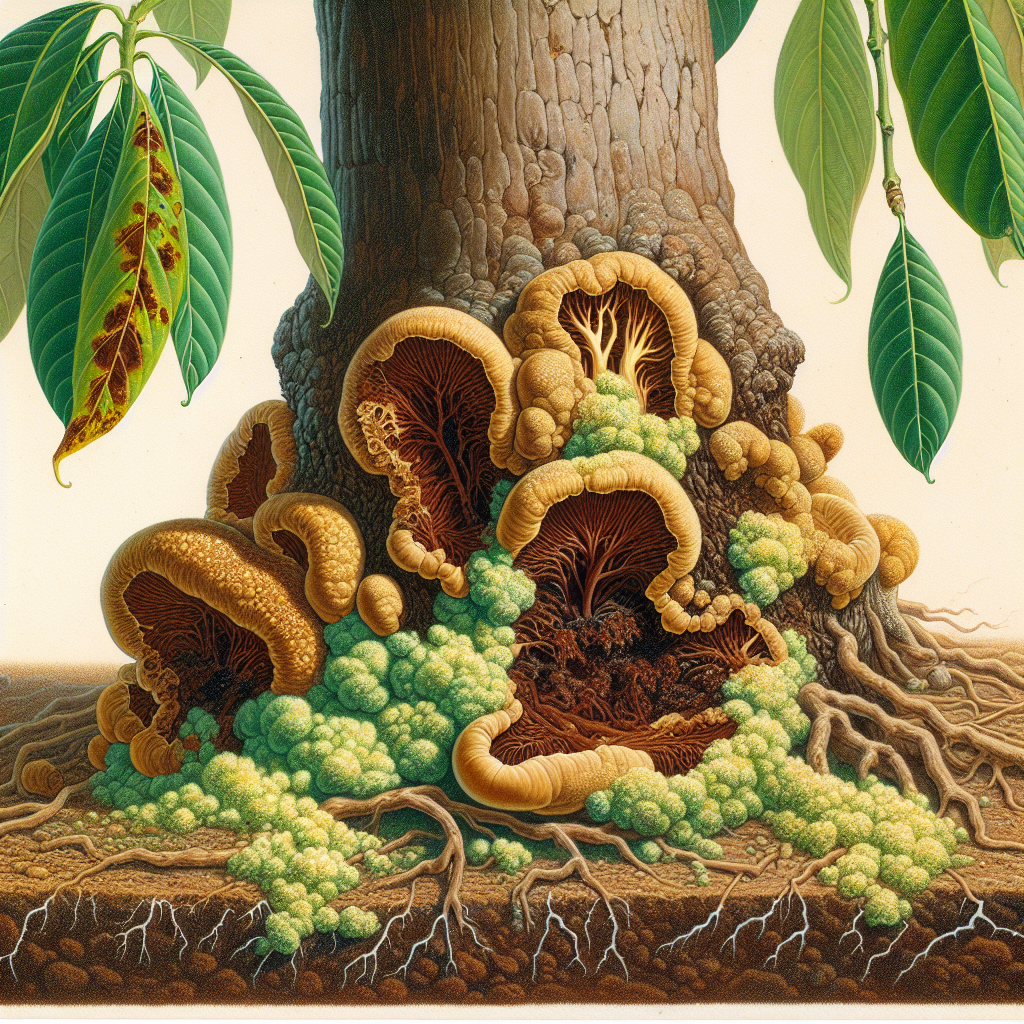
Accurate diagnosis begins with recognizing the hallmark signs of Aspergillus Crown Rot, which progress rapidly under favorable conditions. Initial symptoms appear as subtle yellowing or chlorosis in lower leaves, often mistaken for nutrient deficiencies. As the fungus invades the crown, a distinctive dark brown to black discoloration emerges at the soil line, accompanied by a soft, water-soaked rot that emits a musty, earthy odor.
Examine the crown closely: shred-like mycelial growth, typically greenish-yellow (from A. flavus) or black (A. niger), may be visible under humid conditions. Longitudinal sections reveal internal vascular browning and cavities filled with fungal spores. Unlike Phytophthora, which produces oomycete structures, Aspergillus shows powdery spore masses that readily rub off on fingers.
Advanced stages include wilting of the entire plant, stem cracking, and premature defoliation. In perennials like mango, affected trees exhibit dieback from the base upward, with gum exudate in some cases. Yield impacts are devastating: fruiting bodies abort, tubers shrivel, and surviving plants produce stunted, low-quality harvests. Differentiate from Fusarium by the absence of pinkish mycelium and faster progression in high-temperature scenarios.
To confirm, collect samples for lab analysis—incubate crown sections on selective media where Aspergillus colonies sporulate abundantly within 48 hours. Field scouts should use a hand lens to spot conidiophores, the brush-like spore-producing structures unique to Aspergillus. Damage extends beyond the plant: spores contaminate soil and equipment, perpetuating cycles in monoculture systems.
Lifecycle and Progression of Aspergillus Crown Rot
Aspergillus spp. are ubiquitous soil saprophytes with a complex lifecycle adapted to opportunistic infection. Spores (conidia) overwinter in crop debris, soil organic matter, and infested seeds, remaining viable for years. Germination occurs when conditions align—warm temperatures (25-35°C) and moisture trigger hyphal growth toward plant wounds or natural openings at the crown.
Infection initiates via mycelial penetration of injured tissues, often post-transplant or after mechanical damage. The fungus colonizes vascular tissues, producing enzymes that dissolve lignin and cellulose, leading to rot. Within 7-14 days, profuse sporulation occurs, releasing billions of airborne conidia that spread via wind, irrigation splash, or tools.
Progression accelerates in secondary phases: under chronic stress, the disease girdles the crown, blocking nutrient and water transport. In annuals like peanuts, progression culminates in pod invasion, causing kernel blackening. Perennials enter dormancy-like states but succumb over seasons. Unlike obligate parasites, Aspergillus thrives as both pathogen and decomposer, explaining its resilience.
Sexual reproduction is rare; the asexual cycle dominates, enabling rapid adaptation. Mycotoxin production (e.g., aflatoxins) peaks during late infection, contaminating harvests. Lifecycle interruption requires breaking spore reservoirs through sanitation and rotation.
Environmental Triggers & Risk Factors
Aspergillus Crown Rot epidemics correlate strongly with environmental stressors. High soil temperatures above 28°C combined with excessive moisture—either from over-irrigation or poor drainage—create ideal infection windows. Compacted soils reduce aeration, promoting anaerobic pockets where Aspergillus outcompetes beneficial microbes.
Risk factors include wounding from cultivation, transplant shock, or root-knot nematodes that predispose crowns. High nitrogen fertilizers exacerbate susceptibility by promoting succulent growth. Monocropping depletes soil biodiversity, favoring pathogen dominance. Tropical regions with prolonged wet seasons see highest incidence, but greenhouses with high humidity mimic these conditions.
Climate change intensifies risks: warmer soils and erratic rains extend the infection period. Acidic soils (pH <6.0) enhance spore germination, while salinity stress weakens defenses. Integrated monitoring of soil moisture (aim for 60-70% field capacity) and temperature prevents outbreaks.
Organic Control & Treatment Plans
Organic management emphasizes cultural, biological, and physical controls over fungicides. Upon diagnosis, immediately remove and destroy infected plants, avoiding composting to prevent spore spread. Solarize soil pre-planting: cover moist beds with clear plastic for 4-6 weeks to kill surface spores via heat.
Apply biocontrol agents like Trichoderma harzianum or Bacillus subtilis drenches (rates: 5-10 g/L water) to crowns at transplant and monthly. These antagonists compete for space and produce antifungal compounds. Neem oil (2% emulsion) or garlic-chili extracts deter spore germination; apply weekly during high-risk periods.
Enhance soil biology with compost teas rich in actinomycetes, which suppress Aspergillus. Mulch with straw or biofumigant crops like mustard to modify soil microclimate. For established infections, excise rotted tissue, apply lime paste (to raise pH), and seal wounds with organic wax. Rotate with suppressive crops like clover or marigolds to disrupt lifecycles.
Monitor with sticky traps for spore loads and adjust irrigation to drip systems. In severe cases, integrate hydrogen peroxide (3% solution) soaks for decontamination. Success rates exceed 70% with consistent application, preserving organic certification.
Preventing Aspergillus Crown Rot in the Future
Prevention hinges on resilient systems design. Select resistant varieties where available, such as certain avocado rootstocks. Optimize planting: use raised beds (30-45 cm high) for drainage, space plants to ensure airflow, and avoid deep planting that buries crowns.
Implement strict sanitation: disinfect tools with 10% bleach, rotate fields every 2-3 years, and incorporate residues promptly. Soil test annually, amending to pH 6.5-7.0 with lime and boosting organic matter to 4-5%. Drip irrigation prevents foliar wetting; time applications to midday evaporation.
Foster biodiversity: interplant with repellents like thyme and encourage predatory microbes via vermicompost. Scout weekly during warm months, using threshold-based actions. Long-term, cover crops build antagonistic populations. For zoning strategies, see Why Zoning Your Small Farm Chaos into Profit Zones Feels Impossible - And How AI Changes Everything—no, wait, use available blogs correctly.
Crops Most Affected by Aspergillus Crown Rot
Aspergillus Crown Rot strikes a wide array of crops, especially those with exposed crowns in warm climates. Primary hosts include peanuts, where it causes black hull rot and aflatoxin issues; onions, with basal plate decay; and garlic, leading to clove shrivel. Tree crops like Hass Avocado, mango, and citrus suffer girdling and decline.
Vegetables such as tomatoes, peppers, and potatoes are vulnerable post-transplant. Grains like corn and sorghum face seedling losses, while ornamentals and turf grasses report sporadic outbreaks. Tropicals including banana, pineapple, and papaya amplify risks in humid zones. Yield losses average 20-50% without intervention, underscoring the need for tailored IPM.