Introduction to Southern stem rot
Southern stem rot, also known as Sclerotium rot or southern blight, is one of the most devastating soilborne diseases in warm, humid agricultural regions worldwide. Caused by the fungus Sclerotium rolfsii (teleomorph: Athelia rolfsii), this pathogen attacks over 500 plant species, thriving in temperatures between 25-35°C (77-95°F) and high soil moisture. First identified in the southern United States in the early 1900s, it has since become a major threat to vegetable, fruit, and ornamental crops, causing annual losses in the millions for farmers.
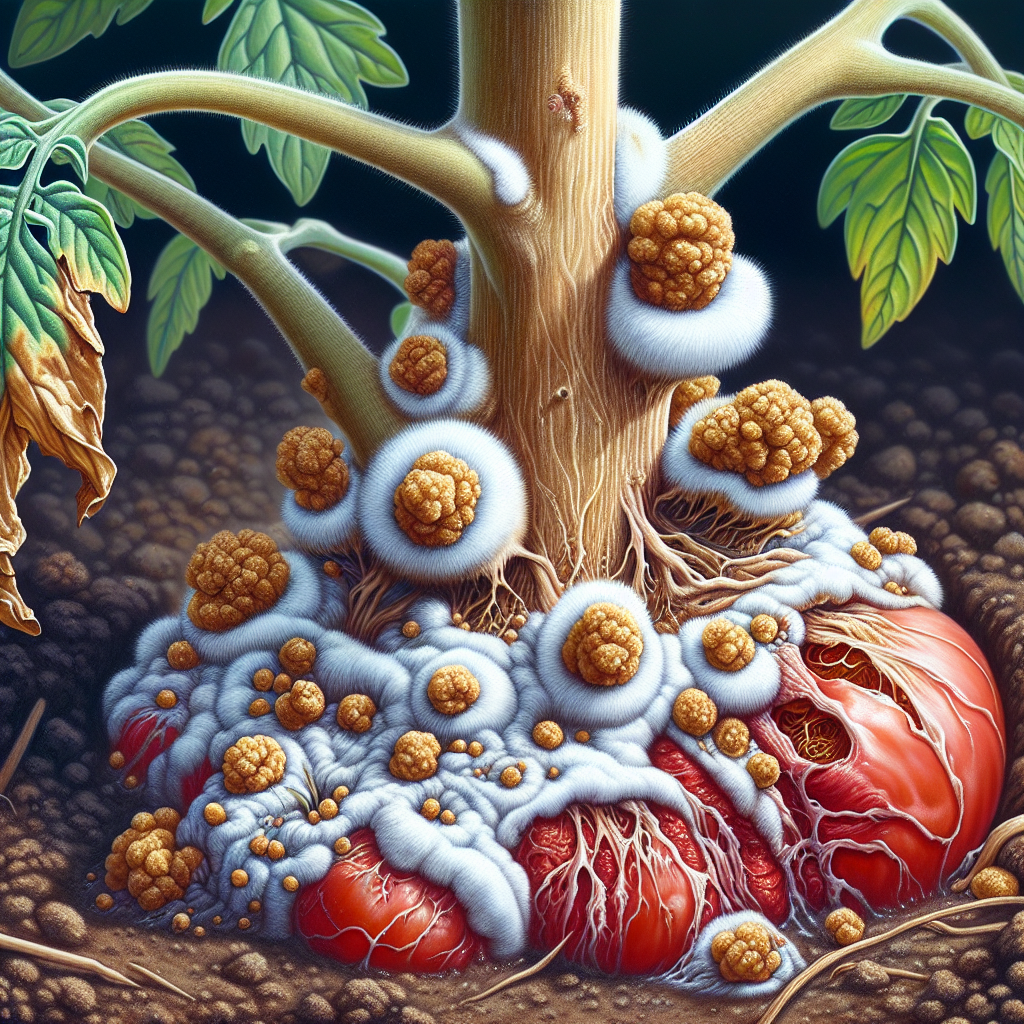
The disease is characterized by rapid stem girdling at the soil line, production of abundant white mycelium, and small, tan sclerotia (fungal survival structures) that resemble mustard seeds. Unlike many foliar diseases, southern stem rot strikes at the base of plants, often leading to sudden collapse during peak growing seasons. Its soilborne nature makes it persistent, surviving in fields for years via sclerotia that can remain viable for up to 3-5 years in dry conditions.
Early detection is critical, as infected plants rarely recover. This guide provides professional-grade diagnostic criteria, lifecycle details, organic management strategies, and prevention tactics tailored for small to medium-scale farms. By integrating crop rotation, sanitation, and biocontrols, growers can suppress populations and protect yields effectively. For more on related soil pathogens, see our detailed entry on Rhizoctonia.
Identifying Symptoms & Damage
Accurate diagnosis of southern stem rot hinges on recognizing its distinctive symptoms, which appear suddenly under favorable conditions. Initial signs include yellowing and wilting of lower leaves, often mistaken for drought stress or root rot. As the disease progresses, a white, cottony mycelial mat emerges at the soil line, encircling the stem base. This mycelium produces a potent girdling action, severing vascular tissues and causing rapid plant collapse.
Key diagnostic features:
- Stem Lesions: Water-soaked, reddish-brown lesions at the soil line, expanding to 5-10 cm. Lesions shred easily, revealing white mycelium.
- Sclerotia Formation: Small (0.5-1.5 mm), round, tan-to-brown sclerotia embedded in decayed tissue or mycelium, resembling rat droppings or mustard seeds.
- Foliar Symptoms: Upper plant wilting, yellowing, and necrosis; no foliar sporulation.
- Root Involvement: Secondary root rotting, but primary damage is at the crown.
Damage severity varies by crop stage: seedlings succumb to damping-off, while mature plants show lodging and yield loss up to 50-100%. Differentiate from Phytophthora (darker lesions, zoospore mats) or Fusarium (pinkish discoloration). Confirm via lab culture: S. rolfsii grows rapidly on potato dextrose agar, producing sclerotia in 5-7 days.
Economic impact is severe in high-value crops, with infected plants producing no marketable yield. Scout fields weekly during warm, wet periods, focusing on low-lying areas. Early removal of symptomatic plants prevents sclerotia dispersal via splashing rain or machinery.
Lifecycle and Progression of Southern stem rot
Sclerotium rolfsii has a complex lifecycle optimized for survival and rapid infection in warm soils. The fungus persists as sclerotia in soil or plant debris, germinating when moisture and temperature align (optimal: 30°C, >60% soil moisture). Mycelium emerges, grows 1-2 cm/day, and contacts host stems or roots.
Lifecycle Stages:
- Dormancy: Sclerotia (resting bodies) survive 2-5 years in dry soil, depths up to 15 cm.
- Germination: Triggered by host exudates or mechanical injury; mycelium spreads radially.
- Infection: Enzymes degrade cell walls; oxalic acid lowers pH, aiding tissue invasion.
- Colonization: White mycelium mats form within 48 hours; plant wilts in 3-7 days.
- Sclerotia Production: 100-1000 sclerotia per infected stem, maturing in 7-10 days.
- Spread: Mycelium via soil contact; sclerotia via water splash, tools, or wind.
Progression is explosive in summer: a single sclerotium can infect 10-20 plants in weeks. Sexual stage (Athelia rolfsii) rarely observed; reproduction is asexual. High populations (>50 sclerotia/kg soil) indicate endemic fields, confirmed by soil baiting with carrot disks.
Environmental Triggers & Risk Factors
Southern stem rot epidemics correlate strongly with environmental stressors. Primary triggers include soil temperatures >25°C, prolonged leaf wetness (>48 hours), and neutral-alkaline soils (pH 6.5-8.0). High organic matter fuels mycelial growth, while poor drainage creates anaerobic microsites.
Key Risk Factors:
- Climate: Subtropical/tropical regions; rainy seasons amplify splash dispersal.
- Soil Conditions: Compacted, waterlogged soils; pH >7 favors sclerotia survival.
- Cultural Practices: Continuous cropping, excessive nitrogen, overhead irrigation.
- Crop Injury: Mechanical damage from cultivation exposes vascular tissues.
- Weed Hosts: Broadleaves like pigweed harbor the pathogen asymptomatically.
Susceptibility peaks mid-season during flowering/fruiting when transpiration stress weakens defenses. Fields with history of southern blight require vigilance. Monitor with soil probes for moisture and temperature thresholds.
Organic Control & Treatment Plans
No chemical cure exists for established infections; management focuses on suppression. Organic strategies emphasize integrated approaches. Read our blog on Spring Pest Patrol: Organic AI Strategies to Shield Your Crops from Common Invaders for tech-enhanced monitoring.
Immediate Response (Active Infection):
- Sanitation: Rogue and destroy infected plants (burn or deep bury >60 cm); disinfect tools with 10% bleach.
- Solarization: Cover infested beds with clear plastic (4-6 weeks, summer) to kill 70-90% sclerotia.
- Biocontrols: Apply Trichoderma harzianum or Gliocladium virens (rates: 10^9 CFU/g, 100-200 kg/ha); repeat every 14 days. Mustard seed meal (4-6 tons/ha) releases biofumigants.
Soil Treatments:
- Flooding (if feasible): Submerge 15-20 cm for 4-6 weeks.
- Amendments: Incorporate brassicas (e.g., mustard) for glucosinolate suppression.
Cultural Integration:
- Deep plowing to bury sclerotia.
- Drench with compost teas (aerated, 100 L/ha weekly).
Efficacy: Combined methods reduce populations 80-95% over 2 seasons.
Preventing Southern stem rot in the Future
Prevention is the cornerstone of long-term control, targeting pathogen exclusion and population dilution.
Proven Strategies:
- Crop Rotation: 3-4 years with non-hosts like grasses or onions; avoid solanaceae/peanuts consecutively.
- Resistant Varieties: Select tolerant cultivars (e.g., certain peanut lines).
- Site Preparation: Acidify soil to pH 6.0-6.5 with sulfur (500-1000 kg/ha); improve drainage with raised beds.
- Planting Practices: Use disease-free transplants; space for airflow; avoid injury.
- Irrigation Management: Drip systems only; irrigate early morning.
- Cover Crops: Sudangrass or marigolds suppress via allelopathy.
- Monitoring: Soil sampling (bait tests quarterly); threshold: <10 sclerotia/kg.
Integrated plans yield 90%+ prevention in low-infestation fields. Annual audits prevent buildup.
Crops Most Affected by Southern stem rot
Southern stem rot devastates warm-season crops, especially legumes and solanaceae. Top victims:
- Peanuts: Up to 30% yield loss; sclerotia in pods.
- Tomato ([/wiki/tomato]): Crown rot during fruiting.
- Peppers ([/wiki/bell-pepper]): Rapid stand loss.
- Beans ([/wiki/soybeans]): Seedling blight.
- Eggplant ([/wiki/eggplant]): Base girdling.
- Sweet Potato ([/wiki/sweet-potato]): Storage rot.
- Others: Cotton ([/wiki/cotton]), watermelon ([/wiki/watermelon]), strawberry ([/wiki/strawberry]).
Global impact: Major in southern U.S., India, Brazil. Tailor rotations to local rotations.