Definitive Diagnostic and Management Guide for Pod Rots
Introduction to Pod rots
Pod rots represent one of the most destructive diseases affecting pod-bearing crops worldwide, causing rapid decay of developing pods and leading to yield losses of up to 80% in severe outbreaks. These diseases are primarily caused by soilborne pathogens such as Pythium, Phytophthora, Rhizoctonia, and Fusarium species, which thrive in warm, wet conditions. Unlike foliar diseases, pod rots target the reproductive structures directly, rendering infected pods unmarketable and often leading to seed rot in storage.
Farmers often first notice pod rots during prolonged rainy periods or in poorly drained fields, where waterlogged soils create ideal environments for pathogen proliferation. The economic impact is profound, especially for small-scale growers reliant on legumes for protein-rich harvests. Early diagnosis is critical, as infections spread rapidly via splashing rain, irrigation, or contaminated tools. This guide provides professional-grade strategies for identification, organic management, and prevention, drawing from decades of agronomic research to help you protect your yields. Understanding pod rots empowers growers to implement integrated approaches that sustain soil health while maximizing profitability. For more on small farm optimization, check this Soil Health Mastery blog post.
Identifying Symptoms & Damage
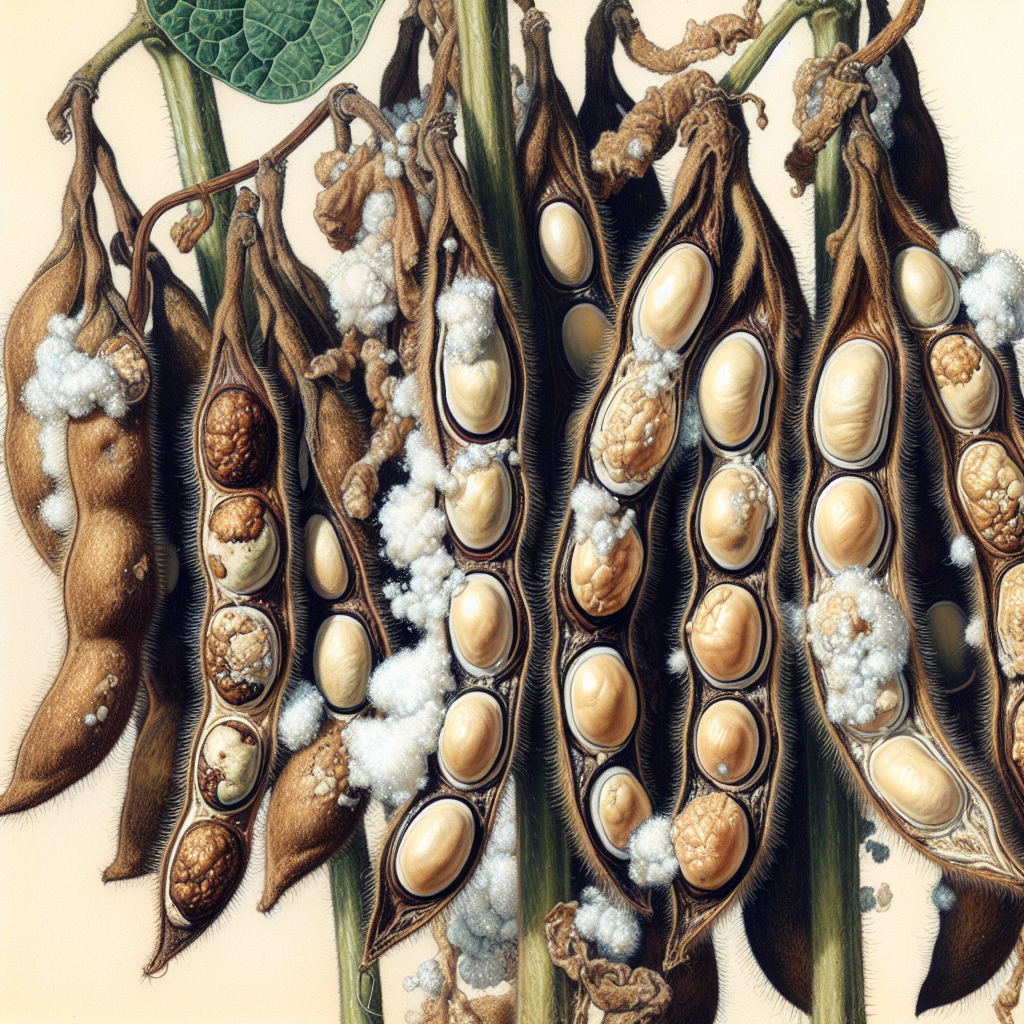
Accurate identification of pod rots is essential for timely intervention, as symptoms can mimic pest damage or nutrient deficiencies. Initial signs appear on lower pods near the soil surface, where lesions start as small, water-soaked spots that expand rapidly into soft, mushy rots. Affected tissues turn tan to dark brown, often with a foul odor from secondary bacterial invasion. In Phytophthora infections, white, cottony mycelium may form under humid conditions, while Rhizoctonia causes brown, sunken cankers with reddish-brown sclerotia resembling mustard seeds.
As the disease progresses, pods shrivel, mummify, or drop prematurely, with internal seeds turning grayish and non-viable. Stem lesions may girdle the plant at the soil line, leading to wilting of upper foliage. Damage assessment reveals 20-50% pod loss in moderate cases, escalating in high-rainfall areas. Differentiate from Pod borers by the absence of entry holes and frass; pod rots lack insect galleries. Use a knife to slice infected pods: healthy tissue is firm and white, while rotted areas are discolored and watery. Microscopic confirmation shows oospores in Pythium or chlamydospores in Fusarium. Yield impacts include reduced seed quality, lower germination rates, and market rejection due to rot. Scout weekly during pod fill stages, focusing on field edges and low spots.
Lifecycle and Progression of Pod rots
Pod rot pathogens exhibit complex lifecycles adapted to soil persistence, surviving years as oospores, sclerotia, or mycelium in crop debris. Infection begins with spore germination triggered by free soil water, zoospore swimming in saturated conditions, or mycelial growth from nearby residues. Primary inoculum sources include infested soil, volunteer plants, and contaminated seeds. Under optimal temperatures (20-30°C), pathogens colonize roots and splash onto pods via rain or overhead irrigation.
Progression unfolds in stages: latent infection (1-3 days), symptom expression (soft rot within 48 hours), and sporulation (releasing new inoculum). Fusarium species produce macroconidia that spread by wind or water, while Phytophthora forms sporangia for aerial dispersal. Disease cycles repeat multiple times per season in wet climates, amplifying epidemics. Overwintering structures ensure recurrence; for instance, Rhizoctonia sclerotia germinate next season upon sensing host roots. Understanding this polycyclic nature underscores the need for sanitation and rotation to disrupt lifecycles. Infected pods serve as secondary inoculum, perpetuating outbreaks in monocultures.
Environmental Triggers & Risk Factors
Pod rots flourish under specific conditions: prolonged leaf wetness (>12 hours), soil moisture above 60%, and temperatures of 25-28°C. Poor drainage, compacted soils, and high clay content exacerbate waterlogging, creating anaerobic zones ideal for oomycetes. Overcrowding reduces airflow, trapping humidity around pods. Risk factors include continuous cropping without rotation, excessive nitrogen favoring lush growth susceptible to infection, and mechanical injury from cultivation or Slugs that open infection courts.
Acid soils (pH <6.0) favor Pythium, while neutral pH suits Rhizoctonia. Overhead irrigation splashes soil pathogens upward, a common trigger in commercial fields. Climate change intensifies risks with erratic rains and warmer soils. Susceptible varieties like certain peas amplify damage. Assess fields pre-planting: test soil drainage by digging post-rain pits—if water persists >48 hours, amend with organic matter. Monitor weather forecasts to time fungicide applications preemptively.
Organic Control & Treatment Plans
Organic management emphasizes cultural, biological, and physical tactics over chemicals. Start with sanitation: remove and destroy infected debris, avoiding composting to prevent sclerotia survival. Solarize soil pre-planting by covering moist fields with clear plastic for 4-6 weeks to kill pathogens via heat (above 50°C). Apply biocontrols like Trichoderma viride or Bacillus subtilis as seed treatments or drenches (10g/kg seed), colonizing roots to outcompete rot fungi.
Crop rotation with non-hosts like onions or garlic for 2-3 years depletes inoculum. Use raised beds (15-20cm high) to improve drainage and mulch with straw to suppress splash dispersal. Plant resistant varieties such as 'Jade' green beans or 'Oregon Sugar' peas. Boost plant immunity with compost teas rich in mycorrhizae, applied foliarly every 14 days. For active infections, prune affected pods and apply copper-based organics (e.g., fixed copper at 2-3kg/ha), respecting pre-harvest intervals. Introduce beneficial nematodes (Steinernema feltiae) against soil pests that wound plants. Integrated plans reduce losses by 60-70%; monitor with sticky traps for early detection. Spring Pest Patrol blog offers complementary strategies.
Preventing Pod rots in the Future
Prevention is the cornerstone of pod rot management, focusing on long-term soil and crop health. Select certified, disease-free seeds treated with hot water (50°C for 25 min) or biofungicides. Optimize planting density for airflow (e.g., 30cm rows for beans). Incorporate lime to raise pH to 6.5-7.0, deterring acid-loving pathogens. Cover crops like mustard biofumigate soil upon incorporation, releasing glucosinolates toxic to fungi.
Implement drip irrigation to minimize foliage wetting, scheduling based on soil moisture probes. Foster beneficial microbes via green manures (clover) and avoid tillage that spreads sclerotia. Scout rigorously: use disease calendars tied to rainfall >10mm. Resistant rootstocks and varietal blends diversify risk. Post-harvest, deep plow residues and till in autumn. Annual soil tests guide amendments; maintain organic matter >3% for drainage. These practices can cut incidence by 80%, ensuring sustainable yields.
Crops Most Affected by Pod rots
Legumes dominate pod rot susceptibility due to their soil-contacting pods. Soybeans suffer Phytophthora pod rot in the Midwest, losing millions annually. Peas and chickpeas face Rhizoctonia in cool, wet springs. Peanuts experience southern blight pod rot in humid South. Emerging threats hit okra and green beans. Avoid confusion with root rots in potato. Global hotspots include tropical Asia for mung beans and U.S. Corn Belt for edamame.