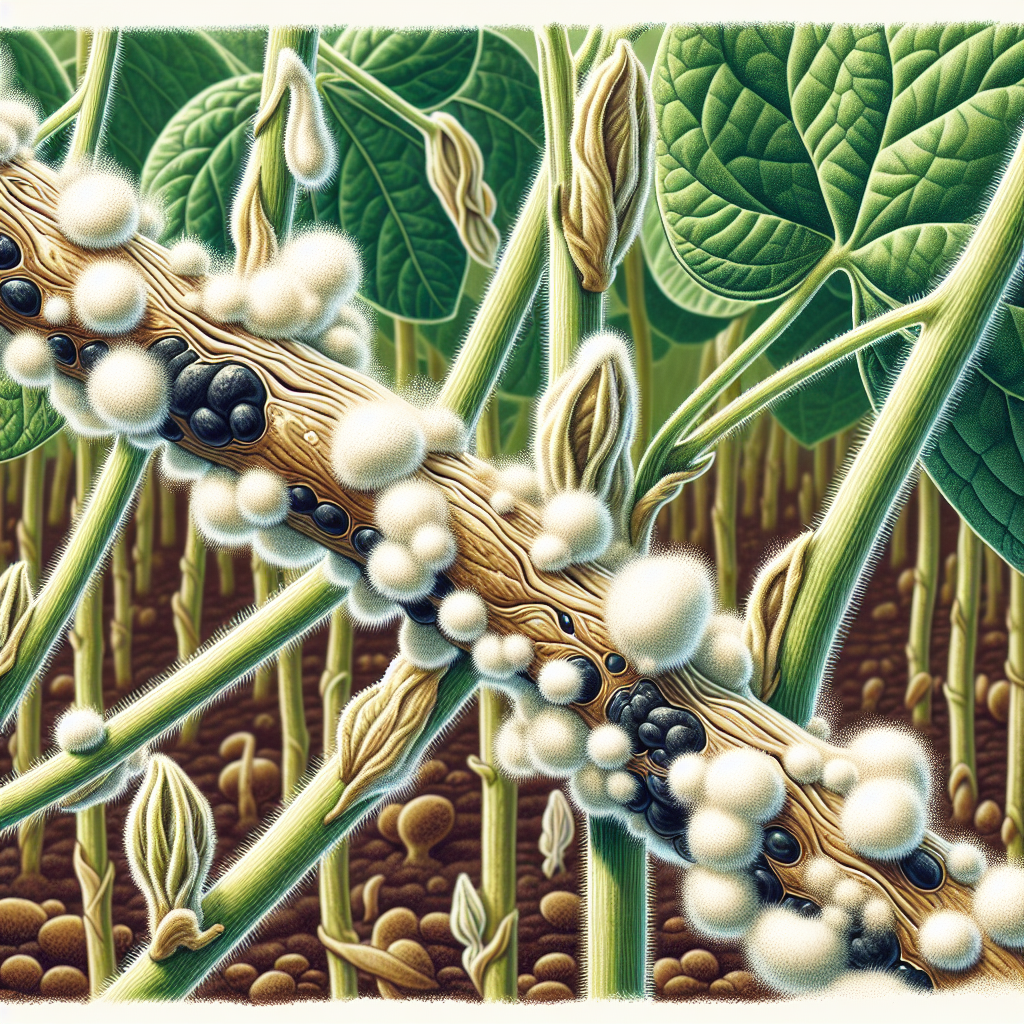
Introduction to white mold
White mold, scientifically known as Sclerotinia sclerotiorum, is one of the most destructive fungal pathogens in agriculture, capable of infecting over 400 crop species worldwide. Also called Sclerotinia blight or timber rot, it thrives in cool, wet environments, producing characteristic white, cottony mycelium and hard, black sclerotia that survive in soil for up to 10 years. This disease causes significant yield losses in high-value crops like soybeans, peas, and sunflowers, with economic impacts reaching billions annually. Farmers often first notice it during flowering when dense canopies trap moisture, creating ideal infection conditions. Early detection and integrated management are crucial, as chemical controls alone are insufficient against this resilient fungus. For more on AI-driven disease identification, check Why Misidentifying Plants Costs Small Farms Thousands - And How AI Camera Diagnosis Fixes It Fast.
Understanding white mold's biology is key to prevention. The pathogen overwinters as sclerotia, which germinate under specific moisture and temperature cues to release ascospores or infect via mycelial growth. Infected plants exhibit rapid wilting, stem girdling, and premature death, often with shredded internal stem tissue filled with white mycelium. This guide provides definitive diagnostic criteria, lifecycle details, and proven organic management strategies to protect your crops.
Identifying Symptoms & Damage
White mold symptoms typically appear during mid-to-late season under prolonged cool, humid conditions (50-77°F or 10-25°C). Initial signs include water-soaked lesions on stems at the soil line or lower canopy, progressing to bleached, shredded stems with fluffy white fungal growth. Black, irregular sclerotia (1/4 to 1/2 inch) form inside stems or on the surface, resembling mouse droppings or rat poison pellets.
Diagnostic Checklist:
- Stem Symptoms: Grayish-white lesions expand into girdling cankers; stems become brittle and hollow with white mycelium visible upon splitting.
- Foliar Signs: Upper leaves wilt while lower leaves yellow and drop; plants may drop petals that become infected and produce apothecia (small tan mushroom-like structures).
- Sclerotia Confirmation: Hard, black resting structures in stems, soil, or debris—key for lab confirmation.
- Damage Patterns: Random distribution in fields, worse in low-lying wet areas or compacted soils; 20-100% yield loss possible.
Differentiate from Phytophthora (darker lesions, warmer temps) or Rhizoctonia (brown, web-like growth). Use a hand lens to spot mycelium or send samples to extension services for PCR testing. In soybeans, look for 'umbrella' shaped sclerotia clusters; in peas, pods may abort with white mold on blossoms.
Lifecycle and Progression of white mold
Sclerotinia sclerotiorum has a complex polycyclic lifecycle with three phases: sclerotial dormancy, carpogenic germination (ascospore production), and myceliogenic germination (direct hyphal infection).
- Overwintering: Sclerotia persist in soil/debris for 3-10 years, resisting tillage and flooding.
- Activation (Spring): At 45-60°F (7-15°C) and near-saturated soil, sclerotia produce mycelia infecting roots or germinate to form apothecia (4-12 days later).
- Spore Dispersal: Apothecia release millions of ascospores up to 30 feet via wind/rain, infecting senesced petals or wounded tissue.
- Infection & Colonization: Spores germinate in 6-24 hours under high humidity (>90% RH), penetrating via hyphae. Incubation: 3-7 days.
- Sclerotia Formation: Late season, mycelium forms new sclerotia in plant tissue for next cycle.
Progression accelerates in dense canopies; one infected plant can produce 1,000+ sclerotia. Disease cycles 2-4 times per season via mycelial spread in wet foliage.
Environmental Triggers & Risk Factors
White mold favors cool (60-75°F), moist conditions with prolonged leaf wetness (>48 hours). Key triggers:
- Weather: High humidity, fog, drizzle during flowering/early pod set.
- Soil Factors: Poor drainage, high organic matter, pH 6.0-7.5, compacted soils.
- Crop Management: Narrow rows, high plant density (>150,000 plants/acre), excessive nitrogen, early planting.
- Rotation Issues: Short rotations (<3 years) with host crops like soybeans, sunflowers, or peas.
- Residue: Surface sclerotia from no-till.
Risk maps use soil sampling (sclerotia >12/quart = high risk) and weather forecasts. Avoid planting in fields with prior history without mitigation.
Organic Control & Treatment Plans
No cure exists; focus on suppression. Integrated organic strategies:
Cultural Controls (Foundation, 50-70% efficacy):
- Rotate 4+ years with non-hosts like corn or wheat.
- Tillage: Moldboard plowing buries sclerotia >4 inches deep.
- Wide rows (15-30 inches) for airflow; plant density <120,000/acre.
- Early fungicide apps desiccate weeds/groundcover.
Biological Controls:
- Trichoderma virens or Coniothyrium minitans (apply 10^9 CFU/g soil pre-planting).
- Apply at 50-100 lbs/acre; irrigate post-application.
Organic Fungicides (Apply at flowering, 7-14 day intervals):
- Contans WG (C. minitans): 1-2 lbs/acre; targets sclerotia.
- Serenade ASO (Bacillus subtilis): 2-4 qts/acre; QST 713 strain.
- Regalia (Reynoutria sachalinensis): 1-2 qts/acre; induces SAR.
- Actinovate (Streptomyces lydicus): 4-12 oz/acre.
Treatment Protocol: Scout weekly at bloom; apply at 10% infection. Combine with potassium phosphite (1-3 qts/acre) for resistance boosting. Efficacy: 40-70% under ideal conditions.
Resistant Varieties: Select partial resistance in soybeans (e.g., group 2 maturity), peas.
Preventing white mold in the Future
Long-term prevention builds resilient systems:
- Soil Health: Aerate, tile drain; cover crop with mustard biofumigants.
- Crop Rotation: 4-6 years non-hosts; include brassicas for glucosinolate suppression.
- Planting Adjustments: Delay planting 1-2 weeks; use raised beds.
- Irrigation Management: Avoid overhead; deficit irrigate at bloom.
- Monitoring: Soil bioassays, weather apps for RH forecasts.
- Sanitation: Deep plow residue; solarize soil in high-risk fields.
- Cover Cropping: Suppress with tillage radish or sorghum-sudangrass.
Annual risk assessment: <5 sclerotia/quart soil = low risk. Integrate with IPM for powdery mildew and Botrytis overlaps.
Crops Most Affected by white mold
White mold strikes legumes, vegetables, and oilseeds hardest:
- Legumes: Soybeans (20-50% losses), peas, chickpeas, dry beans.
- Vegetables: potato, lettuce, cabbage, carrots.
- Oilseeds: sunflower, canola.
- Others: Tomatoes, peppers, clover.
Global hotspots: Midwest US soybeans, European peas. Losses exceed $1B/year in US alone.