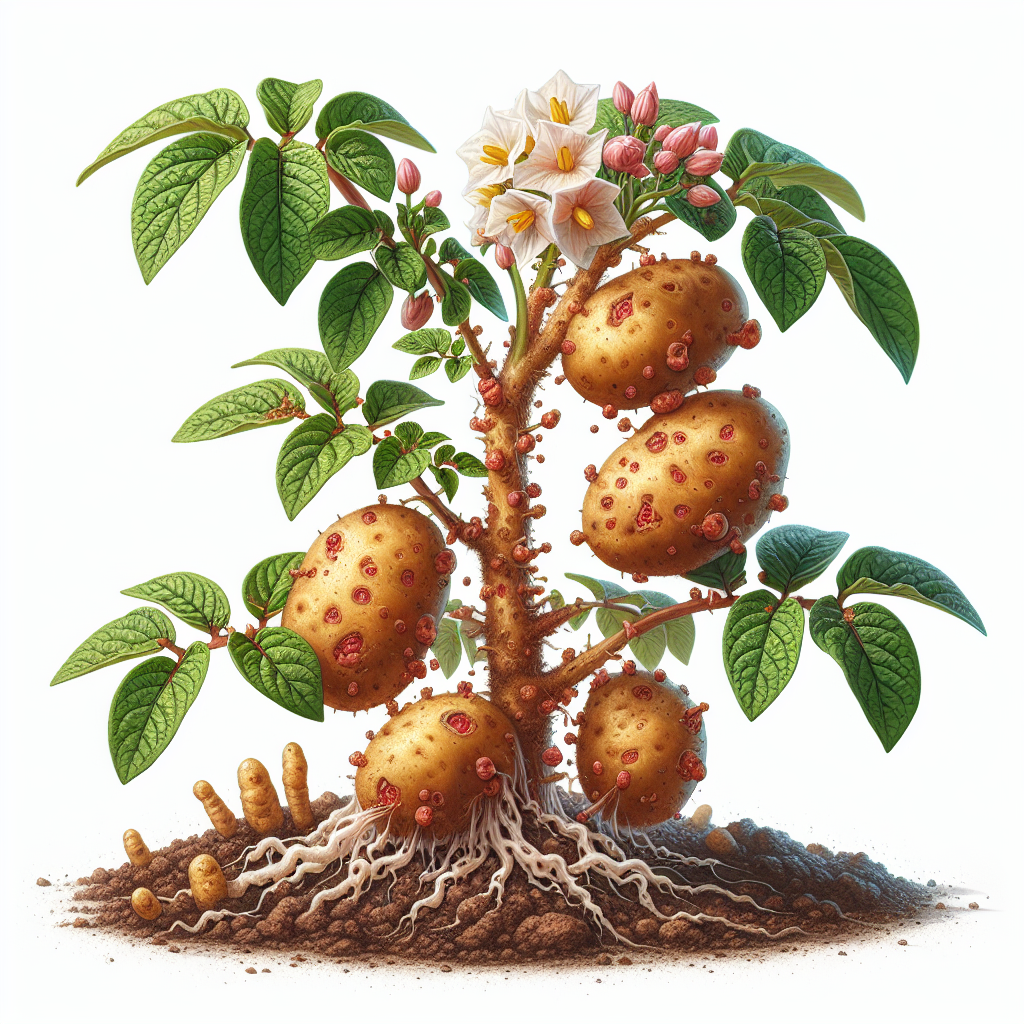
Introduction to Rhizoctonia Canker
Rhizoctonia Canker, caused by the soilborne fungus Rhizoctonia solani, represents one of the most challenging diseases in modern agriculture, particularly in warm, humid environments. This pathogen attacks the basal regions of plants, forming sunken, necrotic lesions or cankers that disrupt vascular tissue, leading to rapid plant decline and significant yield losses. Unlike foliar diseases, Rhizoctonia Canker targets the crown, stem base, and roots, making it insidious and often undetected until irreversible damage occurs.
First identified in the early 20th century, R. solani is a complex species with numerous anastomosis groups (AGs), each adapted to specific hosts and conditions. Anastomosis Group 2-2 is notorious for affecting potato and other solanaceous crops, while AG-4 impacts a broader range including vegetables and ornamentals. The disease is ubiquitous in agricultural soils worldwide, from tropical plantations to temperate fields, costing farmers millions annually in lost production.
Understanding Rhizoctonia Canker is crucial for sustainable farming. It spreads via infected soil, plant debris, and contaminated tools or seedlings, persisting for years as dormant sclerotia—hard, survival structures resembling mustard seeds. Early intervention through cultural practices and organic controls can mitigate outbreaks, preserving crop health and profitability. This definitive guide equips growers with professional-grade diagnostics, management plans, and prevention tactics to combat this resilient foe. For broader context on related pathogens, see the Rhizoctonia wiki page.
Identifying Symptoms & Damage
Accurate identification of Rhizoctonia Canker hinges on recognizing its distinctive symptoms, which manifest primarily at the soil line. Initial signs include water-soaked lesions on the lower stem or crown, rapidly evolving into sunken, reddish-brown to dark brown cankers with a characteristic dry, cracked appearance. Unlike bacterial infections, these lesions lack oozing gum and feature fine, white mycelial growth under humid conditions, often described as 'web-like' or 'cobwebby.'
Affected plants exhibit stunting, yellowing of lower leaves, and wilting during the day, mimicking drought stress. In advanced stages, cankers girdle the stem, interrupting water and nutrient flow, leading to collapse. Roots may show dark rot with sparse feeder roots, and sclerotia (0.5-2 mm, tan to brown) are often visible on infected tissue. Cross-sections reveal brown discoloration of vascular bundles, distinguishing it from Phytophthora rots, which are softer and more watery.
Damage severity varies by crop and environment. In tomato, cankers cause fruiting stems to drop, reducing marketable yield by up to 50%. Potatoes develop black scurf-like sclerotia on tubers, rendering them unmarketable. Seedlings suffer 'damping-off,' with hypocotyls snapping at soil level. Secondary invaders like root-knot nematodes exacerbate damage, creating entry points. Diagnostic confirmation involves lab culturing on potato dextrose agar, where brick-red pigmentation confirms R. solani. Field scouting at 7-10 day intervals during warm weather is essential for timely detection.
Lifecycle and Progression of Rhizoctonia Canker
The lifecycle of Rhizoctonia solani is adapted for long-term soil survival and opportunistic infection. Primary inoculum consists of sclerotia, which endure desiccation, flooding, and burial up to 10 cm deep for 3-5 years. Under favorable conditions (soil temps 20-35°C, moisture >60%), sclerotia germinate myceliogenically, producing hyphae that infect wounded or succulent tissues.
Infection progresses rapidly: hyphae penetrate via natural openings or wounds, colonizing cortex and vascular tissues within 48 hours. Optimal infection occurs at soil depths of 2-5 cm, where oxygen and moisture align. During host colonization, the fungus produces enzymes like cellulases and pectinases, dissolving cell walls and forming cankers. As plants senesce, new sclerotia form on dead tissue, completing the cycle.
Progression is temperature-dependent: at 25-30°C, symptoms appear in 3-5 days; cooler temps slow it to weeks. In perennials like avocado, cankers expand girdlingly over seasons. Airborne basidiospores from teleomorph Thanatephorus cucumeris play a minor role, mainly in teleomorph formation under specific conditions. Crop rotation disrupts the cycle, as sclerotia require host proximity. Understanding this polycyclic nature underscores the need for integrated management targeting all stages. Check out Soil Health Mastery: 5 Proven Strategies for Small Farms to Build Fertile Ground Without Breaking the Bank for soil-focused prevention.
Environmental Triggers & Risk Factors
Rhizoctonia Canker flourishes under specific environmental cues, primarily warm (25-35°C) and moist soils with neutral to slightly acidic pH (6.0-7.0). Compaction reduces aeration, favoring anaerobic-tolerant hyphae, while excessive nitrogen promotes succulent growth susceptible to infection. High residue from previous crops like corn or soybeans harbors sclerotia, amplifying risk.
Key triggers include overwatering, poor drainage, and mechanical injury from cultivation near harvest. In greenhouses, high humidity (>80%) and close plant spacing accelerate spread. Acidic amendments like peat can suppress via pH shift, but overuse risks other issues like Pythium. Crop-specific risks: solanaceous rotations increase AG-3 prevalence; tropical perennials like mango suffer in monsoon seasons.
Risk assessment involves soil testing for sclerotia (wet sieving) and monitoring weather—outbreaks spike post-rainy periods. Acid-loving crops like blueberry are less affected due to pH mismatch. Climate change extends favorable windows, demanding vigilant monitoring.
Organic Control & Treatment Plans
Organic management of Rhizoctonia Canker emphasizes cultural, biological, and physical tactics, avoiding synthetic fungicides. Cultural Controls: Implement 3-4 year rotations with non-hosts like grasses or onion family crops. Hill soil around stems to promote suberization, reducing infection sites. Solarization—covering moist soil with plastic for 4-6 weeks in summer—kills 70-90% of sclerotia via heat (45-50°C).
Biological Agents: Trichoderma spp. (e.g., T. harzianum) antagonize R. solani via mycoparasitism; apply as seed treatments or drenches (10^9 CFU/g). Bacillus subtilis and Pseudomonas fluorescens suppress via antibiotics and competition. Mustard biofumigants release isothiocyanates toxic to sclerotia during cover cropping.
Treatment Plans: For seedlings, use cornmeal drench (1 lb/1000 sq ft) to stimulate native Trichoderma. Remove and destroy infected plants promptly, avoiding composting. Organic amendments like composted manure (20 tons/ha) enhance microbial diversity, reducing pathogen dominance. Foliar biostimulants with silicon strengthen cell walls. In severe cases, integrate multiple tactics: solarize fields pre-planting, inoculate with Trichoderma, and maintain 12-inch row spacing.
Monitor efficacy via trap crops or bioassays. Success rates reach 60-80% with consistent application, outperforming single measures.
Preventing Rhizoctonia Canker in the Future
Prevention is the cornerstone of Rhizoctonia Canker management, focusing on excluding inoculum and fortifying plant defenses. Start with certified, disease-free seed and transplants; hot water treat bulbs at 48°C for 30 min. Deep plow (15-20 cm) buries sclerotia beyond germination depth.
Enhance soil health with cover crops like sudangrass, which biofumigates naturally. Maintain optimal fertility—avoid excess N (>150 kg/ha)—and ensure drainage via raised beds or tiling. Sanitize tools with 10% bleach between uses. Resistant varieties, such as 'Superior' potato or 'Mountain Merit' tomato, reduce incidence by 40%.
Long-term: soil solarization every 2-3 years, integrated with beneficial microbes. Scout weekly during risk periods, using apps for weather-triggered alerts. Educate workers on hygiene. These IPM strategies can prevent 90% of outbreaks, ensuring sustainable yields.
Crops Most Affected by Rhizoctonia Canker
Rhizoctonia Canker strikes a diverse array of crops, with solanaceous and root vegetables most vulnerable. Primary hosts include potato (black scurf, stem canker), tomato (crown rot), eggplant, and bell pepper. Turfgrasses suffer brown patch, while beets and radishes show root lesions.
Field crops like cotton, soybeans, and corn face seedling blight. Perennials such as turf and ornamentals are prone in nurseries. Tropicals like ginger and turmeric report soft rots. Lesser-known impacts occur in rice (sheath blight) and legumes. Host range exceeds 200 species, underscoring broad-spectrum prevention needs.