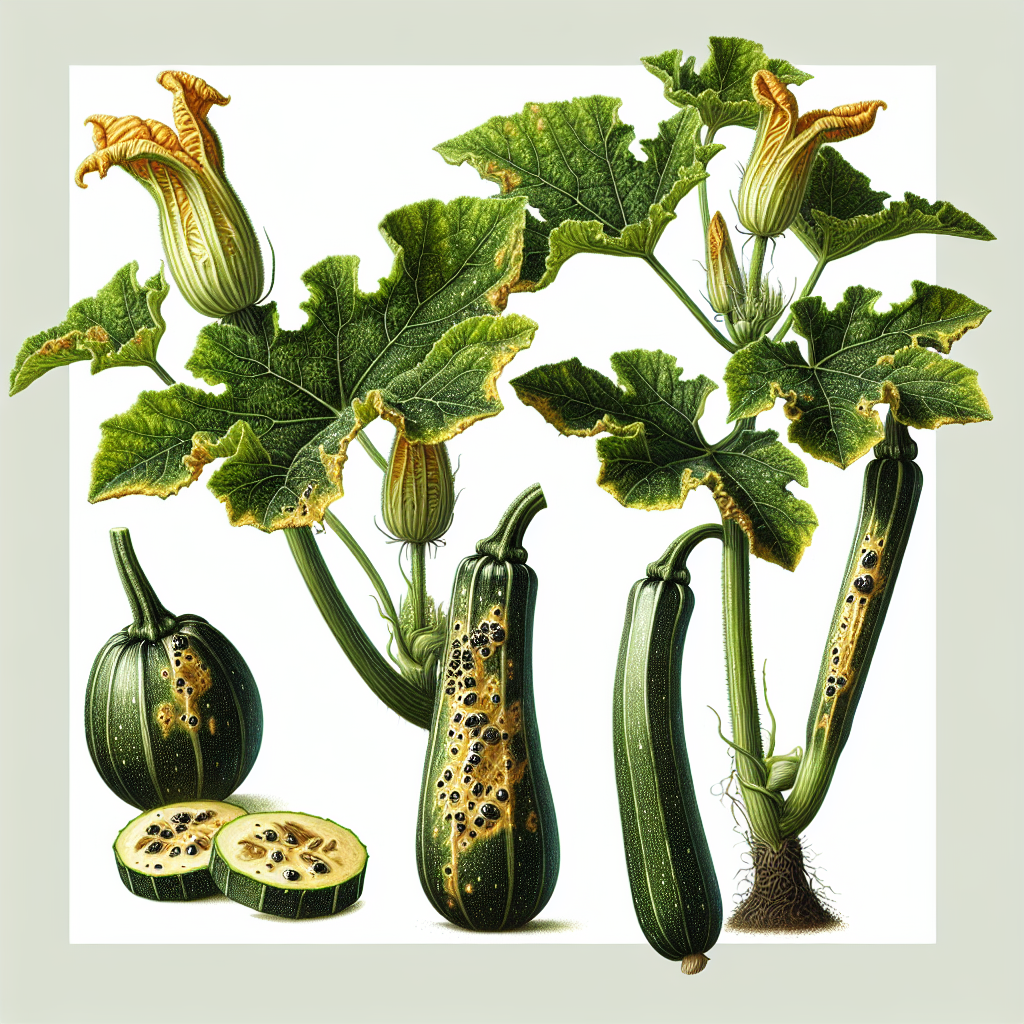
Introduction to Phomopsis blight
Phomopsis blight, caused by fungi in the Diaporthe and Phomopsis genera, is a widespread disease that devastates crops in the Cucurbitaceae family, including cucumbers, squash, pumpkins, and watermelons, as well as eggplant, peppers, and grapes. This pathogen enters through wounds or natural openings, producing dark cankers on stems, spots on leaves, and rot on fruits, often leading to plant death and up to 50-100% yield loss in severe outbreaks. First identified in the early 20th century on cucurbits, Phomopsis blight has become a major concern for organic and conventional growers alike due to its persistence in crop residue and ability to survive harsh winters as pycnidia.
Understanding Phomopsis blight is crucial for sustainable agriculture, especially in humid regions where prolonged leaf wetness exacerbates spread. The disease mimics other blights like Phytophthora blight or Alternaria blight, but distinctive black pycnidia in cankers confirm diagnosis. Early detection and integrated management can protect yields, making this guide essential for farmers growing susceptible crops. For more on AI-driven disease identification, check Why Misidentifying Plants Costs Small Farms Thousands - And How AI Camera Diagnosis Fixes It Fast.
Identifying Symptoms & Damage
Phomopsis blight symptoms appear 7-14 days after infection, starting with small, water-soaked lesions on leaves that expand into irregular brown spots with yellow halos. On stems, elongated black cankers form, often with tiny black pustules (pycnidia) oozing spores in wet weather—the hallmark diagnostic feature. Fruit infections cause circular, sunken brown rots with black pycnidia, rendering produce unmarketable.
In cucurbits like zucchini and cucumber, vines wilt from girdling cankers, leading to sudden collapse. On squash, cotyledons show large necrotic spots, causing high seedling mortality. Grapevines exhibit cane lesions and leaf spots, weakening spurs and reducing bud fruitfulness. Differentiate from anthracnose by the absence of pink spore masses and from powdery mildew by lack of white powder.
Damage is most severe on young tissues; vines may die back 1-2 feet from tips. In epidemics, entire fields collapse, with losses amplified by secondary fruit rots. Scout weekly during wet periods, using a hand lens to spot pycnidia. Lab confirmation via culture or PCR ensures accurate ID, preventing misapplication of controls.
Lifecycle and Progression of Phomopsis blight
Phomopsis spp. overwinter as pycnidia in infected plant debris, releasing pycnidiospores in spring rain. These splash onto lower leaves, germinating in 6-12 hours at 77-86°F (25-30°C) with >12 hours leaf wetness. Hyphae penetrate stomata or wounds, forming alpha conidia internally; beta conidia form later for distant spread via wind/rain.
Primary infections occur on cotyledons and lower leaves 2-4 weeks post-planting. Lesions expand, producing secondary pycnidia. Disease progresses upward as spores splash to crowns and fruits. Peak sporulation aligns with canopy closure and frequent rains. In pumpkin fields, a single cycle can infect 20-50% of vines within 3 weeks.
Sexual ascospores (from pseudothecia) extend the lifecycle in debris, maturing mid-summer. One lesion produces millions of spores over weeks. Hot, dry periods slow spread, but latent infections resume with rain. Crop rotation disrupts this cycle, as the fungus survives 2+ years in soil.
Environmental Triggers & Risk Factors
Phomopsis blight explodes in warm (75-85°F), humid conditions with >10 hours nightly leaf wetness. Overhead irrigation, dense canopies, and poor airflow are prime triggers. High nitrogen fertility promotes succulent growth, enhancing susceptibility. Acidic soils (pH <6.0) and compacted fields stress plants, increasing infection.
Risk spikes after hail, wind, or mechanical injury, providing entry points. In the U.S. Midwest and Southeast, July-August rains drive epidemics in cucurbits. Susceptible varieties like older cantaloupe cultivars amplify damage. Co-infection with downy mildew or cucumber beetles worsens outcomes. For weather insights, see Why 80% of Small Farms Battle Weather Disasters - And How Hyper-Local AI Forecasts Can Save Your Harvest—wait, no, use available. Monitor forecasts; avoid planting in high-risk zones.
Organic Control & Treatment Plans
Cultural Controls: Remove and destroy infected debris post-harvest; rotate with non-hosts like onion or lettuce for 2-3 years. Space plants 3-4 ft apart for airflow; avoid overhead watering, using drip irrigation instead. Prune lower leaves at flowering.
Resistant Varieties: Plant resistant hybrids like 'Pride of Austin' pumpkin or 'Gazelle' cucumber. For eggplant, choose 'Listada de Gandia'.
Organic Fungicides: Apply copper hydroxide (e.g., Cueva) or OMRI-listed sulfur at 7-10 day intervals from vine-run stage. Serenade (Bacillus subtilis) or Regalia (Reynoutria sachalinensis) boosts plant defenses; rotate to prevent resistance. Timing: Start at first symptoms or 14 days pre-bloom.
Biologicals: Trichoderma virens (RootShield) suppresses soil inoculum. Companion plant with marigold to deter vectors.
Integrated Plan: Scout weekly; apply at 5% incidence. Post-rain sprays within 48 hours. In severe cases, rogue infected plants. Yields recover 70-90% with timely action.
Preventing Phomopsis blight in the Future
Prevention centers on sanitation and site prep. Till fields post-harvest to bury debris; cover with tarps or flame-kill residue. Use disease-free seed treated with hot water (122°F for 25 min) or biofumigants. Mulch with straw to reduce splash.
Soil solarization in summer kills surface inoculum. Select well-drained sites; amend with compost for balanced nutrition. Monitor with sticky traps for spore spread. For Phomopsis blight and fruit rot, integrate cover crops like clover to suppress pathogens.
Long-term: Breed resistant lines; track via apps. Annual rotation reduces inoculum by 90%. Educate crews on hygiene—no tools between fields without disinfection.
Crops Most Affected by Phomopsis blight
Primary hosts: Cucurbits—cucumber, squash, pumpkin, zucchini, watermelon, cantaloupe. Also eggplant, bell pepper, grapes, sunflower. Secondary: soybeans, raspberry.
Cucurbits suffer most, with 100% vine kill possible. Grapes show cane blight; eggplant fruit rot hits markets hard. Avoid monocropping; diversify with tomato varieties less prone.