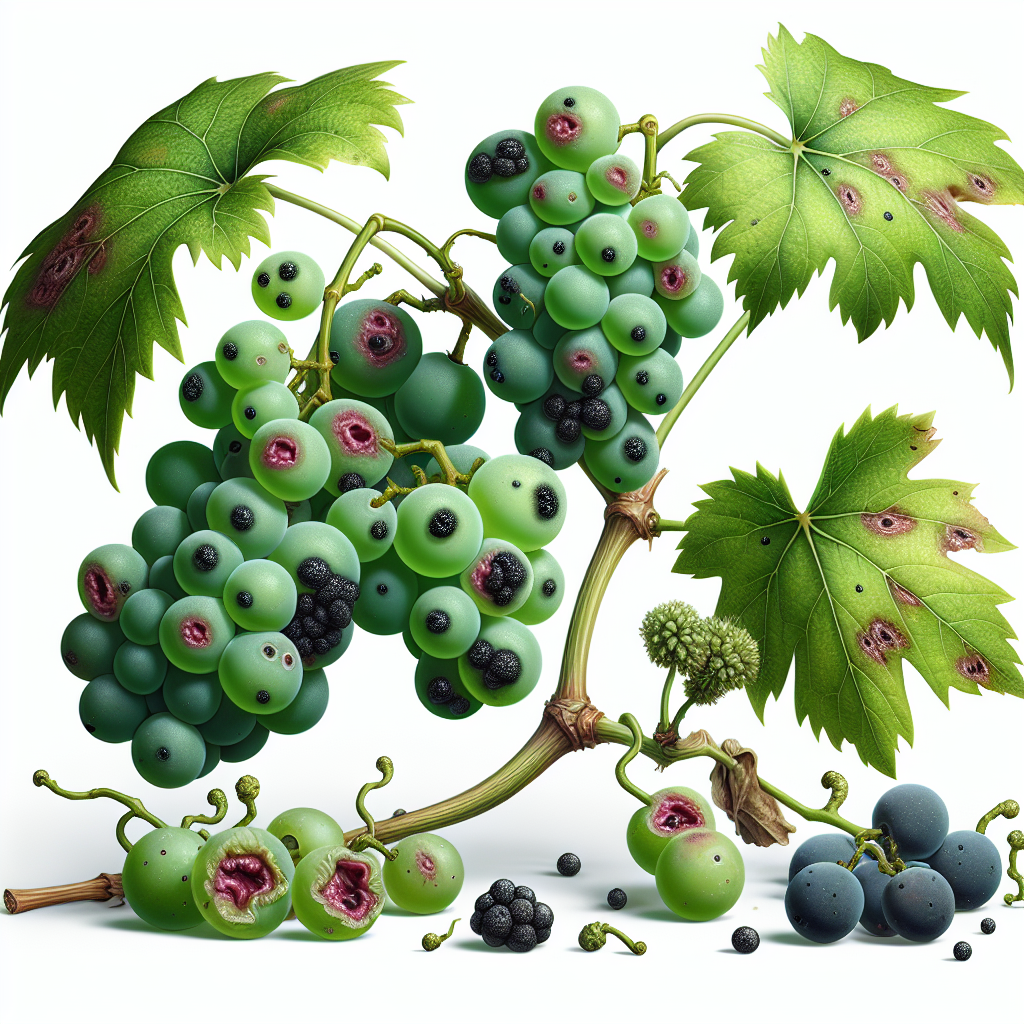
Introduction to Phomopsis blight and fruit rot
Phomopsis blight and fruit rot, caused by fungi in the genus Phomopsis (now classified under Diaporthe spp.), represents one of the most pervasive fungal diseases in fruit orchards and vineyards worldwide. This pathogen targets a wide array of crops, manifesting as blight on twigs, cankers, leaf spots, and severe fruit rot that renders produce unmarketable. First identified in the early 20th century on grapes, it has since spread to blueberries, cherries, peaches, and other stone fruits, costing growers millions annually in lost harvests.
The disease's dual nature—blighting above-ground tissues while rotting fruit—makes it particularly insidious. Spores germinate in prolonged leaf wetness, penetrating young tissues and causing rapid tissue death. In commercial settings, infection rates can exceed 50% during favorable conditions, emphasizing the need for vigilant monitoring and integrated management. This guide provides definitive diagnostic criteria, lifecycle insights, and proven organic strategies to safeguard your crops. Understanding Phomopsis is crucial for sustainable agriculture, especially as climate change extends wet seasons that favor its spread.
Identifying Symptoms & Damage
Early detection is key to limiting Phomopsis blight and fruit rot. Initial symptoms appear on young shoots and leaves as small, dark brown to black spots, often with a yellow halo. These lesions expand into irregular blights, causing shoot tips to blacken and die—a hallmark "shepherd's crook" curvature. On leaves, spots develop pale centers with black borders, sometimes surrounded by chlorotic halos, leading to defoliation.
Twig cankers form as sunken, elliptical lesions with dark borders, girdling branches and causing dieback. Fruit symptoms are devastating: small, sunken, dark brown spots appear near the stem end, expanding into leathery rots with black pycnidia (fungal fruiting bodies) visible as tiny black dots under magnification. Affected fruit shrivels, cracks, or mummifies, dropping prematurely. In severe cases, entire clusters rot, exuding amber gum in stone fruits.
Damage quantification reveals economic impacts: up to 80% fruit loss in grapes and 30-50% in blueberries. Differentiate from anthracnose (sunken lesions with pink spore masses) or Botrytis (gray fuzzy mold). Use a hand lens to confirm pycnidia or lab culture for definitive ID. Scouting every 7-10 days during wet periods prevents escalation.
Lifecycle and Progression of Phomopsis blight and fruit rot
Phomopsis spp. overwinter as pycnidia in infected twigs, cankers, and mummified fruit. In spring, rain or dew (over 9 hours at 10-30°C) releases alpha conidia, splashing to new growth. These germinate on wet tissues, forming appressoria to invade via wounds or stomata. Infections remain latent until summer heat triggers symptom expression.
Beta conidia form later in dry conditions, aiding long-distance spread by wind/rain. The pathogen produces perithecia for ascospores in fallen debris, completing the sexual cycle. Disease progression accelerates post-bloom: infections 2-4 weeks after petal fall cause fruit rot at veraison. A single cycle yields multiple infection courts, with peak sporulation during 20-25°C with leaf wetness.
Infection courts include green tissues up to 6 weeks old; older bark resists. Latent infections activate under stress, explaining epidemics in dense canopies. Lifecycle duration: 2-3 weeks per cycle, with 4-6 cycles per season. Cultural disruption of overwintering sites breaks the cycle effectively.
Environmental Triggers & Risk Factors
Phomopsis thrives in warm (15-28°C), humid climates with frequent rain or overhead irrigation creating leaf wetness >12 hours. High nitrogen fertility promotes succulent growth, ideal for infection. Dense canopies trap moisture, elevating risk—pruning opens airflow, reducing microclimates.
Susceptible varieties like Concord grapes or Jersey blueberries amplify damage. Poor sanitation leaves inoculum sources. Regional hotspots include the U.S. Northeast, Pacific Northwest, and humid tropics. Climate models predict increased incidence with wetter springs. Soil pH >7 or waterlogged roots stress plants, indirectly favoring Phomopsis via weakened defenses.
Risk assessment: Use disease forecasting models integrating temperature, humidity, and rain. Thresholds: 2% shoot tips blighted signals action. Companion issues like powdery mildew compound losses. Check out this Fall Companion Planting Guide for holistic prevention.
Organic Control & Treatment Plans
Organic management emphasizes prevention but includes curative options. Sanitation first: Prune infected twigs 10-15 cm below lesions in dormancy, destroy debris (burn/chip). Remove mummies pre-bloom. Resistant varieties: Select Vitis labruscana hybrids or Bluecrop blueberries.
Biologicals: Apply Bacillus subtilis or Trichoderma spp. pre-bloom; they colonize tissues, outcompeting Phomopsis. Biopesticides: Copper hydroxide (fixed copper, 1-2 kg/ha) or potassium bicarbonate at 3-7 day intervals during high risk. Serenade (QST 713) provides systemic resistance.
Treatment timeline:
- Dormant: 3-5% Bordeaux mixture.
- Pre-bloom: Biothrive + copper.
- Post-bloom (2x): Alternate biofungicides.
- Fruit set: Every 7-10 days if wet.
Integrate with grape or blueberry IPM. Neem oil suppresses sporulation. Monitor with sticky traps for vectors. Yields recover 20-40% with adherence. Avoid resistance via rotation.
Preventing Phomopsis blight and fruit rot in the Future
Long-term prevention builds resilient systems. Cultural practices: Space plants for 20-30% light penetration; drip irrigate to minimize wetness. Fertilize balanced (avoid excess N). Mulch suppresses splash dispersal.
Resistant rootstocks/scions: Use Geneva series for grapes. Timing: Delay bloom via late pruning. Monitoring: Weekly scouts; apps track weather risks. Soil health: Boost microbiomes with compost teas, enhancing biocontrol.
Rotate crops; interplant marigold for nematode suppression, indirectly aiding. Annual audits: <5% inoculum threshold. Educate crews on hygiene. Future-proof with climate-resilient cultivars. Success rates: 70-90% reduction in certified organic orchards.
Crops Most Affected by Phomopsis blight and fruit rot
Phomopsis blight and fruit rot strikes temperate fruits hardest. Grapes (Vitis vinifera/labruscana): 20-80% losses; Concord most susceptible. Blueberries (Vaccinium corymbosum): Fruit rot halves yields. Cherries (Bing Cherry): Twig blight, fruit lesions.
Peaches/plums (Elberta Peach, Santa Rosa Plum): Cankers, gummosis. Apples/pears: Minor but increasing. Eggplant (Black Beauty Eggplant) and tomato in vegetables. Raspberries, strawberries occasionally. Global impact: $100M+ yearly. Focus scouting on these.
(Word count: 1428)