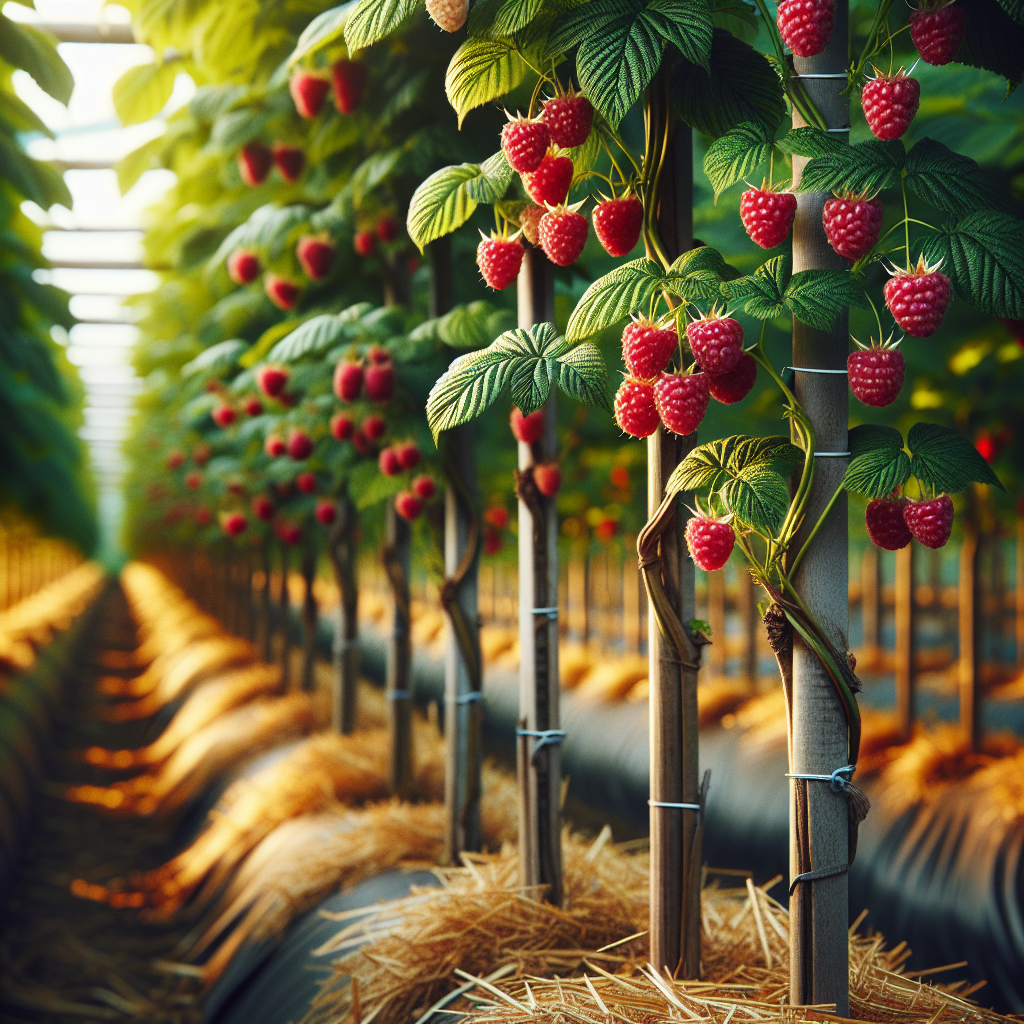
Introduction to Heritage Raspberry
Few raspberry cultivars have earned the long-standing reputation of 'Heritage' for consistency, adaptability, and dependable production. Released by the New York State Agricultural Experiment Station in Geneva in 1969, this red raspberry became a benchmark everbearing type for small farms, pick-your-own plantings, and home gardens. In practical terms, it is more accurately described as a primocane-fruiting cultivar: it produces its main crop on current-season canes, usually from late summer into autumn, which simplifies pruning and disease management.
The variety is known for upright growth, medium-sized deep red berries, firm texture compared with many older raspberries, and a balanced flavor that improves noticeably when fruit is allowed to fully color before picking. Heritage is not usually the largest-fruited modern cultivar, but growers continue to plant it because it tolerates a wide range of conditions, handles winter cold well, and remains productive even where management is not perfect. For growers wanting broader context on cane fruit culture, see the general Raspberry guide.
Heritage is particularly useful where growers want an extended harvest rather than one short flush. In cool temperate climates, the fall crop can be excellent, often beginning after day length shortens and nights cool. In regions with very hot summers, fruit quality is best where plants receive full morning sun and good soil moisture without waterlogging. Because the cultivar is vigorous and sucker-producing, site choice and row design matter from the start.
Botanical Profile of Heritage Raspberry
This cultivar belongs to the rose family, Rosaceae, and to the species Rubus idaeus, the European red raspberry, though modern raspberries often have complex breeding backgrounds. Heritage grows as a perennial root system with biennial canes. The crown and roots live for many years, but individual canes follow a two-year cycle unless removed earlier by management.
Primocanes emerge from the crown and roots in spring and early summer. In most summer-bearing raspberries, these first-year canes stay vegetative and fruit the following year. Heritage behaves differently: the upper portions of the primocanes initiate flowers and fruit in late summer through fall of the same year. If those canes are left standing through winter, their lower portions may produce a smaller floricane crop the following summer. Many commercial growers do not use this two-crop system because the single fall-crop system is simpler and often cleaner.
Canes are upright to slightly arching, moderately thorny, and commonly reach 4 to 6 feet (1.2 to 1.8 m), sometimes taller in fertile soils. Leaves are compound, usually with three to five leaflets, medium green above and paler below. Flowers are white, insect-pollinated, and self-fertile, so a single planting can set fruit without a second cultivar. Even so, pollinator activity improves berry size and drupelet fill.
The raspberry fruit is an aggregate of many small drupelets arranged around a central receptacle. When ripe, the berry separates from the receptacle and is hollow inside. Heritage fruit is typically medium-sized, round-conic, dark red at full ripeness, and moderately firm. That firmness is one reason it has been valued for local sales and short transport. Flavor is pleasant and classic, but sugar accumulation is sensitive to sunlight, crop load, and water balance.
Compared with some newer primocane cultivars, Heritage may ripen slightly later and can produce smaller berries under heat or nutrient stress. However, it compensates with durability, winter hardiness, and strong suckering that makes row establishment relatively easy.
Soil, pH, and Climate Requirements for Heritage Raspberry
This cultivar performs best in deep, fertile, well-drained loam with high organic matter and a slightly acidic reaction. The ideal soil pH is 5.8 to 6.5. It will tolerate a little more acidity, down to about 5.5, but nutrient availability becomes less balanced below that point, especially for calcium and magnesium. Above pH 6.8, iron and manganese deficiencies become more likely, particularly in calcareous soils.
Drainage is non-negotiable. Heritage tolerates cool soils better than many fruit crops, but it does not tolerate saturated root zones for long. If water stands for more than 24 to 48 hours after heavy rain, root stress, Phytophthora root rot, and weak cane growth become much more likely. In heavy clay, raised beds 8 to 12 inches high are strongly recommended. The target is a soil that stays evenly moist but still contains air-filled pore space.
A practical soil moisture goal is roughly 60 to 80% of field capacity during active growth and fruiting. For growers without instruments, that means the soil 3 to 6 inches deep should feel cool and slightly damp, forming a weak ball in the hand but not releasing water when squeezed. If the soil is dusty at root depth by midday, plants are already under stress. If it feels sticky, smells sour, or stays glossy-wet between irrigations, the planting is too wet.
Organic matter in the 4 to 6% range is excellent for raspberries. Well-finished compost improves water holding in sandy soils and structure in heavier soils. Avoid fresh manure before planting because excess soluble salts and nitrogen can damage roots and stimulate overly lush, disease-prone canes.
Climatically, Heritage is best suited to temperate regions with cold winters and moderate summers. It is notably winter hardy, often surviving conditions that challenge less robust primocane varieties. It generally performs well in USDA zones 4 through 8, though exact success depends on summer heat, humidity, and irrigation quality. The ideal summer temperature range for vegetative growth is about 65 to 80°F (18 to 27°C). Fruit set and quality are best when late-season day temperatures are warm but nights cool. Sustained temperatures above 90°F (32°C), especially with low humidity and dry soil, can reduce berry size, increase sunscald, and shorten cane internodes.
Heritage needs full sun for best yields, generally at least 6 to 8 hours daily. In hot inland climates, slight afternoon shade can reduce heat stress, but too much shade lowers sugar levels and encourages cane diseases. Air movement is equally important. Avoid frost pockets and tightly enclosed garden corners where dew lingers, because prolonged leaf wetness favors Anthracnose, Spur blight, and Botrytis.
If you are improving the site before planting, practical soil-building strategies are similar to those used for many perennial fruit crops; see soil health tips.
Step-by-Step Planting & Propagation
Start with certified disease-free nursery stock. This is especially important with raspberries because viruses, crown gall, and root pathogens are easily introduced and difficult to eliminate once established. Buy dormant bare-root canes or container plants from reputable suppliers rather than transplanting unknown roadside suckers.
Choose a site where brambles, tomatoes, potatoes, peppers, or eggplants have not grown recently, ideally for at least 3 to 5 years. These crops can host Verticillium wilt and other soilborne problems. Good crop history reduces future losses more than any spray program.
Prepare the ground several weeks before planting. Remove perennial weeds thoroughly, especially bindweed, quackgrass, dock, and thistle. Raspberries compete poorly during establishment. Incorporate compost if needed, but do not over-enrich. A pre-plant soil test should guide phosphorus, potassium, calcium, and magnesium applications.
For row culture, space rows 8 to 10 feet apart if using equipment, or 6 to 8 feet apart in smaller plantings. Space plants 18 to 24 inches apart within the row. Heritage suckers freely and will fill into a hedgerow; the long-term goal is usually a fruiting row 12 to 18 inches wide. Wider rows reduce air flow and make harvesting difficult.
Plant in early spring as soon as the soil can be worked, while plants are still dormant. Set bare-root plants with roots spread naturally, not bent upward. Place the crown at the same depth it grew in the nursery, or only slightly deeper in light soil. Planting too deep can weaken emergence; too shallow exposes roots to drying.
After planting, water thoroughly to settle soil around the roots. Cut canes back to about 6 to 8 inches if they were not already trimmed. This reduces transpiration and encourages strong new cane emergence from the crown.
Install a support system early. Heritage is more upright than some raspberries, but fruit-laden canes benefit from a simple T-trellis or a two-wire hedgerow system. Wires set at about 30 and 48 inches help keep canes off pathways, improve sunlight penetration, and reduce disease by improving air circulation.
Mulch immediately after planting with 2 to 4 inches of clean straw, shredded leaves, pine needles, or weed-free wood chips aged enough not to rob nitrogen at the surface. Keep mulch a few inches away from the cane bases to prevent crown rot and rodent shelter. Mulch stabilizes moisture, suppresses weeds, and protects shallow feeder roots.
Propagation is usually by suckers, tip layering is less relevant than in blackberries, and crown division is occasionally used. For home propagation, select vigorous disease-free suckers from outside the mother row in late winter or very early spring and transplant while dormant. Commercially, however, replanting from your own patch is risky if virus status is unknown. Tissue-cultured or certified stock is preferred for new plantings.
Care & Maintenance regimes for Heritage Raspberry
Water management determines whether Heritage produces average berries or excellent berries. During establishment, provide about 1 to 1.5 inches of water per week from rain or irrigation, split into two applications in sandy soil. During flowering and fruit fill, many plantings require 1.5 to 2 inches weekly, especially in warm weather. Drip irrigation is ideal because it keeps foliage dry. A mature planting often benefits from 0.5 to 0.75 gallons per linear foot of row every 2 to 3 days in moderate weather, with more in sandy soils or heat.
Signs of underwatering include dull bluish-green foliage, leaf edge curl during the hottest part of the day that does not recover by evening, crumbly small berries, and reduced primocane height. Signs of overwatering include yellowing lower leaves, soft weak cane growth, persistent wet soil, algae or moss near emitters, and reduced root vigor. Chronic excess moisture can mimic nutrient deficiency because stressed roots cannot take up nitrogen efficiently.
Nitrogen should be applied carefully. Heritage responds well to moderate fertility, but excess nitrogen creates tall lush canes with softer tissue and lower fruit quality. In fertile garden soil, 40 to 60 pounds actual nitrogen per acre equivalent may be enough annually; in home terms, that often means a light spring application of a balanced berry fertilizer or composted poultry-based product, followed by a small sidedress once strong cane growth begins. Stop heavy nitrogen applications by midsummer so fall fruit can ripen and canes harden properly.
Potassium is important for fruit firmness, winter hardiness, and disease tolerance. Deficiency can show as marginal leaf scorch on older leaves and poor berry quality. Phosphorus is less commonly needed if soil tests are adequate. Calcium, magnesium, boron, and zinc can all influence cane health and fruit set, so annual observation and periodic soil or tissue testing are worthwhile in serious production.
Pruning depends on your production system:
- For the simplest and often best-quality system, mow or cut all canes to ground level in late winter before spring growth begins. This produces one fall crop on new primocanes. It is the preferred system for most growers because it removes overwintering disease inoculum and eliminates the need to distinguish cane ages.
- For a double-crop system, keep healthy primocanes after the fall crop. The following summer, the lower cane portions fruit as floricanes. After that summer harvest, remove those spent floricanes while retaining new primocanes for the next fall crop. This system is more labor-intensive and often gives a lighter fall crop because cane resources are divided.
Thin rows each year. Even with annual mowing, too many primocanes can emerge. Retain a row width of about 12 to 18 inches and remove suckers spreading into aisles. Within that row, a moderate density of strong canes is better than a thicket of weak ones. Dense stands increase humidity, reduce spray penetration if treatments are needed, and lower berry sweetness.
Weed control must be steady, not occasional. Raspberry roots are shallow and spread laterally, so hoeing deeply can damage them. Hand weeding, mulching, landscape fabric in pathways, and shallow mechanical cultivation are safer options. Keep the strip immediately around the crowns weed-free, especially during the first two years.
In cold climates, winter protection is usually minimal because Heritage is hardy, but exposed sites with desiccating wind benefit from snow retention, windbreaks, or mulching around the root zone. In hot climates, heat mitigation matters more: maintain mulch, prevent afternoon drought stress, and avoid reflected heat from walls or gravel.
Pests, Diseases & Organic Management
Heritage is sturdy, but no raspberry is trouble-free. The most common issues are cane diseases, root rots in wet soils, sap-feeding insects, and fruit contamination from poor sanitation.
Aphids can cluster on new growth and are important not only for sap loss but as vectors of raspberry viruses. Strong water sprays, encouragement of beneficial insects, and pruning out heavily infested tips are effective early measures. Avoid over-fertilizing with nitrogen, which makes growth more attractive to Aphids. Yarrow and Thyme nearby can support beneficial insects, though they are not substitutes for sanitation.
Japanese beetles, where present, may skeletonize leaves and feed on ripe fruit. Hand-picking in the morning, exclusion netting on small plots, and reducing nearby unmanaged breeding habitat can help. Spotted wing drosophila is a major late-season pest because it lays eggs in ripening fruit, and Heritage's autumn crop can coincide with peak pressure. Harvest frequently, cool fruit immediately, remove overripe berries, and use fine exclusion netting where practical. Sanitation is critical: fallen or soft fruit should not remain in the row.
Raspberry cane borer and Crown borer can weaken canes or crowns. Wilting tips with characteristic girdling may indicate cane borer; prune below the damage and destroy affected tissue. Crown borer problems are harder to manage and underscore the importance of clean planting stock and removal of declining plants.
Anthracnose causes small purplish lesions that become gray-centered on canes. Spur blight and Cane blight can also affect raspberries, especially in humid plantings with mechanical injury. Botrytis gray mold attacks flowers and fruit under wet conditions. Organic management starts with spacing, trellising, annual cane removal, mulch to reduce soil splash, and irrigation that avoids wetting foliage. Copper products or biological fungicides may have a place in organic systems, but they work best preventively and within a broader cultural program.
Phytophthora root rot is one of the most serious problems in poorly drained soil. Symptoms include weak stunted canes, yellowing, marginal leaf scorch, and patchy dieback, often in low areas. There is no practical cure once the site is badly infested. Improve drainage, use raised beds, and remove chronically affected plants.
Verticillium wilt causes cane decline, leaf yellowing, and vascular browning. Avoid planting after solanaceous crops and use clean sites. Viral complexes can cause crumbly fruit, mosaic patterns, poor vigor, and misshapen leaves. Since viruses are usually spread by infected stock or Aphids, prevention is the only realistic strategy: plant certified material and rogue suspicious plants quickly.
Birds are often the final major pest as fruit colors. Netting is the most reliable protection. Reflective devices may work briefly, but birds habituate fast.
Harvesting, Curing & Optimal Storage
Harvest begins when berries are fully colored, detach easily with a gentle tug, and have reached full flavor. Heritage often looks red before it is truly ready, so picking too early is a common mistake. Fully ripe berries deepen in color, become more aromatic, and separate cleanly from the receptacle without tearing.
Pick every 2 to 3 days in cool weather and daily in warm periods. Morning harvest after dew has dried but before midday heat is ideal. Wet-picked berries are more prone to Botrytis and shorter shelf life. Use shallow containers to avoid crushing; raspberries should never be stacked deeply immediately after picking.
There is no curing phase in the way onions or sweet potatoes are cured. Instead, the key postharvest step is rapid field heat removal. Cool fruit to 32 to 34°F (0 to 1°C) as soon as possible, ideally within an hour or two of harvest for premium quality. Relative humidity around 90 to 95% minimizes shrivel, but free moisture on berries should be avoided.
At room temperature, raspberries may hold only a day. Under refrigeration, Heritage generally stores 2 to 5 days depending on harvest maturity, handling, and disease pressure. For best quality, do not wash until just before use. If freezing, spread berries in a single layer on trays until firm, then pack into airtight freezer containers. This preserves individual fruit shape better than packing soft fresh berries directly.
For processing, slightly softer fully ripe fruit is excellent for jam, puree, syrup, and freezing. Fruit intended for transport should be harvested just-ripe rather than dead-ripe, but never underripe, because raspberry flavor does not improve substantially after picking.
Companion Planting for Heritage Raspberry
The most useful companions are those that improve pollinator presence, support beneficial insects, suppress weeds without overwhelming the root zone, or help keep pathways manageable. Clover is valuable in aisleways as a living groundcover because it reduces erosion, supports pollinators when managed properly, and can contribute some nitrogen cycling. Keep it mowed so it does not compete aggressively with raspberry crowns.
Thyme works well at row edges in smaller plantings where a low aromatic herb is wanted. It attracts beneficial insects, tolerates leaner edge soils, and does not cast shade on the canes. Yarrow is another strong choice because its umbel flowers draw predatory wasps, hoverflies, and other natural enemies that help with Aphids and small soft-bodied pests.
Garlic can be planted nearby, especially at bed ends or margins, where its narrow upright habit does not crowd canes. While garlic is not a magic pest repellent, it is compatible spatially and can make good use of the same general garden area without creating dense shade.
Avoid companions that are tall, greedy for moisture, or highly competitive in the root zone. Large brassicas, sprawling squash, aggressive mint, and heavy-feeding annuals can crowd the row and reduce airflow. Also avoid placing raspberries near wild brambles, which can harbor disease and insect reservoirs.
In professional systems, companion planting should never interfere with sanitation, picking access, or cane thinning. The best companion scheme is one that supports ecosystem function while preserving the clean, airy, accessible hedgerow that Heritage needs for consistent berry quality.