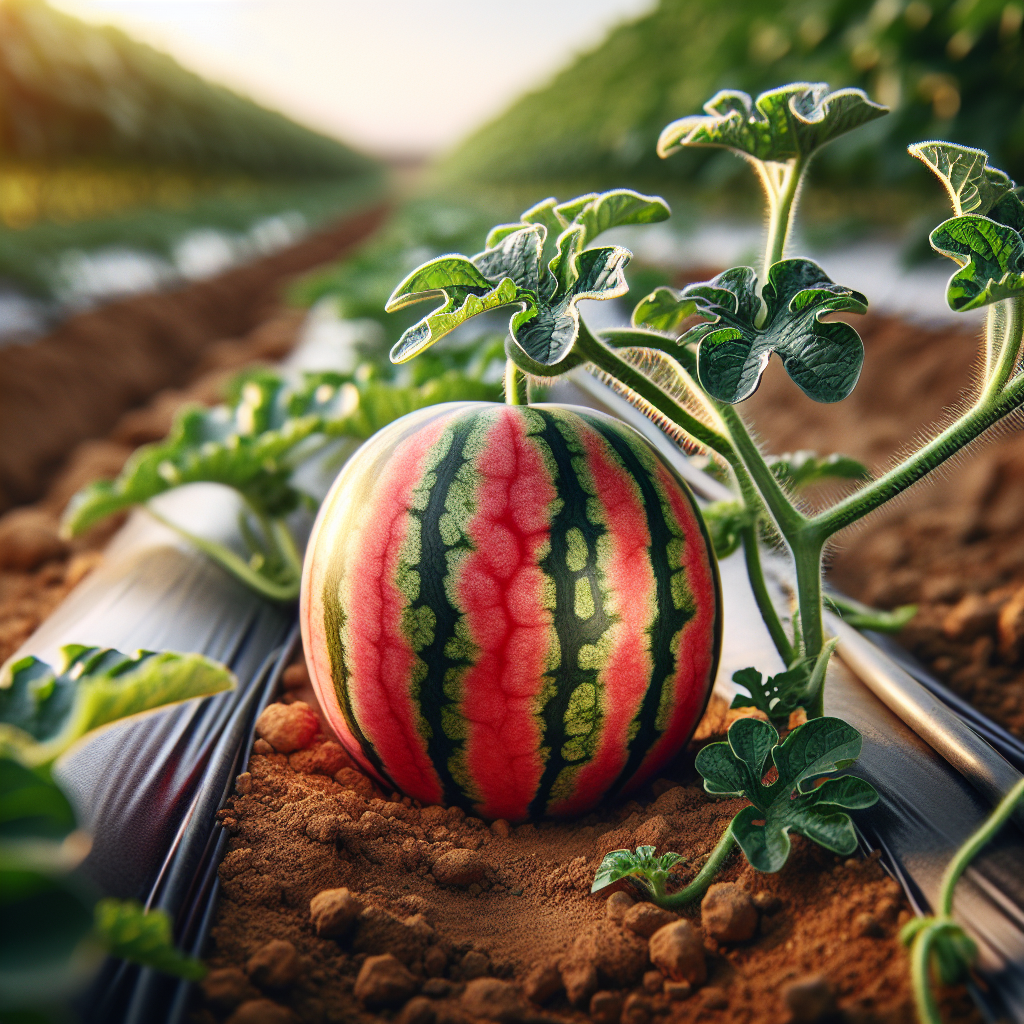
Introduction to Crimson Sweet Watermelon
A widely grown heirloom-style main-season watermelon, this variety became popular because it combines market-friendly appearance with dependable eating quality. Fruits are typically round to slightly oval, medium to large, commonly reaching 20 to 25 pounds under good management, though smaller or larger fruit is possible depending on plant spacing, fertility, and fruit load.
Its rind is light green with dark green striping, giving it the familiar classic watermelon look that many growers and buyers expect. The flesh is rich crimson red, crisp, and high in sugar when ripened under strong sunlight and steady heat. Compared with some smaller icebox types, it requires more space, more heat units, and a longer season, but rewards the grower with impressive fruit size and excellent flavor.
Crimson Sweet is often favored by home gardeners, market growers, and seed savers because it is open-pollinated rather than hybrid. That means seed can be saved from carefully isolated plantings with reasonable varietal stability. It is also known for some tolerance to Fusarium wilt relative to older susceptible melons, though tolerance is not the same as immunity.
For growers wanting a broader species overview, see our Watermelon guide. For broader production principles around fertility and structure, the ideas in soil health strategies are also useful when preparing cucurbit ground.
Botanical Profile of Crimson Sweet Watermelon
This crop belongs to the Cucurbitaceae family, the same family as cucumber, squash, and muskmelon. Botanically, it is a warm-season annual vine with a sprawling growth habit, coarse hairy stems, lobed leaves, tendrils, and separate male and female flowers borne on the same plant. That floral arrangement is called monoecious.
Male flowers usually appear first, often 7 to 14 days before female flowers. Female flowers can be recognized by the miniature swollen ovary behind the petals, which already resembles a tiny watermelon. Pollination is primarily insect-driven, especially by bees. Poor pollinator activity during flowering is one of the most common hidden causes of misshapen fruit, fruit abortion, or low fruit set.
Crimson Sweet generally matures in about 80 to 90 days from transplanting in warm conditions, or somewhat longer from direct sowing depending on soil temperature and early-season growth rate. Vines commonly spread 6 to 10 feet or more, so crowding quickly reduces airflow, increases disease pressure, and limits fruit sizing.
The fruit rind is moderately thick, which helps with shipping and handling compared with very thin-rinded dessert types. Flesh texture is firm-crisp rather than soft, making it desirable for fresh slicing. Seeded fruit is normal for this variety; mature seeds are typically dark brown to black. Because it is open-pollinated, genetic variation can be slightly broader than in highly uniform hybrids, but good seed stock still produces a fairly consistent crop.
Physiologically, watermelon is extremely responsive to heat accumulation. Growth is sluggish below 70°F (21°C), while ideal daytime temperatures usually fall between 80 and 95°F (27 to 35°C). Extended cool nights reduce vigor, delay flowering, and can flatten sugar development later in the season.
Soil, pH, and Climate Requirements for Crimson Sweet Watermelon
This variety performs best in loose, deep, well-drained sandy loam or loam with high biological activity and moderate water-holding capacity. Heavy clay is not automatically impossible, but it creates two major problems: slow spring warming and excess moisture around roots. Both can lead to root stress, slow establishment, and higher disease incidence.
Ideal soil pH is 6.0 to 6.8, with the sweet spot often around 6.3 to 6.6. Below pH 5.8, nutrient imbalances become more likely, especially with calcium, magnesium, and phosphorus availability. Above pH 7.2, micronutrient tie-up can appear, especially iron and manganese, producing pale young growth. A pre-plant soil test is strongly recommended because watermelon responds best when fertility is balanced rather than simply high.
The crop requires a frost-free season and warm soil. Seeds germinate best when soil temperatures are 80 to 95°F (27 to 35°C), though they may sprout more slowly at 70°F (21°C). If soil is below about 65°F (18°C), emergence becomes uneven and seedlings are more vulnerable to rot. Transplants should only be set out after danger of frost has passed and soil at planting depth is consistently above 70°F (21°C).
Full sun is essential. Aim for at least 8 hours of direct light, though 10 or more is preferable for maximum sugar accumulation. In cloudy or humid climates, reduce plant density slightly and prioritize airflow to offset fungal pressure.
Watermelon roots need oxygen as much as moisture. The best soil moisture condition is evenly moist but never saturated. As a practical field rule, the top 2 inches should be allowed to begin drying slightly between irrigations once vines are established, while moisture deeper in the root zone remains available. Waterlogged soil for even 24 to 48 hours can trigger yellowing, root decline, and a stall in vine growth. Signs of overwatering include dull bluish foliage, chlorotic lower leaves, slow growth despite adequate fertility, and fruit that develops bland flavor or cracks under fluctuating conditions.
Climate-wise, hot, relatively dry summers are ideal. High humidity is manageable but increases the risk of foliar disease, especially if leaves remain wet overnight. Wind exposure should be moderated during early establishment because young vines can be physically damaged or desiccated.
Step-by-Step Planting & Propagation
Start with a site that has not grown cucurbits in the previous 3 to 4 years if possible. Rotation reduces carryover of Fusarium wilt, Anthracnose, Gummy stem blight, and cucumber beetle pressure. Work in well-finished compost, but avoid excessive raw manure because it can push overly lush vine growth and delay fruit quality.
Prepare raised beds or mounded hills if drainage is less than ideal. Beds 6 to 8 inches high warm faster and shed excess water. Black plastic mulch is often highly beneficial in cooler regions because it raises soil temperature, suppresses weeds, and keeps fruit cleaner.
Direct sowing is preferred in very warm climates. Sow seeds 1 to 1.5 inches deep. In lighter sandy soils, the deeper end of that range is acceptable; in heavier soils, stay shallower. Plant 2 to 3 seeds per station and thin to the strongest seedling once true leaves appear.
For transplants, sow in biodegradable pots or large cells 3 to 4 weeks before field setting. Watermelon dislikes root disturbance, so avoid letting plants become root-bound. Transplant when they have 2 to 3 true leaves, not when oversized and tangled. Harden off for 5 to 7 days by gradually increasing outdoor exposure while protecting from chilling nights.
Spacing matters greatly. For home gardens, allow 6 to 8 feet between rows and 3 to 4 feet between plants in-row, or 6 feet between hills with 2 plants per hill. Commercial spacing varies, but the goal is to give each plant enough area to support 2 to 4 marketable fruits without severe competition.
At planting, irrigate thoroughly to settle soil around roots. If using drip irrigation, ensure moisture reaches at least 6 to 8 inches deep in the initial establishment phase. Shallow sprinkling encourages surface rooting and instability during heat.
A practical establishment sequence:
- Soil test and adjust pH several weeks or months before planting.
- Form beds or hills in full sun.
- Incorporate compost plus balanced pre-plant nutrients based on test results.
- Install drip lines before mulch if using plastic.
- Sow or transplant only into warm soil.
- Protect young plants with row cover until flowering if Cucumber beetles are common, then remove for pollination.
- Thin early so remaining plants do not compete.
If saving seed, isolate from other watermelon varieties to reduce cross-pollination. Separation distances for varietal purity can be substantial, especially where pollinator activity is high.
Care & Maintenance regimes for Crimson Sweet Watermelon
Early growth should emphasize rapid, stress-free vine establishment. During the first 3 weeks after emergence or transplanting, provide regular moisture so the root zone stays evenly damp to roughly 6 inches deep. A common target is about 1 inch of water per week early on, increasing to 1.5 to 2 inches during vigorous vine growth and fruit bulking, adjusted for rainfall, soil type, and temperature.
Drip irrigation is ideal because it keeps foliage dry and places water where roots can access it efficiently. In sandy soils, shorter but more frequent irrigation cycles are often necessary. In loam, deeper, less frequent irrigation is better. The key is to avoid extremes: drought stress during flowering and fruit set can cause blossom drop or small fruit; excessive water during ripening dilutes sugars and may cause splitting.
Fertility should support steady growth without forcing rampant vines at the expense of fruit. A moderate pre-plant application of phosphorus and potassium is valuable if soil tests indicate need. Nitrogen should be applied carefully. Too little causes pale leaves and poor canopy; too much causes oversized vines, delayed maturity, hollow flavor, and higher disease pressure. A split application works well: some nitrogen pre-plant, then a side-dress once vines begin to run, and a lighter follow-up near early fruit set if plants are not already excessively lush.
Leaf color is a useful field indicator. Healthy plants should be medium to deep green, not pale yellow-green and not unnaturally dark, soft, and rank. Internodes that become excessively long with huge leaves often suggest too much available nitrogen.
Weed management is most important during the first month. Once vines cover the ground, they shade many weeds out, but early competition can permanently reduce yield. Hand weeding, shallow hoeing, stale seedbed techniques, mulch, or plasticulture all work. Avoid deep cultivation near mature vines because watermelon roots spread widely and are easily damaged.
Pruning is generally unnecessary in field culture. However, in small gardens, redirecting vines to keep paths open is reasonable. Do not repeatedly lift and move mature vines, as this can break tendrils and disturb rooting nodes.
Fruit load management can improve size. If a plant sets many fruits early, some growers thin to the best 2 to 4 fruits per plant, especially where very large melons are desired. Leave the healthiest, most evenly shaped fruits on vigorous vines.
Pollination support is crucial. Encourage bees by avoiding insecticide sprays during bloom and by maintaining flowering habitat nearby. Poor pollination often produces fruits that start swelling then stop, or develop unevenly.
As harvest approaches, reduce irrigation gradually rather than stopping abruptly. Slightly drier conditions in the final 7 to 10 days before harvest often improve sweetness, provided plants are not allowed to wilt severely. Severe late drought, however, can cause sunburn, stalled fruit fill, and stringy flesh.
Pests, Diseases & Organic Management
Cucumber beetles are among the most serious early pests. They chew seedlings, scar vines, and vector bacterial wilt in some cucurbits. Use floating row covers immediately after planting, removing them at flowering, and combine with sanitation and trap monitoring. Kaolin clay can deter feeding, and vacuuming or hand removal may help in small plantings.
Squash bugs and Squash vine borers are usually less destructive on watermelon than on squash, but they can still stress plants. Check leaf undersides for egg clusters and destroy them. Maintain field hygiene and remove crop debris after harvest.
Aphids can build rapidly in warm weather, especially on overfertilized plants. They distort leaves and excrete honeydew. Encourage beneficial insects, avoid excessive nitrogen, and use insecticidal soap only with thorough coverage and during cooler parts of the day to prevent leaf burn.
Spider mites become problematic in hot, dusty conditions. Fine stippling, bronzing, and webbing are early signs. Keep field edges downwind from dust sources when possible, use overhead rinsing only in extreme mite situations and early enough in the day for foliage to dry, and conserve predatory mites and insects.
Common diseases include Fusarium wilt, Anthracnose, Alternaria leaf blight, Gummy stem blight, Downy mildew, and Powdery mildew. Good rotation, disease-free seed, wide spacing, drip irrigation, and early morning watering are foundational. Never rely on one tactic alone.
Fusarium wilt often shows as one-sided wilting or progressive collapse despite moist soil. Cutting the stem may reveal vascular browning. There is no curative treatment; infected plants should be removed, and future plantings moved to clean ground. Crimson Sweet has useful tolerance but can still be affected in infested soils.
Anthracnose and Gummy stem blight thrive in warm, wet foliage conditions. Leaf spots, stem lesions, and fruit rot can follow. Reduce leaf wetness duration, improve airflow, and remove heavily infected debris. Copper-based products and certain biological fungicides may help in organic programs, but prevention is far more effective than rescue.
Blossom-end problems in watermelon are less classic than in tomatoes, but uneven moisture and poor calcium movement can still produce poor fruit quality. Consistent root-zone moisture and proper pH help more than adding quick calcium late.
For organic management, combine these practices:
- Rotate away from cucurbits for 3 to 4 years.
- Use clean seed and healthy transplants.
- Maintain mulch to reduce soil splash.
- Keep vines dry with drip irrigation.
- Scout twice weekly during rapid growth.
- Remove diseased plant material promptly.
- Avoid overfeeding nitrogen.
- Protect pollinators while timing any sprays carefully.
Harvesting, Curing & Optimal Storage
Harvest timing determines eating quality more than almost any other factor. Unlike some fruits, watermelon does not continue to sweeten after picking. Crimson Sweet should be harvested fully mature but not overripe.
Several indicators are best used together. The ground spot, where the fruit rests on the soil, changes from pale white to creamy yellow. The nearest tendril to the fruit stem often dries and turns brown, though this is not infallible by itself. The rind loses some of its glossy sheen and becomes more matte. When thumped, mature fruit often gives a deeper, duller sound than immature fruit, though sound testing improves only with experience.
Days from pollination can also be used as a guide, often around 35 to 45 days in warm conditions, but weather affects this significantly. For market production, tagging newly set fruit can help estimate maturity windows more accurately.
Use pruning shears or a sharp knife to cut fruit from the vine, leaving a short stem attached. Do not yank or twist aggressively, as this damages vines and fruit shoulders. Handle carefully; internal bruising may not be visible immediately but reduces shelf life and eating quality.
Watermelon is not cured in the same way as winter squash or sweet potatoes. Instead, harvested fruit should be shaded promptly and cooled out of direct sun. Leaving harvested melons in a hot field can cause sunscald and rapid decline in texture.
Ideal short-term storage is around 50 to 60°F (10 to 16°C) with moderate humidity. Temperatures much below 50°F can cause chilling injury, leading to pitting, poor flavor, and flesh breakdown. Whole fruits may hold 2 to 3 weeks under good conditions, though best flavor is usually enjoyed sooner. Once cut, refrigerate immediately and use within several days.
Avoid stacking too deeply. Even thick-rinded fruits can crack or bruise under rough handling. Wash only if necessary, and if washing is done, dry the fruit before storage to limit surface decay.
Companion Planting for Crimson Sweet Watermelon
Companion planting works best when it supports pollination, pest balance, and space efficiency rather than relying on folklore alone. Low-growing beneficial companions or border species are usually more useful than aggressive neighbors that compete with vines for light and nutrients.
Radish can be used near planting zones as an early-season trap or distraction crop for some flea beetles and as a quick maturing crop before vines sprawl. It should be harvested early so it does not compete once watermelon begins running.
Onion is a practical border companion because its upright habit occupies little horizontal space. It does not heavily shade vines and can help diversify the planting layout. Alliums may also make the immediate area less attractive to some soft-bodied pests, though this effect is supportive rather than absolute.
Clover can be valuable in pathways or outer alleys rather than directly under vines. Managed as a living mulch, it reduces erosion, supports beneficial insects, and contributes nitrogen biologically over time. Keep it mowed or suppressed so it does not compete with young watermelon plants for moisture.
Sunflower is best positioned on the north or west edge of the patch so it does not shade the crop. It helps attract pollinators and beneficial insects, and it can function as a visual windbreak in exposed sites. Give it enough distance that roots and shade do not interfere with melon production.
Avoid placing watermelon directly beside other heavy-feeding cucurbits such as squash or pumpkin if space is tight, because they share pests and diseases and create a dense canopy that traps humidity. The most effective companion strategy is often thoughtful spatial zoning: upright borders, pollinator strips nearby, and clean, open air movement through the watermelon block.