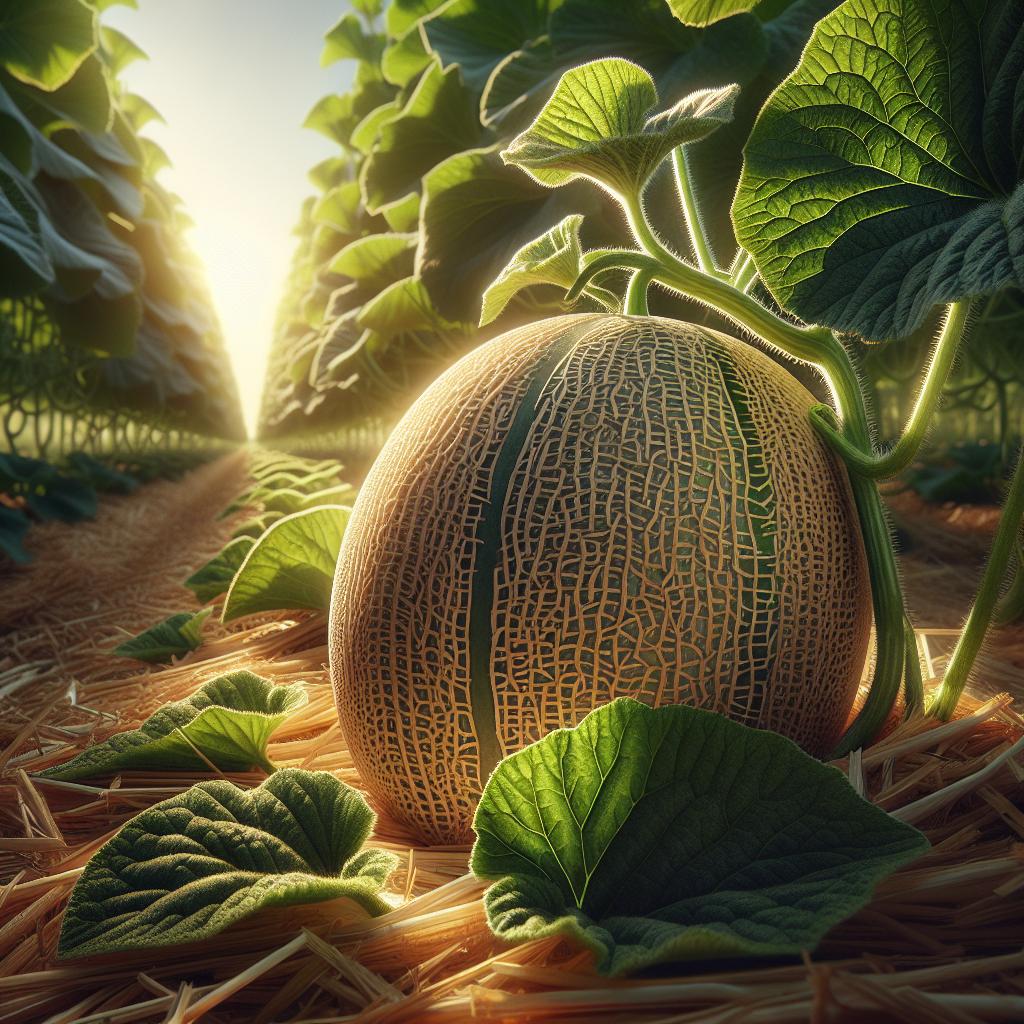
Introduction to Hales Best Cantaloupe
A widely grown American heirloom muskmelon, this variety became popular because it combines strong flavor, recognizable netting, and relatively reliable production under hot summer conditions. Although commonly called a cantaloupe in North America, it is technically a netted muskmelon rather than the true European cantaloupe type. The fruit are usually round to slightly oval, strongly ribbed beneath the netting, and mature to a warm tan-beige rind with salmon-orange flesh.
For growers, its main appeal is balance: strong aroma, attractive market appearance, moderate earliness, and good adaptation to home gardens and diversified farms. Hales Best typically reaches harvest in about 80 to 90 days from sowing under favorable warmth, though local conditions can shift that by a week or more. Sugar accumulation is best when plants receive uninterrupted sun, even soil moisture early, and drier conditions as fruit finish.
Because melons are sensitive to root disturbance, cool soil, and prolonged leaf wetness, success depends more on timing and site preparation than on heroic rescue measures later. If you understand how this cultivar grows—vigorous vines, shallow but wide-spreading roots, separate male and female flowers, and fruit quality tied directly to heat units—you can manage it with precision rather than guesswork. For broader context on melon growth habits, see our Cantaloupe guide. A useful companion-reading on building fertile, resilient beds is soil health strategies.
Botanical Profile of Hales Best Cantaloupe
This cultivar belongs to the species Cucumis melo, a highly variable species that includes muskmelons, honeydews, and many specialty melons. Hales Best falls within the reticulatus group, known for corky surface netting, aromatic flesh, and “slip” maturity, meaning ripe fruit detach naturally from the stem with gentle pressure.
Key morphological traits include:
- Annual, frost-tender, warm-season vine.
- Trailing habit with stems often extending 5 to 10 feet, sometimes longer in rich soils.
- Palmately lobed, rough-textured leaves that help shade fruit and suppress some soil moisture loss.
- Monoecious flowering, with separate male and female flowers on the same plant.
- Pollination primarily by bees and other flower-visiting insects.
- Fruit usually 3 to 5 pounds, round to oval, prominently netted, and strongly aromatic at full ripeness.
Male flowers generally appear first, often 1 to 2 weeks before female flowers. Early male bloom is normal and should not be mistaken for poor fruiting potential. Female flowers are identified by the miniature swollen ovary behind the petals. Fruit set improves substantially when bee activity is high during morning bloom, especially in warm, calm weather between about 70 and 90°F.
Compared with some newer hybrids, Hales Best is valued more for flavor and heirloom character than for maximum disease resistance. That means growers should be more disciplined about spacing, crop rotation, and irrigation hygiene. It is still vigorous, but it does not tolerate chronic stress as gracefully as modern disease-bred commercial melon lines.
Soil, pH, and Climate Requirements for Hales Best Cantaloupe
This variety performs best in loose, fertile, fast-draining soil with high biological activity and good warming capacity. Sandy loam or loam is ideal. Heavy clay can work only if improved with organic matter and shaped into raised beds or ridges to prevent waterlogging. Saturated soil is among the fastest ways to stunt or kill young melon plants because roots require oxygen-rich pore space.
Target soil conditions:
- pH: 6.2 to 6.8 is ideal; 6.0 to 7.2 is workable.
- Organic matter: roughly 3 to 5% is excellent for moisture buffering without making the root zone soggy.
- Drainage: water should infiltrate quickly, with no standing water after heavy irrigation or rain for more than a few hours.
- Soil temperature for direct sowing: minimum 70°F, with 75 to 95°F preferred for rapid emergence.
A pre-plant soil test is strongly recommended. Melons are not especially nitrogen-hungry early, but they respond strongly to balanced nutrition. Excess nitrogen produces rampant vine growth, delayed maturity, diluted sweetness, and greater aphid pressure. Phosphorus supports root establishment and flowering; potassium is especially important for sugar movement, water regulation, and fruit quality.
Climate matters enormously. Hales Best is best suited to warm temperate, Mediterranean, semi-arid, and hot-summer continental climates. It needs a long frost-free season, abundant sunlight, and warmth both day and night. Ideal daytime temperatures are 80 to 90°F, with nighttime temperatures above 60°F. Growth slows sharply below 55°F, and repeated exposure to cool nights can reduce vigor, delay flowering, and impair flavor.
High humidity increases pressure from foliar diseases such as Powdery mildew and Downy mildew. In humid regions, site selection becomes critical: full sun, wide spacing, steady airflow, and drip irrigation outperform crowded plantings every time. In arid regions, heat is less of a disease issue, but sunscald and uneven watering can cause rind stress and reduced fruit sizing.
If growing on black plastic mulch or biodegradable mulch, soil warming and weed suppression improve significantly. Mulch also keeps fruit cleaner and reduces direct soil contact, which lowers rot risk.
Step-by-Step Planting & Propagation
Direct seeding is usually the best method where summers are warm enough. Start only after frost danger has passed and the soil is genuinely warm, not merely the air. Melon seed placed into cold soil often rots or emerges unevenly.
For direct sowing:
- Prepare beds 2 to 3 weeks in advance. Incorporate fully finished compost, not fresh manure, at a moderate rate.
- Shape low hills or raised rows about 6 to 8 inches high if drainage is imperfect.
- Space rows 5 to 6 feet apart, with hills 2 to 3 feet apart within rows.
- Sow 3 to 4 seeds per hill, 1/2 to 1 inch deep.
- Thin to the strongest 1 or 2 plants once true leaves appear.
For transplants, use caution. Start seeds indoors only 2 to 3 weeks before planting out. Use biodegradable pots or large cell trays that minimize root disturbance. Seedlings should have 1 to 2 true leaves at transplanting, not be pot-bound. Older melon transplants often stall after planting.
Transplanting procedure:
- Harden off for 5 to 7 days, exposing seedlings gradually to outdoor wind and sun.
- Plant only when soil is at least 70°F.
- Set plants at the same depth they were growing in containers.
- Water in immediately with a gentle starter irrigation.
- Protect from early cucumber beetles using insect netting until flowering begins.
Spacing depends on system:
- Traditional sprawling beds: 24 to 36 inches between plants, 5 to 6 feet between rows.
- Intensive mulched rows: 18 to 24 inches between plants if fertility and irrigation are managed precisely.
- Trellising is possible but less common; if used, support fruit with slings.
Seed germination usually occurs in 4 to 10 days under warm conditions. Uneven emergence often signals cool soil, crusted surface, variable moisture, or old seed.
Care & Maintenance regimes for Hales Best Cantaloupe
Irrigation should change by growth stage. During emergence and early vine growth, maintain consistently moist but never saturated soil in the top 4 to 6 inches. A useful target is soil that feels cool and slightly damp when squeezed, but not wet enough to glisten or form mud. If the top inch becomes bone dry every afternoon, seedlings may check in growth; if the root zone smells sour or leaves look dull and puffy, overwatering is likely.
A practical watering framework:
- Establishment: 1 to 1.5 inches of water per week, split into 2 to 3 applications in light soil.
- Vine growth to fruit set: 1.5 to 2 inches per week in hot weather.
- Fruit sizing: maintain even moisture; severe fluctuations can reduce size and promote cracking.
- Final 7 to 10 days before harvest: reduce irrigation slightly, enough to avoid vine collapse but dry the surface profile somewhat. This often improves sweetness and aroma.
Overwatering signs include yellowing lower leaves without heat stress, lush brittle vines, poor flavor, slow root growth, and increased fruit rot. Underwatering signs include midday wilting that persists into evening, small hard fruit, aborted female flowers, and netting that develops on undersized fruit before proper sizing.
Fertilization should be staged rather than front-loaded. A professional approach is:
- Pre-plant: balanced fertility based on soil test, with moderate compost and potassium if needed.
- At 3 to 5 true leaves: a light sidedress of nitrogen, especially in sandy soils.
- At first female bloom: a second light feeding, emphasizing potassium over nitrogen if using soluble organic inputs.
- After fruit set: avoid heavy nitrogen pushes.
Pollination deserves active management. Bees are most important in the morning when flowers are newly open. Avoid insecticide use during bloom. Poor fruit set often comes from low pollinator activity, cold mornings, or excessive nitrogen. Misshapen fruit can result from incomplete pollination.
Weed control is most important in the first month. Once vines run, canopy shade helps suppress weeds. Cultivate shallowly because melon roots are surprisingly close to the soil surface. Organic mulches can work, but in cool climates they may delay soil warming if applied too early.
Pruning is usually unnecessary in field culture. Some growers pinch the main vine at 5 or 6 leaves in small-space gardens to stimulate branching, but this is not required for good yields. Remove only damaged or diseased tissue when sanitation is needed.
Pests, Diseases & Organic Management
The most common insect pests are cucumber beetles, aphids, squash bugs in some regions, spider mites in hot dry weather, and occasionally pickleworms or rind-feeding caterpillars in warm southern climates.
cucumber beetles are especially serious because they chew seedlings, scar stems, and spread Bacterial wilt. Protect plants from emergence to flowering with row cover or insect mesh, then remove covers to allow pollination. Keep field edges mowed and rotate cucurbits away from previous melon, cucumber, squash, or pumpkin ground.
aphids colonize undersides of leaves and growing tips, causing curling and sticky honeydew. Small infestations can be controlled by preserving lady beetles, lacewings, and hoverflies. Strong water sprays can suppress them early, but avoid chronic leaf wetness late in the day.
Major diseases include:
- Powdery mildew: white fungal growth on upper leaf surfaces, often late season.
- Downy mildew: angular yellow lesions with gray-purple growth beneath leaves.
- Fusarium wilt: one-sided vine collapse, vascular browning, persistent soilborne issue.
- Alternaria and anthracnose: leaf spots and fruit lesions under humid conditions.
- Bacterial wilt: sudden irreversible wilt, commonly vectored by cucumber beetles.
Organic management works best as a system, not a single spray. Use at least a 3-year rotation out of cucurbits, maintain wide spacing, irrigate with drip instead of overhead, and remove severely infected plants promptly. Sulfur and potassium bicarbonate can help manage Powdery mildew preventively or at first sign, though sulfur should not be used under very high temperatures if plant injury is likely. Copper-based products may reduce certain bacterial and fungal issues but should be applied sparingly and according to label directions.
Sanitation is critical after harvest. Remove vines, cull fruit, and volunteer seedlings, since these can carry pests and disease into the next cycle.
Harvesting, Curing & Optimal Storage
This variety is best harvested at full-slip or near full-slip, depending on how far the fruit must travel. Full-slip means the fruit separates from the stem with very gentle pressure at the abscission zone. That stage corresponds with strong aroma, complete surface netting, background rind shifting from green to tan, and maximum eating quality.
Signs of proper maturity include:
- Pronounced sweet musky fragrance at the blossom end.
- Raised, well-developed netting over most of the rind.
- Loss of green cast under the netting.
- Stem attachment cracking cleanly with light thumb pressure.
Do not rely on size alone. A large fruit harvested too early will be bland, while a slightly smaller fruit harvested at proper maturity will be much sweeter. Unlike some fruits, melons do not continue to accumulate sugars significantly after harvest.
Harvest during the cool part of the morning after surface dew has dried. Handle gently; netted melons bruise more easily than they appear. Remove damaged or cracked fruit from storage lots immediately.
Curing in the classic squash sense is not required, but a short conditioning period of 12 to 24 hours in shade with good airflow can help dry superficial surface moisture before packing. Do not leave ripe fruit in direct sun after harvest.
Optimal storage conditions:
- Temperature: 36 to 41°F for short-term holding.
- Relative humidity: 85 to 90%.
- Storage life: typically 5 to 14 days depending on harvest stage and handling.
Below about 36°F, chilling injury becomes more likely with pitting, poor flavor, and watery breakdown. At room temperature, ripe fruit quality declines quickly, often within 2 to 4 days. For best taste, allow refrigerated fruit to warm slightly before serving.
Companion Planting for Hales Best Cantaloupe
Useful companions are those that improve pollinator traffic, suppress weeds early, or discourage pest pressure without competing heavily for root space. Radish is often sown nearby as a fast early crop and can help occupy bare soil before melon vines run. Onion and Thyme are also frequently used around melon plantings because their scent profile may help confuse some pests while taking up comparatively little lateral space if kept at the bed margins.
Beneficial insect support matters just as much as pest deterrence. Sunflower planted on the north or west side of a melon patch can attract pollinators and beneficial insects, but it should be placed far enough away to avoid shading the vines. In compact gardens, the best strategy is often perimeter companion planting rather than interplanting directly among the vines.
Avoid pairing melons too closely with other sprawling cucurbits such as squash, pumpkins, or cucumbers because they compete for the same space, nutrients, and pest complex. Also avoid dense companion layouts that reduce air circulation around the foliage. For Hales Best specifically, the best companions are those that support clean airflow, active pollination, and an undisturbed warm soil surface.