Introduction to greasy spot
Greasy spot, caused by the fungal pathogens Pestalotiopsis guermanni and Pestalotiopsis mangiferae, is one of the most prevalent and damaging diseases in citrus orchards worldwide, particularly in humid subtropical regions. First identified in Florida in the early 20th century, it has since spread to major citrus-producing areas including the Caribbean, Central America, and parts of Asia. The disease derives its name from the distinctive greasy, oily appearance of lesions on leaves, which can lead to extensive defoliation, reduced photosynthesis, and substantial fruit yield losses of 20-45% in unmanaged groves.
This fungal disease primarily targets leaves but can also affect fruit rinds, twigs, and nursery stock. Spores are dispersed by wind, rain splash, and overhead irrigation, making it a persistent challenge in wet climates. Unlike many citrus diseases such as citrus greening, greasy spot is manageable with integrated strategies combining sanitation, organic treatments, and cultural practices. Early diagnosis is critical, as severe infections weaken trees, increasing susceptibility to secondary pests like aphids and stressors like drought. This guide provides professional-grade diagnostic criteria, lifecycle insights, and proven organic management plans to protect your citrus crop profitability.
Identifying Symptoms & Damage
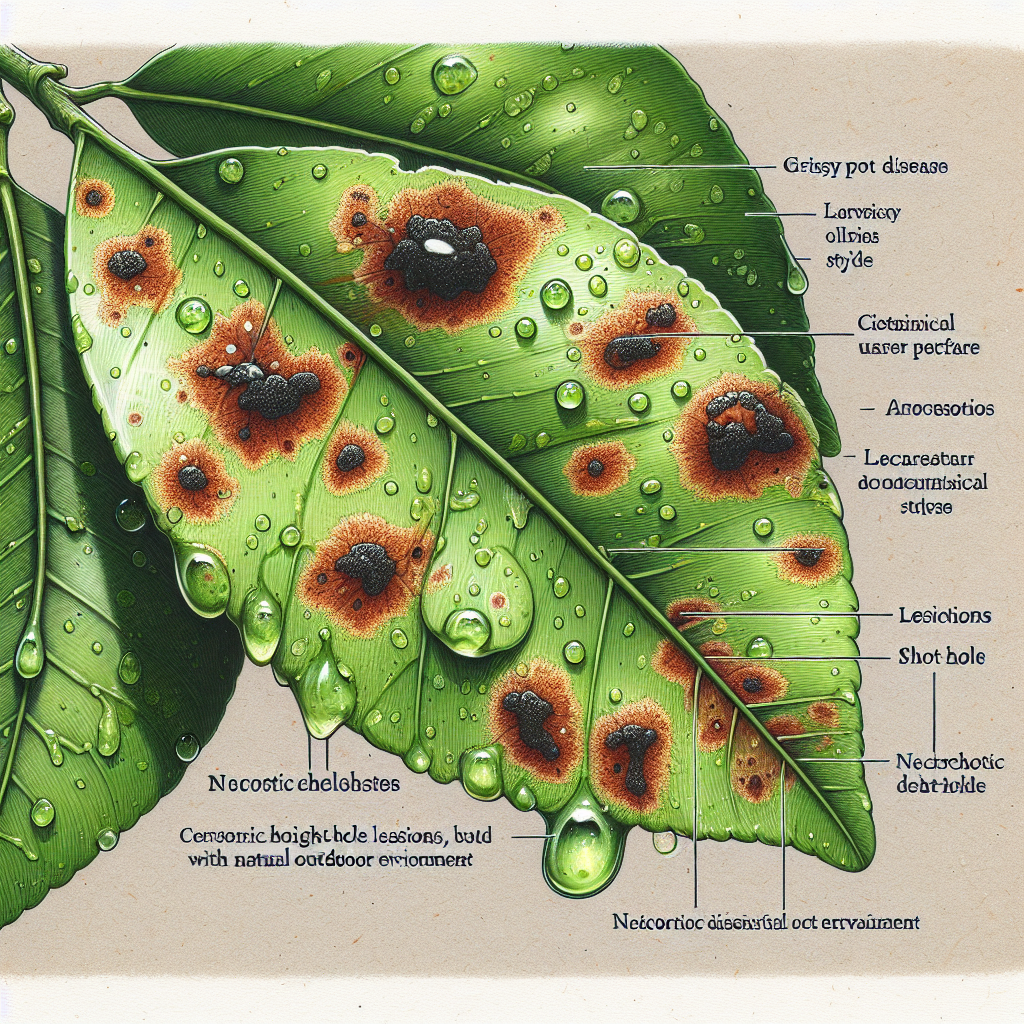
Greasy spot manifests in two primary phases: the necrotic phase on the leaf underside and the oily spot phase on the upper surface. Initial symptoms appear 7-14 days after infection as small, dark brown to black necrotic flecks (1-2 mm) on the lower leaf surface, often clustered around veins or leaf margins. These lesions expand to 3-10 mm, developing a shot-hole appearance as centers fall out, especially in mature leaves.
The hallmark oily spots emerge on the upper leaf surface directly above necrotic areas, appearing as yellowish to reddish-brown blotches with a greasy sheen, measuring 5-20 mm. In humid conditions, black fungal structures (acervuli) form in necrotic spots, releasing olive-green spore masses. Severe infections cause yellowing, premature leaf drop (up to 80% defoliation), and twig dieback. On fruit, superficial rind spots (greasy spot rind blotch) appear as dark, oily lesions 1-3 cm in diameter, reducing market value but not affecting internal quality.
Damage quantification is key for growers: mild infections (<10% leaf area affected) cause minor yield dips, while moderate (10-30%) and severe (>30%) lead to 15-45% fruit loss due to smaller, sunburned fruits from canopy thinning. Differentiate from Alternaria leaf spot by greasy texture and acervuli; melanose lacks oily spots and is more prevalent on young flush. Use a 10x hand lens to confirm acervuli and spore masses for definitive diagnosis. Scout weekly during rainy seasons, assessing 100 leaves per tree from 20 trees across the orchard.
Lifecycle and Progression of greasy spot
Pestalotiopsis spp. are polycyclic fungi completing 10-20 cycles per season in optimal conditions. The lifecycle begins with ascospores or conidia overwintering in fallen leaves, leaf litter, and infected twigs. Primary inoculum releases in spring rains (March-May), splashing onto new flush. Infection requires free water on leaves for 6-12 hours at 20-30°C (68-86°F), germinating spores within 4-6 hours to penetrate via stomata or wounds.
Lesion development takes 7-21 days, with acervuli forming in 10-14 days under high humidity (>90% RH). Conidia (5-celled, with 3 dark apical bands) eject forcibly, spreading up to 1 km via wind. Secondary cycles accelerate in summer monsoons, peaking July-October. Disease progression follows a sigmoid curve: slow initial spread, exponential during wet periods, plateauing in dry seasons. Fallen leaves remain infectious for 6-12 months, serving as reservoirs.
In Hass Avocado interplanted groves—a common practice—disease spillover occurs, as Pestalotiopsis also affects avocado foliage. Lifecycle interruption via leaf removal breaks cycles effectively. Monitor using disease forecasting models based on rainfall (>50 mm/week) and temperature thresholds to time interventions.
Environmental Triggers & Risk Factors
Greasy spot epidemics are driven by prolonged leaf wetness (6+ hours), temperatures 22-32°C, and relative humidity >85%. Tropical hurricanes and extended rainy seasons (e.g., Florida's wet season) trigger outbreaks, with spore germination optimal at 25°C and water films. Overhead irrigation mimics rain splash, increasing spread by 3-5x compared to drip systems.
High nitrogen fertilization promotes lush flush susceptible to infection, while dense canopies trap humidity. Susceptible varieties like grapefruit, early oranges (e.g., Hamlin), and tangelos face higher risk than late-maturing Valencia or resistant trifoliate hybrids. Poor sanitation—leaving >5% leaf litter—multiplies inoculum 10-fold. Climate change intensifies risks via erratic rains; coastal areas with saline stress see 20% higher severity due to weakened defenses.
Soil pH >7.0 and low potassium exacerbate symptoms, as does intercropping with mango or guava, alternative hosts. For more on optimizing irrigation to reduce foliar diseases, check this Soil Health Mastery guide.
Organic Control & Treatment Plans
Organic management emphasizes prevention but includes curative options. Cultural Controls (Foundation): Rake and destroy fallen leaves quarterly, reducing inoculum by 70-90%. Prune for 30-50% canopy openness to enhance drying; avoid overhead watering. Apply balanced NPK with 4-6% potassium boosts tolerance.
Biologicals: Bacillus subtilis (Serenade) or Trichoderma harzianum sprays every 14 days during wet periods suppress sporulation (60-80% efficacy). Potassium phosphite (0.5-1%) foliar applications induce systemic resistance, applied 3x/season.
Organic Fungicides: Copper octanoate (Bonide Liquid Copper) at 1-2 gal/100 gal water, 7-14 day intervals, 6 applications max. Neem oil (1-2%) + sulfur alternates reduce conidia by 50%. Baking soda (sodium bicarbonate, 1 tbsp/gal) weekly prevents spore germination.
Integrated Plan: Scout weekly; apply at 5% incidence threshold. Week 1: Copper + phosphite. Week 3: Bacillus. Rotate modes of action. Efficacy: 75-90% control in trials. For severe cases, strip-harvest and mulch litter. Compatible with IPM against scale insects.
Preventing greasy spot in the Future
Long-term prevention builds resilient orchards. Plant resistant rootstocks (e.g., Cleopatra mandarin, US-942) and scions like Valencia. Site selection: well-drained soils, elevations >100m for better airflow. Establish windbreaks with Thai Basil or marigold to cut rain splash 40%.
Annual programs: Pre-spring leaf cleanup, phosphite at budbreak, 4 copper sprays May-August. Mulch with 4-6" organic matter to bury inoculum. Monitor via sticky traps for spore counts. Rotate fields; avoid susceptible orange monocultures. Nutrient management: Soil tests yearly, maintain K:Mg >2:1. Resistant varieties + sanitation yield 95% disease-free canopies. Educate workers on hygiene to prevent mechanical spread.
Crops Most Affected by greasy spot
Citrus dominates greasy spot impacts: grapefruit (most susceptible, 40%+ losses), sweet oranges (Hamlin, Pineapple varieties), tangelos, and lemons. Avocado experiences similar foliar symptoms from Pestalotiopsis, with rind blotch on 'Fuerte' and 'Hass'. Minor hosts include mango, guava, and eucalyptus. Globally, Florida loses $10M/year; Brazil and India report rising incidence in young groves. Focus scouting on these high-value perennials for ROI protection.