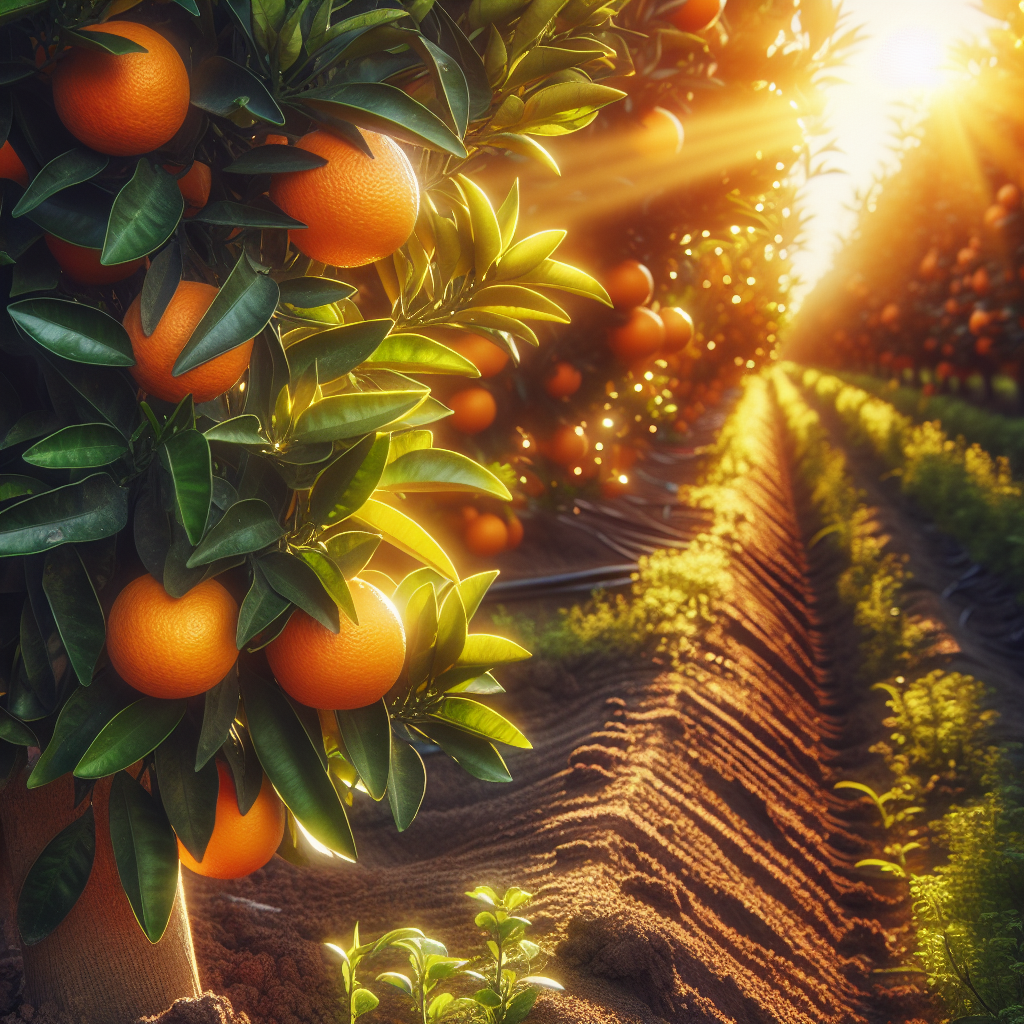
Introduction to Valencia Orange
Among sweet oranges, this late-season cultivar has earned a near-global reputation as the benchmark juice orange because it combines high juice content, dependable flavor, and the unusual ability to hold fruit on the tree well after maturity. That extended hang time gives growers flexibility in harvest scheduling, but it also creates a distinctive management challenge: mature fruit and the next flush of bloom may be present at the same time. In practical orchard terms, this means irrigation, nutrition, and pest decisions must support both current crop quality and next season’s yield potential.
The cultivar is believed to have originated in the 19th century and became especially influential in commercial citrus regions such as Florida, California, Brazil, South Africa, and Mediterranean-type production zones. Valencia fruit is typically medium-sized, round to slightly oval, with a relatively thin orange rind and fine-textured flesh. In warm conditions, some fruit may re-green externally during late holding on the tree even though internal quality remains excellent; this is a chlorophyll return in the peel, not a sign of immaturity.
For home growers, this is an outstanding choice if the goal is fresh juice, a long harvest period, and a classic sweet orange flavor with enough acidity to remain lively. For professional growers, it remains a cornerstone variety wherever climate permits. If you want broader citrus context, see our Orange guide.
Botanical Profile of Valencia Orange
This cultivar belongs to the Rutaceae family and is a selection within sweet orange, Citrus sinensis. Trees are evergreen, medium to large, and naturally rounded with dense canopies when healthy. On vigorous rootstocks and in warm regions, mature trees may reach 4.5-9 meters tall if unpruned, though commercial orchards usually maintain smaller dimensions for spray coverage and efficient harvest.
Leaves are glossy, medium green, and elliptic to ovate, with winged petioles that are typically narrower than those of grapefruit. New flush growth often emerges light green to bronze before hardening. Flowers are white, fragrant, and borne singly or in clusters, often during spring, though bloom timing shifts with regional temperature patterns and water status.
Fruit characteristics distinguish this cultivar from many table oranges. Valencia oranges are valued for:
- high juice percentage, often 45-55% or more under good management
- balanced soluble solids and acidity, making flavor less flat than some low-acid oranges
- relatively few seeds in many plantings, though seed count varies with pollination and nearby citrus
- late maturity, often harvested from late spring into summer depending on region
- excellent on-tree holding ability compared with many early and midseason oranges
The tree is usually self-fertile, so a single planting can set fruit without a pollinizer. Even so, pollinator activity can improve fruit set under some conditions. Fruit set, however, is heavily influenced by spring temperatures, tree carbohydrate reserves, and stress levels during bloom and post-bloom development.
Rootstock choice strongly affects vigor, salinity tolerance, disease tolerance, fruit size, and precocity. In professional production, Valencia is commonly grafted rather than grown on its own roots. Common rootstock decisions are based on local soil pH, calcareous conditions, nematode pressure, tristeza risk, and Phytophthora history. Sour orange, trifoliate hybrids, Carrizo citrange, Cleopatra mandarin, and other regional rootstocks may be used, but the ideal choice is highly location-specific.
Soil, pH, and Climate Requirements for Valencia Orange
This cultivar thrives in deep, aerated, well-drained loam or sandy loam with good internal drainage and moderate water-holding capacity. The ideal effective rooting depth is at least 1-1.5 meters, because citrus develops a broad but relatively shallow feeder root system concentrated in the upper 30-60 cm, while still benefiting from deeper permeable soil for anchorage and drainage.
The preferred soil pH is 6.0-7.5. It can tolerate slightly more alkaline conditions than some fruits, but performance begins to decline when pH rises above about 7.8, especially if free lime is present. In alkaline soils, iron, zinc, and manganese become less available, leading to chlorosis, small leaves, weak flushes, and poor fruit finish. In strongly acidic soils below pH 5.5, aluminum toxicity and nutrient imbalance may reduce root growth.
Good drainage is not optional. Citrus roots require oxygen, and Valencia orange is notably sensitive to prolonged saturation. As a practical threshold, if soil remains waterlogged for more than 24-48 hours after irrigation or rain, root stress and Phytophthora risk rise sharply. In heavier clay soils, plant on raised beds or berms 30-45 cm high to improve aeration.
Optimal climate is subtropical to warm Mediterranean, with hot days for sugar accumulation and mild winters to avoid severe freeze injury. Best results come where annual temperature patterns include:
- active growth from roughly 13-35°C
- optimal photosynthetic and canopy performance around 25-30°C
- bloom protection from frost during spring
- minimal exposure below -2°C, especially for young trees
Mature trees may survive light, brief frosts better than young trees, but fruit and tender flush are far more vulnerable than hardened wood. Even a short freeze around -2 to -3°C can damage blossoms, split peel cells, reduce juice quality, or cause fruit drop. Wind protection matters because hot dry winds increase transpiration, while cold winds intensify freeze damage.
Rainfall of 900-1,300 mm annually can support good production if it is well distributed and soils drain properly. In many citrus districts, supplemental irrigation is essential because moisture demand is highest during flowering, fruit set, and fruit enlargement, when rainfall may be unreliable. For deeper principles of building resilient orchard soil, read Soil health strategies.
Step-by-Step Planting & Propagation
Commercially and for serious home orchards, propagation is almost always by grafting or budding onto a suitable rootstock. Seed propagation is mainly used for rootstock production or breeding work, not for maintaining reliable cultivar traits. Trees grown from seed may be variable, slow to bear, and not true to type.
Select a certified disease-free nursery tree. Choose a tree with a straight trunk, healthy green leaves, no leaf miner distortion on new flush, no root circling so severe that it creates girdling, and a visible sound graft union. Avoid trees with suckers emerging from below the graft.
Match rootstock to site conditions. On calcareous or alkaline soils, choose rootstocks known for better tolerance to high pH. In salinity-prone regions, use rootstocks with documented salt tolerance. In Phytophthora-prone soils, disease-tolerant rootstocks are essential.
Time planting correctly. Best planting is usually early spring after frost danger passes, or in warm winter regions during autumn when soil remains warm enough for root establishment. Avoid midsummer planting in very hot inland climates unless irrigation is highly reliable.
Prepare the site. Remove perennial weeds in at least a 1-meter radius. If drainage is marginal, create a raised berm. Dig a hole only as deep as the root ball and 2-3 times as wide. Planting too deep is a common failure point.
Set the tree carefully. Position the tree so the top of the root ball sits slightly above surrounding soil grade, usually 2-5 cm high to allow for settling. Keep the graft union well above soil line. Backfill with native soil rather than a sharply different amended mix, which can create a water basin effect.
Irrigate immediately. Water deeply after planting to settle soil around roots. A newly planted tree typically needs enough water to moisten the entire root ball and adjacent native soil, but not so much that the planting hole becomes a sump.
Mulch properly. Apply 5-8 cm of coarse organic mulch over the root zone, but keep it 10-15 cm away from the trunk to prevent collar rot and rodent damage.
Stake only if necessary. In windy sites, use soft ties and remove support as soon as the trunk is stable. Excessive staking weakens trunk development.
Spacing depends on rootstock vigor and management system. Typical spacing is 4.5-6 meters between trees and 6-7.5 meters between rows for standard orchards. High-density systems can be closer but require disciplined pruning and fertigation.
For propagation by T-budding or chip budding, perform budding when bark is slipping and rootstocks are actively growing. Budwood should come from clean, true-to-type mother trees. After the bud union heals, the rootstock top is cut back to force scion growth.
Care & Maintenance regimes for Valencia Orange
Irrigation is the single most important controllable factor after site selection. Citrus roots perform best under evenly moist, well-aerated conditions, not repeated flooding and drying. In the active root zone, aim to keep soil moisture generally around 60-80% of field capacity, depending on soil texture. In sandy soils, this may mean smaller, more frequent irrigations; in loams, longer intervals with deeper watering.
Practical watering signs matter. A water-stressed tree often shows dull leaves, slight leaf folding along the midrib, reduced shoot elongation, blossom drop, and small fruit. Severe stress causes leaf drop and fruit drop. Overwatered trees may show yellowing leaves that resemble nutrient deficiency, persistent wet soil smell, algae or moss near emitters, limp but not dry foliage, reduced feeder roots, and eventual canopy thinning from root decline.
A useful rule for mature trees is to irrigate to the depth of the main feeder roots, often 45-60 cm, then allow partial drawdown before the next event. Never let the upper root zone alternate between saturation and dust-dry extremes during bloom and early fruit set.
Nutrition should be based on leaf analysis and soil testing, but nitrogen is typically the main driver of canopy health and yield. Young trees benefit from split applications during active growth, while bearing trees often receive nitrogen in 3-6 smaller doses through the season. Excess nitrogen causes overly vigorous vegetative growth, thicker peels, lower color development, and can worsen certain pest issues. Deficiency appears as pale green leaves, weak flushes, and reduced fruit size.
Approximate nutrient priorities are:
- nitrogen for canopy renewal and yield
- potassium for fruit size, juice quality, and stress resilience
- calcium for peel integrity and root health
- magnesium for leaf chlorophyll and photosynthesis
- zinc, manganese, and iron, especially in high-pH soils
- boron in small amounts for flowering and fruit set, but only with caution because excess is toxic
Pruning should be light and strategic. Valencia orange fruits on mature wood and does not require heavy annual pruning like some deciduous fruits. Remove dead wood, crossing branches, rootstock suckers, water sprouts that shade the canopy interior, and low branches that drag fruit onto soil. Keep the canopy open enough for light penetration and spray coverage, but avoid over-thinning, which can expose scaffold limbs to sunburn.
Young tree training focuses on developing 3-5 well-spaced scaffold branches above a clear trunk height appropriate for local harvest practices. Whitewashing exposed trunks and major limbs with diluted interior white latex paint can prevent sunburn in hot climates.
Flowering and fruit set management require restraint. Growers are often tempted to push spring flush hard with nitrogen, but excessive vegetative growth during bloom can compete with fruit set. Maintain stable moisture during bloom; drought followed by heavy irrigation can increase flower and fruitlet drop.
Alternate bearing is generally less extreme than in some fruit species, but crop load can still affect next year’s bloom. Trees carrying very heavy crops may need especially careful potassium and irrigation management. Fruit thinning is rarely practiced commercially, though young overloaded trees may benefit from reducing excessive crop burden.
Container culture is possible but demanding. Use a fast-draining citrus mix, a large pot with excellent drainage, and frequent feeding with a complete citrus fertilizer including micronutrients. Repot before roots become densely circling. Container trees dry faster and show salt buildup sooner than orchard trees.
Pests, Diseases & Organic Management
Valencia orange is vulnerable to the standard spectrum of citrus pests and diseases, and success comes from integrated management rather than reactive spraying.
Aphids attack tender flush and can distort new growth, especially on young trees. They also produce honeydew that encourages Sooty mold. Organic control includes conserving lady beetles, lacewings, and hoverflies; washing off colonies with water on small trees; and using insecticidal soap when populations exceed acceptable levels.
Citrus leaf miner tunnels young leaves, causing serpentine mines and curled flush. Damage is most significant on nursery trees and young nonbearing trees because it reduces canopy establishment. Avoid excessive nitrogen that stimulates constant tender flush. Horticultural oils timed to new flush can suppress egg laying.
Scale insects and Mealybugs weaken trees by sucking sap and producing honeydew. Ant control is crucial because ants protect these pests from natural enemies. Trunk barriers, baiting, and sanitation improve biological control.
Spider mites become serious in hot, dusty conditions and after broad-spectrum insecticide use that disrupts predators. Symptoms include stippling, bronzing, and premature leaf drop. Maintain orchard humidity where possible, reduce dust, and use narrow-range oil or approved biological products when necessary.
Major disease concerns include:
- Phytophthora root rot and Gummosis in poorly drained or overirrigated soils
- Citrus canker in regions where it occurs
- Greasy spot in humid climates
- Melanose and Scab under favorable infection conditions
- Tristeza virus depending on rootstock and regional disease pressure
- Huanglongbing (citrus greening) where present, transmitted by Asian citrus psyllid
For Phytophthora prevention, keep the trunk dry, avoid mulch against bark, do not bury the graft union, and schedule irrigation by soil need rather than calendar habit. Symptoms include bark gumming, feeder root loss, leaf yellowing, sparse canopy, and small fruit.
For fungal foliar diseases, improve air flow, prune lightly for canopy ventilation, avoid prolonged overhead wetting, and remove heavily infected fallen debris where practical. Copper-based products are commonly used in organic-compatible programs, but timing and local regulations matter.
Huanglongbing deserves special mention because it has transformed citrus culture in many regions. Symptoms include asymmetric blotchy mottling of leaves, lopsided bitter fruit, dieback, and progressive decline. There is no cure once trees are infected. The best defense is sourcing clean nursery stock, monitoring psyllids, removing infected trees where required, and following local quarantine guidance.
Organic management works best when built around prevention: healthy soil, balanced nutrition, ant suppression, irrigation accuracy, predator conservation, and frequent scouting of new flush, fruit clusters, and trunk bases.
Harvesting, Curing & Optimal Storage
This is a late-maturing orange, and harvest timing should be based on internal maturity rather than peel color alone. Fruit may appear fully colored before sugars and acids reach ideal balance, and in hot regions fruit held late may partially re-green even when mature. Use taste, juice percentage, and, in commercial settings, soluble solids-to-acid ratio to determine harvest readiness.
Typical signs of maturity include full size for the district, good juice content, a rich sweet flavor with fresh acidity, and easy separation from the twig without tearing. Fruit left too long can eventually lose acidity and become less vibrant, though Valencia generally holds quality on-tree better than many cultivars.
Harvest by clipping or twisting carefully to avoid rind puncture. Pulling fruit forcefully can tear the peel or button, creating entry points for postharvest decay. Harvest only when fruit surface moisture has dried to reduce spread of pathogens.
Unlike bulbs or tubers, oranges are not cured in the classic sense, but they do benefit from gentle postharvest handling and, in commercial channels, careful degreening or conditioning where appropriate. For small growers:
- sort out bruised, split, insect-damaged, or decayed fruit immediately
- avoid stacking fruit deeply in the field
- keep harvested fruit shaded and cool
- wash only if necessary, and dry thoroughly before storage
Optimal storage is around 3-9°C with relative humidity of 85-90%, depending on intended storage duration and local postharvest practice. At room temperature, fruit generally keeps for 1-2 weeks; under cool storage it may last several weeks. Very low humidity causes rind shrivel, while excessive moisture and poor air movement promote mold.
Do not store damaged fruit with sound fruit. Ethylene exposure is less critical than with some fruits, but cleanliness, ventilation, and gentle handling are central to maintaining juice quality and rind appearance.
Companion Planting for Valencia Orange
Companion planting around citrus works best when the goal is ecological support rather than crowding the root zone. Because citrus feeder roots occupy much of the upper soil layer, companions should be placed so they do not compete heavily for water within the immediate trunk zone. Keep a vegetation-free ring 60-100 cm around young trees, expanding management based on tree size and irrigation layout.
Low-growing nitrogen-fixing covers such as Clover are among the best orchard-floor companions. They help protect soil, support beneficial insects, and contribute organic matter when mowed and recycled. In dry climates, however, monitor competition carefully and terminate or mow before they draw too much spring moisture.
Aromatic insectary species such as Thai Basil can attract pollinators and predatory insects while occupying manageable strips near but not directly against the trunk. Garlic is often used in mixed plantings because its pungent foliage may help diversify the understory and it fits well in sunny orchard margins. Onion serves a similar role in smaller home-scale systems.
Good companion strategy follows a few principles:
- never let companions shade the trunk or touch the bark
- avoid aggressive vines or heavy feeders under the canopy
- coordinate irrigation so understory plants do not force overwatering of the tree
- mow or cut covers before seed set if reseeding is undesirable
- use flowering companions to support beneficial insects during citrus bloom gaps
In commercial orchards, permanent or seasonal living mulches are often more useful than classic garden-style interplanting. In home orchards, a mixed border of shallow-rooted herbs and alliums can be helpful, attractive, and practical if moisture competition is managed closely.