Introduction to huanglongbing
Huanglongbing (HLB), commonly called citrus greening, represents one of the most destructive diseases facing global citrus production. Caused by the unculturable bacterium Candidatus Liberibacter asiaticus (CLas), Candidatus Liberibacter africanus, or Candidatus Liberibacter americanus, it infects the phloem tissue of citrus trees, disrupting nutrient transport and leading to rapid decline. First identified in China in 1919, HLB has spread to over 40 countries, devastating orchards in Florida, Brazil, and Southeast Asia, with economic losses exceeding $10 billion annually. The disease is primarily vectored by the Asian citrus psyllid, a tiny insect that feeds on citrus leaves and injects the bacteria during feeding. Unlike many fungal pathogens, HLB has no known cure, emphasizing the need for vigilant scouting, rapid removal of infected trees, and aggressive psyllid control. For small-scale and commercial growers alike, understanding HLB's insidious nature is essential to protect valuable orange, lemon, and lime crops. This definitive guide covers symptoms, lifecycle, risk factors, organic management, and prevention, drawing from cutting-edge agricultural research to help you safeguard your citrus groves. Early intervention can preserve yields, but delayed action often results in total orchard loss within 5 years.
Identifying Symptoms & Damage
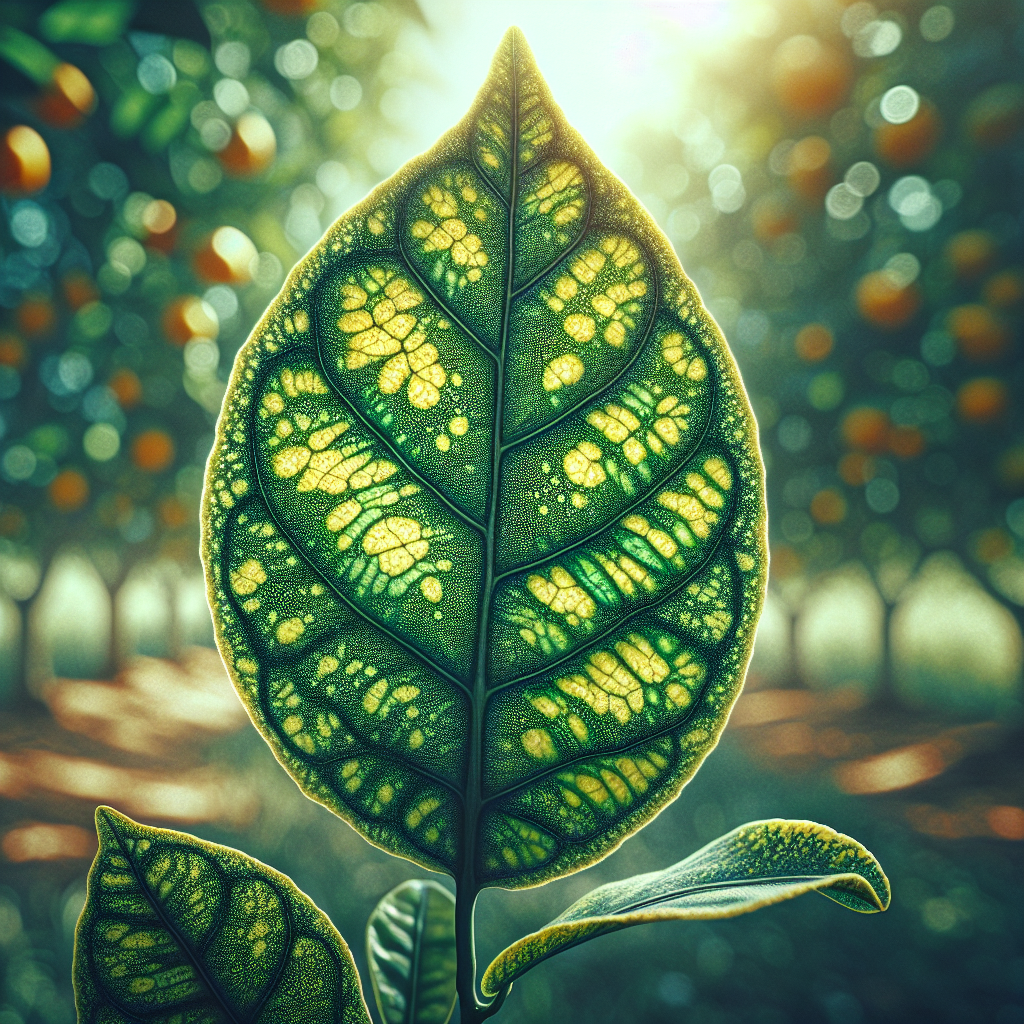
HLB symptoms vary by tree age, variety, and environmental stress, often mimicking nutrient deficiencies or phytophthora root rot, leading to misdiagnosis. Key foliar signs include asymmetric mottling: blotchy yellowing on mature leaves with green islands of healthy tissue amid chlorotic veins, distinct from uniform yellowing in nitrogen deficiency. Leaves may curl upward, become brittle, and drop prematurely, thinning the canopy. Shoots exhibit 'zinc-like' deficiencies with small, upright, chlorotic leaves clustered at twig tips. Fruit symptoms are diagnostic: small, lopsided, green-islanded oranges with aborted seeds, bitter taste, and premature coloring—green-stemmed fruit with yellow peels. Advanced trees show dieback, sparse foliage, heavy fruit drop, and root decline, with starch accumulation plugging phloem. Confirm via PCR testing of leaf petioles or fruit peduncles, as visual symptoms appear 3-12 months post-infection. Damage escalates rapidly: yields drop 30-100% within 2-3 years, fruit quality plummets, and trees succumb in 3-5 years. Scout weekly in high-risk areas, using a 10x hand lens for psyllids and tapping branches over white paper to detect nymphs. Differentiate from citrus leafminer damage (serpentine mines) or mites (stippling). Professional diagnosis via extension services prevents spread. Read our detailed post on Why Misidentifying Plants Costs Small Farms Thousands - And How AI Camera Diagnosis Fixes It Fast for tech-assisted identification tips.
Lifecycle and Progression of huanglongbing
HLB progresses systemically once introduced, with no latency period—bacteria multiply in phloem, callose deposition clogs vessels within weeks. Incubation spans 3-12 months, starting in feeder roots then moving to canopy. Early: subtle mottling on 1-2 leaves. Moderate: widespread foliar symptoms, 20-50% yield loss, psyllid populations surge on stressed trees. Advanced: canopy thinning >50%, misshapen fruit, root rot synergy, tree death. Bacteria overwinter in psyllids and roots; psyllid lifecycle (egg-nymph-adult) completes in 15-30 days at 77°F, with 20+ generations/year in tropics. Females lay 500-800 eggs; nymphs acquire bacteria after 2nd instar feeding. Transmission efficiency: 100% from infected adults, 20-80% from nymphs. Hot, humid conditions accelerate spread; drought-stressed trees show symptoms faster. See the comprehensive entry on huanglongbing (citrus greening) (disease) for in-depth pathology. Progression models predict 80% orchard infection in 4 years without intervention, underscoring removal of 'sleeper' trees.
Environmental Triggers & Risk Factors
Warm subtropical climates (68-95°F) optimize psyllid reproduction and bacterial titer, with peaks in spring flush cycles when tender growth attracts vectors. High humidity (>60%) and mild winters enable year-round psyllid activity; freezes (<28°F) temporarily suppress but don't eradicate. Poor soil drainage exacerbates secondary root rots, accelerating decline. Risk factors: proximity to abandoned groves (<1 mile), backyard citrus, or murraya hedges; new plantings from untested nurseries; inadequate scouting. Flood irrigation spreads psyllids; wind currents disperse adults up to 2 miles. Nutrient imbalances (low N, K) mimic and worsen symptoms. In Florida, 90% of groves are affected due to unchecked psyllid invasion since 1998. Soil pH >7.5 limits root health, compounding phloem blockage.
Organic Control & Treatment Plans
No curative organic treatments exist; focus on vector suppression and tree support. Psyllid Management: Plant marigold and thyme borders as repellents; release Tamarixia radiata parasitoids (50-100/acre weekly). Kaolin clay sprays (Surround WP, 25-50 lb/acre) deter feeding; spinosad (Entrust, 4-6 oz/acre) targets nymphs (OMRI-listed, 7-day PHI). Neem oil (1-2%) disrupts molting. Tree Nutrition: Foliar micronutrients (Zn, Mn, Fe at 2-4 qt/acre monthly) enhance tolerance; soil drenches with mycorrhizae and humic acids bolster roots. Roguing: Remove confirmed positives immediately, plus 20-ft buffer; shred and bury to prevent psyllid reservoirs. Reflective Mulch: Aluminum plastic mulch repels adults 70% in young groves. Integrated plans reduce psyllids 80-95%, delaying symptoms 2+ years. Monitor with yellow sticky traps (1/acre); treat at 0.2 psyllids/trap/day. Combine with citrus psyllids cultural controls for synergy.
Preventing huanglongbing in the Future
Prevention hinges on certified HLB-free nursery stock (PCR-tested), inspected quarterly. Establish 500-ft buffer zones; eradicate backyard hosts. Psyllid-free production: screenhouses, bagging nursery trees. Quarantine new introductions 1 year. Scout intensively: double-density sampling in edges. Area-wide management: synchronize sprays across neighborhoods. Resistant rootstocks (US-942, US-897) show 20-50% tolerance. Windbreaks reduce dispersal. Post-planting: micronutrient programs from day 1. Education via co-ops prevents re-infestation. Long-term: breed HLB-tolerant varieties like Sugar Belle mandarin.
Crops Most Affected by huanglongbing
HLB devastates Citrus genus: sweet oranges (Navel, Valencia—90% mortality), mandarins (clementine), grapefruit, lemons (Eureka), limes (Persian). Trifoliate hybrids (Sunki, Flying Dragon) mildly tolerant; kumquats, calamondin resistant. No impact on non-citrus like mango or avocado. Global: Florida lost 75% production; Brazil replanted 40 million trees.