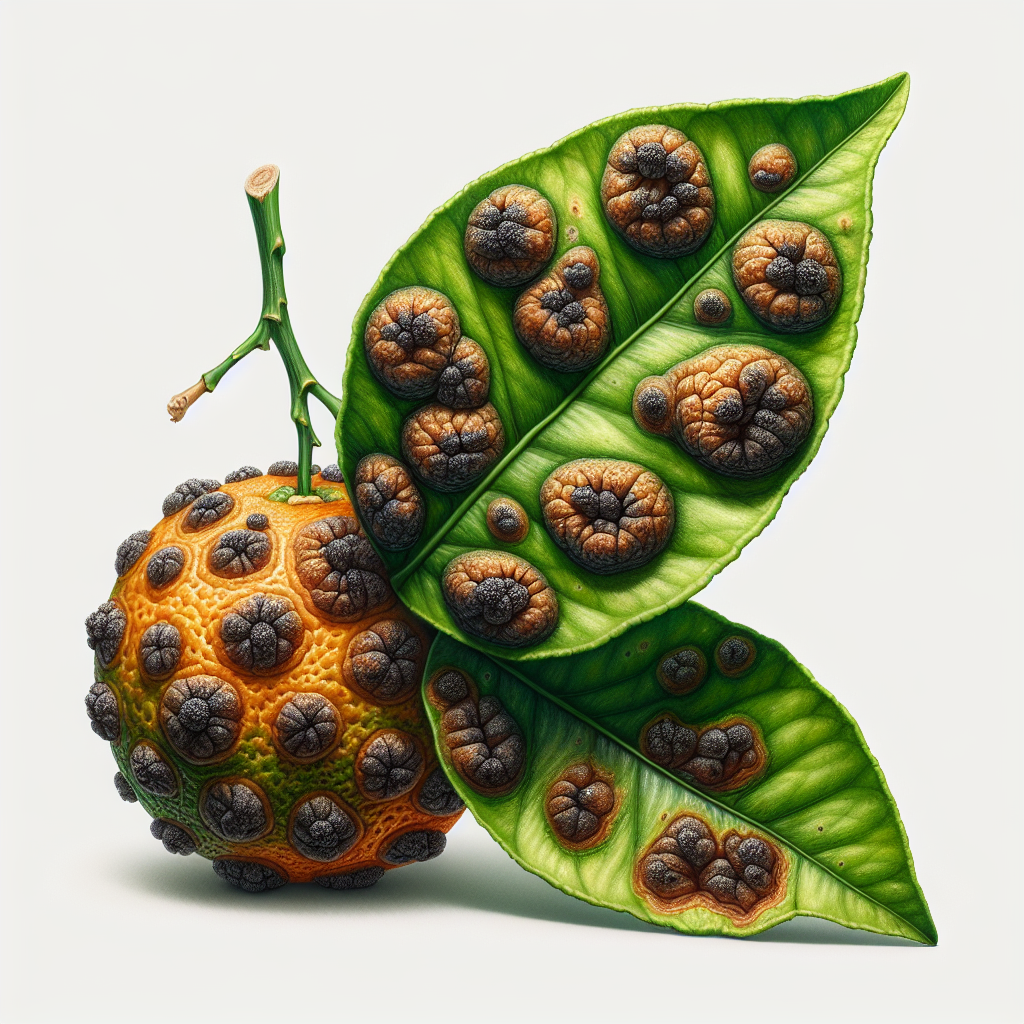
Introduction to melanose
Melanose, caused by the fungus Diaporthe citri (formerly Phomopsis citri), is one of the most prevalent fungal diseases in citrus orchards worldwide, particularly in humid subtropical regions. This disease primarily targets orange, grapefruit, lemon, and other citrus varieties, manifesting as rough, darkened pustules on dead tissues. While it rarely kills trees, severe infections can defoliate young trees, weaken overall vigor, and blemish fruit, leading to significant economic losses for growers. Early identification and proactive management are crucial for maintaining healthy orchards and high-quality yields. This guide provides professional-grade diagnostic criteria, lifecycle insights, and organic control strategies optimized for small farms and commercial operations alike.
Understanding melanose is essential for citrus producers, as it thrives in warm, wet environments common to Florida, Brazil, and Southeast Asia. The fungus overwinters in dead wood and splash-dispersed spores infect new growth during rainy seasons. Unlike more destructive pathogens like Phytophthora or anthracnose, melanose is manageable with sanitation and fungicides, but ignoring it can exacerbate issues like fruit drop or secondary infections from pests such as scale insects. For more on AI-driven farm optimization, check this blog post on hyper-local weather forecasts to predict outbreak risks.
Identifying Symptoms & Damage
Diagnosing melanose requires keen observation of characteristic symptoms on citrus tissues. On leaves, small, dark brown to black pustules (pycnidia) appear on dead areas, often surrounded by yellow halos. These raised, corky lesions aggregate into larger, irregular patches, giving a 'shot-hole' appearance upon leaf drop. Twigs show elongated, sunken cankers with dark, cracked bark, while fruit exhibits superficial, rough, brown rinds that feel velvety to the touch—most evident on immature green fruit.
Damage severity varies by tree age: young trees suffer most from defoliation (up to 50% leaf loss), stunting growth and reducing photosynthesis. Mature trees experience fruit russeting, downgrading market value by 20-30% in fresh markets. Differentiate from Alternaria leaf spot (larger, target-like spots) or greasy spot (oily blotches). Use a hand lens to confirm pycnidia—tiny black fruiting bodies exuding spore tendrils in wet conditions. Scouting every 7-10 days post-rain is vital; threshold: 5% twig infection triggers action.
Economic impact includes yield losses of 10-25% in unmanaged groves and cosmetic rejections. In Hass Avocado interplanted systems, melanose can spread via shared humidity. Photograph symptoms for records and consult extension services for confirmation.
Lifecycle and Progression of melanose
Diaporthe citri follows a polycyclic lifecycle tied to wet weather. Primary inoculum survives in blighted twigs, leaves, and fallen debris as pycnidia. Rain splash disperses conidia (alpha and beta types) up to 1-2 meters, infecting wounds or young tissues when relative humidity exceeds 90% and temperatures are 20-30°C (68-86°F). Incubation lasts 3-7 days, producing new pycnidia in 10-14 days under optimal conditions.
Progression peaks during spring flush and post-harvest rains, with 5-10 cycles per season. Beta conidia facilitate further spread in water films. Unlike sexual spores (ascospores), conidia dominate epidemics. Dead tissue dependency limits spread to healthy areas, but pruning wounds invite entry. Overwintering structures endure 12-18 months, reactivating with spring rains. Monitoring with weather stations tracks spore release: >12 hours leaf wetness at >95% RH signals risk.
Environmental Triggers & Risk Factors
Melanose epidemics correlate strongly with prolonged leaf wetness (>48 hours) and frequent showers. High rainfall (>1000mm annually), dense canopies, and poor air circulation in young groves amplify spore dispersal. Risk factors include excessive nitrogen fertilization promoting succulent growth, overhead irrigation, and adjacent weed hosts harboring inoculum. Susceptible varieties like Navel Orange and Valencia Orange face higher pressure in low-lying, humid sites.
Soil types with poor drainage exacerbate via root stress, mimicking root rot. Climate change intensifies outbreaks with erratic storms. Assess risk via disease forecasting models integrating temperature, humidity, and historical data.
Organic Control & Treatment Plans
Organic management emphasizes sanitation: prune and destroy 80-90% of infected twigs annually during dry periods, removing mummies and debris. Copper-based fungicides (e.g., Bordeaux mixture) applied at 2-4 kg/ha every 14-21 days during high-risk windows offer 70-85% control. Bacillus subtilis or Trichoderma applications suppress sporulation. Enhance biocontrol with Thai Basil borders to reduce humidity. Integrate with aphids management, as honeydew fosters sooty mold complicating melanose.
Treatment plan: 1) Scout weekly; 2) Prune at 20% incidence; 3) Apply copper pre-rain; 4) Mulch to suppress splash. Rotate modes of action to prevent resistance. Yields improve 15-20% with IPM.
Preventing melanose in the Future
Prevention starts with resistant rootstocks and certified disease-free nursery stock. Space trees 6-7m for airflow, avoiding overhead watering—drip irrigation cuts risk 50%. Balanced nutrition (N-P-K 1:0.5:1) hardens tissues. Winter sanitation removes 95% inoculum. Cover crops like clover suppress weeds. Annual copper sprays (3-4 applications) protect flushes. Monitor via apps for early warnings. Long-term: breed tolerant varieties, integrating with powdery mildew strategies.
Crops Most Affected by melanose
Primarily citrus: oranges (70% incidence), lemons, limes, grapefruit. Minor on mango, avocado. Young grafts most vulnerable; mature trees tolerate. Global impact: Florida loses $10M/year.