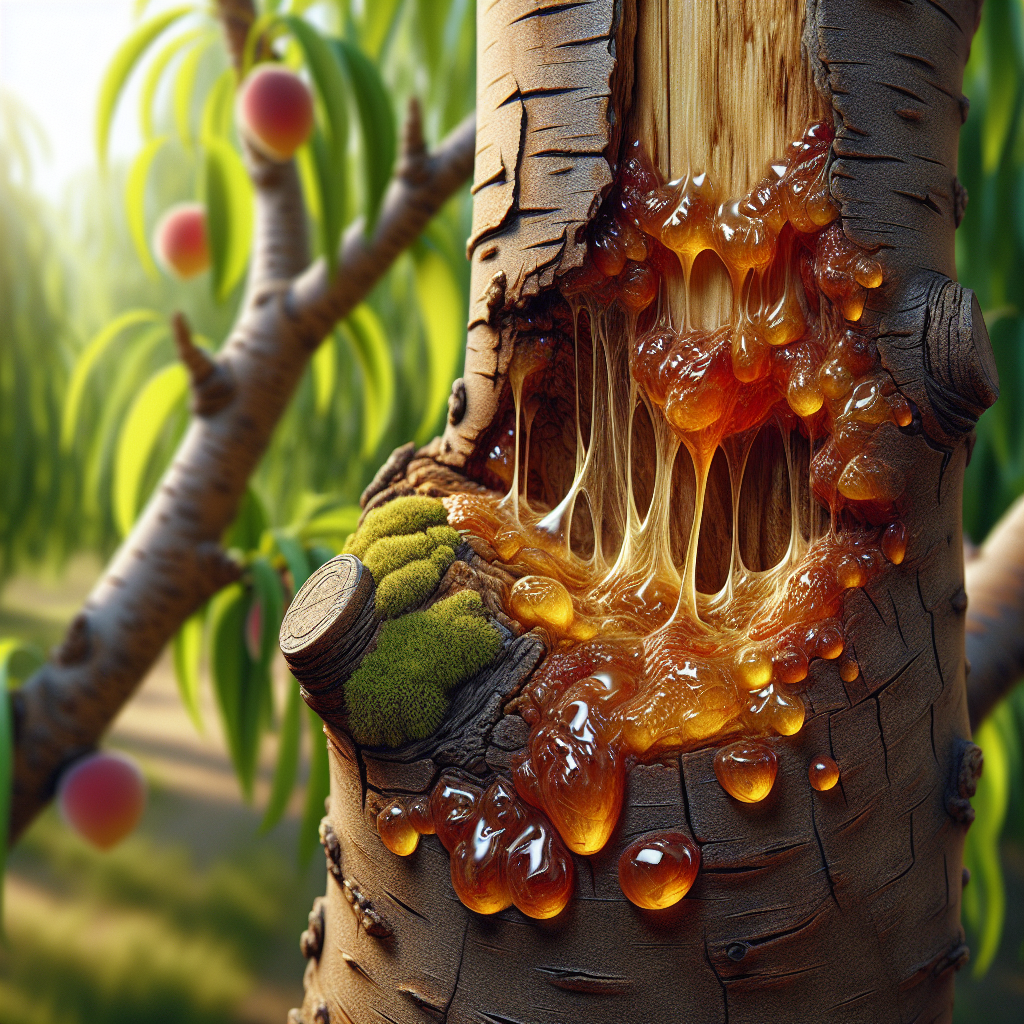
Introduction to gummosis
Gummosis is one of the most pervasive and damaging diseases in fruit orchards worldwide, striking fear into growers of stone fruits and citrus alike. This condition manifests as the exudation of thick, amber or honey-colored gum from the bark, stems, or roots of infected trees, often signaling severe underlying infection by soilborne pathogens like Phytophthora species. Unlike mechanical injuries, gummosis gum is sticky, persistent, and accompanied by tissue necrosis, distinguishing it from natural resin flows.
Primarily associated with oomycetes (water molds), gummosis disrupts the tree's ability to transport water and nutrients, leading to canopy dieback, reduced yields, and eventual tree mortality. It affects high-value crops in commercial settings and home orchards, costing millions annually in lost production and removal. Understanding gummosis is crucial for sustainable agriculture, as it spreads via contaminated soil, water, and equipment. This guide provides definitive diagnostic criteria, lifecycle insights, and proven organic management strategies to protect your investment. For small farms battling weather extremes, tools like hyper-local forecasts can prevent outbreaks—check out Why 80% of Small Farms Battle Weather Disasters - And How Hyper-Local AI Forecasts Can Save Your Harvest.
Early intervention is paramount; once advanced, recovery rates plummet below 30%. Symptoms often mimic drought stress or rodent damage, leading to misdiagnosis. This comprehensive resource equips botanists, entomologists, and growers with professional-grade advice drawn from decades of field research across continents.
Identifying Symptoms & Damage
Accurate diagnosis begins with recognizing gummosis's hallmark signs. The primary symptom is the profuse oozing of gum, which appears as glistening, caramel-like blobs on trunks, scaffolds, or lower limbs. This gum hardens over time into a crusty, dark residue, often with a fermented odor. Inspect wounds closely: healthy trees produce clear sap that dries quickly, but gummosis gum is viscous and persistent.
Bark lesions start as water-soaked areas, progressing to sunken, discolored cankers with cracked edges. Inner bark reveals brown, necrotic streaking, while cambium tissue sloughs off in sheets. Foliar symptoms include yellowing leaves, sparse canopy, and premature defoliation, mimicking root rot. In severe cases, branches die back from the tips, and trees lean or topple due to girdling.
Root systems show dark, mushy decay with sparse fine roots. Differentiate from collar rot by location—gummosis often girdles the entire trunk base. Use a knife to probe: healthy tissue is firm and white; infected is soft and foul-smelling. In peach trees, gum flows copiously from pruning wounds; in avocado, it accompanies trunk splitting. Damage escalates rapidly in young trees, reducing vigor by 50-70% in the first season. Yield losses average 20-40% in moderate infections, up to 100% in epidemics. Always rule out Phytophthora root rot via lab testing for confirmation.
Lifecycle and Progression of gummosis
Gummosis pathogens, chiefly Phytophthora citrophthora and P. syringae, follow a soil-water cycle amplified by plant stress. Spores (zoospores) swim in saturated soils, infecting roots through wounds or natural openings. Optimal germination occurs at 15-25°C with free water on tissues for 6-12 hours.
The pathogen overwinters as oospores in soil or infected debris, germinating in spring rains. Primary infections target feeder roots, progressing upward to the crown. Gum production is the tree's defense response, trapping pathogens but blocking phloem. Disease advances systemically: roots decay first (weeks 1-4), followed by basal cankers (months 2-6), and canopy wilt (year 1+).
Sporangia release during wet cycles, splashing to trunks via rain or irrigation. A single cycle yields 10-100x spore amplification. In cherry orchards, progression peaks post-harvest; in citrus, summer monsoons drive epidemics. Without intervention, trees decline over 2-5 years, with 80% mortality in poorly drained sites. Secondary invaders like armyworms exploit weakened tissues, compounding damage.
Environmental Triggers & Risk Factors
Gummosis thrives in poorly drained, heavy clay soils with pH 5.5-7.0. Waterlogging for 48+ hours activates zoospores, with incidence rising 300% in flood-prone areas. High nitrogen fertilizers promote succulent growth, increasing susceptibility—avoid excess N in spring.
Wounds from borers, mechanical injury, or frost cracks serve as entry points. Overcrowded orchards reduce airflow, trapping humidity. Cool, wet springs (10-20°C) trigger outbreaks, especially after downy mildew seasons. Susceptible rootstocks like Mazzard cherry or Mexican lime amplify risks.
Climate change intensifies threats: erratic rains and warmer soils extend the infection window. In plum groves, irrigation flooding correlates with 60% higher rates. Poor sanitation—using contaminated tools—spreads inoculum up to 1km. Monitor Phytophthora palmivora in tropical zones for aggressive strains.
Organic Control & Treatment Plans
Organic management hinges on cultural, biological, and phosphite-based strategies. First, improve drainage: install berms, rip soil to 60cm, and plant on raised mounds (30-50cm high). Avoid overhead irrigation; use drip systems to keep trunks dry.
Apply phosphorous acid (mono- and di-potassium salts) as trunk sprays or drenches—0.5-1% solutions every 4-6 weeks during wet seasons. These boost tree defenses without fungicide residues. Biologicals like Trichoderma harzianum suppress soil pathogens; inoculate at planting (10g/m²).
Prune cankers 10cm below margins during dry periods, paint wounds with organic Bordeaux mixture. Mulch with composted bark (not fresh wood) to 10cm depth, excluding trunk zones. Introduce mycorrhizal fungi to enhance root resilience. For Hass Avocado, integrate cover crops like clover to aerate soil.
Resistant rootstocks (e.g., Dusa for peach) reduce incidence by 70%. Scout weekly; remove severely infected trees to curb spread. Organic yields recover 40-60% with consistent programs. Rotate with biofumigants like mustard for soil solarization.
Preventing gummosis in the Future
Prevention outperforms cure: select certified, disease-free nursery stock tested for Phytophthora. Site selection avoids low spots; test soil percolation pre-planting (>1 inch/hour). Maintain 20-30% open canopy for sunlight penetration.
Annual cultural calendar: deep rip every 3 years, balance NPK (avoid >100kg N/ha), and monitor soil moisture (20-30% volumetric). Sanitize tools with 10% bleach between trees. Fall applications of compost teas build microbial barriers.
Integrated programs cut incidence 80%: combine resistant varieties, drainage mods, and early phosphites. Track via soil assays; thresholds <10 CFU/g safe. Educate crews on hygiene. Long-term, breed for tolerance—ongoing trials yield promising hybrids.
Crops Most Affected by gummosis
Stone fruits dominate: peach, plum, cherry, apricot, and nectarine suffer 50-90% losses in epidemics. Citrus like orange, lemon, and grapefruit show trunk gummosis. Avocados (Hass Avocado) face root/crown forms. Almonds and mango report sporadic cases. Tropicals like papaya and guava in wet zones. Avoid confusion with anthracnose in humid climates.