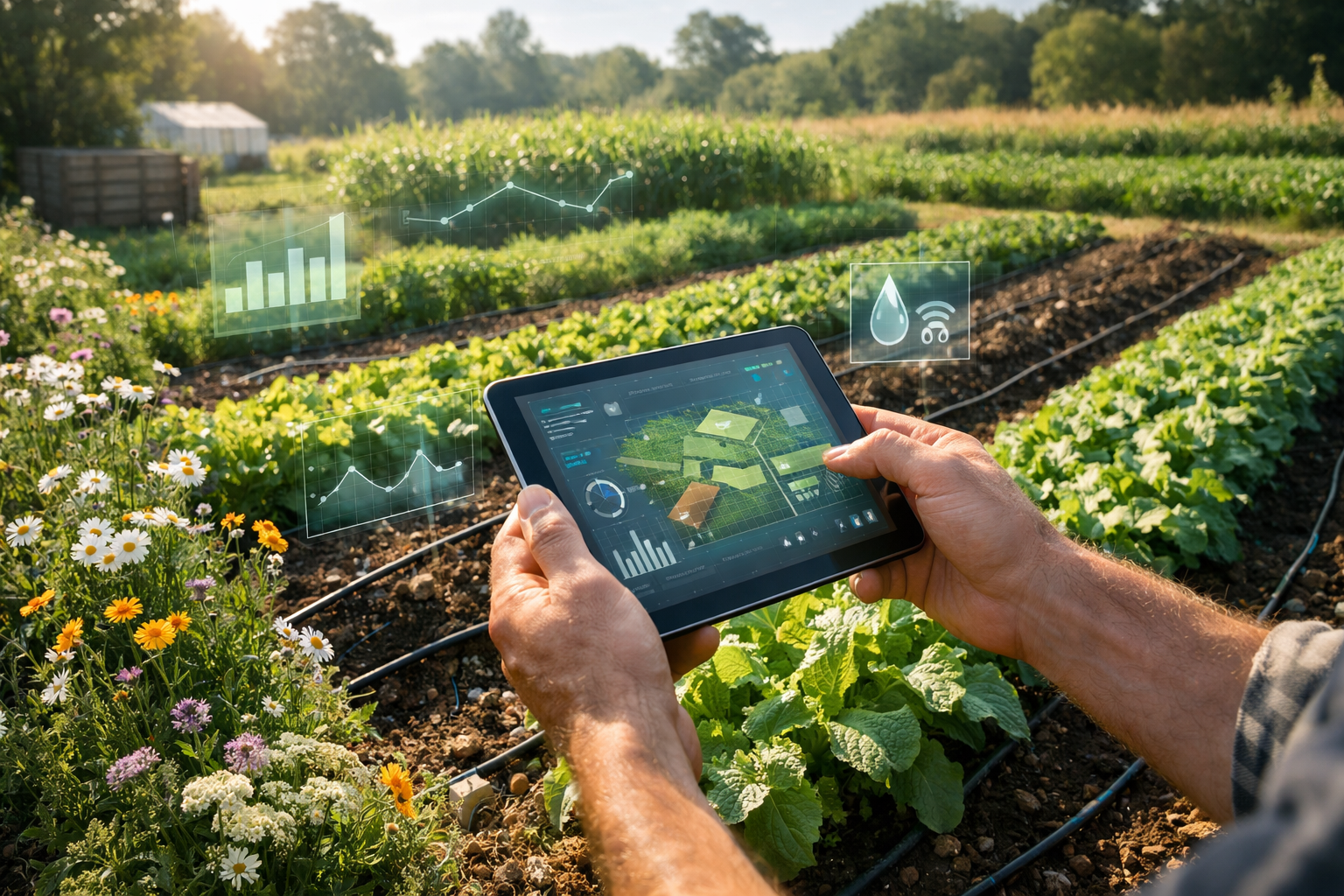
Organic farming isn't just for large operations with certifications and full-time crews. For hobby farms and small homesteads, "organic" is often about growing food you trust, improving your land year over year, and managing pests and weeds without relying on harsh chemicals.
This guide breaks organic farming into clear, doable steps-so you can start (or refine) organic practices on a small acreage without getting overwhelmed.
What "Organic" Means on a Hobby Farm
On a hobby farm, organic farming usually focuses on principles, not paperwork:
- Build soil health first (because healthy soil grows resilient plants)
- Prevent problems instead of reacting to them
- Use natural inputs and low-toxicity controls only when necessary
- Encourage biodiversity: beneficial insects, birds, microbes, and mixed plantings
- Keep good records, even if you're not pursuing certification
If you ever decide to pursue certification later, these habits make the transition much smoother.
Start with Soil: The Foundation of Organic Success
Healthy soil is the "engine" of organic farming. It holds nutrients, buffers drought, and supports the microbial life plants depend on.
Test your soil and learn what it's telling you
Before you add anything, get a baseline soil test. Focus on:
- pH (controls nutrient availability)
- Organic matter (higher usually means better water retention and fertility)
- Major nutrients (N-P-K) and key micronutrients
Pro tip: In organic systems, you're feeding the soil ecosystem-not force-feeding plants.
Build fertility the organic way
On hobby farms, the most effective tools are also the simplest:
- Compost: improves structure, biology, and nutrient holding capacity
- Mulch (straw, leaves, wood chips in paths): reduces weeds and moisture loss
- Cover crops: protect soil and add biomass (think clover, rye, vetch)
- Aged manure: great input-just apply responsibly and avoid fresh manure on food crops
Avoid the most common soil mistakes
- Over-tilling (can reduce soil structure and microbial life)
- Adding "random fertilizers" without a test
- Leaving soil bare (erosion and weed pressure increase fast)
Plan Your Crops Like a Pro (Even on a Small Plot)
Organic farming rewards planning. A little structure up front prevents big headaches later.
Use crop rotation to break pest and disease cycles
Even small gardens benefit from rotation. Rotate by plant family, for example:
- Nightshades: tomatoes, peppers, potatoes
- Cucurbits: squash, cucumbers, melons
- Brassicas: cabbage, broccoli, kale
- Legumes: beans, peas
- Alliums: onions, garlic
Goal: Don't grow the same family in the same spot year after year.
Choose varieties that make organic easier
Look for:
- Disease-resistant varieties
- Shorter "days to maturity" (less time for problems to develop)
- Varieties known to perform in your climate
When in doubt, prioritize reliability over novelty--then experiment once your system is stable.
Weed Control Without Chemicals
Weeds are often the #1 frustration for hobby farmers. Organic weed control is about stacking small advantages until weeds stop winning.
The organic weed-control toolkit
- Mulch heavily around established plants
- Stale seedbed method: water beds, let weeds germinate, then lightly disturb before planting
- Landscape fabric in pathways (paired with wood chips)
- Shallow cultivation early and often (tiny weeds are easy; big weeds are a workout)
- Dense spacing and interplanting to shade soil
Rule of thumb: If weeds are going to be a battle, it's usually because the soil is bare and sunlight is hitting it.
Natural Pest and Disease Management That Actually Works
Organic pest control is less about a single "spray" and more about ecosystem management + early detection.
Step 1: Prevent problems with habitat and diversity
- Plant flowers that attract beneficial insects (dill, yarrow, alyssum, marigold)
- Include hedgerows or mixed borders if you have space
- Avoid over-fertilizing with nitrogen (lush growth can attract pests)
Step 2: Scout early (this matters more than products)
Walk your crops routinely and look for:
- Chewed leaves, stippling, curling
- Eggs on undersides of leaves
- Spots, powdery coatings, wilting, discoloration
Catching issues early often turns a "disaster" into a 5-minute fix.
Step 3: Use low-impact interventions when needed
When prevention isn't enough, organic options can include:
- Hand removal (especially for caterpillars and egg clusters)
- Row covers to block insect access
- Insecticidal soap for soft-bodied pests
- Neem-based products (use carefully and follow label directions)
- Bt for specific caterpillars (targeted, not broad-spectrum)
Important: Always follow product labels and timing, and avoid spraying when pollinators are active.
Watering and Irrigation: Save Time, Reduce Disease
Overhead watering can increase disease pressure, especially in humid weather. For hobby farms, the most practical upgrade is usually:
- Drip irrigation or soaker hoses
- Watering in the morning
- Mulching to reduce evaporation
This combo reduces leaf wetness and keeps watering consistent-two big wins for organic systems.
Organic Livestock on Hobby Farms (If You Keep Animals)
If your hobby farm includes chickens, goats, or other livestock, organic principles still apply:
- Prioritize clean bedding, dry footing, and ventilation (prevention beats treatment)
- Use rotational grazing where possible to reduce parasite loads
- Compost manure properly before applying to crops
- Keep feed storage sealed to reduce rodents
Even a small flock can become a powerful fertility engine when managed well.
Recordkeeping: The Secret Ingredient for Consistent Results
You don't need complicated spreadsheets. You do need a reliable way to remember:
- What you planted, where, and when
- Pest and disease observations
- Inputs applied (compost, amendments, sprays)
- Harvest notes and yields (even rough estimates)
Good notes help you answer questions like: "What worked last year?" and "What caused that problem?"
How OnlyCrops AI Makes Organic Farming Easier on Hobby Farms
Organic farming rewards observation and consistency-but hobby farmers are busy. OnlyCrops AI helps you stay on top of the details without turning your farm into paperwork.
Use Farm Vision to spot problems early
With Farm Vision, you can use your phone camera to document what you're seeing in the field-like leaf spots, pest damage, or nutrient deficiency symptoms-so you can respond while the issue is still small.
What this helps with:
- Faster identification of common issues
- Better tracking of "before and after" results
- Building a visual history of each bed or plot
Ask the AI Assistant for organic-friendly next steps
Not sure whether you're looking at aphids, blight, or sunscald? The OnlyCrops AI Assistant can help you think through:
- Likely causes based on symptoms and timing
- Organic prevention strategies
- Low-impact interventions (like row cover timing, pruning, spacing, or targeted treatments)
- Follow-up scouting steps so you can confirm the diagnosis
Turn record keeping into a habit (without the hassle)
Organic success is built on repetition: rotation, scouting, compost timing, cover crops, and irrigation routines. OnlyCrops AI helps you:
- Log plantings, notes, and observations in one place
- Keep track of what you applied and when
- Review your season quickly so next year is easier-and better
Bottom line: The app supports the two biggest organic advantages--early detection and good records - without demanding extra hours from your day.
A Simple Organic Starter Plan for Hobby Farms
If you want a clear starting point, try this:
- Week 1: Soil test + choose a compost plan
- Week 2: Map plots and set a basic rotation
- Week 3: Mulch pathways and set up drip/soaker irrigation
- Week 4: Plant a small set of reliable crops + start weekly scouting
- Ongoing: Log observations and inputs, adjust based on what you see
Start small, improve one system at a time, and you'll build an organic farm that gets easier every season.
Ready to Farm Organic with Less Guesswork?
Organic farming on a hobby farm is absolutely achievable - especially when you combine healthy soil, preventive planning, and early scouting. The difference between frustration and success often comes down to how quickly you notice problems and how well you track what you tried.
Start using OnlyCrops AI today to identify issues faster with Farm Vision, get organic-friendly guidance from the AI Assistant, and keep clean, organized records that make next season your best one yet.