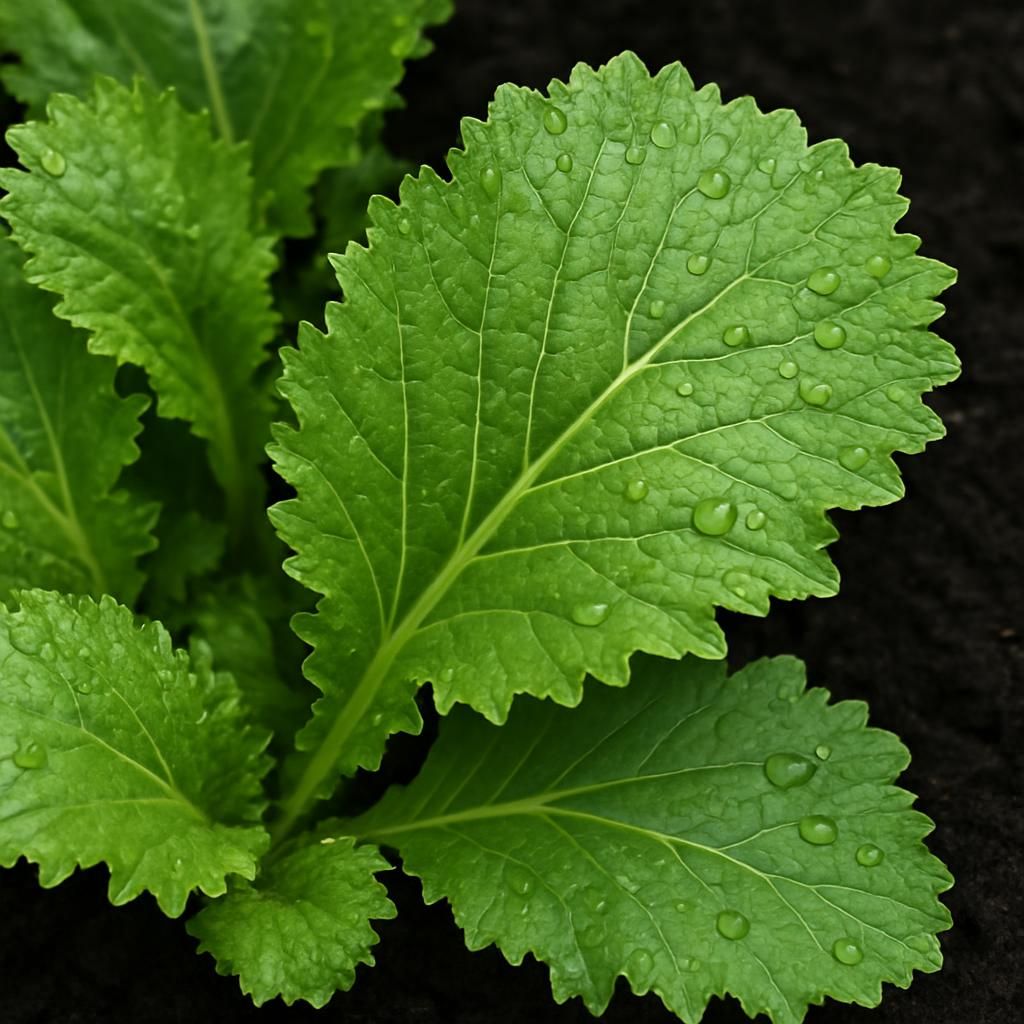
Introduction to Mustard Greens
Mustard greens (Brassica juncea) belong to the Brassicaceae family and are cultivated worldwide for their edible leaves, stems, and seeds. They thrive in cool-season conditions and mature quickly, often within 30–45 days of planting. While prized for their high vitamin, mineral, and antioxidant content, mustard greens are highly susceptible to a range of insect pests, fungal pathogens, and environmental stresses that can devastate commercial and home gardens alike.
Successful production requires careful attention to soil health, crop rotation, and timely intervention against common threats. Because mustard greens share pests with other brassicas such as Cabbage, Kale, and Broccoli, integrated management across the entire brassica crop rotation is essential.
Identifying Symptoms & Damage
Early detection of pest and disease pressure on mustard greens is critical. Common symptoms include irregular holes in leaves, skeletonized foliage, yellowing or wilting, and the presence of frass or webbing. Chewing damage from caterpillars and flea beetles often appears as shot-hole patterns, while aphids and whiteflies cause leaf curling and sticky honeydew deposits. Root damage from nematodes or soil-borne fungi leads to stunting and poor nutrient uptake.
Accurate identification involves examining both upper and lower leaf surfaces, stems, and roots. Use a 10× hand lens to spot eggs, larvae, or fungal structures. Compare observed symptoms against diagnostic keys for brassica-specific pests such as Caterpillars, Flea beetles, and Aphids.
Lifecycle and Progression of Mustard Greens
Mustard greens follow a rapid annual lifecycle from seed to harvest. The table below outlines key stages and associated pest risks.
| Stage | Duration | Description | Common Pests/Diseases |
|---|---|---|---|
| Germination & Seedling | 5–10 days | Cotyledons emerge; high risk of damping-off and flea beetle attack | Flea beetles, Pythium, Rhizoctonia |
| Vegetative Growth | 15–30 days | Rapid leaf expansion; peak vulnerability to aphids, caterpillars, and leaf spots | Aphids, Caterpillars, Alternaria leaf spot |
| Bolting & Flowering | 30–45 days | Stem elongation and flowering; seedpod pests become active | Pod borers, Stink bugs |
| Seed Set & Maturity | 45–60+ days | Pods ripen; storage pests may infest seed | Bruchids, Storage beetles |
Environmental Triggers & Risk Factors
Mustard greens are cool-season crops that prefer daytime temperatures of 15–24 °C and nighttime temperatures above 5 °C. Excessive heat above 30 °C accelerates bolting and reduces leaf quality while favoring aphids and whiteflies. High humidity (>80 %) promotes fungal diseases such as downy mildew and Alternaria leaf spot.
Soil conditions also influence susceptibility. Acidic soils (pH < 6.0) increase clubroot risk, while compacted or poorly drained soils favor root rots. Over-fertilization with nitrogen produces succulent growth attractive to sucking insects. The following table summarizes key environmental parameters.
| Parameter | Optimal Range | Risk Threshold |
|---|---|---|
| Soil pH | 6.0–7.5 | <6.0 increases clubroot |
| Daytime Temperature | 15–24 °C | >30 °C promotes bolting & aphids |
| Relative Humidity | 60–75 % | >85 % favors fungal pathogens |
| Soil Moisture | Even, well-drained | Waterlogging promotes root rots |
Organic Control & Treatment Plans
An integrated approach combining cultural, mechanical, biological, and organic chemical controls delivers the best long-term results. Begin with preventive cultural practices such as crop rotation, sanitation, and row covers. Monitor weekly and apply treatments only when economic thresholds are reached.
| Treatment Option | Target Pest/Disease | Application Frequency | Notes |
|---|---|---|---|
| Floating row covers | Flea beetles, caterpillars, aphids | Install at planting; remove for pollination | 0.5 mm mesh; secure edges |
| Neem oil (0.5–1 %) | Aphids, whiteflies, mites, caterpillars | Every 7–10 days until pressure subsides | Apply in evening; avoid >30 °C |
| Bacillus thuringiensis (Bt) | Caterpillars | Every 5–7 days during larval hatch | Target young instars |
| Insecticidal soap | Aphids, whiteflies, thrips | Every 5–7 days | Thorough coverage of leaf undersides |
| Spinosad | Caterpillars, thrips, leafminers | Every 7–10 days | Rotate with other modes of action |
| Sulfur or potassium bicarbonate | Powdery mildew | Every 7–14 days | Avoid during high heat |
| Compost tea / beneficial microbes | Root rots, damping-off | Soil drench at planting and 2 weeks later | Improves soil biology |
| Hand removal / vacuuming | Visible caterpillars, beetles | Daily during peak activity | Dispose of insects away from garden |
Preventing Mustard Greens in the Future
Prevention begins with site selection and continues through the entire growing season. Choose well-drained fields with full sun and fertile loam soils amended with 5–10 cm of compost. Practice a minimum three-year rotation away from all brassicas to break pest and disease cycles. Use certified disease-free seed and resistant cultivars when available.
Install physical barriers such as floating row covers immediately after seeding. Maintain optimal plant spacing (20–30 cm between plants) to improve airflow and reduce humidity. Remove and destroy crop residues after harvest to eliminate overwintering sites for flea beetles and pathogens. Encourage beneficial insects by planting nectar sources such as alyssum, dill, and Nasturtium.
Monitor weather forecasts and adjust irrigation to avoid prolonged leaf wetness. Avoid excess nitrogen; side-dress with balanced organic fertilizers only as needed. Regular scouting combined with timely cultural interventions dramatically reduces the need for reactive treatments.
Crops Most Affected by Mustard Greens
Because mustard greens share the same pest complex as other brassicas, damage often spills over to neighboring crops. The most commonly affected crops include Cabbage, Kale, Broccoli, Cauliflower, Turnip, Radish, and Collard greens. Flea beetles and aphids readily move between these hosts, while clubroot and Alternaria can persist in soil and residue for multiple seasons.
When planning rotations, separate mustard greens from other brassicas by at least 3–4 years and avoid planting near Lettuce or Spinach beds that may harbor shared viral vectors. Diversifying plantings with non-host crops such as Onion, Garlic, and Carrot helps dilute pest pressure and supports beneficial insect populations.
For additional context on brassica pest dynamics, see the University of Minnesota Extension guide on Brassica pests. Readers may also benefit from practical insights in the blog post Crop Rotation Realities: 6 Organic Patterns That Deliver for Small Farms.