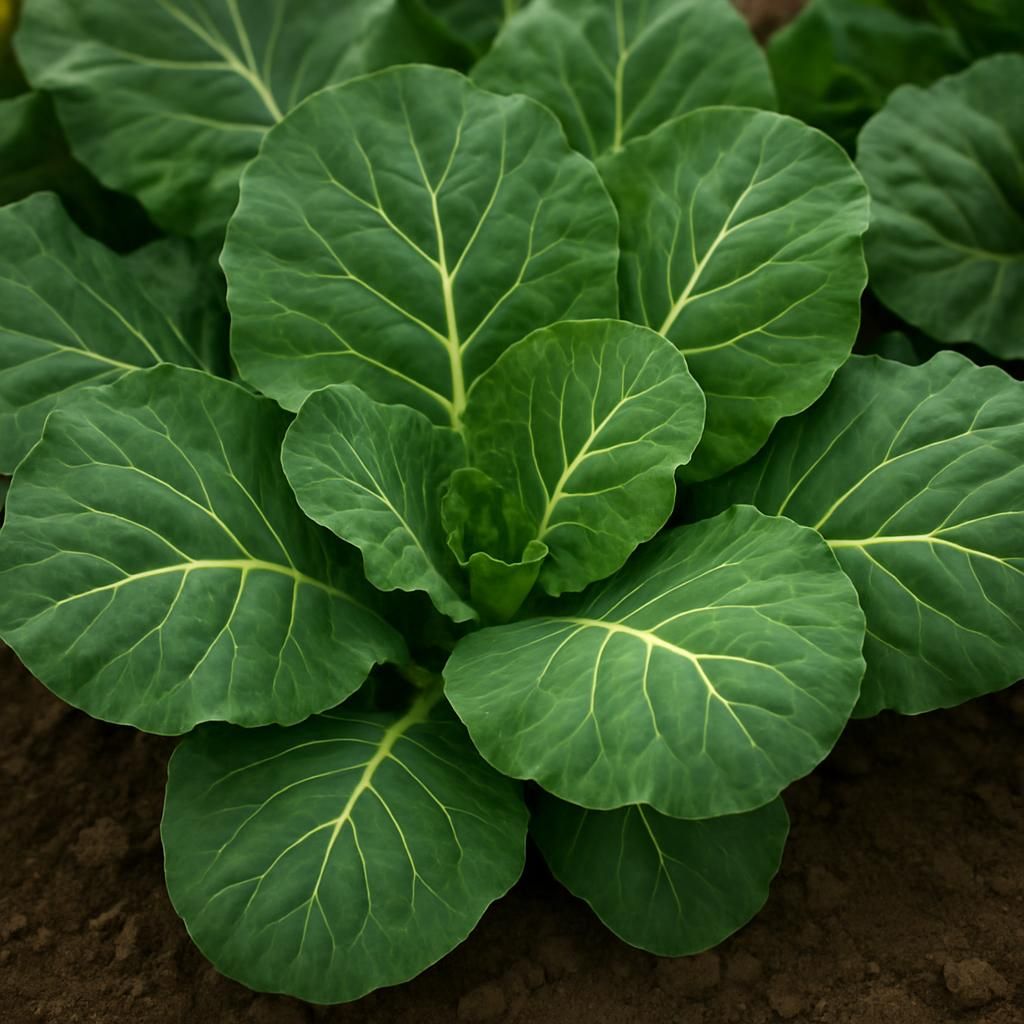
Introduction to Collard greens
Collard greens (Brassica oleracea var. viridis) are a staple cool-season crop valued for their nutrient density and resilience. These non-heading brassicas produce large, tender leaves that remain productive through light frosts and even moderate freezes. Their mild, slightly sweet flavor improves after exposure to cold temperatures, making them a favorite for both home gardeners and commercial growers seeking reliable winter greens.
Botanical Profile of Collard greens
Collard greens belong to the Brassicaceae family and share close genetic ties with cabbage, kale, and broccoli. The plants form a loose rosette of thick, leathery leaves supported by a central stem that can reach 2–4 feet in height when allowed to bolt. Leaves are typically oval to lance-shaped with prominent veins and a waxy cuticle that helps reduce water loss. Unlike heading brassicas, collards do not form a compact head; instead, they continue producing new foliage from the center as outer leaves are harvested.
Soil, pH, and Climate Requirements for Collard greens (MUST INCLUDE A MARKDOWN TABLE OF IDEAL CONDITIONS)
Collard greens thrive in fertile, well-drained soils with consistent moisture and moderate fertility. They prefer full sun but tolerate partial shade in warmer climates. The following table summarizes optimal growing parameters:
| Parameter | Ideal Range | Notes |
|---|---|---|
| Soil Type | Loamy, well-drained | Sandy loam amended with organic matter |
| Soil pH | 6.0–7.5 | Slightly acidic to neutral; avoid below 5.8 |
| Temperature Range | 45–75 °F (7–24 °C) | Tolerates light frost down to 20 °F |
| Spacing | 18–24 in between plants | Rows 30–36 in apart |
| Sun Exposure | Full sun (6–8 hrs) | Afternoon shade beneficial in heat |
| Soil Moisture | Consistent, 1 in/week | Mulch helps retain moisture |
Step-by-Step Planting & Propagation
Site Selection & Preparation: Choose a location with full sun and good air circulation. Incorporate 2–3 inches of well-rotted compost or aged manure into the top 8–10 inches of soil. Perform a soil test and adjust pH if necessary using lime or sulfur.
Timing: Direct sow or transplant 6–8 weeks before the first expected fall frost or 4–6 weeks before the last spring frost. In mild-winter regions, plant in late summer for winter harvest.
Seed Starting: Sow seeds ½ inch deep in seed trays or directly in the garden. Maintain soil temperature of 55–70 °F for rapid germination (5–10 days). Thin seedlings to 18–24 inches apart once they have 3–4 true leaves.
Transplanting: Harden off indoor-started seedlings for 7–10 days. Transplant on a cool, overcast day, planting at the same depth as the container. Water thoroughly after planting.
Care & Maintenance regimes for Collard greens (MUST INCLUDE A MARKDOWN TABLE OF WATER, FERTILIZER, AND PRUNING SCHEDULES)
Consistent moisture and balanced nutrition are essential for tender, high-quality leaves. The following schedule outlines recommended practices:
| Growth Stage | Watering Schedule | Fertilizer Application | Pruning / Maintenance |
|---|---|---|---|
| Establishment (0–3 wks) | 1–1.5 in/week; keep evenly moist | Side-dress with ½ cup balanced organic fertilizer per 10 ft row | Remove damaged lower leaves |
| Vegetative (3–8 wks) | 1 in/week; mulch to conserve moisture | Top-dress with compost tea every 3–4 weeks | Harvest outer leaves regularly to encourage new growth |
| Mature / Bolting Stage | Reduce to 0.75 in/week if cool | Avoid excess nitrogen to limit bolting | Remove flower stalks promptly |
Pests, Diseases & Organic Management
Common pests include aphids, cabbage loopers, flea beetles, and slugs. Diseases such as clubroot, downy mildew, and Alternaria leaf spot can affect collards under humid conditions.
Organic Control Strategies:
- Use floating row covers to exclude flying insects.
- Apply Bacillus thuringiensis (Bt) for caterpillar control.
- Handpick slugs and use beer traps.
- Practice crop rotation and avoid planting in areas with previous clubroot history.
- Spray neem oil or insecticidal soap for aphids.
- Ensure good airflow and avoid overhead irrigation to reduce fungal pressure.
Harvesting, Curing & Optimal Storage
Harvest outer leaves when they reach 8–12 inches in length, leaving the central growing point intact. Regular harvesting promotes continuous production. For best flavor, pick after a light frost. Collard greens store best unwashed in perforated plastic bags in the refrigerator crisper drawer for up to 7–10 days. For longer storage, blanch and freeze leaves or make collard kraut.
Companion Planting for Collard greens
Collards pair well with aromatic herbs and alliums that deter pests. Recommended companions include onion, garlic, thyme, nasturtium, and marigold. Avoid planting near strawberries or other brassicas that share similar pest pressures. Summer Companion Planting: 10 Organic Pairings to Boost Small Farm Resilience provides additional strategies for integrating collards into diverse plantings.