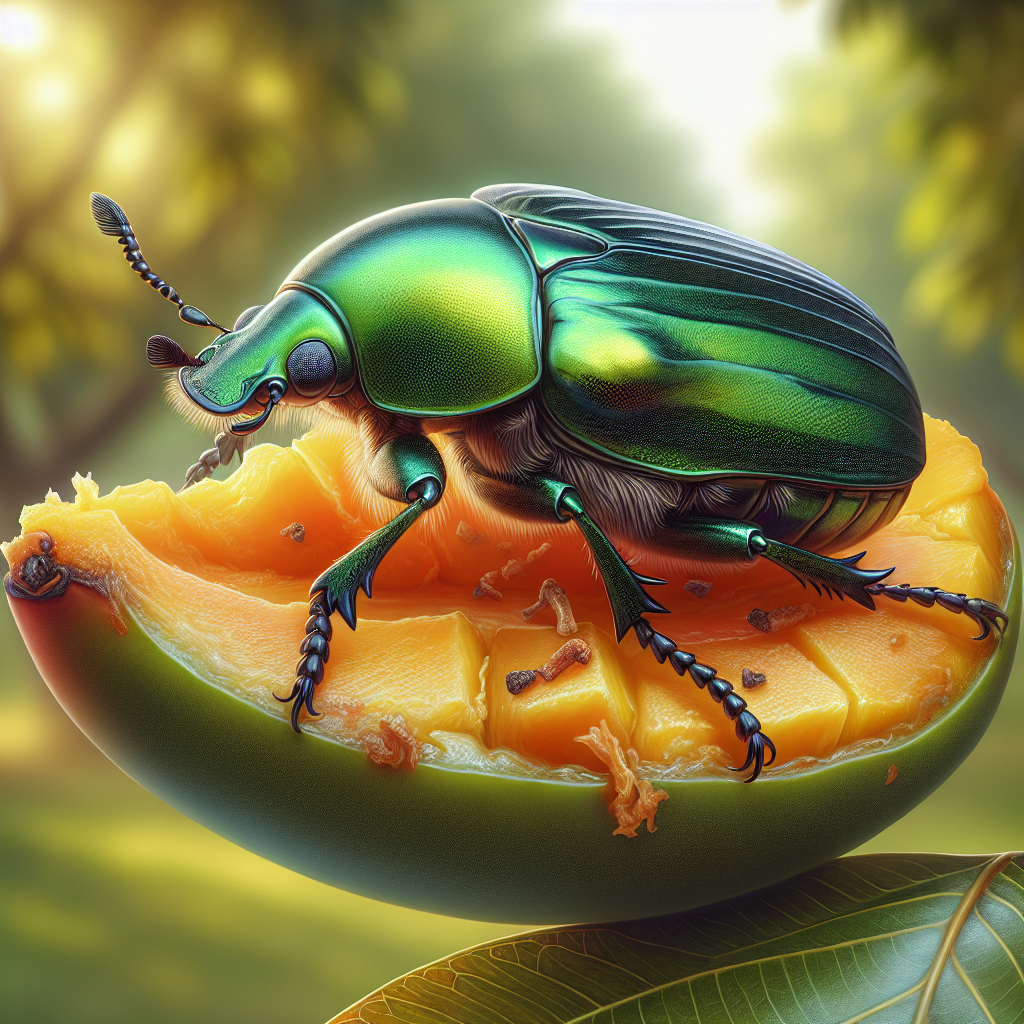
Introduction to Fruit beetles
Fruit beetles, also known as flower chafer beetles or fig beetles, represent a diverse group of pests primarily from the Scarabaeidae and Cetoniidae families. Common species include the green fruit beetle (Cotinis mutabilis) in North America, figeater beetles, and various Pachnoda species in Africa and Asia. These beetles are notorious in tropical and subtropical agriculture for their voracious appetite for soft, ripening fruits, leading to substantial economic losses in orchards. Adults are medium to large-sized (1-4 cm), shiny, and often metallic green, brown, or black with striking iridescent colors that make them visually distinctive but agriculturally destructive.
These pests thrive in warm climates, targeting overripe or damaged fruits but readily attacking healthy ones during peak ripening seasons. Unlike borers that tunnel inside, fruit beetles feed externally, creating characteristic ragged holes and accelerating fruit rot. Global trade and climate change have expanded their range, making them a growing threat to mango, avocado, and other high-value crops. Understanding their biology is crucial for implementing timely interventions. This guide provides professional-grade diagnostics, lifecycle insights, and organic management strategies to protect yields effectively.
Identifying Symptoms & Damage
Diagnosing fruit beetle infestations requires keen observation during fruit development stages. Primary symptoms include irregular, chewed-out holes on fruit surfaces, often clustered around the stem end or sun-exposed sides. Damage appears as scooped-out cavities filled with frass (beetle excrement), which is fine, sawdust-like pellets. Affected fruits exude juice, attract secondary pests like fruit flies, and spoil prematurely, leading to 20-50% yield losses in severe cases.
Look for adult beetles actively feeding during daylight hours, as many species are diurnal. They are strong fliers, buzzing loudly when disturbed, and may drop to the ground from infested trees. Larvae, less commonly observed, inhabit moist soil under host trees, causing root damage that manifests as stunted growth or wilting in young plants. Differentiate from other chewers like birds or slugs by the clean-cut edges and absence of slime trails. Use sticky traps baited with fermenting fruit to confirm presence. Early scouting in canopies and fallen fruits prevents escalation, especially in peach and fig orchards.
Secondary signs include increased sooty mold on fruit due to honeydew-like excretions, though less common than in sap-feeding pests. Inspect at dawn or dusk when beetles congregate. For precise identification, note body shape: broad, convex with clubbed antennae. Damage severity peaks in humid conditions, accelerating fungal invasions like anthracnose.
Lifecycle and Progression of Fruit beetles
Fruit beetles undergo complete metamorphosis with four distinct stages: egg, larva, pupa, and adult. Females lay 20-60 eggs in moist soil or decaying organic matter near host plants during summer rains. Eggs hatch in 1-2 weeks into C-shaped, white grubs (larvae) that feed on humus, roots, and compost for 6-12 months, growing up to 5 cm long. Larval damage is subtler, weakening tree vigor but rarely killing mature plants.
Pupation occurs in earthen cells 20-30 cm deep, lasting 2-4 weeks, emerging as adults in late spring to summer. Adults live 4-8 weeks, focusing energy on mating and feeding. Peak activity aligns with fruit ripening, with one to two generations per year in temperate zones and continuous in tropics. Overwintering happens as late-stage larvae in soil, resuming development in spring.
Lifecycle progression ties directly to environmental cues: soil moisture for egg-laying, warmth for larval growth. Monitor soil temperatures above 20°C (68°F) for emergence risks. This knowledge enables targeted interventions, like soil treatments post-harvest to disrupt larvae. For more on related pests, see our comprehensive guide on Spring Pest Patrol: Organic AI Strategies to Shield Your Crops from Common Invaders.
Environmental Triggers & Risk Factors
Fruit beetles flourish in warm, humid environments with temperatures of 25-35°C (77-95°F) and high soil moisture. Overripe or split fruits act as attractants, drawing adults from kilometers away via pheromones and volatiles. Poor sanitation—leaving fallen fruits—exacerbates infestations, as does excessive nitrogen fertilization promoting lush, succulent growth.
Risk factors include proximity to native vegetation harboring wild hosts, monsoon seasons boosting larval survival, and climate warming extending activity periods. Monoculture orchards of susceptible crops heighten vulnerability, while windbreaks can trap flying adults. Soil compaction reduces larval predation by natural enemies like birds or parasitic wasps. Drought-stressed trees produce thinner skins, inviting easier access. Integrated monitoring of weather data helps predict outbreaks; for instance, prolonged rains increase egg viability by 30-50%.
Organic Control & Treatment Plans
Organic management emphasizes prevention and biological controls over chemicals. Cultural Controls: Remove and destroy fallen or infested fruits daily to eliminate breeding sites. Use fine mesh netting (1-2 mm) over canopies from fruit set to harvest, especially for small orchards. Prune for better airflow and light penetration, reducing humidity.
Biological Controls: Introduce entomopathogenic nematodes (Heterorhabditis bacteriophora) to soil targeting larvae—apply post-harvest at 10^9 infective juveniles per hectare. Encourage predators like birds, chickens under trees, or parasitic wasps. Neem oil (azadirachtin 0.03%) sprays deter feeding; apply evenings to avoid bees, repeating every 7-10 days.
Physical Traps: Yellow sticky traps or bucket traps with fermenting banana/molasses bait capture adults. Pheromone traps for specific species enhance efficacy. Hand-pick beetles at dawn, dropping into soapy water. For severe cases, kaolin clay sprays create a protective fruit barrier.
Treatment Timeline: Scout weekly from bloom; trap at petal fall; net high-risk crops; soil drench larvae in fall. Rotate tactics to prevent resistance. Combine with companion plants like marigold to repel beetles.
Preventing Fruit beetles in the Future
Long-term prevention builds resilient systems. Plant beetle-resistant varieties, such as thick-skinned Hass avocado cultivars. Maintain orchard hygiene: deep plow soil annually to expose larvae to predators and desiccation. Mulch with diatomaceous earth to deter egg-laying.
Crop rotation disrupts lifecycle; interplant with repellents like garlic or thyme. Install permanent exclusion netting or row covers. Monitor with degree-day models tracking emergence (base 15°C). Foster biodiversity: hedgerows with native flowers support beneficial insects. Post-harvest, flood-irrigate soil to drown larvae. Annual audits reduce populations by 70-90% over time. Educate on early warning signs for community-wide efforts.
Crops Most Affected by Fruit beetles
Fruit beetles target soft-skinned, sugar-rich fruits, devastating tropical and subtropical crops. Top victims include mango, banana, papaya, guava, and pineapple, with losses up to 40% in unmanaged groves. Stone fruits like peach, plum, and cherry suffer heavily in summer. Citrus such as orange and fig face secondary damage. Even tomato and berries like strawberry attract opportunistic feeders. Diversify plantings to mitigate risks across dragon fruit and pomegranate.