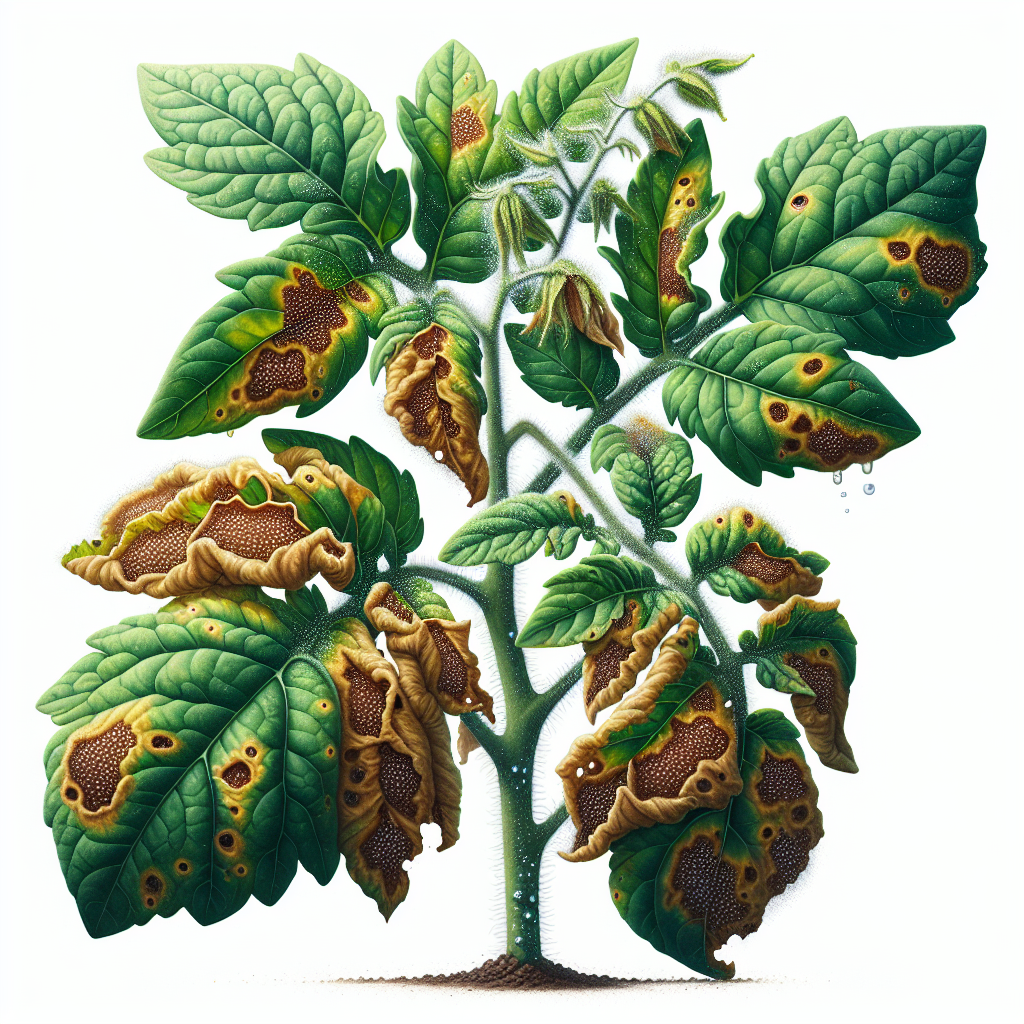
Introduction to Foliar blights
Foliar blights represent a critical challenge in modern agriculture, encompassing a group of fungal diseases that target the leaves of crops, leading to widespread necrosis, reduced photosynthetic capacity, and substantial yield losses. These diseases are caused primarily by pathogens such as Alternaria spp., Septoria spp., Botrytis spp., and Exserohilum spp., which thrive in warm, humid environments. Unlike localized leaf spots, foliar blights spread rapidly across entire canopies, often resulting in 20-50% yield reductions in severe cases. For farmers growing tomato, wheat, or potato, recognizing and managing foliar blights is essential for sustainable production.
The economic impact is profound, with global losses estimated in billions annually due to defoliation that compromises fruit quality and plant vigor. In organic systems, where synthetic fungicides are unavailable, integrated strategies become paramount. This guide provides professional-grade diagnostics, lifecycle insights, organic treatments, and prevention tactics tailored for small to medium-scale operations. Early intervention can salvage crops, while proactive measures build long-term resilience against these pervasive pathogens. Understanding foliar blights empowers growers to protect their harvests effectively.
Identifying Symptoms & Damage
Accurate diagnosis begins with keen observation of leaf symptoms, which evolve predictably across infection stages. Initial signs include small, water-soaked lesions on lower leaves, often appearing 7-10 days after spore germination. These spots expand into irregular brown to black necrotic areas with yellow halos, characteristic of many blights like Alternaria leaf spot or Septoria leaf spot.
As the disease progresses, lesions coalesce, forming large blighted patches that give leaves a scorched appearance—hence the 'blight' moniker. Affected foliage wilts, curls, and drops prematurely, exposing fruits or stems to sunburn. In humid conditions, sporulation creates olive-gray or velvety fungal growth on lesion undersides, aiding spore dispersal via wind or rain splash. Differentiate from powdery mildew by the absence of white powdery residue and from bacterial blights by lesion edges that are zonate rather than water-soaked.
Damage extends beyond aesthetics: severe defoliation reduces carbohydrate production by up to 40%, stunting growth and lowering yields. In grains like corn, blights cause premature senescence, reducing kernel fill. Vegetables such as cucumber show rapid canopy collapse, while tree crops like apple suffer twig dieback. Scout weekly during wet periods, using a 10x hand lens to confirm fungal structures. Yield impacts scale with infection timing—early-season outbreaks are most devastating, potentially halving harvests.
Lifecycle and Progression of Foliar blights
Foliar blight pathogens follow a polycyclic lifecycle, enabling multiple infection cycles per season. Primary inoculum overwinters in crop debris, soil, or alternate hosts as mycelium, sclerotia, or spores. Spring rains splash conidia onto lower leaves, where high relative humidity (>90%) and temperatures (20-28°C) trigger germination within 6-12 hours.
The incubation period lasts 3-7 days, producing secondary conidia that spread via wind, driving epidemics. Optimal conditions accelerate 5-10 cycles per season, with each expanding blighted area exponentially. In potato, Alternaria solani produces chains of conidia on necrotic tissue, dispersing up to 100 meters. Disease progression follows a sigmoidal curve: slow initial spread, rapid mid-season escalation, and plateau as host tissue depletes.
Senescence phases see surviving mycelium recolonizing debris, completing the cycle. Interrupt this loop by removing residue and timing plantings to avoid peak spore release. Understanding progression informs spray schedules—protectant fungicides pre-infection, curatives post-scout detection.
Environmental Triggers & Risk Factors
Foliar blights explode under prolonged leaf wetness (8-48 hours), high humidity (80-100%), and moderate warmth (15-30°C). Overhead irrigation, dense canopies, and poor airflow exacerbate splash dispersal. Risk spikes after heavy dews, thunderstorms, or in valleys with cool nights and warm days.
Susceptible varieties, excessive nitrogen promoting lush growth, and stressed plants from drought or nutrient imbalance heighten vulnerability. Crop rotation gaps allow buildup from related pathogens like Cercospora. In wheat, no-till fields retain inoculum; in soybeans, double-cropping shortens rotations, amplifying risks. Monitor with weather stations—disease forecasting models like Smith-Onion predict outbreaks using leaf wetness hours.
Organic Control & Treatment Plans
Organic management integrates cultural, biological, and approved fungicides. Cultural: Prune for airflow, space plants adequately (e.g., 45-60cm for tomatoes), and mulch to suppress splash. Remove lower leaves at flowering. Biological: Apply Trichoderma or Bacillus subtilis (e.g., Serenade) weekly from first symptoms—efficacy reaches 60-80% in trials.
Fungicides: Copper-based (e.g., Bordeaux mix) or OMRI-listed potassium bicarbonate at 7-14 day intervals. For corn, neem oil disrupts spore germination. Scout thresholds: 10% leaves affected triggers action. Rotate modes to prevent resistance. In advanced cases, strip infected lower canopy and boost potassium for tolerance. Integrated plans reduce severity by 70%, per extension studies. Read our Spring Pest Patrol blog for complementary tactics.
Preventing Foliar blights in the Future
Prevention hinges on breaking the lifecycle pre-infection. Select resistant varieties—e.g., 'Mountain Merit' potato or 'Defiance' corn. Rotate crops 2-3 years, avoiding host families. Bury debris post-harvest or flame-kill surface residue. Time planting to evade peak humidity; use row covers during wet spells.
Enhance vigor with balanced fertility—avoid excess N. Improve drainage and airflow via staking/trellising. Apply preventative biofungicides at canopy closure. Monitor with apps tracking wetness hours. Clean tools/equipment to curb spread. Long-term, interplant Thai basil as a repellent. These strategies cut incidence by 80-90% in proactive systems.
Crops Most Affected by Foliar blights
Foliar blights plague solanaceous crops like tomato, potato, and eggplant, where Alternaria and Septoria cause 30-60% losses. Cereals including wheat, corn, barley, and rice suffer from Exserohilum turcicum or Setosphaeria blights. Legumes such as soybeans and peas face Cercospora epidemics.
Vegetables like cucumber, squash, and lettuce are vulnerable in humid tunnels. Tree fruits—apple, grapes, strawberry—see Botrytis blights during wet harvests. Tropicals including mango and banana report anthracnose-like foliar phases. Grains dominate global impact, but vegetables drive small-farm concerns. Tailor defenses to your rotation.