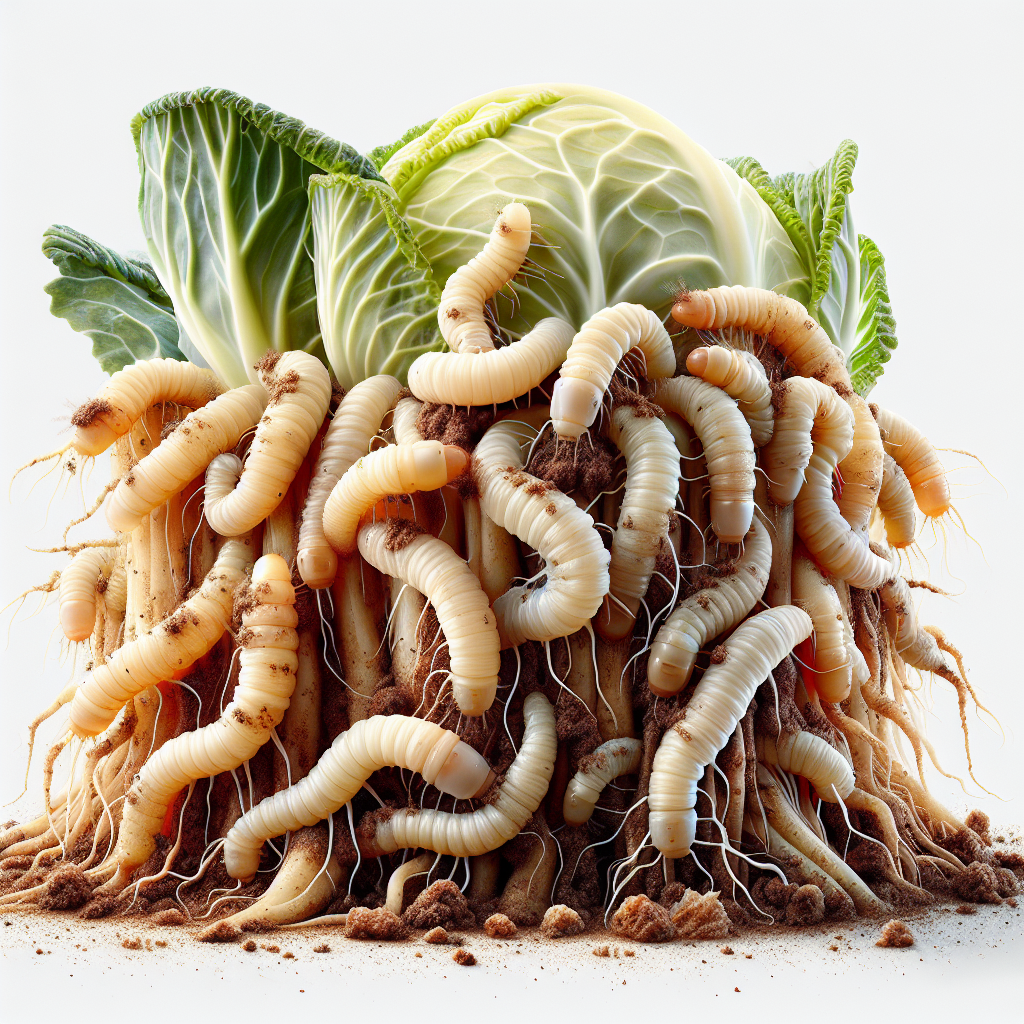
Introduction to Cabbage root maggots
Cabbage root maggots (Delia radicum) represent one of the most insidious threats to brassica vegetable production worldwide, particularly in temperate climates. These pests, belonging to the Anthomyiidae family, lay eggs near the soil surface around host plants, and their legless, white larvae tunnel into roots, petioles, and stems, feeding voraciously and often leading to complete crop failure. Adult flies resemble small houseflies, measuring 6-7 mm long with gray bodies and black bristles, emerging in early spring to initiate infestations.
First identified as a major pest in Europe during the 18th century, cabbage root maggots have since spread across North America, Canada, and parts of Asia, thriving in cool, moist conditions. Their impact extends beyond direct feeding damage; larvae create entry points for soil pathogens like Pythium and Rhizoctonia, exacerbating secondary infections. In commercial fields and home gardens alike, losses can reach 50-100% without intervention, making proactive management essential.
Understanding this pest's biology is key to control. Unlike foliar pests such as cabbage worms, cabbage root maggots operate belowground, evading surface scouting. This guide equips growers with diagnostic tools, lifecycle insights, risk assessment, organic treatments, prevention tactics, and a list of affected crops. For more on brassica cultivation, check our detailed Cabbage (crop) page. Early detection and integrated strategies can preserve harvests effectively.
Identifying Symptoms & Damage
Diagnosing cabbage root maggot infestations requires vigilance, as symptoms mimic nutrient deficiencies or drought stress. The earliest sign appears 2-3 weeks after planting: seedlings or transplants exhibit stunted growth, bluish-green foliage, and premature wilting, even under adequate irrigation. Plants may lean or fall over due to severed roots, with a characteristic foul odor from decaying tissue.
Inspect the base of affected plants for glistening white maggots, 3-8 mm long, often coiled in tunnels within roots. Damage manifests as irregular holes and brown lesions on taproots and lateral roots, reducing water uptake and nutrient absorption. In severe cases, multiple maggots per plant cause rapid collapse, especially in young broccoli or cauliflower heads.
Secondary indicators include adult flies hovering low over soil or resting on plants, and ribbon-like pupae (5-6 mm) near stems. Differentiate from cutworms, which cut stems at night, or wireworms, which create finer tunnels. Use yellow sticky traps to monitor fly activity; counts exceeding 5 per trap signal active infestation.
Cross-section roots to confirm: maggot tunnels fill with frass and rot. In broccoli and cauliflower, marketable heads become undersized or aborted. Yield losses correlate with maggot density; 10+ larvae per plant often results in total loss. Regular soil digs around suspect plants aid confirmation.
Lifecycle and Progression of Cabbage root maggots
Delia radicum completes 2-4 generations annually, depending on climate, with lifecycle spanning 3-6 weeks per cycle. Adults overwinter as pupae 5-10 cm deep in soil, emerging when soil temperatures reach 15°C (59°F) in spring, coinciding with brassica planting. Females lay 50-300 creamy-white eggs in clusters of 10-20 around plant bases over 2-3 weeks, preferring cracks in soil from transplants.
Eggs hatch in 3-6 days into first-instar larvae, which burrow immediately into roots. Larvae progress through three instars over 2-3 weeks, growing from 1 mm to 9 mm, then drop into soil to pupate. New adults eclose in 10-20 days, repeating the cycle through summer until fall pupation for overwintering.
Peak activity aligns with 10-20°C (50-68°F) soils; cooler springs delay emergence, hotter summers suppress later generations. In northern regions, two generations dominate; southern areas see three or four. Pupae remain viable 1-2 years, posing persistent threats.
Monitoring degree-days (base 6°C) predicts flights: first generation at 210 DD, second at 650 DD. This timing informs control applications. For companion strategies, see Spring Pest Patrol: Organic AI Strategies to Shield Your Crops from Common Invaders.
Environmental Triggers & Risk Factors
Cabbage root maggots flourish in cool, moist soils (pH 6.0-7.5), with optimal infestation at 16-20°C and high humidity. Early spring plantings trigger first-generation attacks, as females seek fresh transplants. Poor soil drainage exacerbates damage, creating ideal larval habitats; compacted or waterlogged fields amplify losses by 30-50%.
Previous brassica crops or weeds like shepherd's purse serve as reservoirs, increasing local populations. No-till systems without rotation harbor overwintering pupae, while acidic soils deter natural enemies. Proximity to wild crucifers heightens risk; fields near mustards or wild radish face 2-3x higher infestations.
Climate change extends seasons, potentially adding generations. Nitrogen-rich fertilizers attract egg-laying; avoid excess early applications. Scout high-risk sites: sandy loams near 15°C soils post-rain. Integrate with clubroot management, as combined stresses devastate kale.
Organic Control & Treatment Plans
Organic management emphasizes cultural, biological, and mechanical tactics over chemicals. Row Covers: Deploy fine mesh (0.4 mm) immediately after planting; effective 90% against adults. Anchor securely for 6-8 weeks or until second generation passes.
Biological Controls: Introduce Steinernema feltiae nematodes (200,000/m²) at egg hatch; irrigate post-application for soil penetration. Parasitic wasps like Aleochara bilineata target pupae naturally. Yellow sticky traps (10/ha) capture adults; add water traps with fish oil.
Approved Insecticides: Spinosad or pyrethrins as drenches (label rates), timed to peak flights. Diatomaceous earth around stems repels but requires reapplication after rain. Crop rotation (3-4 years away from brassicas) disrupts cycles.
Treatment Plan:
- Monitor traps weekly from soil 10°C.
- Apply nematodes at first maggots detected.
- Use row covers on high-value crops.
- Till soil post-harvest to expose pupae to predators.
- Companion plant with onion or garlic for repellency.
Integrated plans reduce populations 70-90%. Avoid root-knot nematodes by solarizing soil pre-planting.
Preventing Cabbage root maggots in the Future
Prevention hinges on cultural disruption. Rotate brassicas with non-hosts like potato, corn, or legumes for 3 years minimum. Delay spring planting until after first fly peak (mid-May in many zones). Use transplants over direct seed to bypass peak egg-laying.
Incorporate mustard biofumigants or marigold residues to suppress pupae. Maintain soil health with cover crops like clover to foster predators. Tarp fields post-harvest for solarization, killing 80% pupae.
Select resistant varieties: 'Market Prize' cabbage or 'Consor' broccoli show tolerance. Monitor weather-triggered flights via degree-days. Long-term, enhance biodiversity with hedgerows attracting parasitic flies. Consistent practices yield pest-free crops year-over-year.
Crops Most Affected by Cabbage root maggots
Primarily brassicas, cabbage root maggots target:
- Cabbage (all varieties, esp. early types)
- Broccoli
- Cauliflower
- Kale
- Brussels sprouts (implied via brassicas)
- Radish
- Turnip
- [Mustard greens]
Secondary hosts include beet and mustard. Avoid planting near these in rotations.