Introduction to Botryosphaeria
Botryosphaeria, caused by various species within the Botryosphaeria genus (commonly Botryosphaeria dothidea and related fungi like Neofusicoccum spp.), represents one of the most destructive fungal pathogens in agriculture. This opportunistic fungus targets woody plants and trees, inducing cankers, shoot dieback, leaf blight, and fruit decay, leading to significant yield reductions and plant mortality. As a latent pathogen, it often remains dormant in healthy tissues, activating during periods of environmental stress to cause rapid decline.
Worldwide, Botryosphaeria affects orchards, vineyards, and nurseries, with economic losses exceeding millions annually in crops like grapes, avocado, and apple. Its ability to produce pycnidia—small, black, flask-shaped fruiting bodies—distinguishes it from other canker diseases. Early detection and integrated management are crucial, as chemical controls alone are insufficient against this resilient fungus. This guide provides professional-grade diagnostic tools, organic treatments, and prevention strategies tailored for small farms and commercial operations. For more on small farm disease management, check this Soil Health Mastery blog post.
Understanding Botryosphaeria's biology is key to control. Spores spread via rain splash, wind, and contaminated tools, infecting through wounds or natural openings. Infected plants exhibit reduced vigor, making them susceptible to secondary pests like aphids or scale insects. Proactive cultural practices can suppress outbreaks by over 70%, according to extension studies from UC Davis and Cornell University.
Identifying Symptoms & Damage
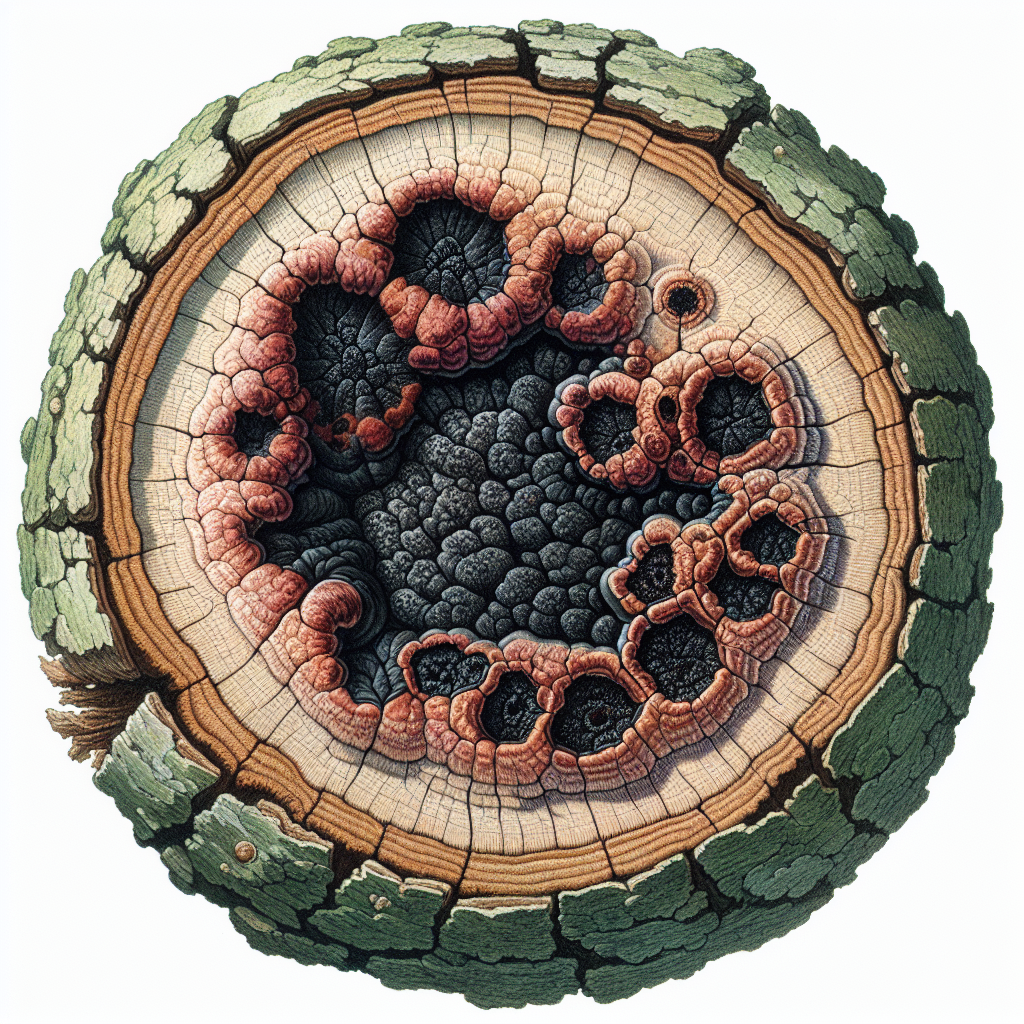
Botryosphaeria symptoms vary by host but share hallmark signs: sunken, discolored cankers on branches, trunks, and roots; wilting shoots; and black, oozing lesions. On leaves, small, irregular necrotic spots expand into blights, often with zonate patterns. Fruit develops dark, sunken rots, sometimes with white mycelium under humid conditions.
Diagnostic Checklist:
- Cankers: Elliptical, sunken areas with cracked bark; inner bark dark brown to black, with amber gum in stone fruits.
- Dieback: Shoots wilt suddenly, leaves turn brown while attached; longitudinal cracks reveal blackened vascular tissue.
- Fruit Symptoms: Brown, leathery spots on peach or mango drupes; internal decay without distinct odor.
- Microscopic ID: Slice cankers to find black pycnidia (0.1-0.3 mm) exuding white spore tendrils in moisture.
Differentiate from Phytophthora (water-soaked lesions, oomycete smell) or Botrytis (gray fuzz). Lab confirmation via culturing on PDA agar shows fast-growing, dark colonies. Damage escalates in stressed trees: a single canker can girdle limbs, causing 20-50% canopy loss. In Hass Avocado, branch dieback leads to defoliation and fruit drop, mimicking drought.
Field diagnosis tip: Cut 1-inch sections above/below lesions; healthy tissue is cream-colored, infected is chocolate-brown. Yield impacts: 30-80% in severe orchard infections.
Lifecycle and Progression of Botryosphaeria
Botryosphaeria's lifecycle is polycyclic, with conidia (asexual spores) driving epidemics. The fungus overwinters in cankers, bark, or xylem as mycelium or stromata. In spring, pycnidia form, releasing conidia in 5-spore chains via cirri during rain (>2 hours wetting).
Spores germinate on wet surfaces, penetrating wounds within 6-12 hours at 20-30°C. Latency lasts 1-3 years; symptoms appear post-stress. Sexual ascospores (ascospores) in pseudothecia spread long-distance via wind. Progression: Infection → colonization (2-4 weeks) → canker expansion (1-2 cm/month) → girdling → dieback.
Peak sporulation: summer rains. In olive groves, one storm can infect 100+ trees via splash. Lifecycle completes in 4-6 weeks, enabling multiple cycles/year. Dormant in dry conditions, surging with drought recovery flushes.
Environmental Triggers & Risk Factors
Botryosphaeria exploits plant stress: drought, flooding, frost injury, poor nutrition, and mechanical wounds. Optimal: 25-35°C, high humidity (>80% RH) for infection, followed by drought for symptom expression. Soil pH extremes (>8.0 or <5.5) weaken defenses.
Risk factors:
- Overcrowding: Poor airflow in young almond orchards.
- Irrigation flaws: Overhead watering spreads spores; deficit stress primes infection.
- Cultivar susceptibility: Thin-barked varieties like young pear.
- Site issues: Heavy clay soils, frost pockets.
Climate change intensifies outbreaks; warmer winters boost overwintering survival. Companion stressors like root rot amplify damage.
Organic Control & Treatment Plans
No cure exists; focus on suppression. Step 1: Sanitation—Prune cankers 4-6 inches below visible margins during dry periods; destroy debris (burn/chip). Disinfect tools with 10% bleach.
Step 2: Organic Fungicides—Apply copper hydroxide (e.g., Cueva) at bud swell and post-rain (3-5x/season, 7-day intervals). Bacillus subtilis (Serenade) for bio-control, reducing conidia by 50%. Neem oil suppresses sporulation.
Step 3: Nutrition—Boost potassium (4-6% leaf tissue) via compost tea; avoid excess N. Mycorrhizal inoculants enhance resilience.
Integrated Plan:
| Stage | Action | Frequency |
|---|---|---|
| Pre-bloom | Copper spray | 1x |
| Growing | Bio-fungicide + prune | Every 14 days |
| Post-harvest | Sanitation | Annual |
In trials, this cuts spread 60-80%. For pecan, trunk injections of phosphites aid recovery.
Preventing Botryosphaeria in the Future
Prevention > cure. Select resistant rootstocks (e.g., D2 for avocado). Space trees 15-20 ft for airflow. Drip irrigate; mulch to retain moisture without wetting trunks.
Annual practices:
- Wound protection: Paint fresh prunes with latex.
- Fertility: Balanced NPK; silicon amendments.
- Monitoring: Scout weekly; trap spores with agar plates.
- Diversity: Interplant with thyme for bio-fumigation.
Resistant varieties: Geneva series apples. Avoid planting in high-risk sites. Long-term: Solarization reduces soil inoculum.
Crops Most Affected by Botryosphaeria
Woody perennials dominate: grapes (canker, dieback), avocado (branch canker), citrus (gummosis-like), stone fruits (peach, plum). Also pistachio, walnut, mango, olive, pecan. Emerging in ornamentals. Grapes suffer 40% losses in California; avocados in Florida see 25% tree decline.