Introduction to Yuzu
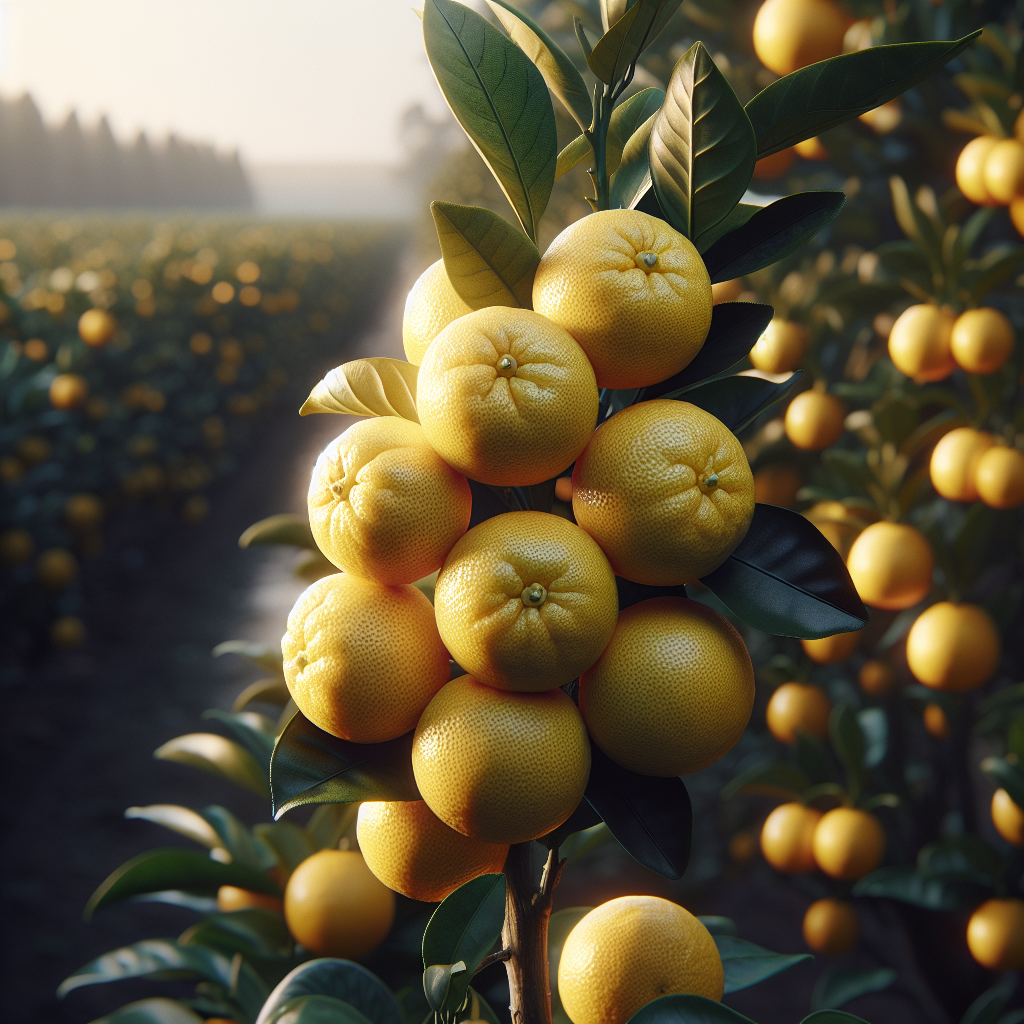
Native to East Asia and long cultivated in Japan, Korea, and parts of China, this distinctive citrus occupies a special niche between commercial fruit production and specialty culinary horticulture. It is valued less for sweet fresh eating and more for its penetrating floral-citrus aroma, highly perfumed zest, and tart juice used in ponzu, preserves, condiments, desserts, and beverages. The fruit is typically round to slightly flattened, yellow to deep golden when mature, and often irregular or bumpy in texture.
For growers, its biggest appeal is that it combines premium market identity with better cold tolerance than many common citrus types. Mature trees can withstand substantially lower winter temperatures than sweet orange or many lime types, which is why it is often considered by growers who cannot reliably produce more cold-sensitive citrus. If you already grow Lemon, expect similar citrus management principles but with greater attention to slow maturation, thorny juvenile growth, and fruit quality driven by aroma rather than sweetness.
Commercially and in home orchards alike, success depends on understanding that this is not a heavy-feeding, tropical-only citrus. It performs best where winters are cool enough to support dormancy, summers are warm but not constantly scorching, drainage is excellent, and the canopy is protected from desiccating wind. Poor drainage, excess nitrogen, and chronic over-irrigation are the fastest routes to weak growth, root disease, and bland fruit.
Botanical Profile of Yuzu
Belonging to the Rutaceae family, this species is generally classified as Citrus junos, though its ancestry is complex and likely involves ancient hybridization between mandarin-type citrus and ichang papeda. That ancestry helps explain several traits growers notice immediately: pronounced thorns, relatively small leaves compared with some vigorous citrus, a distinctive winged petiole, and notable cold hardiness.
Trees are usually upright to somewhat spreading, moderately vigorous, and can reach 8-15 feet tall in managed plantings, though older specimens may grow larger under favorable conditions. Juvenile shoots are often strongly thorned, and even mature trees retain enough armament to complicate pruning and harvesting. Leaves are glossy green, aromatic when crushed, and retained year-round in frost-free or lightly frosted climates.
Flowering generally occurs in spring after temperatures stabilize. Blossoms are white, fragrant, and attractive to pollinators, although fruit set can occur on self-fertile trees without requiring a second cultivar. Fruit development is relatively slow. Depending on climate, harvest commonly falls from late autumn into early winter, when rind color transitions from green to yellow and aroma intensifies.
Fruit quality differs sharply from sweet citrus. The pulp is seedy, juice yield is modest, and internal eating quality is usually too sour and resinous for casual fresh consumption. However, the peel contains exceptionally valuable essential oils. Professional growers often judge maturity not just by color but by rind fragrance, skin firmness, and the balance between juice acidity and aromatic complexity.
Rootstock matters. Trees grafted onto trifoliate orange or related cold-hardy rootstocks often show improved cold adaptation, manageable vigor, and better soil tolerance in heavier ground, though even hardy rootstocks cannot compensate for poorly drained planting sites. Seedling-grown trees are possible but highly variable, slower to bear, and less predictable in fruit quality.
Soil, pH, and Climate Requirements for Yuzu
The ideal soil is a well-drained sandy loam or loam with moderate organic matter and good internal aeration. Citrus roots require oxygen in the root zone; when soil pores remain filled with water for too long, feeder roots die back quickly. In practical terms, the planting area should drain well enough that a test hole 12-18 inches deep, filled with water, empties within 24 hours and preferably much faster. If water remains after a day, the site is unsuitable without mounding, drainage correction, or raised-bed orchard design.
Preferred soil pH is mildly acidic to near neutral, about 5.5-6.8, with an optimum around 6.0-6.5. Above pH 7.5, micronutrient lockout becomes more likely, especially iron, manganese, and zinc deficiencies. These often appear as interveinal chlorosis on young leaves: yellow leaf tissue with green veins. In alkaline soils, repeated sulfur applications, acid-forming fertilizers, heavy mulching with appropriate organic matter, and tolerant rootstocks can help, but site choice remains the best solution.
Yuzu is one of the most cold-tolerant edible citrus, yet that should not be confused with full frost indifference. Young trees are far more vulnerable than mature ones. Established trees may tolerate winter lows around 10-15°F (-12 to -9°C) for short durations, especially when fully dormant and healthy, but flowers, new flush, and immature fruit can be damaged at much warmer temperatures. Spring frost after budbreak is a greater threat to annual yield than midwinter cold on dormant wood.
Best performance occurs in warm-temperate to subtropical climates with full sun, modest humidity, and protection from persistent wind. Ideal growing temperatures are roughly 60-85°F (16-29°C). Sustained heat above 95°F (35°C), especially when paired with hot dry wind and low soil moisture, can cause leaf curl, fruit sunburn, rind roughness, and premature fruit drop. In very hot inland climates, light afternoon shade or reflective mulch management may improve fruit finish.
Rainfall should be moderate and well distributed, but irrigation control is more important than total annual rainfall. The crop dislikes alternating drought stress and saturation. Soil moisture should remain evenly moist in the active root zone, generally the top 8-18 inches depending on soil texture. A useful target is to irrigate when the upper 2-3 inches of soil become dry in young plantings, while deeper established trees can be watered after the upper 3-5 inches dry, provided subsoil still contains some moisture.
Step-by-Step Planting & Propagation
Start with a certified disease-free grafted tree whenever possible. This is the standard professional recommendation because grafted nursery stock bears earlier, has known rootstock performance, and reduces the risk of introducing serious citrus pathogens. Choose a tree with a straight trunk, healthy green leaves, no cankers, no root circling severe enough to create girdling, and a visible graft union above the soil line.
Select the site. Choose a south- or southeast-facing location with at least 8 hours of direct sun, excellent air drainage, and shelter from prevailing winter wind. Avoid frost pockets, low spots, and compacted clay basins.
Prepare the ground. Remove perennial weeds in at least a 3-foot radius. Do not heavily amend only the planting hole in native soil orchards, as this can create a bathtub effect that traps water. Instead, improve a broad area or plant on a mound 8-18 inches high if drainage is marginal.
Test soil pH and salinity. Correct pH before planting where possible. Citrus is moderately salt-sensitive, and high sodium irrigation water can cause leaf burn and poor growth.
Plant at the correct depth. Dig a hole no deeper than the root ball and 2-3 times as wide. Set the tree so the top of the root ball sits 1-2 inches above finished soil grade, especially in heavier soils. Keep the graft union several inches above the soil line.
Backfill and settle. Refill with native soil, breaking clods gently. Water deeply to settle the soil and eliminate air pockets. Do not stamp the soil hard around roots.
Mulch properly. Apply 2-4 inches of coarse organic mulch over the root zone, but keep mulch 4-6 inches away from the trunk to prevent collar rot and vole damage.
Stake only if necessary. In windy sites, use soft ties and remove staking after establishment. Overstaking leads to weak trunk development.
Manage early structure. Remove shoots emerging from below the graft union. If the nursery tree has crossing branches or acute crotch angles, correct them early.
Propagation by seed is mainly for breeding, rootstock production, or hobby use. Seeds should be fresh, cleaned, and sown promptly because citrus seed viability declines if allowed to dry excessively. Seedlings often grow vigorously but can take many years to fruit and may not produce true-to-type quality.
Vegetative propagation is usually done by budding or grafting onto suitable rootstocks. T-budding and chip budding in warm, active growth periods are standard. Semi-hardwood cuttings can root under mist with bottom heat and hormone treatment, but they are less common commercially because own-root trees may differ in vigor and soil adaptation.
Container culture is feasible and often preferred in cold-winter areas. Use a sharply draining mix with bark fines, coarse perlite or pumice, and a modest peat or coir fraction. Containers must have abundant drainage holes, and repotting should occur before severe root binding develops.
Care & Maintenance regimes for Yuzu
Irrigation should be deliberate, not automatic by calendar alone. Newly planted trees generally need deep watering 1-3 times weekly depending on soil type, temperature, and rainfall. Sandy soils may require more frequent irrigation with lower volume; loam and clay-loam require less frequent but deeper soaking. A newly planted tree often needs moisture maintained uniformly through the root ball because nursery media can dry faster than surrounding field soil.
A practical moisture test is to insert a probe or trowel 4-6 inches down for young trees and 8-12 inches down for established trees. Soil should feel cool and slightly moist, not sticky-saturated and not powder-dry. Overwatered trees show pale foliage, leaf drop, weak new flush, algae or moss on the soil surface, sour-smelling soil, and in severe cases twig dieback. Underwatered trees show dull or folded leaves, reduced shoot extension, small fruit, premature fruit drop, and dry soil pulling away from the root ball in containers.
Nutrient management should prioritize steady, moderate feeding. Excess nitrogen produces coarse vegetative growth, increased thorniness, rind puffiness, and reduced aromatic concentration. Young trees may receive 3-4 small split applications during the growing season, while bearing trees benefit from nitrogen timed around spring flush, post-bloom, and early fruit enlargement. Include potassium for fruit quality and calcium, magnesium, zinc, manganese, and iron where deficiencies are documented.
Leaf analysis is ideal in commercial situations. Without lab testing, deficiency symptoms offer clues: nitrogen deficiency causes overall pale yellowing of older leaves; magnesium deficiency often appears as a green inverted V near the leaf base with yellow margins on older foliage; iron deficiency shows on young leaves first. Foliar micronutrient sprays can correct short-term issues, but root-zone pH correction is the lasting solution.
Pruning is lighter than many deciduous fruit growers expect. The goal is canopy balance, sanitation, access, and light penetration rather than heavy annual framework renewal. Remove dead, diseased, broken, crossing, or inward-growing wood. Eliminate rootstock suckers promptly. Keep the lower canopy high enough to improve airflow and harvesting access, but do not overexpose scaffold limbs to intense sun. The best time for structural pruning is after harvest and before major spring flush, once severe freeze risk has passed.
Fruit thinning is rarely essential, but in young trees carrying an excessive first crop, removing some fruit can improve canopy establishment. In the first 1-2 years after planting, many growers remove flowers or fruitlets entirely so the tree invests in roots and framework.
Cold protection is essential for young trees. Use trunk wraps, frost cloth, temporary frames, or microsprinkler freeze protection where appropriate. A well-watered soil before a freeze stores more heat than dry soil, but avoid saturating the root zone in already cold, wet conditions.
Weed control should maintain a vegetation-free circle around the trunk at least 2-3 feet wide in young orchards. Grass competition can drastically reduce establishment because citrus feeder roots occupy the same shallow soil zone. For broader soil stewardship, see soil health strategies.
Pests, Diseases & Organic Management
Major pests vary by region but often include aphids, scale insects, mealybugs, spider mites, citrus leafminer, whiteflies, and occasionally thrips. aphids cluster on tender new growth and produce honeydew that encourages sooty mold. Scale and mealybugs may colonize twigs and leaf undersides, weakening trees gradually and interfering with fruit quality. Leafminer tunnels distort young leaves, especially on vigorous summer flushes, but usually do not threaten mature trees unless infestations are severe and repeated.
Organic management begins with canopy balance. Overfed, lush trees attract more sap-feeding pests. Prune for airflow, avoid excessive nitrogen, and encourage predator habitat nearby. Dormant or low-temperature horticultural oils are highly useful for scale, mites, and some overwintering pest stages when applied thoroughly and at label-safe temperatures. Insecticidal soaps work best on soft-bodied insects when coverage is direct.
Disease pressure rises sharply when water sits around roots or foliage stays wet for extended periods. Phytophthora root and collar rot is among the most serious issues. Symptoms include reduced vigor, pale leaves, sparse canopy, gummosis near the crown, and eventual branch dieback. Prevention depends on drainage, high planting, clean irrigation practices, and keeping mulch away from the trunk.
Fungal and bacterial problems may include melanose, greasy spot, anthracnose, citrus canker in affected regions, and post-injury infections following hail or frost damage. Sanitation matters: prune out dead wood, remove badly diseased fruit, disinfect tools when working between suspect trees, and avoid overhead irrigation late in the day.
citrus greening (huanglongbing, HLB) is the most serious modern citrus disease in many regions, spread by the Asian citrus psyllid. Symptoms can mimic nutrient deficiency but often appear as asymmetrical blotchy mottling, misshapen bitter fruit, twig decline, and progressive tree collapse. Because this disease is regionally regulated and devastating, source trees only from certified nurseries and follow local extension guidance immediately if suspicious symptoms appear.
snails and slugs may feed on low fruit or tender bark in humid orchards. Copper barriers, hand removal, habitat reduction, and dry mulch management near the trunk can help. Rodents may gnaw bark under dense mulch; maintain trunk clearance.
Harvesting, Curing & Optimal Storage
Harvest timing depends on end use. For culinary zest, some growers harvest green to yellow-green fruit when essential oils are intense and acidity is high. For broader market sales, fully colored yellow fruit with developed aroma is preferred. Mature fruit should feel heavy for size, firm but not rock-hard, and strongly fragrant even before cutting.
Use hand clippers rather than pulling fruit. Leave a short stem stub if needed to prevent rind tearing, but avoid sharp protrusions that can puncture neighboring fruit in storage bins. Harvest carefully because the rind bruises more easily than its rough surface suggests, and cosmetic damage reduces premium value.
Unlike some storage crops, there is no true curing phase in the root-crop sense. Instead, focus on field heat removal, dry handling, and clean packing. Harvest in cool morning conditions when fruit is dry. Do not pack wet fruit, as surface moisture encourages decay organisms.
For short-term storage, hold fruit at cool room conditions only briefly. For longer storage, maintain approximately 41-50°F (5-10°C) with high relative humidity around 85-90%. Temperatures that are too low can induce chilling injury in citrus, expressed as rind pitting, discoloration, and poor shelf life. Good airflow is essential, but avoid drying drafts that shrivel the peel.
Fruit for processing can also be juiced and frozen, while zest may be frozen or preserved in salt or sugar depending on the intended culinary use. Because peel aroma is the primary value, protect fruit from heat, ethylene exposure, and prolonged sunlight after harvest.
Yields vary widely with tree age, rootstock, climate, and management. Young trees may bear lightly after 2-4 years if grafted, while mature trees can become productive specialty orchard specimens with consistent annual management. Alternate bearing can occur if trees are stressed, heavily cropped one year, or subjected to bloom-time weather extremes.
Companion Planting for Yuzu
The most useful companions are those that improve beneficial insect activity, reduce weed pressure, protect soil, or avoid strong competition with shallow citrus roots. Low, non-invasive aromatic and insectary species are generally preferable to heavy feeders.
Thyme works well near the outer drip line as a living mulch in drier climates. It suppresses some weed growth, attracts pollinators when flowering, and does not usually compete aggressively when kept trimmed. Clover can be used in alleyways or beyond the immediate trunk zone as a nitrogen-contributing cover, though it should not be allowed to crowd the crown area of young trees where moisture and rodent pressure may increase. Yarrow is valuable for attracting parasitic wasps and predatory insects, and its deep-rooted habit can complement orchard biodiversity. Nasturtium may function as a trap and distraction plant for aphids in mixed garden systems while also drawing pollinators.
Keep all companions several inches away from the trunk itself. The innermost root crown zone should remain open, mulched, and easy to inspect for pests, suckers, and disease. Avoid planting tall shade-casting companions or thirsty annuals directly under the canopy. In intensive systems, companion planting should support orchard ecology without reducing airflow or interfering with irrigation uniformity.
The best design is often a clean mulch ring under the tree, insectary strips just beyond the drip line, and managed cover crops in row middles. That arrangement delivers biodiversity and soil protection while preserving the dry, aerated crown conditions citrus requires.