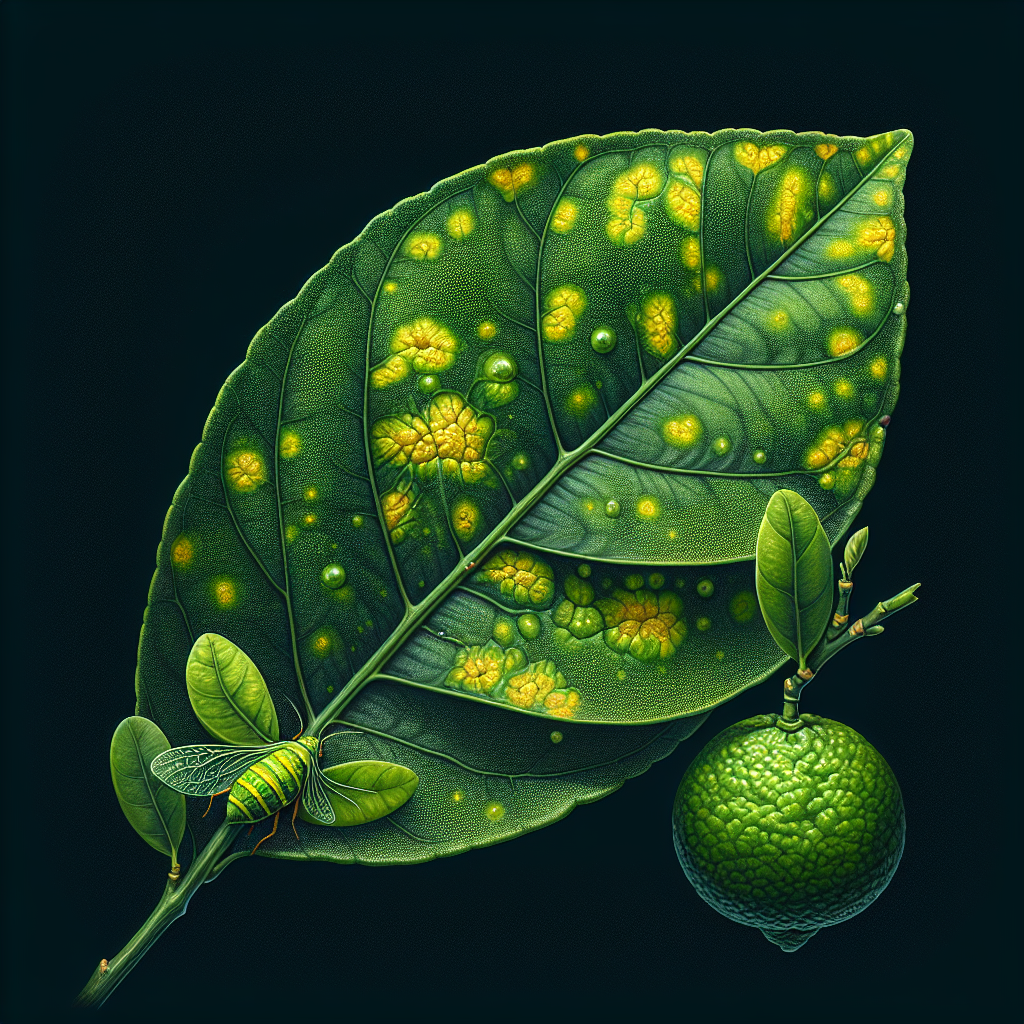
Definitive Diagnostic and Management Guide for Citrus Greening
Introduction to citrus greening
Citrus greening, scientifically known as Huanglongbing (citrus greening), represents one of the most destructive diseases facing global citrus production. First identified in China in the early 1900s, it has since spread to nearly every citrus-growing region, causing billions in economic losses. The disease is caused by a fastidious, phloem-limited bacterium from the genus Candidatus Liberibacter, primarily Ca. L. asiaticus (CLas) in Asia and the Americas, Ca. L. africanus in Africa, and Ca. L. americanus in Brazil.
The pathogen is exclusively vectored by psyllids: the Asian citrus psyllid (Diaphorina citri) in most regions and the African citrus psyllid (Trioza erytreae) in Africa. These insects feed on young flushes, injecting the bacteria into the tree's phloem, where it multiplies and clogs the vascular system. This systemic infection disrupts nutrient and water transport, leading to characteristic symptoms and decline.
No cure exists for infected trees, making prevention and vector control paramount. In severe outbreaks, such as in Florida and Brazil, entire industries have been threatened, with up to 80% tree mortality over 5-10 years without intervention. This guide provides professional-grade diagnostic, organic management, and prevention strategies for growers, drawing from entomological, pathological, and agronomic expertise to safeguard orange, lemon, and other citrus crops.
Identifying Symptoms & Damage
Early detection is critical, as symptoms mimic nutrient deficiencies or other stressors like phytophthora root and collar rot. Look for these diagnostic signs:
Foliar Symptoms:
- Asymmetrical mottling: Yellowing or chlorosis in vein areas, creating a blotchy pattern on leaves. Mature leaves show irregular yellow patches between veins, while new growth exhibits uniform yellowing.
- Stunted, upright 'witch's broom' shoots with small, pale leaves.
- Leaf drop leading to sparse canopy.
Fruit Symptoms:
- Small, misshapen fruits with an asymmetric shape, often lopsided.
- Bitter, sour taste despite green color; fruits remain small and drop prematurely.
- Abortive seeds and thick, pale rind with green islands (green streaks on yellowing fruit).
**Tree-Level Damage:**n
- Dieback of twigs and branches.
- Severe yield decline: 30-100% over 2-5 years.
- Root decay due to secondary infections from stressed phloem.
Confirmation: PCR testing of leaf petioles or fruit peduncles detects CLas DNA. Visual scouting for citrus psyllids on new flushes is essential. Differentiate from citrus tristeza virus (uniform yellowing) or nutrient deficiencies by mottling pattern and psyllid presence.
Economic impact includes reduced juice quality (high acid, low Brix) and market rejection. In Florida, losses exceed $1 billion annually.
Lifecycle and Progression of citrus greening
HLB progresses systemically once inoculated. Here's the timeline:
- Inoculation (0-3 months): Psyllid feeds on flush, injecting bacteria. Bacteria colonize phloem sieve tubes.
- Latent Phase (3-12 months): No visible symptoms; bacteria multiply unevenly.
- Symptomatic Phase (1-3 years): Mottling appears on oldest leaves first, progressing inward. Fruit symptoms emerge in year 2.
- Advanced Decline (3-8 years): Canopy thins >50%, yields drop 50-80%, roots rot. Tree death in 5-12 years.
Psyllid lifecycle amplifies spread: Eggs on flush → nymphs (bacteria acquired) → adults (transmit within hours). Females lay 500-800 eggs; 15-20 generations/year in tropics. Bacteria survive indefinitely in psyllids and trees.
Progression varies by cultivar tolerance (Valencia orange slower than trifoliate hybrids) and environment.
Environmental Triggers & Risk Factors
HLB thrives in warm, humid climates (20-30°C optimal for psyllid). Key triggers:
- Temperature: Psyllids inactive below 10°C; CLas dies below 14°C.
- Humidity: >60% RH boosts psyllid reproduction.
- Flush Cycles: New growth every 2-4 weeks in tropics attracts vectors.
- Orchard Factors: Dense planting, poor sanitation, nearby unmanaged citrus/host plants (e.g., murraya).
- Soil/Stress: Water stress or root rot accelerates symptoms.
Risk highest in Florida, Brazil, China; emerging in California, Texas. Wind/dispersal spreads psyllids 2-5 km.
Organic Control & Treatment Plans
No cure, but integrated organic strategies extend tree life 3-5 years. Focus on vector suppression. See Spring Pest Patrol: Organic AI Strategies to Shield Your Crops from Common Invaders for AI-enhanced scouting.
1. Psyllid Monitoring & Cultural Controls:
- Scout weekly: Tap flushes over white paper; treat if >0.2 psyllids/shoot.
- Remove infected trees (rogue >50% symptomatic).
- Tall windbreaks reduce psyllid influx.
- Reflective mulches deter adults.
2. Organic Insecticides:
- Neem oil (0.5-2%): Repels/sterilizes nymphs; apply 7-14 days.
- Insecticidal soaps: Contact kill on nymphs.
- Spinosad (OMRI): Targets larvae; rotate to avoid resistance.
- Kaolin clay: Physical barrier on flush.
**3. Biological Controls:**n
- Predators: Ladybugs, lacewings, syrphid flies.
- Entomopathogens: Isaria fumosorosea (mycelial sprays).
- Tamarixia radiata (parasitoid wasp, released 1,000/acre).
**4. Tree Nutrition:**n
- Foliar micronutrients (Zn, Mn, Fe): 4-6x/year; delays symptoms 1-2 years.
- Balanced NPK; avoid excess N (promotes flush).
5. IPM Rotation: Threshold-based sprays; no calendar applications.
**Read Spring Pest Patrol for AI scouting.
Preventing citrus greening in the Future
Prevention > Cure. Implement zero-tolerance strategies:
- Quarantine: Inspect nursery stock; PCR-test mother trees.
- Vector-Free Certification: Psyllid-free zones.
- Resistant Varieties: US-942, US-897 rootstocks; tolerant scions like Sugar Belle.
- Sanitation: Remove volunteers, hedges; destroy debris.
- Area-Wide Management: Coordinate with neighbors for psyllid traps.
- Push-Pull: Repellent borders (e.g., marigold) + trap crops.
Annual costs: $1,000-2,000/acre, but saves orchards.
Crops Most Affected by citrus greening
Primarily commercial citrus:
| Crop | Susceptibility | Notes |
|---|---|---|
| Navel Orange | High | Rapid decline |
| Valencia Orange | Moderate | Later symptoms |
| Lemon (Eureka) | High | Mottling prominent |
| Lime (Persian) | High | Premature drop |
| Grapefruit | Moderate-High | Abortive seeds |
| Mandarin | Variable | Some tolerance |
Minor hosts: murraya paniculata. Non-citrus unaffected. Global impact: 40M+ trees lost.
(Word count: 1452)