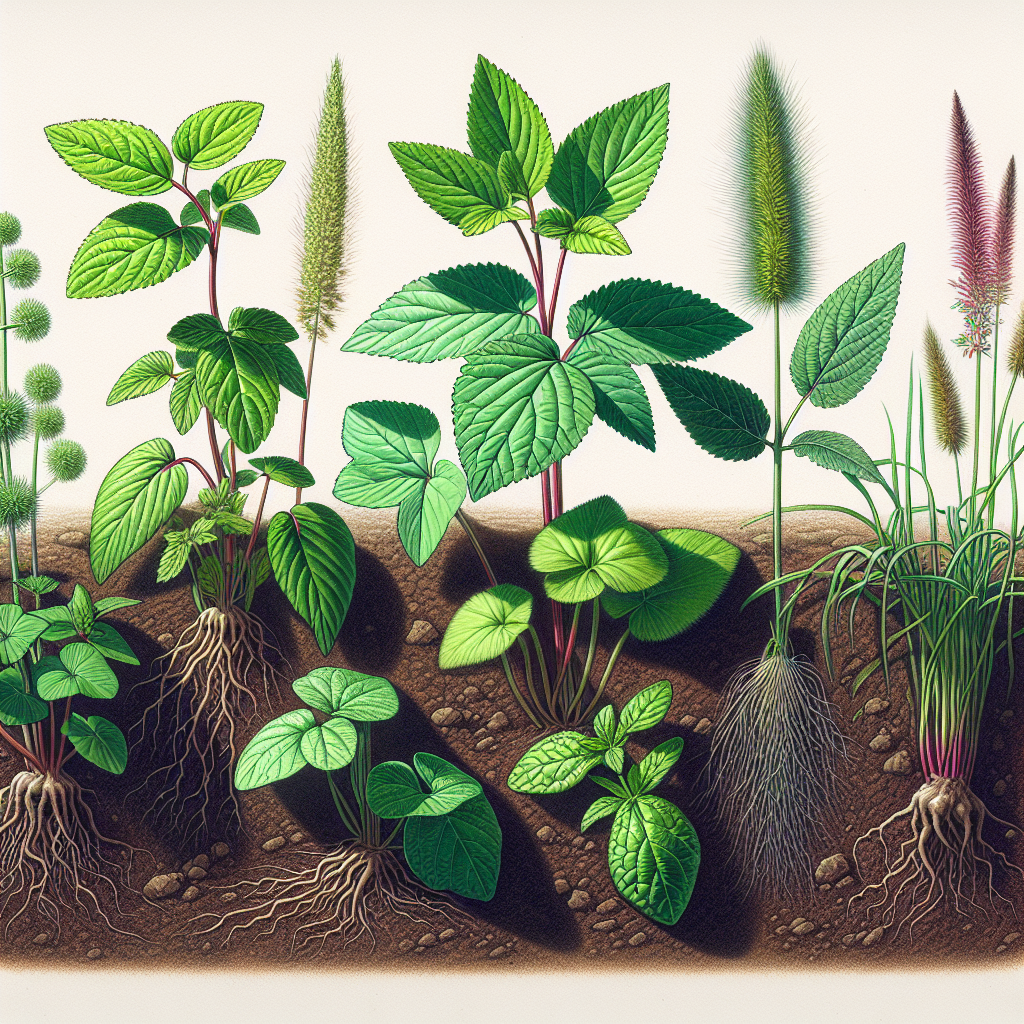
Introduction to weeds
Weeds represent one of the most persistent challenges in agriculture, outcompeting cultivated crops for vital resources such as sunlight, water, nutrients, and space. Unlike pests or diseases, weeds are plants that grow where they are not wanted, often thriving in disturbed soils and rapidly colonizing fields. Globally, weeds cause an estimated 34% yield loss in crops, making effective weed management essential for food security and farm profitability.
As a professional botanist and agricultural expert, understanding weeds goes beyond simple removal. Weeds can harbor pests like aphids or diseases such as powdery mildew, complicating integrated pest management (IPM). Common categories include annuals (completing lifecycle in one season), biennials (two years), and perennials (regenerating from roots or rhizomes). Key examples include broadleaf weeds like pigweed (Amaranthus spp.), lamb's quarters (Chenopodium album), and purslane (Portulaca oleracea); grasses like crabgrass (Digitaria sanguinalis) and foxtail (Setaria spp.); and perennials like dandelion (Taraxacum officinale) and bindweed (Convolvulus arvensis).
Weed pressure varies by region, soil type, and cropping system. In row crops, weeds reduce yields by shading seedlings and stealing nutrients; in orchards, they compete with tree roots and provide cover for rodents. Economic impacts are staggering: U.S. farmers spend over $10 billion annually on herbicides alone. However, with organic and cultural controls, sustainable weed management is achievable. This guide equips farmers with diagnostic tools, lifecycle insights, and proven strategies to reclaim fields from weed dominance. For small farms struggling with plant identification, tools like AI-driven diagnostics can prevent costly missteps—check out Why Misidentifying Plants Costs Small Farms Thousands - And How AI Camera Diagnosis Fixes It Fast.
Successful weed control integrates prevention, mechanical, cultural, and biological methods, reducing reliance on chemicals. Early intervention is key: weeds emerging before crop canopy closure cause the most damage. Monitoring fields weekly during critical growth stages allows timely action. By tailoring strategies to specific weed species and farm conditions, growers can achieve 80-90% control without environmental harm.
Identifying Symptoms & Damage
Weed damage manifests subtly at first but escalates rapidly. Primary symptoms include stunted crop growth, yellowing leaves (nutrient deficiency), and reduced tillering or branching due to resource competition. Visually, weeds appear as dense patches of non-crop vegetation, often taller or more vigorous than surrounding plants. Seedlings struggle most: a single large weed can suppress 10-20 crop plants within a 1-meter radius.
Broadleaf weeds feature wide leaves, taproots, and flowers; damage includes shading (e.g., lambsquarters blocking light to tomato seedlings) and allelopathy (chemical inhibition, like velvetleaf suppressing corn). Grassy weeds mimic crops but have finer leaves; crabgrass forms prostrate mats, choking young wheat. Sedge weeds (e.g., yellow nutsedge) have triangular stems and tubers, thriving in wet soils and competing in rice paddies.
Secondary damage: weeds host root-knot nematodes or whiteflies, increasing disease transmission. Physical indicators include crop rows narrowing around weed clumps, bare soil patches from weed-induced erosion, and harvest contamination (e.g., weed seeds in grain). Yield losses: 20-50% in soybeans from pigweed alone.
Diagnosis steps: 1) Scout fields systematically (W-pattern). 2) Identify by leaf shape, stem, roots—use apps for instant ID. 3) Assess density (plants/m²). 4) Note growth stage (seedling vs. reproductive). Differentiate from crops: weeds often have fibrous roots, irregular growth, or off-season emergence. In perennials like johnsongrass, rhizomes regenerate post-mowing, worsening infestations.
Lifecycle and Progression of weeds
Weed lifecycles dictate control timing. Annuals (summer/winter) germinate from seed, flower, set seed, and die yearly. Summer annuals (e.g., pigweed) emerge spring-summer, producing 100,000+ seeds/plant. Winter annuals (e.g., chickweed) overwinter as rosettes. Control before seed set prevents future generations.
Biennials (e.g., wild carrot) form vegetative rosettes year 1, bolt and seed year 2. Perennials (e.g., dandelion, quackgrass) persist via roots/rhizomes/seed. Short-lived perennials regenerate quickly; woody ones (e.g., brush) require repeated cutting.
Progression: Dormant seedbank → germination (soil temp/moisture trigger) → vegetative growth → flowering → seed production → senescence. Seedbanks persist 5-40+ years; one flush doesn't eliminate the problem. Grasses tiller rapidly; broadleaves branch post-grazing. In potato fields, nutsedge tubers multiply 2-10x annually.
Lifecycle knowledge enables precise intervention: mulch pre-emergence for annuals, root excavation for perennials. Track progression via phenology models aligning control with crop stages.
Environmental Triggers & Risk Factors
Weeds exploit disturbances: tillage brings seeds to surface; compaction favors deep-rooted types. Soil factors: Poor fertility boosts nitrophilous weeds (e.g., nettles); acidic soils favor sorrel. Climate: Warm, moist conditions accelerate grassy weeds; drought stresses crops, favoring resilient perennials.
Crop management risks: Wide rows allow light penetration for weeds; delayed planting extends weed windows. No-till reduces emergence but favors perennials. Irrigation mimics wetland weeds like sedges. Crop residues suppress some but harbor others.
Regional triggers: In tropics, cassava fields see elephant grass; temperate zones battle foxtails in barley. Climate change extends growing seasons, prolonging weed windows. Risk assessment: High-risk fields have >50 weed seeds/kg soil, history of poor rotation.
Organic Control & Treatment Plans
Organic weed management emphasizes IPM: prevention first, then cultural/mechanical/biological.
Cultural: Crop rotation disrupts cycles (corn after soybeans). Cover crops (clover) smother weeds, add nitrogen. Competitive varieties (tall, dense canopies) shade out intruders.
Mechanical: Hand-pulling for small areas; cultivation (e.g., rotary hoe) at 2-4 leaf stage severs roots. Mowing prevents seed set but stimulates tillering—repeat weekly. Flame weeding bursts cell walls pre-emergence.
Mulching: Straw (4-6 inches) blocks light, retaining moisture. Living mulches (e.g., thyme) suppress without tillage.
Biological: Grazing animals (chickens, goats); bioherbicides (e.g., corn gluten meal inhibits germination); insects/pathogens targeting specific weeds.
Treatment plans:
- Scout/identify.
- Prioritize (perennials first).
- Apply timed controls.
- Monitor/repeat. For wheat, fallow cultivation + spring harrowing yields 90% control.
Preventing weeds in the Future
Prevention beats cure: Clean equipment/seeds (weed-free certified). Narrow rows, optimal seeding rates for quick canopy. Soil solarization (clear plastic, summer heat kills seeds). Alleyway management in orchards with mango trees: cardboard mulch + woodchips.
Long-term: Diverse rotations, minimum tillage. Monitor seedbank via bioassays. Thresholds: Act if >5 weeds/m² in row crops. Integrate with Soil Health Mastery: 5 Proven Strategies for Small Farms to Build Fertile Ground Without Breaking the Bank for resilient systems.
Crops Most Affected by weeds
Weeds plague all crops, but row crops suffer most. Rice: barnyardgrass mimics, causes 30% losses. Corn: foxtails/pigweed compete early. Soybeans: velvetleaf allelopathy. Wheat: wild oats.
Vegetables: Tomato shaded by amaranth; potato by nightshade. Orchards: Avocado roots compete with guava weeds. High-value strawberry requires clean beds. Fiber cotton loses to morningglory. Mitigation: Tailor to crop—dense planting for lettuce, mulching for squash.