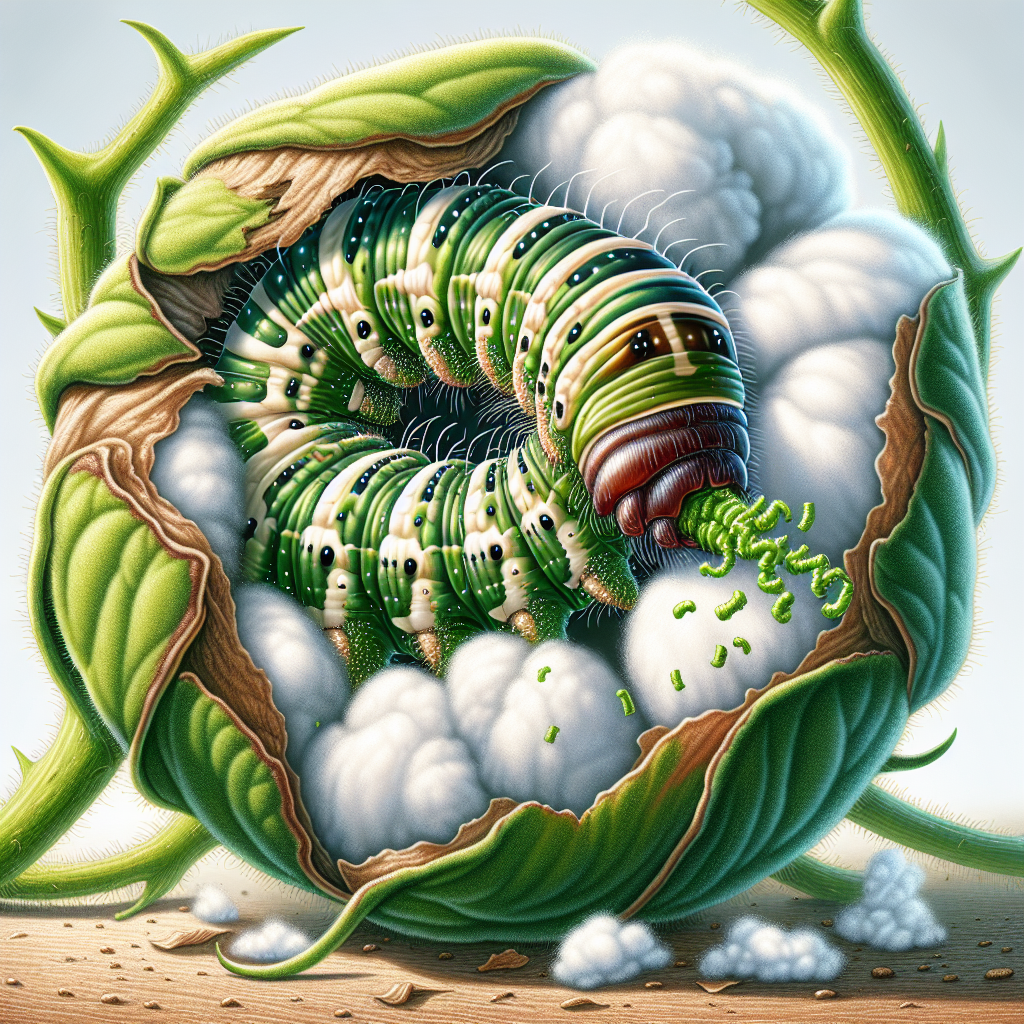
Introduction to Bollworms
Bollworms, primarily species like the Helicoverpa species (American bollworm, Helicoverpa armigera) and corn earworm (Helicoverpa zea), represent one of the most notorious pest complexes in global agriculture. These polyphagous caterpillars attack over 300 host plants, targeting high-value crops by boring into developing fruits, bolls, pods, and ears. Originating from tropical regions, bollworms have spread worldwide, thriving in warm climates and causing billions in annual losses—up to 50% yield reductions in untreated fields.
Farmers recognize bollworms for their resilience to many insecticides, earning them the status of 'super pests.' Unlike surface feeders, their internal feeding habit shields them from sprays, demanding integrated pest management (IPM). Early detection is critical, as small larvae inflict disproportionate damage. This definitive guide equips growers with diagnostic tools, lifecycle knowledge, organic controls, and prevention strategies to safeguard harvests. For small farms, timely intervention can preserve profitability amid rising input costs. Check out this Spring Pest Patrol: Organic AI Strategies to Shield Your Crops from Common Invaders for tech-enhanced scouting tips.
Identifying Symptoms & Damage
Spotting bollworm activity requires vigilance, as larvae hide inside plant tissues. Key symptoms include:
Entry Holes and Frass: Small, ragged holes on bolls, ears, or fruits, often with wet, green frass (caterpillar poop) resembling sawdust. In cotton, fresh bolls show square-shaped holes; in corn, silks are clipped and ears feature bore holes near tips.
Internal Feeding Damage: Larvae tunnel into squares, bolls, pods, or kernels, leaving empty cavities. Affected cotton bolls fail to open; tomato fruits (tomato) develop black moldy tunnels; corn ears show moldy, hollowed kernels.
Larval Presence: Creamy-white to green caterpillars, up to 2 inches long, with dark heads and longitudinal stripes. They may drop silk threads when disturbed. Differentiate from cutworms (nocturnal soil-dwellers) or armyworms (gregarious surface feeders).
Secondary Issues: Bored tissues invite fungal infections like Aspergillus ear rots in corn or bacterial rots, worsening losses. Scout weekly: shake plants over white paper to dislodge larvae; threshold is 5-10% damaged fruiting structures.
Visual aids: Mottled eggs on foliage; pinkish mature larvae pupating in soil. Severe infestations stunt plants, reduce boll set by 30-40%, and drop lint yields significantly.
Lifecycle and Progression of Bollworms
Understanding the bollworm lifecycle—complete metamorphosis—enables precise timing of controls. A generation spans 30-60 days, with 4-8 cycles per season in tropics.
Egg Stage (2-4 days): Adult moths (1-1.5 inch wingspan, tan with dark spots) lay 500-3000 pearly white eggs singly on foliage, preferring pre-flowering squares in cotton or silks in corn. Eggs hatch in 2-3 days at 80°F.
Larval Stage (14-21 days): Six instars; neonates (1mm) skeletonize leaves, older larvae bore fruits. Peak damage at 3rd-5th instar. They feed nocturnally, hiding by day.
Pupal Stage (7-14 days): Larvae burrow 4-6 inches into soil, forming reddish-brown pupae. No feeding occurs.
Adult Stage (7-10 days): Moths emerge, mate, and disperse up to 100 miles on winds, peaking at dusk. Females oviposit on susceptible crops.
Progression accelerates in heat (optimum 77-86°F); diapause in pupae allows overwintering in mild climates. Multiple generations overlap, complicating control. Monitor with pheromone traps: 10-20 moths/trap/week signals risk.
Environmental Triggers & Risk Factors
Bollworms exploit specific conditions for outbreaks:
Temperature and Humidity: Thrive above 70°F; high humidity (60-80%) favors egg hatch and larval survival. Drought-stressed crops are more susceptible.
Crop Phenology: Attacks peak at flowering/fruit set. Continuous bloom (e.g., cotton) sustains generations; nearby corn earworm hotspots seed infestations.
Agronomic Practices: Late planting, excessive nitrogen, or dense canopies promote lush growth attractive to moths. Volunteer plants or weed hosts harbor populations.
Landscape Factors: Proximity to alternate hosts like sorghum, tomato, or peanuts fuels migration. Reduced tillage leaves pupae undisturbed.
Risk assessment: High-risk fields have history of bollworms, poor rotations, or adjacent susceptible crops. Climate change extends seasons, intensifying pressure.
Organic Control & Treatment Plans
Organic management emphasizes IPM over chemicals:
Cultural Controls:
- Destroy crop residues promptly; deep plow to expose pupae to predators.
- Rotate with non-hosts like grains or legumes.
- Plant early-maturing varieties; time planting to avoid peak moth flights.
Biological Controls:
- Conserve natural enemies: Trichogramma wasps parasitize eggs (release 100,000/acre); big-eyed bugs, lacewings devour neonates.
- Apply Bacillus thuringiensis (Bt) kurstaki weekly during egg hatch; targets larvae <1/2 inch.
- Neem oil or spinosad disrupts feeding/molting (OMRI-listed).
Mechanical/Physical:
- Pheromone traps for monitoring/mass trapping.
- Hand-pick eggs/larvae in small fields; shake and crush.
- Reflective mulches deter oviposition.
Treatment Plan:
- Scout 2x/week; treat at 8% eggs or 5 small larvae/100 plants.
- Bt + indoxacarb rotations (if allowed); avoid broad-spectrum sprays.
- Post-harvest: flaming fields kills pupae. Expect 70-90% control with diligence.
Preventing Bollworms in the Future
Proactive prevention minimizes outbreaks:
- Resistant Varieties: Plant Bt cotton/corn expressing Cry toxins; stack genes for durability.
- Crop Rotation and Sanitation: 2-3 year break; eliminate volunteers, weeds.
- Trap Crops: Border plantings of sorghum attract moths.
- Monitoring Tech: Pheromone lures, degree-day models predict flights.
- Soil Health: Healthy soils foster resilient plants via cover crops like clover.
- Area-Wide Management: Coordinate with neighbors for synchronized planting. Long-term: Scout thresholds prevent unnecessary inputs, cutting costs 20-30%.
Crops Most Affected by Bollworms
Bollworms devastate:
| Crop | Damage Type | Yield Loss |
|---|---|---|
| Cotton | Boll boring | 20-50% |
| Corn | Ear/silk feeding | 10-30% |
| Tomato | Fruit tunneling | 30-60% |
| Soybeans | Pod/flower loss | 15-40% |
| Sorghum | Head/panicle | 10-25% |
Others: Chickpeas, okra, peppers. Focus protection on these high-risk hosts.