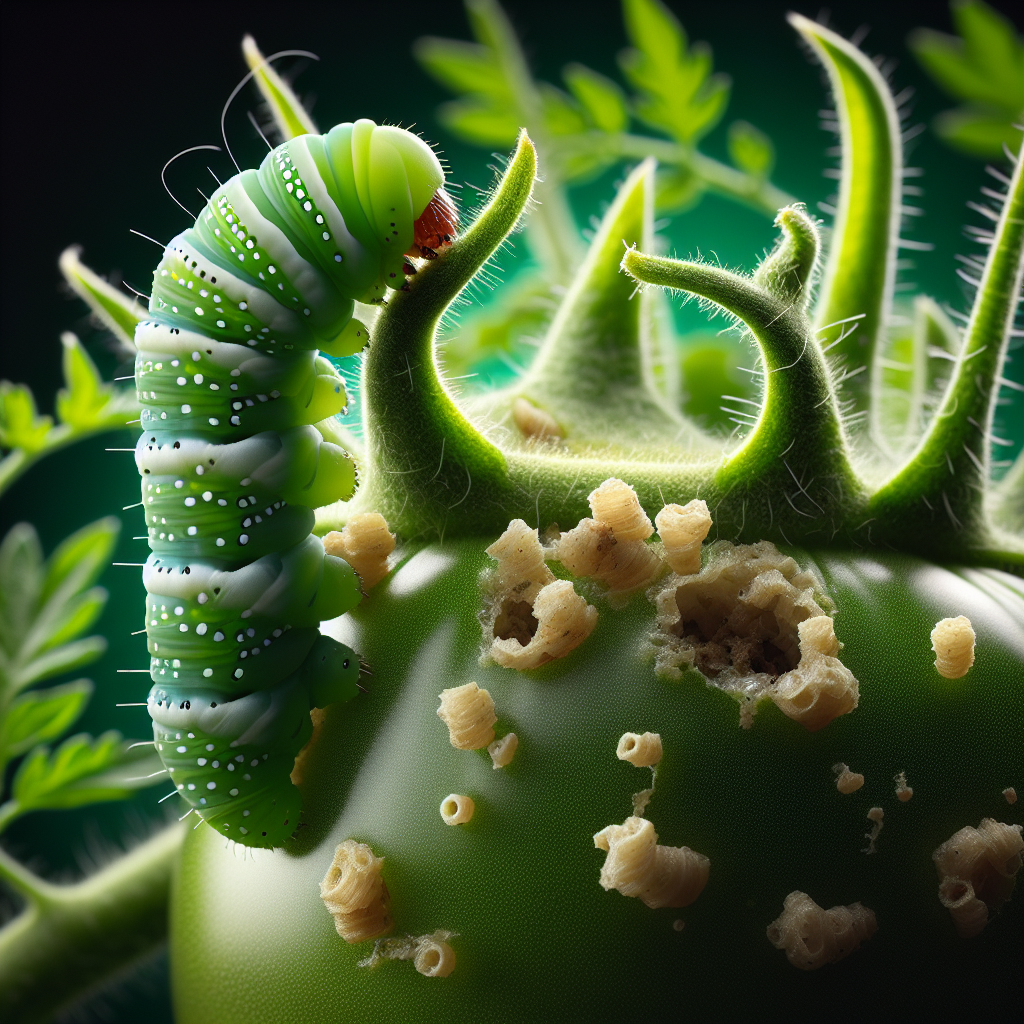
Introduction to Budworms
Budworms represent a group of highly destructive caterpillar pests belonging primarily to the Noctuidae family, with key species including the tobacco budworm (Chloridea virescens) and corn earworm (Helicoverpa zea), often referred to collectively as Helicoverpa species. These larvae are notorious for infesting buds, flowers, and developing fruits, boring into plant tissues and feeding voraciously, which leads to deformed growth, reduced yields, and secondary infections. Affecting a wide range of crops from tomato fields to corn plantations, budworms pose a major threat to both commercial agriculture and home gardens, particularly in warm-season growing regions.
Understanding budworms is crucial for timely intervention. Adult moths are nocturnal, laying eggs on host plants, while larvae—green to brown with darker stripes—cause the visible damage. Global warming has expanded their range, making them a year-round concern in subtropical areas. This definitive guide equips growers with diagnostic tools, lifecycle knowledge, environmental insights, organic treatments, prevention strategies, and lists of most affected crops to safeguard productivity. For small farms, mastering budworm management can preserve up to 30-50% of potential yields. Spring Pest Patrol: Organic AI Strategies to Shield Your Crops from Common Invaders offers additional tech-enhanced tips.
Identifying Symptoms & Damage
Budworm damage is unmistakable once established, but early symptoms allow for intervention. Initial signs include small holes in buds and tender leaves, often with frass (insect droppings) resembling fine black pellets scattered around feeding sites. Larvae bore into buds, causing them to wilt, blacken, and fail to open, leading to blind terminals or deformed shoots.
On fruits like tomato or pepper, entry holes appear with silken webbing and frass, followed by rot from bacterial invasion. In grains such as corn, buds or ears show chewing damage, with larvae tunneling inside. Severe infestations cause stunted plants, yellowing foliage, and up to 100% bud loss in young plants. Differentiate from cutworms by bud-specific feeding versus stem-cutting, or armyworms by lack of marching behavior.
Diagnostic tips: Inspect buds at dawn or dusk when larvae are active. Use a magnifying glass to spot 1-2 inch green/brown caterpillars with pale stripes. Sticky traps capture adults (moths with wingspans of 1-1.5 inches, mottled brown). Yellowing alone may indicate powdery mildew; confirm with larval presence. Scouting weekly during flowering/fruit set is essential—thresholds are 5-10% bud infestation for action.
Lifecycle and Progression of Budworms
Budworms complete 4-6 generations per year in warm climates, with lifecycle spanning 25-40 days depending on temperature. Eggs (tiny, ribbed, cream-colored) are laid singly or in clusters on buds, leaves, or silks, hatching in 2-4 days into 1st instar larvae. Larvae progress through 6 instars over 14-21 days, molting and growing from 1mm to 40mm, feeding aggressively in later stages before dropping to pupate in soil.
Pupae (brown, 15-20mm) overwinter in soil, emerging as adults in spring. Moths live 7-10 days, mating immediately and seeking hosts. Progression accelerates above 75°F (24°C), with diapause in cooler months. Multiple overlapping generations complicate control—target eggs/young larvae for best results. Monitor with pheromone traps to predict peaks; for instance, corn earworm flights coincide with silk emergence.
Environmental Triggers & Risk Factors
Budworms thrive in warm, humid conditions (75-90°F, 60-80% RH), with populations exploding after mild winters. Risk factors include nearby host residues from previous seasons, like volunteer corn or tomato plants, serving as reservoirs. Monocultures, excessive nitrogen fertilizer promoting tender growth, and drought-stressed plants attract moths seeking moist tissues.
Wind currents carry adults miles from wild hosts (nightshade family), while irrigation creates humid microclimates favoring egg survival. Late-planted crops overlap peak flights. Soil tillage disrupts pupae, but no-till increases risks. Climate change extends seasons; track local forecasts. Companion pests like aphids indicate vulnerability, as honeydew attracts moths.
Organic Control & Treatment Plans
Organic management relies on IPM: scout, disrupt lifecycle, and apply targeted controls. Cultural: Hand-pick larvae into soapy water; destroy infested buds. Till soil post-harvest to expose pupae to predators/sun. Plant trap crops like sorghum borders.
Biological: Introduce Bacillus thuringiensis (Bt) kurstaki weekly during egg hatch (0.5-1 lb/acre), safe for beneficials. Release Trichogramma wasps (100k/acre) to parasitize eggs. Encourage predators: lacewings, birds, ground beetles via flowering borders (marigold).
Mechanical: Pheromone traps (20-50/acre) for monitoring/mating disruption. Row covers exclude adults during vulnerable stages.
Botanicals: Neem oil (0.5-2%) or spinosad (0.02-0.1%) at dusk, rotate to prevent resistance. Soap sprays smother small larvae. Treatment plan: Scout 2x/week; apply Bt at 10% eggs/young larvae; reapply rainfast products every 5-7 days. Threshold: 5 larvae/10 plants. Combine with caterpillars management for synergy.
Preventing Budworms in the Future
Prevention beats cure: Rotate crops (avoid solanaceae/grains consecutively), use resistant varieties (e.g., Bt corn hybrids). Plant early to miss peak flights. Maintain 4-week host-free periods. Cover soil with mulch to deter pupation.
Sanitation: Remove weeds/volunteers; deep plow residues. Enhance biodiversity with nasturtium traps and pollinator hedges. Monitor with traps from crop emergence. Reflective mulches deter moths. Long-term: Build soil health for resilient plants less prone to infestation. Annual planning integrates these for 80-90% reduction.
Crops Most Affected by Budworms
Budworms devastate high-value crops:
- Vegetables: Tomato, corn, pepper, eggplant, okra, sorghum.
- Grains/Forages: Cotton, soybeans, alfalfa, millet.
- Fruits: Strawberry, apple buds, citrus flowers.
Yields drop 20-70% untreated; corn earworm specifics hit sweet corn hardest. Protect these priorities first.