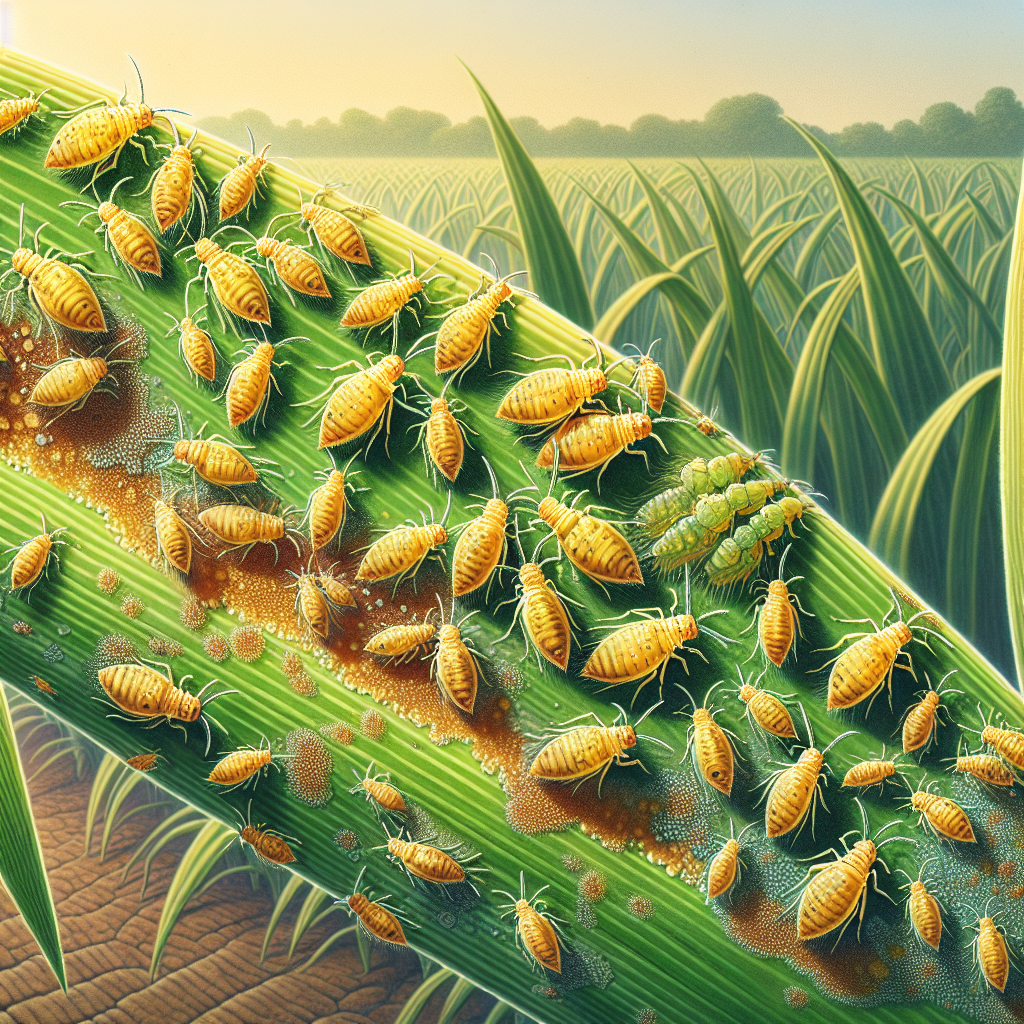
Introduction to sugarcane aphid
The sugarcane aphid, scientifically known as Melanaphis sacchari, has emerged as a major threat to sugarcane production worldwide since its widespread invasion in the early 2010s. Native to Asia and Africa, this tiny insect (1-2 mm long) features a distinctive yellow-orange body, dark legs, and antennae, often clustering on the undersides of leaves. Unlike many Aphids, sugarcane aphids reproduce parthenogenetically—females give birth to live nymphs without mating—leading to explosive population growth under favorable conditions. They pierce plant tissues with needle-like mouthparts to extract sap, weakening crops and transmitting viruses. In the U.S., it devastated Texas sugarcane fields in 2013, spreading to sorghum, corn, and sorghum across the South, causing up to 100% yield loss in severe infestations. This guide provides farmers with diagnostic tools, lifecycle insights, and proven organic strategies to combat this pest, drawing from entomological research by USDA and university extensions. Early detection is critical, as populations can double daily in warm weather. For small farms, integrating cultural practices with biological controls offers the most economical defense. Learn more about Spring Pest Patrol: Organic AI Strategies to Shield Your Crops from Common Invaders for tech-enhanced monitoring.
Identifying Symptoms & Damage
Spotting sugarcane aphid infestations early prevents irreversible damage. Initial signs include small yellow-orange aphids visible on leaf undersides, especially lower leaves, forming dense colonies of 100-500 individuals per plant. Nymphs resemble tiny adults, pale yellow with black tail pipes (cornicles). As feeding intensifies, leaves turn yellow from base to tip, mimicking nitrogen deficiency but progressing upward unlike nutrient issues. Sticky honeydew coats leaves, stems, and soil, fostering black sooty mold that blocks photosynthesis and reduces marketability. Severe cases show stunted plants, dead leaf tips, and tiller proliferation as the crop compensates for lost vigor. Yield impacts are profound: sap loss reduces sugar content by 20-50% in sugarcane, while grain sorghum heads fail to fill, dropping yields by 70%. Scout weekly by examining 25-50 plants per field, tapping leaves over white paper to dislodge aphids—10 per leaf warrants action. Differentiate from soybean aphid by sugarcane aphid's uniform yellow color and lack of winged forms until overcrowding. Associated pests like lady beetles signal natural predation. Honeydew attracts ants, complicating control. Document symptoms with photos for threshold tracking.
Lifecycle and Progression of sugarcane aphid
Understanding the sugarcane aphid's lifecycle enables timed interventions. This pest completes generations in 5-10 days under 77-86°F (25-30°C), with optimal reproduction above 68°F (20°C). Wingless females (viviparous) produce 50-100 nymphs over 10-20 days, all females in warm climates. Nymphs mature in 4-6 days through four instars, feeding immediately. Winged alates form during stress (crowding, plant maturity), dispersing to new fields. No true eggs in temperate regions; populations crash below 50°F (10°C) but rebound with spring warmth. Annual cycles start with overwintering on volunteer crops or wild grasses like johnsongrass. Peak infestations coincide with crop tillering (4-8 weeks post-planting). In sugarcane, aphids colonize young shoots, migrating upward as leaves age. Multiple overlapping generations (10-20 per season) amplify outbreaks. Monitor with sticky traps for alates. Lifecycle accelerates in irrigated fields with dense canopies. Cold snaps provide natural resets, but climate change extends seasons. For detailed aphid biology, see Aphids.
Environmental Triggers & Risk Factors
Sugarcane aphids thrive in specific conditions, making risk assessment key. High temperatures (77-95°F) and low humidity (<60%) favor rapid reproduction, while drought-stressed plants exude more sap-attracting volatiles. Dense plantings (>100,000 plants/acre) create humid microclimates ideal for colonies. Volunteer crops and weed hosts like sorghum, corn, and grain wheat serve as reservoirs. Nitrogen-rich fertilizers boost tender growth, enhancing aphid preference. Late planting exposes crops to alate migrations from southern fields. Wind currents spread winged forms 100+ miles. Irrigation without rotation sustains populations. Soil types matter: sandy loam fields dry faster, stressing plants and inviting aphids. Previous infestations increase risk via soil pupae (minimal) or debris. Climate shifts extend ranges northward, impacting rice belts. Mitigate by rotating with non-hosts like peanuts or cotton. Monitor weather via apps; thresholds rise post-rain.
Organic Control & Treatment Plans
Organic management emphasizes integrated pest management (IPM) for sugarcane aphids. Biological Controls (Priority 1): Introduce or conserve predators like ladybugs, lacewings, and parasitic wasps (Lysiphlebus testaceipes), which parasitize 80% of aphids in outbreaks. Plant nectar-rich borders with marigold or thyme to attract beneficials. Cultural Practices: Scout weekly, rogue infested plants, and destroy volunteers. Overhead irrigate to dislodge aphids (avoid excess humidity). Apply silica foliar sprays (potassium silicate) at 1-2% to toughen leaves. Organic Insecticides: Insecticidal soaps or neem oil (0.5-1%) smother aphids; apply evenings to spare predators, repeat every 5-7 days (3x max). Pyrethrins or spinosad target aphids without broad harm. Horticultural oils at 1-2% coat colonies effectively. Threshold: Treat at 20-50 aphids/leaf or 20% honeydew coverage. Resistant Varieties: Plant sugarcane hybrids like 'HoCP 91-555' or sorghum 'Sugargrazer 50'. Combine with row spacing (30-36 inches) for airflow. Foliar calcium boosts plant resistance. Track efficacy; rotations prevent resistance. For small farms, Soil Health Mastery: 5 Proven Strategies for Small Farms to Build Fertile Ground Without Breaking the Bank enhances resilience.
Preventing sugarcane aphid in the Future
Prevention builds resilient systems. Select resistant varieties certified by local extensions (e.g., LSU AgCenter lists). Rotate crops: follow sugarcane with soybeans or peas (2-3 years). Destroy stubble post-harvest via shredding/flaming. Plant early to avoid peak alate flights (June-August). Maintain 20% ground cover with mulch to deter alates. Scout borders first—aphids enter peripherally. Use reflective mulches or kaolin clay barriers. Enhance biodiversity with trap crops like sudangrass. Monitor with yellow sticky traps (1/acre). Clean equipment to prevent spread. Long-term: Breed for antibiosis (aphid mortality) and tolerance. Educate neighbors for area-wide management. Annual field histories predict risks. Climate-resilient practices like drip irrigation reduce stress. IPM audits yearly ensure efficacy. Resistant planting slashes incidence 70%.
Crops Most Affected by sugarcane aphid
Sugarcane (Saccharum spp.) suffers most, with sugarcane yields dropping 25-100% from sap drain and sooty mold. Grain sorghum (Sudangrass, forage types) faces head blanking, losing 50-80% grain. Corn (sweet, field) shows silk clipping and kernel set failure. Rice, wheat, and barley host minor populations. Wild grasses bridge infestations. Emerging threats to millet and sugarcane. Tropical crops like cassava report sporadic attacks. Focus protection on Gramineae family.