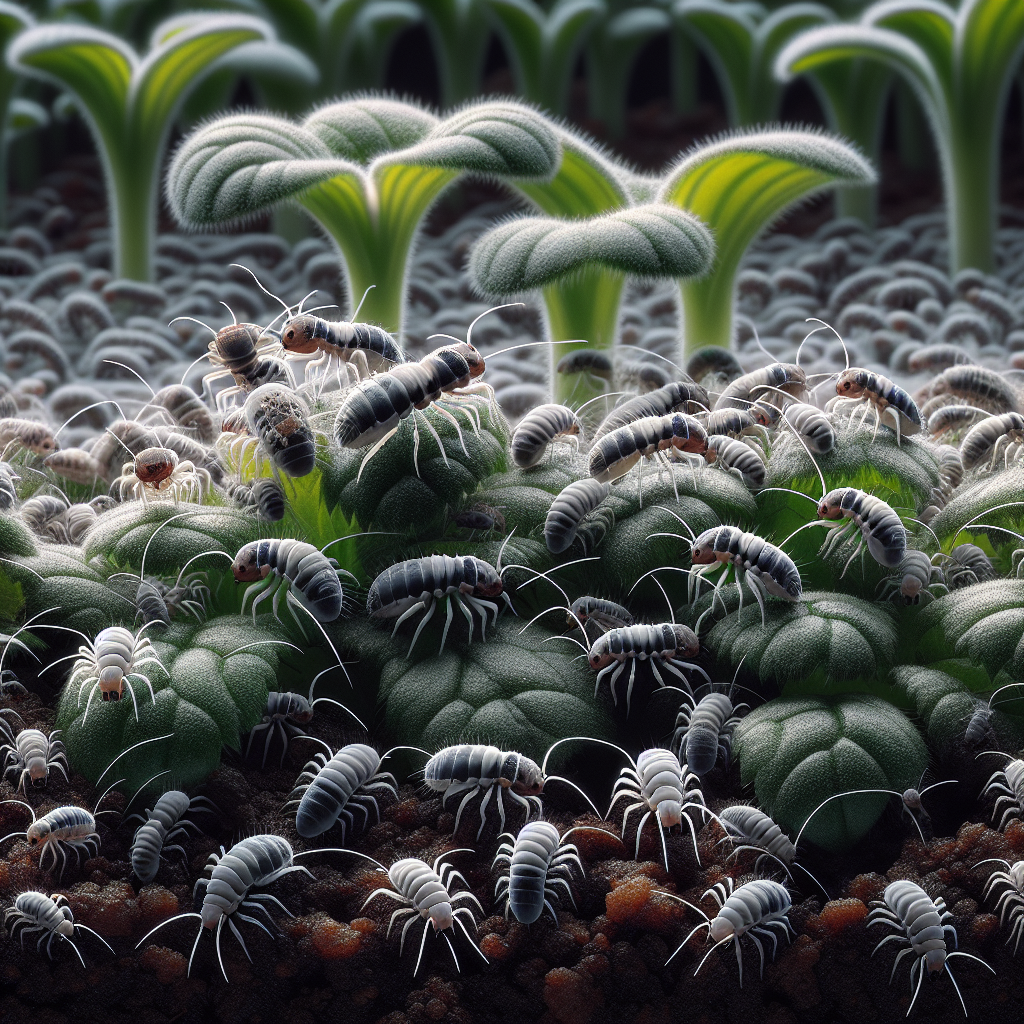
Introduction to springtails
Springtails (order Collembola) are among the most abundant arthropods in soil ecosystems worldwide, with over 8,000 described species. These minuscule, wingless creatures—typically 1-2 mm long—are not true insects but hexapods, distinguished by their unique springing mechanism: a tail-like furcula that folds under the abdomen and snaps to propel them into the air. In agricultural settings, springtails become noticeable pests when populations explode in overly moist, organic-heavy environments like greenhouses, nurseries, mushroom houses, and mulched field crops.
Though often mistaken for harmful invaders, springtails are primarily decomposers, feeding on fungi, algae, decaying plant matter, and occasionally fresh roots or seedlings. Direct damage is minimal compared to chewing pests like aphids or cutworms, but massive infestations can stress young plants by nibbling tender roots or competing for organic resources. Their sudden appearance on foliage or around pots signals underlying cultural issues—chiefly poor drainage and high humidity—making them indicators of imbalanced growing conditions rather than primary yield threats. This guide provides professional-grade diagnostics, lifecycle insights, and organic management strategies tailored for small farms and commercial growers dealing with springtail outbreaks. For real-world success stories, check this Spring Pest Patrol blog on proactive defenses.
Identifying Symptoms & Damage
Spotting springtails requires keen observation, as their size (often smaller than a pinhead) and rapid jumping make them elusive. Key identifiers include:
- Appearance: Pearly white, gray, blue-black, or yellowish elongated bodies with antennae and no wings. The furcula is visible as a forked structure under the abdomen when viewed under magnification.
- Behavior: Hordes scattering like popcorn when disturbed, congregating in moist cracks, pot rims, soil surfaces, or under mulch. They may climb plant stems or leaves during wet spells.
Damage manifests subtly:
- Seedling and Root Feeding: Tiny chew marks on hypocotyls, radicles, or fine roots, leading to stunted growth, wilting, or seedling death—especially in tomato, lettuce, and strawberry transplants.
- Secondary Signs: Fecal pellets (tiny black dots) on soil or foliage; silvery webbing from associated fungi; increased incidence of damping-off diseases like Pythium.
- Differentiation: Unlike fungus gnats, springtails lack wings and don't have maggot larvae; they jump instead of flying. Rule out mites by their lack of legs and jumping ability.
Scout early mornings or evenings in humid conditions using a hand lens (10x+). Sticky traps or Berlese funnels extract soil populations for confirmation. Threshold: 10+ per square foot warrants action.
Lifecycle and Progression of springtails
Springtails exhibit simple, ametabolous development—no distinct larval/pupal stages—maturing directly from juveniles to adults. Lifecycle spans 2-8 weeks, depending on temperature and moisture:
- Eggs: Laid in clutches of 10-50 in moist organic matter; hatch in 5-10 days at 20-25°C (68-77°F).
- Juveniles: 4-6 instars, growing via molts; feeding intensifies in high-humidity (>80% RH).
- Adults: Reproductive within 2 weeks; parthenogenetic reproduction in many species yields females-only populations. One female produces 100+ offspring lifetime.
Progression accelerates in warm (15-30°C), saturated soils (>60% moisture). Overwinter as eggs or juveniles in temperate zones; explode in spring with warming/thawing. Multiple generations (4-12/year) in greenhouses. Populations peak post-rain or irrigation, declining with drying.
Environmental Triggers & Risk Factors
Springtails proliferate where moisture and organics abound:
- High Soil Moisture: Overwatering, poor drainage, or compacted soils retaining water >48 hours.
- Excess Organic Matter: Thick mulch, undecomposed compost, or peat-based media.
- Greenhouse/Nursery Conditions: Stagnant air, high RH (80%+), shaded benches.
- Seasonal Factors: Spring thaws, monsoon seasons, or flood-irrigated fields.
Risk crops include those in Oyster Mushroom houses or strawberry beds with heavy straw mulch. Compromised plants stressed by root rot or nutrient deficiencies attract them. Poor sanitation—standing water, leaf litter—amplifies invasions.
Organic Control & Treatment Plans
Prioritize cultural fixes over sprays, as springtails inhabit soil/foliage interstices:
Immediate Actions (Week 1):
- Reduce watering: Allow top 2-5 cm soil to dry between irrigations.
- Improve ventilation: Fans, vents to drop RH below 70%.
- Physical Barriers: Diatomaceous earth (DE) or sand top-dressing (1 cm layer) desiccates on contact.
Biological Controls:
- Predators: Hypoaspis miles mites, rove beetles (Dalotia coriaria), or ground beetles.
- Entomopathogenic fungi: Beauveria bassiana sprays (weekly, 7-10 days efficacy).
Organic Treatments:
- Neem Oil: 0.5-1% foliar/soil drench; disrupts feeding/molting.
- Insecticidal Soap: Potassium salts of fatty acids (2% solution); contact kill.
- BTI (Bacillus thuringiensis israelensis): Limited efficacy but safe for soil.
Integrated Plan:
| Step | Action | Frequency |
|---|---|---|
| 1 | Dry out media | Daily check |
| 2 | Apply DE/sand | Once, reapply rain |
| 3 | Release predators | 1x/100m² |
| 4 | Neem/soap rotate | Weekly x3 |
| 5 | Monitor traps | Weekly |
Avoid broad-spectrum chemicals; they kill predators. Repopulation occurs in 2-4 weeks without habitat correction.
Preventing springtails in the Future
Long-term prevention embeds dry, hygienic practices:
- Soil Management: Use well-draining mixes (20-30% perlite/vermiculite); sterilize potting media.
- Irrigation: Drip systems, early AM watering to minimize leaf wetness.
- Mulch Wisely: Thin (2-3 cm) coarse materials; avoid fines in high-rain areas.
- Sanitation: Remove debris weekly; quarantine infested plants.
- Crop Rotation: Alternate with dry-tolerant crops like garlic.
- Monitoring: Yellow sticky traps + soil cores monthly.
Threshold-based IPM keeps populations below damage levels. For advanced scouting, see Soil Health Mastery.
Crops Most Affected by springtails
Springtails target high-moisture, seedling-vulnerable crops:
- Vegetables: Lettuce, cabbage, spinach, radish—damping-off in flats.
- Fruit Crops: Strawberry, blueberry—mulch hotspots.
- Specialty: Oyster Mushroom, microgreens, nursery seedlings.
- Tropicals: Banana, ginger in humid propagators.
Minimal impact on mature field crops like corn or wheat unless flooded. Seedling stages suffer most; protect transplants rigorously.