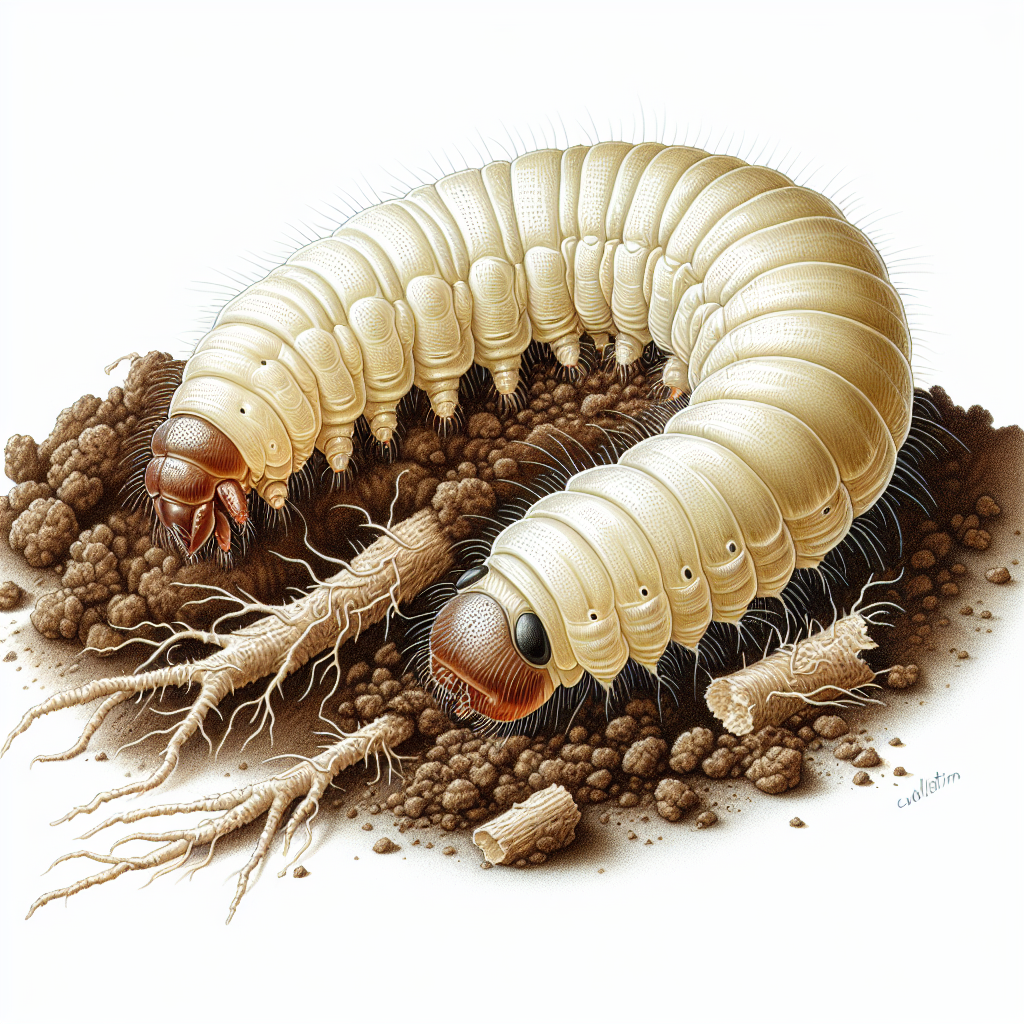
Introduction to Root grubs
Root grubs, also known as white grubs or scarab larvae, represent one of the most destructive soil-dwelling pests in agriculture and turf management worldwide. These plump, C-shaped larvae belong primarily to the Scarabaeidae family, with notorious species including Phyllophaga (June beetle grubs), Popillia japonica (Japanese beetle grubs), and Costelytra zealandica (grass grub). They target the roots of grasses, crops, and ornamentals, feeding voraciously underground and disrupting water and nutrient uptake. This leads to widespread plant stress, yellowing, wilting, and eventual death if populations exceed economic thresholds—often as low as 5-10 grubs per square foot in turf or 0.5 per plant in row crops.
Farmers and growers encounter root grubs in diverse settings, from lawns and golf courses to vast fields of corn, potato, and sugarcane. Their cryptic nature makes early detection challenging, but timely intervention can prevent losses exceeding 30-50% in severe infestations. This guide provides a comprehensive diagnostic framework, lifecycle insights, organic management strategies, and prevention tactics tailored for small to medium-scale operations. Understanding root grubs empowers proactive defense, minimizing chemical reliance and preserving soil health. For more on integrated pest management timing, check this insightful blog post.
Identifying Symptoms & Damage
Root grub damage manifests subtly at first, mimicking drought or nutrient deficiencies, which delays diagnosis. Above-ground signs include irregular patches of yellowing or browning turf that fails to recover after watering. Affected plants wilt during the day but partially recover at night, a hallmark of root severance. In crops like sweet potato or cassava, seedlings emerge poorly, and mature plants exhibit stunted growth, lodging, or sudden collapse.
Digging into the soil reveals the culprits: creamy-white larvae, 5-40 mm long, with distinct brown heads, six jointed legs, and a raster pattern (arrangement of hairs and spines on the rear) unique to species. Healthy roots appear fibrous and abundant; grub-damaged ones are pruned short, sparse, or absent, often with secondary invasions by root-knot nematodes or pathogens like Pythium. Animals such as skunks, birds, or armadillos digging up lawns signal heavy infestations as they forage for grubs.
Diagnostic steps: (1) Perform a soap flush test—mix 2 tablespoons dish soap in 5 gallons water and pour over 1 sq m; grubs surface in 10-15 minutes. (2) Float test in soapy water to confirm viability. (3) Check soil moisture; grubs thrive in moist conditions. Differentiate from similar pests like wireworms (slender, wire-like) or leatherjackets (legless crane fly larvae). Early identification prevents escalation, especially in high-value crops like turf or strawberry fields.
Lifecycle and Progression of Root grubs
Root grubs undergo complete metamorphosis: egg, larva, pupa, adult. Adults are robust beetles emerging at dusk in spring/summer to feed on foliage before laying eggs in moist soil. Eggs hatch in 1-2 weeks into 1st instar larvae, which feed minimally. The 2nd and 3rd instars (summer-fall) cause peak damage, growing to full size (25-45 mm) over 4-6 months.
In temperate regions, larvae overwinter 10-20 cm deep, resuming feeding in spring before pupating in soil cells (late spring). New adults eclose but remain underground until the next season. Tropical species like African sugarcane grubs may complete 2-3 generations yearly. Lifecycle duration varies: 1 year for most (e.g., Japanese beetle), 2-4 years for larger Phyllophaga. Peak feeding aligns with warm, moist soils (15-25°C), with synchronized damage waves.
Monitoring adult flights via blacklight traps or pheromone lures predicts larval influx. Soil sampling every 2 weeks during peak periods (July-September in northern hemisphere) tracks progression. Understanding this cycle enables precise interventions, targeting vulnerable eggs/young larvae for 80-90% control efficacy.
Environmental Triggers & Risk Factors
Root grubs flourish in high-organic, moist soils with pH 6-7, exacerbated by over-irrigation, excessive thatch, or heavy sod. Warm nights (>15°C) trigger adult egg-laying, while compacted soils trap larvae near roots. Risk spikes after adult host outbreaks—e.g., Japanese beetles on roses or linden trees. Overuse of broad-spectrum insecticides kills natural predators like beetles or parasitic wasps, creating outbreaks.
Crop history matters: continuous turfgrass or corn-soybean rotations favor grubs over diverse systems. Drought-stressed plants are more susceptible, as weakened roots attract feeding. Climate change extends activity windows, with earlier springs boosting populations 20-50%. Assess risks via historical data, soil tests, and scouting; mitigate with aerification and balanced fertility.
Organic Control & Treatment Plans
Organic management emphasizes layered IPM: cultural, biological, mechanical. Cultural: Aerate soil to disrupt habitat, reduce irrigation to 2.5 cm/week, mow high (8 cm) for deep roots. Milky spore (Paenibacillus popilliae) bacteria infect Japanese beetle grubs specifically; apply in summer for 10-year suppression (1-2x10^11 spores/sq m).
Biological: Beneficial nematodes (Heterorhabditis bacteriophora) target all grub species; drench soil at 10^9 infective juveniles/ha when soil >18°C, achieving 70-90% mortality in 2 weeks. Bacillus thuringiensis galleriae (BTG) offers broad-spectrum control via root drench. Predatory beetles and ground beetles thrive in mulch-reduced fields.
Mechanical: Hand-pick in small areas; solarize soil (clear plastic, 50-60°C for 4-6 weeks) kills eggs/larvae. Neem oil or spinosad drenches disrupt feeding/molting. Treatment plan: Scout weekly; treat at 5+ grubs/sq ft with nematodes + BTG; reapply after rain. Rotate tactics to prevent resistance. For potato fields, interplant with marigold to deter oviposition. Expect 60-85% reduction organically vs. 95% chemically.
Preventing Root grubs in the Future
Prevention hinges on cultural resilience: Rotate crops with non-hosts like clover or brassicas every 2 years, breaking lifecycle. Maintain soil health with compost (5 cm/year) to foster predators; avoid N>100 kg/ha. Plant resistant varieties—e.g., endophytic ryegrasses deter grass grubs.
Border traps (Japanese beetle traps 10m from fields) intercept adults. Encourage birds (birds) via perches/nest boxes. Monitor with sticky traps and soil cores (October, April). Threshold-based action prevents unnecessary treatments. Long-term: Diverse landscapes reduce monoculture appeal. For detailed soil strategies, see Soil Health Mastery. Annual audits sustain low populations <2 grubs/sq ft.
Crops Most Affected by Root grubs
Root grubs devastate root-dependent crops: Turf/Pasture (90% losses in outbreaks); corn, wheat, sorghum (stand reductions 20-50%); potato, sweet potato, cassava (tuber yield drops 40%); sugarcane (ratoon stunting); strawberry, turf. Ornamentals like birch, willow suffer total defoliation. In orchards, apple and peach seedlings vulnerable. Tropicals: banana, mango. Mitigation varies by crop—e.g., pre-plant nematodes for potatoes.