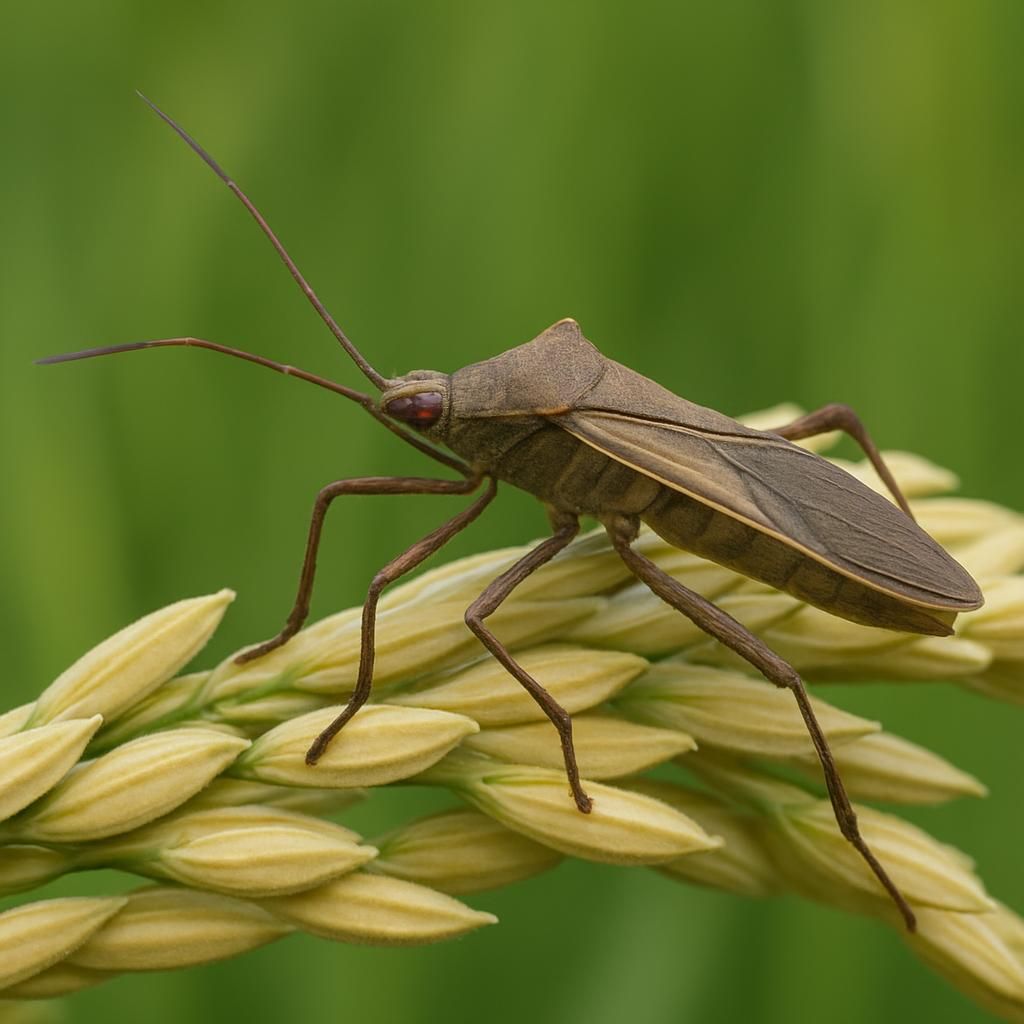
Introduction to Rice Bugs
Rice bugs represent a critical threat to global rice production, encompassing several hemipteran species notorious for their piercing-sucking mouthparts that extract vital sap from rice plants. The most notorious include the Southern Green Stink Bug (Nezara viridula), a cosmopolitan pest with a distinctive green shield-shaped body, and the rice bug (Leptocorisa oratorius), prevalent in Southeast Asia. These pests target the milky and dough stages of rice grains, injecting digestive enzymes that disrupt grain filling, leading to empty or shriveled kernels known as 'whiteheads.' Yield losses can exceed 30-50% in severe infestations, making rice bugs a primary concern for farmers growing Rice, Basmati Rice, and Jasmine Rice.
Understanding rice bugs is essential for rice growers worldwide, as these pests migrate from surrounding vegetation into paddies during crop vulnerability. Adult rice bugs are 10-15 mm long, with shield-like bodies emitting a foul odor when disturbed—hence 'stink bugs.' Nymphs are smaller, rounder, and gregarious. Their economic impact is staggering: in Asia alone, annual losses surpass millions of tons of rice. Early detection and integrated pest management (IPM) are key to minimizing damage. For small farms, check out this Spring Pest Patrol: Organic AI Strategies to Shield Your Crops from Common Invaders for proactive defense tips.
Identifying Symptoms & Damage
Spotting rice bug damage early can save your harvest. Primary symptoms appear on panicles: look for yellowing or browning grains clustered at the panicle tips, progressing to 'white ear' where grains fail to fill and remain chalky white. Bugs leave small black puncture marks on husks, often with dark exudates from feeding wounds. Severe infestations cause panicle blasting, where entire heads wither and drop prematurely.
Examine plants closely—adults cluster on panicles, sucking sap and injecting saliva that halts starch accumulation. Nymphs feed gregariously on leaves and stems, causing stunting. Differentiate from leafhoppers by the bugs' larger size and odor; unlike aphids, they don't produce honeydew or sooty mold. Use a hand lens to confirm: rice bugs have piercing mouthparts and lack cornicles. Scout fields weekly from tillering stage, using a zigzag pattern to check 20-30 hills per hectare. Damage thresholds: 5-10 bugs per hill warrant action. Secondary signs include bird predation on weakened panicles and increased susceptibility to grain mold.
Lifecycle and Progression of Rice Bugs
Rice bugs undergo incomplete metamorphosis: egg, nymph (5 instars), and adult. Females lay 50-300 pale green barrel-shaped eggs in clusters of 20-100 on leaf undersides or panicles. Eggs hatch in 4-7 days at 25-30°C. Nymphs, resembling wingless adults, pass through 5 stages over 20-40 days, molting between gregarious feeding phases. First instars are tiny and red-black; later ones green and mobile.
Adults emerge after the final molt, living 30-60 days and capable of long-distance flight. Multiple generations (3-6 per season) overlap, with peak activity during flowering and grain fill. Overwintering occurs as adults in leaf litter or weeds. Lifecycle completes in 35-60 days, temperature-dependent. Monitor for egg masses early; destroy by hand or with predators. Understanding progression aids timing interventions—target nymphs for maximum impact, as they cause most damage.
Environmental Triggers & Risk Factors
Rice bugs flourish in warm, humid conditions: optimal 25-32°C, >70% RH. Heavy rains trigger migration from grassy borders into paddies. Overcrowded fields, excessive nitrogen, and late planting heighten risk, as lush tillers attract oviposition. Alternate hosts like corn, sorghum, and weeds harbor populations.
Poor field sanitation—unharvested stubble or ratoon crops—provides refugia. Monoculture and continuous rice cropping amplify infestations. Climate change extends seasons, boosting generations. Risk hotspots: Asia's irrigated lowlands, but spreading via trade. Mitigate with crop rotation to soybeans or legumes, border trapping, and resistant varieties like those bred against stem borers. Drought stress indirectly favors bugs by concentrating populations.
Organic Control & Treatment Plans
Organic management emphasizes IPM: prevention first, then biological and mechanical controls. Cultural: Synchronous planting reduces migrant influx; destroy volunteer rice and weeds. Flood fields intermittently to drown nymphs. Biological: Conserve predators like spiders, stink bugs parasitoids (Trissolcus wasps), and birds. Release Anastatus egg parasitoids or Telenomus at 1:10 bug ratio.
Mechanical: Use sweep nets for adults (early morning); light traps at night. Hand-pick egg masses. Botanicals: Neem oil (azadirachtin 0.03%) sprays every 7-10 days from booting stage; pyrethrum or spinosad for outbreaks (<5% organic). Rotate modes to prevent resistance. Threshold-based: Treat at 2 nymphs/hill or 1 adult/panicle. Integrate with marigold borders as trap crops. Monitor weekly; combine with armyworms controls for synergy. Success rates: 70-90% yield protection.
Preventing Rice Bugs in the Future
Long-term prevention builds resilient systems. Plant early-maturing, resistant varieties (e.g., IR varieties). Rotate with non-hosts like wheat or peas. Maintain clean fields: deep plow post-harvest to bury stubble. Use certified seeds free of storage beetles. Border crops—sesame or sunflower—trap bugs away from rice.
Enhance biodiversity: interplant with thai-basil or nasturtium as repellents. Pheromone traps for monitoring. Soil health via cover crops suppresses weeds. Scout rigorously; use economic thresholds. For holistic planning, explore Why Companion Planting Feels Like Guesswork for Small Farms - And How AI Makes It Foolproof. Community-wide synchronous planting slashes regional populations by 80%.
Crops Most Affected by Rice Bugs
Primarily Rice and its varieties: Basmati Rice, Jasmine Rice, Arborio Rice. Secondary: sorghum, millet, corn, sugarcane, and legumes like soybeans, chickpeas. Polyphagous pests attack >100 hosts, but rice suffers most due to panicle preference. In Asia, 20-60% losses in paddy fields.