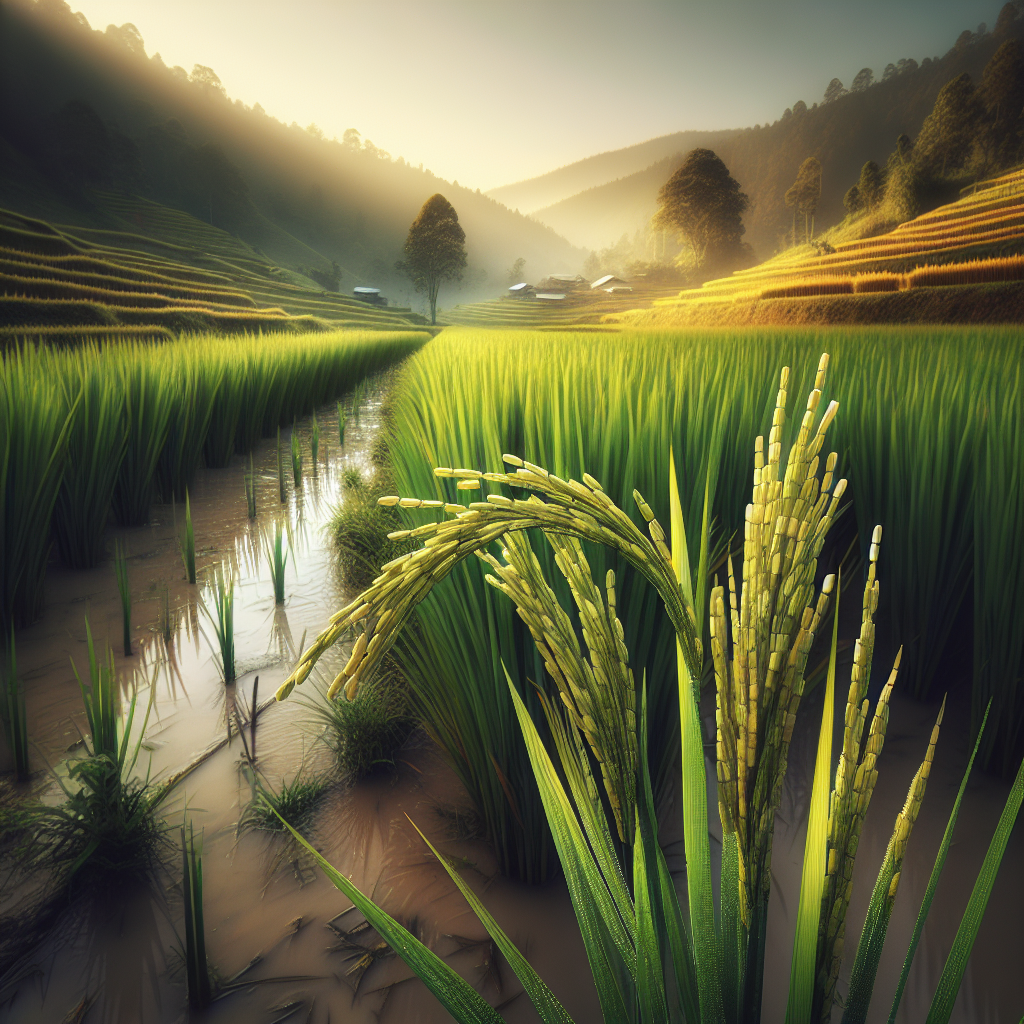
Introduction to Basmati Rice
Among the world’s most celebrated rices, basmati occupies a unique place because quality is judged not only by yield, but by aroma, grain length, post-cooking elongation, texture, and aging performance. It has been cultivated for centuries in the northwestern Indian subcontinent, especially in the Himalayan foothill belt where warm days, relatively cooler nights during grain filling, and alluvial soils help express the characteristic fragrance associated with 2-acetyl-1-pyrroline, the main aromatic compound.
Unlike many high-yielding coarse rice types, basmati often requires more disciplined nutrient and irrigation management. Excess nitrogen, stagnant deep flooding, delayed harvest, or rough threshing can all reduce market value even if total tonnage looks acceptable. Traditional and improved basmati cultivars are typically photoperiod-sensitive to varying degrees, relatively tall compared with modern semi-dwarf paddy, and may be more prone to lodging if fertilized aggressively. For growers interested in broader cereal comparisons, see our Rice guide.
The term “basmati” is also tied to grain quality standards rather than just appearance in the field. True basmati lines usually have slender grains, a distinct nutty-floral aroma, and strong linear elongation after cooking without excessive breadth expansion. Well-grown crops command premium prices, but only when agronomy, post-harvest handling, and storage are aligned with quality preservation.
Botanical Profile of Basmati Rice
This crop belongs to the grass family Poaceae and is a domesticated form of Oryza sativa, usually within the indica group, though basmati germplasm occupies a somewhat distinctive quality class with characteristic aroma genes and grain morphology. It is an annual, warm-season cereal with fibrous roots, hollow culms, narrow linear leaves, and terminal panicles bearing the grains.
Key botanical traits important to cultivation include:
- Growth habit: erect tufted grass, commonly 90-160 cm tall depending on cultivar and fertility.
- Rooting: shallow to moderately deep fibrous root system, with most active roots concentrated in the upper 15-20 cm of soil under puddled conditions.
- Tillering: moderate to high, but tiller survival depends heavily on transplant shock, spacing, nitrogen timing, and water depth.
- Leaves: narrow, flat blades with a ligule and auricles typical of rice.
- Inflorescence: a panicle with multiple spikelets; flowering within a field should be fairly synchronized for uniform harvest.
- Pollination: primarily self-pollinated, though small outcrossing levels are possible.
- Grain type: extra-long, slender caryopsis with husk; premium quality depends on low chalkiness and proper maturity.
Basmati cultivars differ substantially. Traditional types such as Basmati 370 are renowned for exceptional aroma and quality but can be low-yielding and lodging-prone. Improved cultivars and basmati-type hybrids often offer better disease resistance, shorter stature, and higher yield potential, though some growers believe certain modern lines can be slightly less expressive in aroma under suboptimal conditions. Choosing seed should therefore reflect your target market: export-quality premium grain, local culinary use, or farm resilience.
Its phenology generally follows these stages: germination, seedling establishment, tillering, panicle initiation, booting, flowering, milk stage, dough stage, and physiological maturity. The most sensitive stages for water and nutrient stress are active tillering, panicle initiation, flowering, and grain filling. Aroma and grain quality are influenced by genotype, climate, sulfur and nitrogen balance, and post-harvest aging.
Soil, pH, and Climate Requirements for Basmati Rice
The best fields are fertile alluvial loams to silty clay loams with good water-holding capacity, moderate permeability, and the ability to retain shallow standing water without prolonged stagnation. Heavy cracking clays can be used if puddling is well managed, but extremely sandy soils often lead to inefficient water use, nutrient leaching, and uneven crop development.
Optimal soil pH is generally 5.5-7.5, with the best performance often seen around 6.2-7.0. Slightly acidic to neutral soils support nutrient availability and root activity. In soils above pH 8.0, micronutrient deficiencies such as zinc and iron become more common, especially under flooded conditions. In strongly acidic soils below pH 5.2, phosphorus fixation and possible aluminum toxicity can weaken early establishment.
Important soil characteristics include:
- Organic matter: moderate levels improve structure, cation exchange, microbial activity, and slow nutrient release.
- Leveling: essential for uniform irrigation. Even minor depressions can create deep-water pockets that suppress tillering and encourage disease.
- Drainage control: fields must hold shallow water during vegetative growth but also allow drainage before harvest.
- Salinity: basmati is generally less tolerant of salinity than some coarse rice types. Electrical conductivity above about 3-4 dS/m can begin reducing vigor and grain quality.
Climatically, basmati performs best in warm, humid to sub-humid monsoonal conditions during vegetative growth, followed by somewhat drier weather and slightly cooler nights during ripening. Ideal temperature ranges are:
- Germination: 20-35°C, optimum around 25-30°C
- Seedling establishment: 22-32°C
- Tillering and vegetative growth: 25-35°C
- Flowering: 25-30°C is safest; temperatures above 35-36°C can reduce pollen viability and increase spikelet sterility
- Grain filling: 20-30°C, with mild night cooling favoring grain quality and aroma expression
Basmati usually needs a long frost-free growing season of roughly 120-150 days depending on cultivar. High humidity supports vegetative growth, but persistent cloudiness and rain at flowering can reduce pollination and increase disease pressure. Strong winds and heavy late-season rain raise lodging risk, especially in tall cultivars.
Where water is limited, basmati can be grown under carefully managed aerobic or alternate wetting systems, but traditional quality production is usually best under lowland transplanted conditions with controlled shallow flooding. Deep, continuous flooding is not ideal; it wastes water, reduces root oxygen, and can suppress productive tillering.
For a broader understanding of field fertility planning, the principles in soil health strategies are useful when adapting paddy systems to long-term productivity.
Step-by-Step Planting & Propagation
Propagation is by seed. Commercial growers should always start with certified, pure seed of a recognized basmati cultivar because varietal admixture directly lowers grain grading and sale price.
Select and test seed
Use clean seed with high germination, ideally above 85%. Remove broken, lightweight, and diseased grains. Salt-water flotation can help separate poor seed lots, followed by rinsing in clean water. Seed treatment with approved biological agents such as Trichoderma can reduce seedborne fungi.Prepare the nursery or direct-seeding field
Most premium basmati is established by transplanting. Raise seedlings in a well-puddled nursery bed enriched with decomposed farmyard manure. Nursery soil should be fine-textured and weed-free. For one hectare of main field, seed requirement commonly ranges from 15-30 kg depending on cultivar and transplanting density.Pre-soak and pre-germinate
Soak seed in clean water for 12-24 hours, then incubate in a moist sack for another 24-36 hours until radicles just emerge. Avoid excessive sprouting, which makes sowing uneven and damages embryos.Sow the nursery
Broadcast pre-germinated seed evenly on moist nursery beds. Keep the nursery saturated but not under deep standing water during the first few days. A thin film of water, about 0.5-1 cm, is enough after emergence. Seedlings are generally ready in 20-30 days, preferably at 4-5 leaf stage. Overaged seedlings often produce fewer productive tillers and mature less uniformly.Prepare the main field
Plow, incorporate well-rotted organic matter, and puddle the field if growing under lowland conditions. Finish with careful laser or manual leveling. Construct strong bunds to hold irrigation and reduce nutrient loss. Final puddling should leave a soft but settled planting surface.Transplant properly
Transplant 1-3 healthy seedlings per hill. Typical spacing ranges from 20 x 15 cm to 25 x 20 cm, with wider spacing in fertile fields or for vigorous cultivars. Shallow transplanting is critical: set seedlings about 2-3 cm deep. Deep transplanting delays tillering and weakens stand establishment.Alternative direct seeding
In some regions, dry or wet direct seeding is used to save labor. Seed rates are usually higher than for transplanting, often 35-50 kg/ha depending on method. Direct seeding demands excellent weed control and more precise early irrigation, because basmati seedlings compete poorly when weeds establish first.Initial water management
After transplanting, keep only a shallow water layer of 1-2 cm for the first 3-5 days to help recovery. Once seedlings are anchored, raise to 2-5 cm. Avoid immediate deep flooding; this often causes yellowing, slow tillering, and root stress.
Care & Maintenance regimes for Basmati Rice
Water is the central management factor. During vegetative growth, maintain moist soil to shallow standing water, generally 2-5 cm deep. Depths above 7-10 cm for extended periods can suppress tillering, encourage weak root systems, and increase nutrient imbalance. The soil should never remain foul-smelling or blackened from prolonged anaerobic stagnation beyond normal paddy conditions; such signs indicate poor water turnover and possible root stress.
A practical irrigation schedule by growth stage:
- Establishment: 1-2 cm water for the first few days after transplanting.
- Tillering: 2-3 cm, with occasional drainage if growth is overly lush.
- Panicle initiation to flowering: 3-5 cm consistently; moisture stress here causes severe yield loss.
- Grain filling: maintain moist conditions with shallow water or saturated soil.
- Pre-harvest: drain 10-15 days before harvest to improve grain maturity, field trafficability, and grain quality.
Under alternate wetting and drying, allow the water table to drop modestly before re-irrigation, but do not permit severe cracking during panicle initiation or flowering. Hairline surface cracks may be acceptable in some soils during vegetative stages, but wide cracking, leaf rolling by mid-morning, or bluish-green stress coloration indicates moisture deficit.
Nutrient management must balance yield with quality. Overfeeding nitrogen often gives tall, dark green, lush plants that lodge easily, mature late, and produce grains with poorer cooking quality. A professional program should be based on soil testing, but a general approach includes:
- Nitrogen: split into 2-3 applications, typically at basal/transplanting, active tillering, and panicle initiation.
- Phosphorus: mostly basal, especially important for root establishment and early vigor.
- Potassium: basal plus topdressing where soils are deficient; improves stem strength, disease tolerance, and grain filling.
- Zinc: apply if deficiency is expected, especially in alkaline or high-phosphorus soils.
- Sulfur: supports protein synthesis and may contribute indirectly to quality where deficient.
Common deficiency symptoms include pale green lower leaves from nitrogen shortage, bronzing and stunting from zinc deficiency, and weak stems or marginal scorch under potassium deficiency. In flooded paddies, iron toxicity and micronutrient interactions can occasionally occur, so visual diagnosis should be confirmed with soil or tissue testing.
Weed control is most critical during the first 20-45 days after transplanting or emergence. Common paddy weeds include Echinochloa spp., Cyperus spp., and broadleaf aquatics. Use stale seedbeds, water level manipulation, mechanical cono-weeding where feasible, and organic mulching on bunds to reduce seed influx. In direct-seeded basmati, delayed weed control can cause catastrophic yield loss because the crop is relatively less competitive than vigorous coarse rice.
Lodging prevention is especially important in basmati. To reduce lodging:
- Avoid excess nitrogen, especially late applications.
- Maintain balanced potassium.
- Do not keep water too deep during vegetative growth.
- Choose moderate plant spacing rather than overcrowding.
- Drain fields temporarily if vegetative growth becomes excessively lush.
Pests, Diseases & Organic Management
Basmati can be attacked by the same major pests and pathogens affecting lowland rice, but quality losses are often more damaging economically than raw yield losses.
Important insect pests include stem borers, leaf folders, brown planthopper, white-backed planthopper, gall midge, rice hispa, and gundhi bug. Stem borer damage appears as deadhearts during vegetative growth and whiteheads at reproductive stages. Planthoppers thrive in overly dense, nitrogen-rich canopies and can cause hopper burn in patches. gundhi bug feeding near grain maturity directly reduces grain quality and may affect aroma perception.
Organic and ecological pest management should focus on prevention:
- Use resistant or tolerant cultivars when available.
- Avoid excessive nitrogen, which attracts sap-feeding pests.
- Maintain field sanitation and remove volunteer rice plants.
- Encourage beneficial predators such as spiders, dragonflies, and parasitoids.
- Use light traps carefully for monitoring, not as a sole control measure.
- Install pheromone traps for stem borer monitoring where available.
- Apply neem-based formulations in early pest build-up rather than after severe infestation.
Major diseases include blast, bacterial leaf blight, sheath blight, false smut, and grain discoloration complexes. blast lesions are spindle-shaped with gray centers and brown margins; it is favored by high humidity, susceptible cultivars, and imbalanced nutrition. bacterial leaf blight often starts as water-soaked lesions that extend from leaf tips or margins and can spread rapidly after storms or mechanical injury. sheath blight is common in dense, fertile canopies and appears as oval lesions on lower sheaths near the waterline.
Organic disease management priorities:
- Start with clean seed and resistant varieties.
- Use wider spacing where humidity is persistently high.
- Avoid excess nitrogen and maintain potassium sufficiency.
- Improve air movement and avoid prolonged unnecessary standing water.
- Rotate with non-host crops when possible in upland phases.
- Incorporate decomposed residues rather than leaving infected debris exposed on the surface.
- Use seed biopriming with Trichoderma or Bacillus-based products where locally validated.
Nutritional disorders are often mistaken for disease. Zinc deficiency in young paddy can cause bronzing, chlorosis, and stunting; sulfur deficiency can mimic nitrogen shortage but tends to affect younger tissues first. Always verify before treating.
Rodents and birds can become serious near maturity. Keep bund vegetation trimmed, use synchronized planting in the locality where possible, and harvest promptly once grain reaches maturity to reduce losses.
Harvesting, Curing & Optimal Storage
Harvest timing is one of the most important quality decisions in basmati production. Grains harvested too early show lower head rice recovery, poor cooking elongation, and immature aroma. Delayed harvest increases shattering, lodging, bird damage, discoloration, and weathering.
The crop is usually ready when about 80-85% of grains on the panicle are straw-colored and firm, with grain moisture around 20-24% at field maturity. Panicles should bend naturally under grain weight, and lower grains should be in hard dough to full maturity. If too many grains remain green, wait; if panicles are drying unevenly because of late tillers, evaluate the main crop rather than the youngest tillers.
For premium quality:
- Drain the field 10-15 days before harvest.
- Harvest in dry weather whenever possible.
- Handle panicles gently to minimize fissuring and breakage.
- Avoid stacking wet sheaves for long periods, which causes heating and odor loss.
Thresh promptly but carefully. Mechanical threshers should be adjusted to avoid cracking slender grains. Dry paddy gradually to about 12-14% moisture for safe short-term storage, and closer to 12% if storing longer in humid climates. Drying temperatures should remain moderate; excessive heat can damage milling quality and alter aroma.
Unlike many staple cereals, basmati often improves with aging after harvest. Controlled aging for several months can enhance cooking quality, aroma expression, and grain elongation. However, aging only works if storage conditions are dry, cool, pest-free, and well ventilated. Store in clean bins or food-grade sacks on pallets, never directly on the floor. Relative humidity in the storage area should ideally remain below 65%, and grain should be protected from insects such as rice weevils and moths.
If storing seed rather than grain for consumption, maintain lower temperature and moisture as much as practical. Seed viability falls quickly in warm, humid storage. Label lots by cultivar and field to preserve purity, since admixture is a major commercial problem in aromatic rice.
Companion Planting for Basmati Rice
In broad-acre paddy systems, companion planting usually means border crops, bund crops, rotational companions, or beneficial intercrops on raised edges rather than mixed sowing directly within the flooded rice stand. The best companions support pest balance, bund stabilization, extra income, or soil fertility without competing heavily for light and nutrients.
Legumes are especially useful on bunds and in rotation. Peas and Lentils can fit into rice-based systems in cooler or post-rice seasons, helping improve nitrogen cycling and diversifying farm output. On drier bunds, Onion can act as a practical secondary crop where irrigation is controlled and flooding does not reach the roots.
Good companion strategies include:
- Bund legumes: reduce erosion, contribute biomass, and support beneficial insects.
- Post-rice pulses: break pest cycles and improve system profitability.
- Flowering insectary strips near paddy edges: attract parasitoids and predators of rice pests.
- Duck-rice systems in suitable regions: ducks can help suppress weeds and some insects, though this is a management system rather than a plant companion.
Avoid tall, shading companions immediately adjacent to basmati fields if they reduce air flow or increase humidity around the crop. Also avoid bund crops that host the same key pests or interfere with irrigation channels. In premium aromatic rice, simplicity and field hygiene are usually more valuable than overly complex intercropping.
For most growers, the strongest approach is not dense companion interplanting but a rice-centered rotation with pulses, clean bund management, and habitat support for natural enemies. That keeps grain quality high while improving soil function over time.