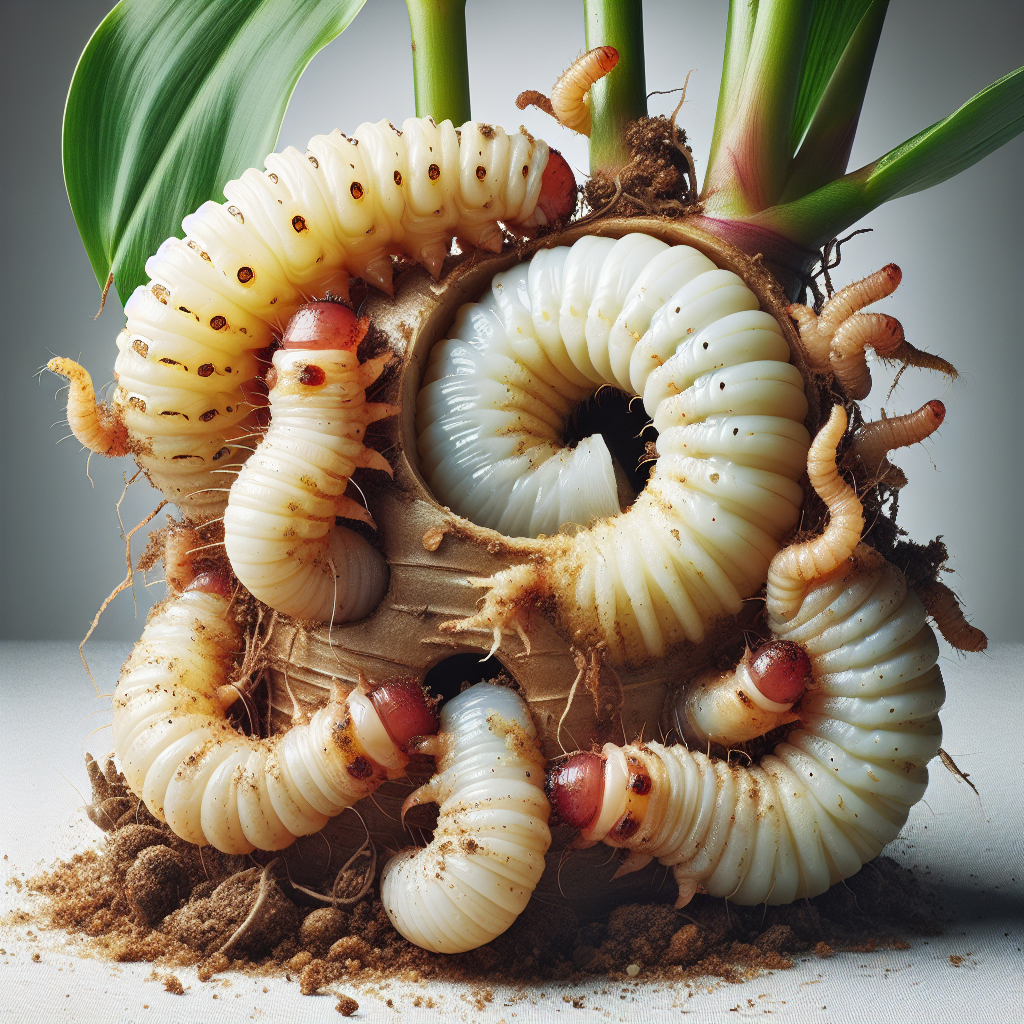
Introduction to Rhizome-feeding larvae
Rhizome-feeding larvae represent a critical threat to underground plant structures in many agricultural systems, particularly those reliant on rhizomatous crops. These soil-dwelling insect larvae, often from beetle families like Scarabaeidae (e.g., white grubs such as Holotrichia spp. and Leucopholis burma), burrow into rhizomes, severing vascular tissues and disrupting nutrient and water uptake. Farmers growing ginger, turmeric, banana, and other perennials frequently encounter these pests, which can reduce yields by 30-70% in severe infestations.
Unlike surface pests, rhizome-feeders operate invisibly below ground, making early detection challenging. Their damage manifests as sudden wilting, stunted growth, and plant collapse, often mimicking drought or root rot diseases. Understanding their biology is essential for sustainable management, especially in organic farming where chemical interventions are limited. This guide equips growers with diagnostic tools, lifecycle insights, and proven organic strategies to protect crops. For small farms battling hidden soil threats, check out this Spring Pest Patrol: Organic AI Strategies to Shield Your Crops from Common Invaders for tech-enhanced monitoring tips.
These larvae thrive in warm, moist soils with high organic matter, common in tropical regions like Southeast Asia, India, and parts of Africa. Economic impacts are profound: in ginger fields, losses can exceed $500 per acre. Proactive scouting and integrated pest management (IPM) are key to minimizing damage while preserving soil health.
Identifying Symptoms & Damage
Diagnosing rhizome-feeding larvae requires keen observation of both above- and below-ground signs. Initial symptoms include yellowing and wilting of lower leaves, progressing to complete plant collapse during peak activity (rainy seasons). Affected plants appear drought-stressed despite adequate moisture, with no recovery after watering—a hallmark distinction from water deficits.
Excavate around suspect plants to reveal the damage: rhizomes exhibit galleries of feeding tunnels, often filled with frass (larval excrement). Severed rhizome sections turn brown and rot-prone, inviting secondary pathogens like Pythium or Rhizoctonia. Larvae themselves are C-shaped, creamy-white grubs, 2-5 cm long, with brown heads and prominent raster patterns on the abdomen for identification.
Compare with similar issues: root-knot nematodes cause galls without tunnels, while wireworms produce clean cuts on roots. Damage severity correlates with larval density—over 5 grubs per plant signals heavy infestation. Use a soil auger for sampling: dig 20-30 cm deep in a zigzag pattern across 1 m², counting larvae to assess infestation levels (economic threshold: 2-3 per plant).
In Dwarf Cavendish Banana plantations, look for pseudostem collapse; in turmeric, harvested rhizomes show extensive boring. Early symptoms in young plants include stunted shoots and poor tillering. Regular monitoring post-monsoon is crucial, as larvae migrate upward in wet conditions.
Lifecycle and Progression of Rhizome-feeding larvae
Rhizome-feeding larvae undergo complete metamorphosis: egg, larva, pupa, adult. Adults are nocturnal beetles emerging in summer, attracted to lights. Females lay 20-50 eggs singly in soil near rhizomes, hatching in 7-10 days into tiny larvae that initially feed on organic matter before targeting roots.
The larval stage dominates (6-12 months), with 3-6 instars. Early instars rasp root hairs; mature grubs bore deeply into rhizomes. Pupation occurs in earthen cells 20-30 cm deep during dry periods, lasting 2-4 weeks. One generation per year in cooler climates, 2-3 in tropics.
Progression aligns with seasons: eggs in June-July, peak larval feeding August-November, pupation December-February. Overwintering larvae resume feeding in spring. Disrupt this cycle by targeting eggs/young larvae. Adults live 1-2 months, feeding minimally on foliage, so soil stages are primary management focus. For related soil pests, see root-feeding larvae.
Environmental Triggers & Risk Factors
Warm temperatures (25-35°C) and high humidity (>70%) trigger egg-laying and larval activity. Compacted, poorly drained soils retain moisture, favoring survival—avoid heavy clay without amendments. High organic matter from undecayed residues attracts egg-laying adults.
Monocropping rhizomatous plants like ginger or turmeric builds populations; rotate with non-hosts like grains or legumes. Overuse of nitrogen fertilizers boosts succulent rhizome growth, enhancing attractiveness. Weed-free fields reduce refuges, but bare soil exposes larvae to predators.
Irrigation practices matter: overhead watering mimics rain, stimulating feeding. Infested machinery or floodwater spreads eggs/larvae between fields. Climate change extends activity periods, increasing risk in marginal areas.
Organic Control & Treatment Plans
Organic management emphasizes cultural, biological, and mechanical tactics. Cultural: Deep plow (30 cm) in dry season exposes larvae to predators/birds. Solarization—cover moist soil with clear plastic for 4-6 weeks pre-planting—kills eggs/larvae via heat (50-60°C).
Biological: Apply entomopathogenic nematodes (Heterorhabditis bacteriophora) at 10^9 IJ/ha during irrigation; they parasitize grubs effectively (80% mortality). Metarhizium anisopliae or Beauveria bassiana fungal biopesticides (5-10 kg/ha) target soil stages. Encourage natural enemies: ground beetles, ants, birds via habitat strips.
Mechanical: Hand-pick grubs during tillage; install light traps for adults (1-2 per ha). Neem cake (250-500 kg/ha) at planting repels larvae via azadirachtin.
Integrated Plan: Scout weekly; apply nematodes if >1 grub/plant. Mulch with neem leaves post-emergence. Foliar neem oil deters adults. Monitor efficacy with pitfall traps. Avoid tillage during pupation to prevent new infestations.
Preventing Rhizome-feeding larvae in the Future
Prevention hinges on IPM: rotate crops (3-4 years) with sweet potato or corn. Use healthy, disease-free planting material. Improve drainage with raised beds (20-30 cm). Apply Trichoderma-enriched compost (5 t/ha) for antagonism.
Soil solarization + biofumigation (mustard green manure) reduces populations by 70%. Plant trap crops like castor nearby. Monitor with bait stations (buried yam pieces). Certified seeds/rhizomes minimize introduction. Long-term: enhance biodiversity with cover crops like clover to boost predators.
Crops Most Affected by Rhizome-feeding larvae
Rhizomatous perennials suffer most: ginger (up to 50% loss), turmeric (40%), banana (30% in pseudostems/corms). Others include sweet potato, taro, cassava, elephant foot yam. In grains, sugarcane and sorghum face root damage. Tropical spices like cardamom and black pepper vines are vulnerable. Grasses (rice, wheat) see minor impacts but yield reductions in heavy soils.