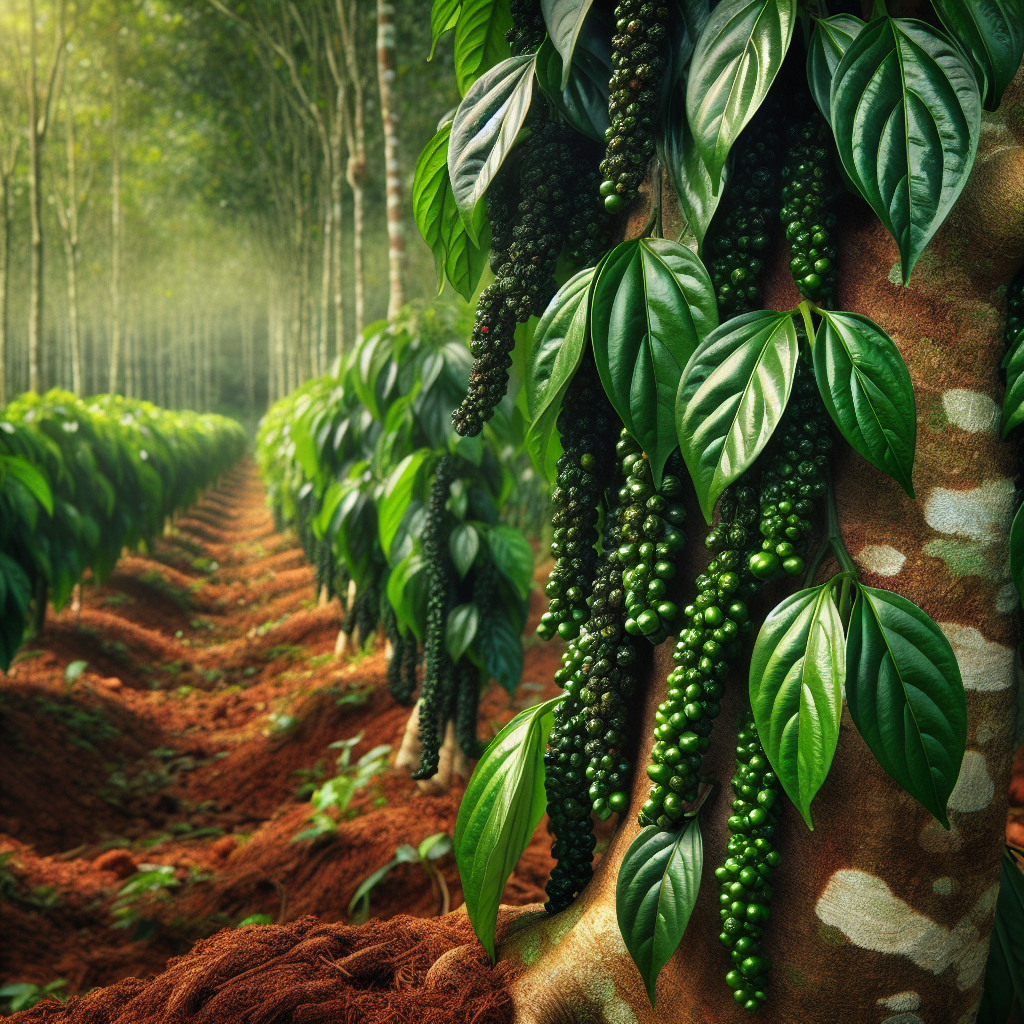
Introduction to Black Pepper
Often called the “king of spices,” this crop has shaped global trade, cuisine, and colonial history for more than two millennia. Native to the humid forests of India’s Western Ghats, black pepper became one of the earliest internationally traded agricultural commodities, prized not only for flavor but also for its preservative value and medicinal uses in traditional systems of medicine.
Unlike annual vegetable peppers in the genus Capsicum, black pepper is a woody, perennial vine in the family Piperaceae. The economic product is the immature green berry, harvested at the correct physiological stage and dried until it wrinkles into the familiar black peppercorn. White pepper, green pepper, and red peppercorn products can all come from the same plant, with differences determined mainly by harvest timing and postharvest processing.
For growers, black pepper is both rewarding and exacting. It thrives where many temperate crops fail: in equatorial to subequatorial heat, high humidity, and organically rich soils with excellent drainage. It is not a crop for neglect. Yield and vine longevity depend on canopy management, support training, disease vigilance, and consistent soil moisture without waterlogging. In mixed tropical systems, it pairs especially well with shade-modulated perennial plantings such as coffee, where humidity and vertical structure can be managed together.
Commercially, a well-managed planting can remain productive for well over a decade, though peak performance depends on cultivar, site drainage, phytosanitary practices, and nutritional balance. Black pepper is therefore best approached as a long-term perennial investment rather than a quick-return spice crop.
Botanical Profile of Black Pepper
This species is a dioecious-to-functionally bisexual, evergreen, perennial climber with a scandent growth habit. Modern cultivated types are generally selected for stable fruiting, spike length, berry set, disease tolerance, and local adaptation. The plant produces different types of shoots, and understanding them is central to good management.
The root system consists of a shallow but widely spreading feeder root network concentrated largely in the top 20 to 40 cm of soil, along with adventitious roots emerging from nodes on climbing stems. These nodal roots help the vine attach to supports and absorb moisture from humid microclimates. Because the active root zone is relatively shallow, the crop is highly sensitive to both drought stress and poor drainage.
Stems are jointed and produce distinct orthotropic and plagiotropic growth. Orthotropic shoots are the main climbing stems that grow upward along a support. Plagiotropic branches emerge laterally from mature climbing stems and are the principal fruiting branches. Excessive vegetative vigor with inadequate lateral development often leads to impressive-looking vines but disappointing spike production.
Leaves are alternate, simple, leathery, and broadly ovate to cordate, typically dark green with prominent venation. Healthy leaves should appear glossy and turgid, not pale, drooping, or chlorotic. Persistent yellowing between veins may indicate magnesium deficiency, iron unavailability under unfavorable pH, or root dysfunction from waterlogging.
Inflorescences are pendulous spikes borne opposite leaves on plagiotropic branches. Each spike carries numerous tiny sessile flowers. Fruit set forms small drupes that mature from green to yellow-orange and finally red. For black pepper production, berries are usually harvested just as one or a few fruits on a spike begin changing color, indicating the correct physiological maturity for optimal aroma, density, and drying quality.
Cultivar choice matters. Traditional Indian selections such as Karimunda, Panniyur series cultivars, and local landraces differ in spike length, berry boldness, yield potential, and disease response. In Southeast Asia and Sri Lanka, local selections are often chosen for adaptation to rainfall pattern and soilborne disease pressure. Growers should prioritize disease-free planting material from reputable nurseries over chasing maximum yield claims alone.
Soil, pH, and Climate Requirements for Black Pepper
This crop performs best in deep, friable, humus-rich loams to clay loams with outstanding drainage and high biological activity. The ideal soil profile is one that holds moisture evenly yet never stays stagnant after rain. In practical terms, if a planting hole remains water-filled for more than a few hours after a moderate irrigation or rainfall event, the site is risky for pepper unless raised beds, mounds, drains, or contour management are installed.
The preferred soil pH is generally 5.5 to 6.5. It can tolerate slightly more acidic conditions, but strong acidity below about pH 5.0 may reduce nutrient availability and root efficiency unless corrected with carefully measured liming. Overliming should be avoided because black pepper does not like alkaline conditions; once soil pH rises much above neutral, micronutrient uptake becomes uneven and vines often show chlorosis and weak growth.
Organic matter is critical. A soil organic matter content above 3% is desirable, and in intensive tropical systems higher levels are even better. Well-rotted farmyard manure, compost, leaf mold, vermicompost, and chopped mulch all improve moisture buffering, root aeration, and microbial resilience. Fresh uncomposted material should not be packed directly against the vine base because it may generate heat, tie up nitrogen, or encourage collar rot.
Climatically, black pepper prefers true tropical to warm humid subtropical conditions, with optimal temperatures around 23 to 32°C. Growth slows below 18°C and plants may suffer chilling injury if exposed to prolonged temperatures under 12 to 15°C. Frost is usually fatal. Very high heat above 35°C can be tolerated if humidity is high and roots are never allowed to dry, but such conditions often reduce spike retention and can scorch young growth if shading is inadequate.
Rainfall of roughly 1,500 to 3,000 mm annually, well distributed or supported by irrigation, is ideal. A short drier phase may help synchronize flowering in some regions, but prolonged drought leads to flower drop, reduced berry set, and vine dieback. Relative humidity of 60 to 90% favors growth; however, constantly saturated air in crowded canopies also favors foliar disease. Good production therefore depends on humid conditions with airflow, not stagnant dampness.
Light requirements are often misunderstood. Pepper is a forest-edge vine, not a full-shade understory species and not a harsh full-sun crop in most tropical lowlands. It performs best under filtered light or partial shade, often 30 to 50% shade in hot regions. Too much shade causes long internodes, soft tissues, reduced flowering, and poor berry fill. Too much direct sun, especially on young vines, can cause leaf scorching and moisture stress. Live standards, shade trees, or carefully oriented trellis systems help create the right light balance.
Wind protection is also important. Strong dry winds shred foliage, desiccate tender shoots, and interfere with early vine establishment. Shelterbelts or multistory agroforestry designs reduce this stress while stabilizing the plantation microclimate.
Step-by-Step Planting & Propagation
Propagation is most reliably done vegetatively, not by seed, because seedlings are variable and slower to come into bearing. Commercial plantings are usually established from rooted cuttings taken from healthy, high-yielding, disease-free mother vines.
Select mother plants with consistent production, bold berries, strong spike setting, and no history of Quick wilt, Foot rot, or viral symptoms. Use runner shoots or selected vine cuttings with 2 to 3 nodes, though local systems vary. Cuttings should be taken from vigorous but not overly succulent material. Extremely soft tissue rots easily; very woody material roots more slowly.
Before planting, prepare the site thoroughly. Dig pits or trenches near support standards at least several weeks ahead of planting. In many production systems, pits of about 50 cm x 50 cm x 50 cm are used, though this can be adjusted to soil depth and structure. Refill with topsoil mixed with well-decomposed compost or farmyard manure and, where needed, sand or coarse organic matter to improve aeration. In heavy rainfall areas, plant on raised mounds rather than sunken pits.
Pepper requires support from the beginning. Supports may be live standards such as Gliricidia, Erythrina, silver oak, or other compatible species, or inert supports such as concrete posts and trellises. Live standards moderate microclimate and provide filtered shade, but must be regularly pruned so they do not outcompete the vines for light and nutrients. The support should be in place before or at planting, not added later after root disturbance.
For rooting cuttings, use a sterile, free-draining medium such as coarse sand mixed with cocopeat or composted bark. Maintain high humidity and warm conditions but avoid water saturation. A good nursery medium should feel evenly moist like a wrung sponge, never sour-smelling or sludgy. Rooted cuttings are ready for field setting when they have a healthy white root system and at least a few mature leaves.
Plant at the onset of the rainy season in areas with dependable rains, or post-monsoon where excessive early rainfall encourages rot. Set the rooted cutting slightly inclined toward the support. Keep the upper node above the soil line and gently tie the vine to the support using soft biodegradable ties. Do not bury too much stem tissue, as deep planting increases collar-rot risk.
Spacing depends on cultivar vigor, support type, and management intensity. In many systems, 2 to 3 meters between supports is common. Tighter spacing can raise early yield per area but also increases disease pressure and shading if pruning and sanitation are neglected.
Immediately after planting, mulch the basin with dry leaves, composted husk, or straw, leaving a small gap around the stem to prevent moisture buildup at the collar. Temporary shade is valuable during the first months if sunlight is intense. Establish a watering schedule that keeps the root zone uniformly moist but not wet. Newly planted vines should never undergo repeated dry-down cycles because this delays rooting and weakens attachment to the support.
Air layering and serpentine layering are also used in some regions for rapid multiplication. These methods can produce robust planting material, but sanitation remains critical. Disinfect tools, avoid taking material from suspect vines, and discard any propagation stock showing lesions, dieback, or unusual leaf distortion.
Care & Maintenance regimes for Black Pepper
Water management is the single most important day-to-day practice. The root zone should remain consistently moist to a depth of roughly 15 to 25 cm during active growth, flowering, and berry development. In practical field terms, soil in the root zone should form a weak ball when squeezed but break apart with light pressure. If it feels dusty and cannot bind at all, the vine is too dry. If water glistens or the soil smears into a sticky anaerobic mass, it is too wet.
Young vines generally require more frequent but lighter irrigation than mature plants. Mature bearing vines benefit from deeper irrigation that wets the broader feeder root zone, followed by a slight surface drying that preserves aeration. Frequent shallow irrigation encourages surface rooting and drought sensitivity. Drip irrigation is ideal because it maintains stable moisture while avoiding splash dispersal of soilborne pathogens.
Signs of underwatering include limp young leaves during morning hours, shortened internodes, poor spike emergence, berry shrivel, and premature leaf drop. Signs of overwatering include persistent leaf yellowing, dull foliage, blackening near the collar, sour-smelling mulch, poor new root growth, and vines that wilt despite wet soil because roots are suffocating or rotting.
Nutrient management should combine organic matter with balanced mineral nutrition where needed. Black pepper removes appreciable amounts of nitrogen and potassium, especially once cropping begins. Split applications are better than heavy single doses. Apply compost or well-rotted manure annually around the drip zone, not directly against the stem. Supplement with nitrogen, phosphorus, potassium, calcium, magnesium, and micronutrients according to soil and leaf analysis. Potassium strongly influences berry filling and overall vine resilience, while magnesium supports leaf function and chlorophyll retention.
Mulching is indispensable. A 5 to 10 cm organic mulch layer buffers soil temperature, conserves moisture, reduces weed competition, and gradually feeds the soil food web. In very wet climates, keep mulch slightly thinner during peak rains and pull it back from the stem base to reduce collar disease.
Training begins early. Tie the main shoots loosely to the support at intervals so the vine climbs straight and anchors well. Remove weak, damaged, or tangled shoots. Once the vine reaches a productive height, tip pruning may encourage lateral branching and fruiting wood. Fruiting laterals that become excessively dense should be thinned to maintain airflow and improve spray penetration in disease-prone regions.
Shade management is a continuing task. With live standards, prune the host tree canopy before the wet season and again as needed to maintain filtered light. Excessive overhead shade is a common hidden cause of low flowering. Conversely, if sudden hard pruning exposes pepper vines to abrupt full sun, leaf scorch can follow. Adjust shade gradually.
Weed control should be shallow and careful. Deep hoeing damages feeder roots near the surface. Use mulch, hand weeding, or light scraping rather than aggressive cultivation. Cover crop strategies can be useful if chosen species do not compete heavily for water or create excessive humidity around the stem base. For broader soil stewardship, principles similar to those in this soil health article can improve long-term pepper productivity.
In high-rainfall areas, drainage maintenance is not optional. Keep channels open, avoid basin depressions that trap runoff, and inspect after storms. Many pepper losses blamed on “disease” are triggered first by preventable water stagnation.
Pests, Diseases & Organic Management
The most serious production threats are usually fungal and oomycete diseases rather than insects. Foot rot and Quick wilt, commonly associated with Phytophthora species, can devastate plantings. Early signs include leaf yellowing, sudden wilting, black lesions near the collar, spike drop, and rapid vine collapse during wet weather. Once advanced, rescue is difficult. Prevention depends on drainage, disease-free planting stock, collar-zone sanitation, balanced shade, and prompt removal of infected material.
Slow decline complexes may involve root pathogens, nematodes, nutrient stress, and poor soil structure acting together. Affected vines show reduced vigor, smaller leaves, sparse spikes, and progressive dieback rather than sudden collapse. Build resilience with organic matter, mulching, root-zone aeration, and biological soil management.
Anthracnose and other leaf spot diseases cause necrotic lesions, defoliation, and reduced photosynthetic capacity. These problems intensify in crowded humid canopies with poor airflow. Prune to open the vine, avoid overhead irrigation late in the day, and remove heavily infected debris.
Pollu beetle, Top shoot borer, Leaf gall-forming insects, Mealybugs, Scale insects, and Aphids may appear depending on region. Mealybugs and scales are especially problematic where ant activity protects them. Inspect leaf axils, tender shoots, and spikes regularly. Small infestations can be suppressed with hand removal, strong water sprays in nursery settings, horticultural soaps, or neem-based products used carefully under moderate temperatures.
Root-knot nematodes and Burrowing nematodes can weaken vines and predispose them to decline. Symptoms include stunting, chlorosis, poor root mass, and weak response to fertilization. Organic suppression measures include clean planting stock, removal of heavily infested vines, increased organic matter, beneficial microbial inoculants where locally validated, and avoiding movement of contaminated soil between blocks.
For organic disease management, focus on prevention and ecology rather than rescue chemistry. Key measures include:
- Start only with certified clean cuttings.
- Ensure rapid drainage after heavy rain.
- Keep the collar region dry and free of piled mulch.
- Prune support trees and pepper laterals for airflow.
- Sanitize tools between vines, especially after removing diseased material.
- Remove and destroy severely infected vines and surrounding debris promptly.
- Use composts and microbial amendments that are mature and pathogen-free.
- Apply permitted copper or biological fungicides only as part of an integrated program and according to local regulations, especially ahead of periods favorable for Phytophthora.
A healthy plantation is characterized by moderate vegetative vigor, clean green leaves, visible new root activity, and no stagnant water near the base. Very lush, dark, nitrogen-pushed canopies may look productive but often suffer worse pest and disease pressure.
Harvesting, Curing & Optimal Storage
Black pepper usually begins yielding modestly within 2 to 3 years after planting, with stronger commercial harvests thereafter under good management. The correct harvest stage is crucial. For black peppercorn production, spikes are typically picked when berries are fully developed and one or two berries on the spike begin turning yellow to orange-red. Harvesting too early gives lighter peppercorns with reduced aroma and poorer recovery after drying. Waiting too long increases shattering risk and may shift the product toward red or white pepper processing.
Harvest by hand, clipping or snapping whole spikes carefully to avoid damaging fruiting laterals. Pick selectively at proper maturity rather than stripping all spikes indiscriminately. Clean containers should be used; harvested spikes should not sit in sealed heaps for long periods because heating and fermentation can begin quickly.
After harvest, berries are separated from spikes and often briefly blanched in hot water for a minute or two in some systems. This optional step cleans the surface, accelerates drying, and can improve final color uniformity. The berries are then dried in thin layers on clean mats, trays, or raised drying platforms. Sun drying remains common, but the product must be protected from dew, rain, dust, and animal contamination. Mechanical drying at controlled temperatures can improve consistency, especially in humid climates.
Drying continues until moisture content falls to about 10 to 12%. Properly dried peppercorns are hard, wrinkled, and produce a sharp rattling sound when handled in a dry container. If they remain leathery or soft, moisture is still too high and mold risk remains serious.
Sorting and grading are important commercial steps. Remove lightweight berries, stalks, stones, and discolored material. Bold, dense peppercorns command better value. Hygienic handling during drying and grading is essential because pepper is often traded internationally under strict contamination standards.
For storage, keep peppercorns in clean, dry, food-grade sacks or sealed containers in a cool, low-humidity environment away from direct sunlight. Ideal storage conditions are below about 25°C with relative humidity low enough to prevent reabsorption of moisture. Pepper readily absorbs odors, so do not store it near fuels, chemicals, onions, fish meal, or other strong-smelling products. Whole peppercorns retain volatile oils much longer than ground pepper, so grinding should be delayed until sale or use whenever possible.
Companion Planting for Black Pepper
Because black pepper is a perennial climbing spice rather than a freestanding field crop, companion planting is best understood as agroforestry design and root-zone compatibility rather than traditional vegetable bed pairing. The best companions are those that provide filtered shade, structural support, mulch biomass, pollinator habitat, or income diversification without creating severe competition or disease-promoting stagnation.
Live support trees are the first and most important companions. Suitable standards should have reasonably deep rooting, manageable canopies, and bark that allows vine attachment without aggressive peeling or excessive moisture retention. Species such as Gliricidia and Erythrina are valued in some regions because they can be pollarded, provide green leaf manure, and moderate light. However, any support tree must be managed so pepper remains the primary crop rather than becoming suppressed beneath an overgrown host.
Nitrogen-fixing support species can improve nutrient cycling, but this benefit is often overstated if prunings are not actually returned as mulch. The practical value lies in biomass production and microclimate moderation. Pruned leafy material can be laid around the pepper basin as surface mulch once partially wilted.
Ground-level companions should be chosen conservatively. Low, non-invasive legumes may help reduce erosion and improve organic matter, but dense covers pressed against the vine base can trap moisture and worsen collar disease. Keep a clean, airy ring around each stem. Avoid companion species that require frequent heavy irrigation, attract shared pests, or create persistent shading at the lower trunk.
Mixed tropical systems may include ginger, turmeric, banana, cacao, or coconut in carefully planned strata, but spacing and water management must be excellent. Banana, for example, can enhance humidity and provide temporary shade, yet if planted too densely it increases competition and disease humidity. In home gardens, aromatic herbs with lighter root systems may fit at a distance from the vine basin; for example, Thai basil can function as a low companion in warm climates if kept far enough from the collar zone to preserve airflow.
Avoid close planting with aggressive feeders or sprawling species that make harvest access difficult. The ideal pepper companion system is one where laborers can inspect the vine base easily, drainage remains visible, and air can move through the planting after rain. If the system looks lush but the soil surface never dries and the stem base is hidden, the companion arrangement is probably too dense.
A successful companion design for black pepper therefore has four traits: vertical support, moderated light, surface mulch generation, and minimal collar-zone humidity. When those are achieved, companion planting becomes a productivity tool rather than a disease risk.