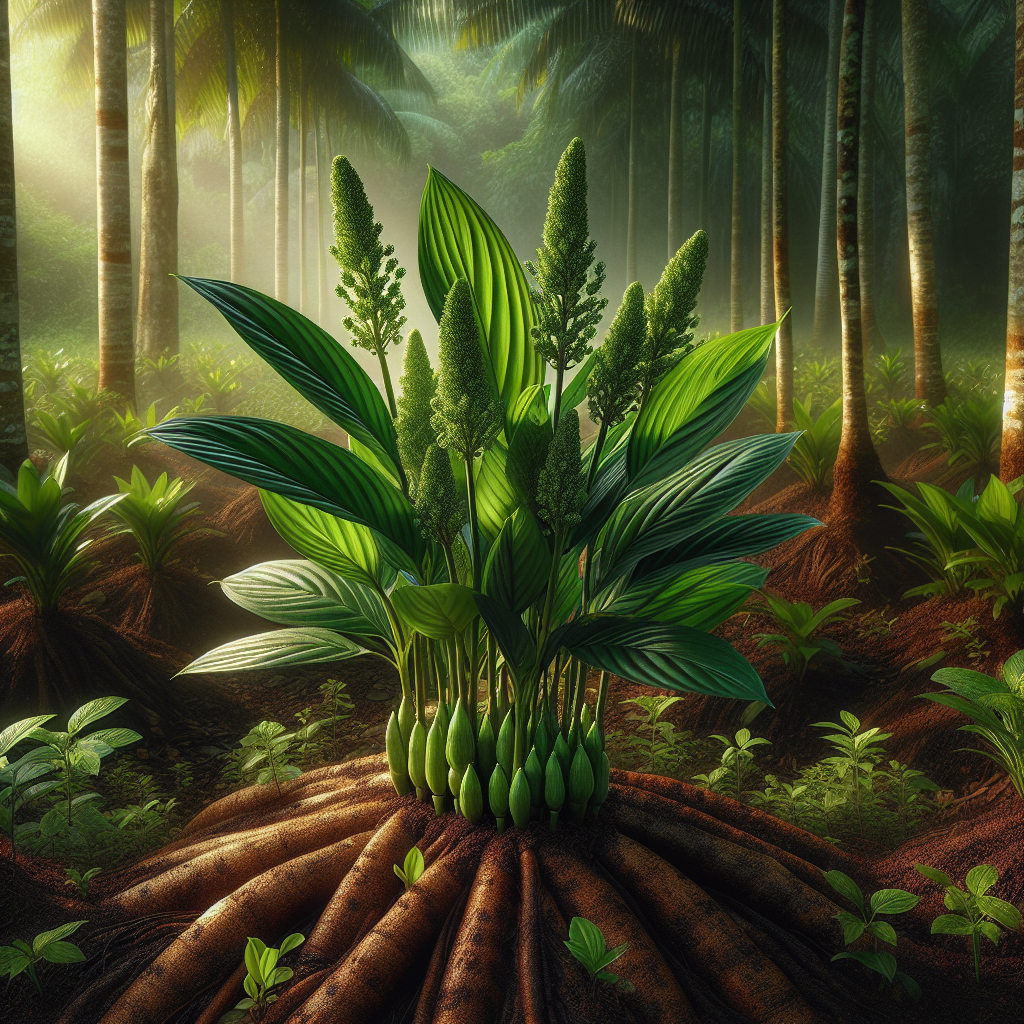
Introduction to Cardamom
Known as the “queen of spices,” cardamom is one of the most valuable and botanically distinctive plantation spices in the world. Native to the evergreen forests of the Western Ghats of southern India, it has been cultivated for centuries in humid, shaded mountain landscapes where mist, leaf litter, and deep organic soils create ideal growing conditions. The crop occupies a unique niche among tropical spices because it combines the growth habit of a perennial forest understory herb with the economics of a premium export commodity.
The commercial product is the immature, green, three-sided capsule containing highly aromatic seeds rich in essential oils such as cineole, terpinyl acetate, and limonene. Quality is judged by capsule size, color retention, density, aroma, and oil content. Although cardamom can be grown in home gardens, profitable production requires an understanding of shade ecology, rhizome behavior, drainage, flowering biology, and post-harvest curing. Growers familiar with other rhizomatous spices may notice some parallels with Ginger, but cardamom is generally more sensitive to both waterlogging and prolonged direct sun.
Cardamom is a long-term crop. Well-managed plantings can remain productive for 8 to 15 years or more, though peak yields often come after establishment and before clump congestion becomes severe. Because it is perennial and labor-intensive, field design, drainage layout, shade management, and access for harvesting should be planned before planting rather than corrected later.
Botanical Profile of Cardamom
Cardamom belongs to the family Zingiberaceae, the same botanical family as ginger, turmeric, and several other aromatic tropical rhizomatous plants. The cultivated species for true or small cardamom is Elettaria cardamomum. It grows from branching subterranean rhizomes that produce multiple leafy pseudostems formed by overlapping leaf sheaths. Mature plants typically reach 2 to 4 meters in height under favorable shaded conditions.
The leaves are lanceolate, glossy, and arranged distichously, with a characteristic aromatic smell when crushed. Unlike many annual spice crops, cardamom produces specialized flowering panicles from the base of the clump near ground level. These prostrate or semi-erect inflorescences bear pale flowers with a distinctive lip marked by violet or white streaking. Pollination can occur by insects, and good biodiversity in shaded systems often improves fruit set.
The fruit is a trilocular capsule, harvested while still green and physiologically mature but before it yellows or splits. Each capsule contains numerous small black-brown seeds enclosed in a thin mucilaginous aril. Aroma intensity is influenced by genotype, maturity at harvest, nutrition, and curing method.
Several cultivar groups are recognized in producing regions, often categorized by capsule size, plant vigor, adaptation to altitude, and panicle habit. Traditional categories include Malabar, Mysore, and Vazhukka types in India. Malabar types often bear more prostrate panicles and may suit certain shaded hill conditions; Mysore types are generally more robust and can produce larger capsules; Vazhukka types are considered natural hybrids with intermediate traits. Modern improved selections have been bred for higher yield, disease tolerance, and more uniform capsule quality, but cultivar performance remains highly site-specific.
Cardamom grows in flushes. New tillers arise from the rhizome, and each tiller contributes to future productivity. A healthy clump therefore depends not only on current leaf growth but on the steady recruitment of vigorous replacement shoots. Management practices that damage shallow roots, compact soil, or bury the collar too deeply can reduce tillering and long-term yield.
Soil, pH, and Climate Requirements for Cardamom
Cardamom performs best in deep, friable, humus-rich forest loam with excellent drainage and high moisture-holding capacity. The ideal soil is not simply “moist” but evenly aerated and biologically active, with abundant organic matter that buffers temperature and supports fine feeder roots. In commercial terms, the most productive soils are often well-structured clay loams to loams rich in decomposed leaf litter. Shallow, gravelly, compacted, saline, or calcareous soils are poor choices.
The preferred soil pH is typically 5.5 to 6.5. Cardamom tolerates slightly more acidic conditions, but growth can suffer below about pH 5.0 if acidity is associated with aluminum toxicity, nutrient lock-up, or weak microbial activity. At pH above 7.0, micronutrient availability declines and plants may show chlorosis, reduced vigor, and lower capsule set. If soil is too acidic, incorporate finely ground agricultural lime or dolomite well before planting, using a soil test to guide rates. Avoid sudden over-liming, which can destabilize nutrient balance in high-rainfall tropical systems.
Drainage is one of the most critical factors in cardamom cultivation. The crop needs continuous moisture but is highly intolerant of stagnant water around the rhizome zone. A suitable root environment is moist to the touch at 10 to 15 cm depth, crumbly rather than sticky, and never foul-smelling. Soil should drain free water within a few hours after heavy rain. Persistent saturation causes root decline, Rhizome rot, yellowing, poor tillering, and eventual clump collapse.
Climatically, cardamom is a true humid tropical to subtropical montane crop. Ideal temperatures range between 18 and 30°C, with best performance often around 20 to 26°C in shaded plantations. Growth slows below about 15°C, and heat stress becomes significant above 32 to 35°C, especially when accompanied by low humidity or exposed conditions. Relative humidity of 75% or higher supports leaf turgor, flowering, and capsule development.
Rainfall requirements are generally 1500 to 4000 mm annually, well distributed or supplemented with irrigation during dry months. However, rainfall quantity alone is not enough; its seasonal pattern matters. Cardamom benefits from moist pre-flowering conditions, but prolonged dry spells during panicle emergence and capsule filling sharply reduce yield. Conversely, continuous cloudburst conditions with poor drainage can trigger severe fungal problems.
Shade is essential. Cardamom is not a full-sun field crop. In most production systems, 40% to 60% filtered shade is ideal, though local conditions may justify slightly more or less. Excess shade reduces tillering, flowering, and air movement, while too little shade scorches leaves, raises soil temperature, and causes spikelet abortion. Shade trees should create dappled light rather than dense darkness.
Altitude influences crop behavior. Many premium cardamom belts lie between 600 and 1500 meters above sea level, where temperatures are moderate and humidity remains high. At lower, hotter elevations, productivity can be maintained only with careful shade, irrigation, and wind protection.
For broader management principles on building resilient fertile ground, see soil health tips.
Step-by-Step Planting & Propagation
Propagation is done either by seed or by vegetative division, but the choice depends on the production goal. Seed propagation preserves genetic diversity and is used in breeding or seedling plantations, yet offspring may vary in vigor, yield, and capsule quality. Vegetative propagation by division of healthy clumps is preferred when uniformity and rapid establishment are desired.
Start with site selection. Choose a gently sloping or terraced field with reliable moisture, shelter from hot winds, and existing or planned shade trees. Remove aggressive perennial weeds and open drainage channels before the rainy season. In steep areas, establish contour drains and soil-conservation barriers to prevent nutrient wash and rhizome exposure.
If using suckers or divisions, select disease-free mother clumps that are high-yielding, well-tillering, and free of viral symptoms, capsule rot, and Root grubs. Each division should ideally contain one vigorous leafy shoot and one young growing shoot attached to a healthy rhizome segment with active roots. Planting weak or over-aged material leads to slow stand establishment and poor future clump architecture.
For seed propagation, harvest fully ripe capsules from elite mother plants, extract seeds, wash away mucilage, and sow promptly because viability declines with storage. Seeds are commonly raised in shaded nursery beds or polybags filled with rich, sterilized medium containing loam, sand, and compost. Germination may take 20 to 45 days, sometimes longer. Seedlings are transplanted only when robust enough to withstand field conditions.
Prepare pits roughly 45 cm x 45 cm x 30 cm, adjusting size to soil depth and root ball size. In looser forest soils, smaller pits may suffice; in compact ground, larger pits help root exploration. Refill with topsoil mixed with well-rotted compost or leaf mold. Never plant into fresh manure, which can generate heat, attract pests, and favor rot.
Spacing varies with cultivar vigor, shade intensity, and terrain, but 2 m x 1 m to 2 m x 2 m is common. In more intensive systems under managed shade, tighter spacing may be used initially, with later thinning. Wider spacing improves aeration and access for harvest in high-rainfall disease-prone regions.
Plant at the onset of the monsoon or during a reliably wet period. Set divisions so the rhizome sits just below the soil surface, with the collar not deeply buried. Press soil gently but firmly around roots to eliminate air pockets. Immediately mulch with dry leaves, chopped shade-tree litter, or other clean organic material, keeping mulch a few centimeters away from the pseudostem base to prevent stem rot.
In the first year, temporary shade may be needed if permanent canopy is not yet balanced. Young plants are especially vulnerable to sun scorch. Irrigate lightly and frequently during dry periods rather than flooding. The goal is to keep the upper root zone uniformly moist without sealing the soil.
Care & Maintenance regimes for Cardamom
Cardamom management is a year-round discipline centered on moisture regulation, mulching, nutrient supply, shade balance, sanitation, and clump renewal. The crop responds best to consistency rather than extremes.
Irrigation should maintain soil moisture near field capacity in the active root zone without prolonged saturation. Practically, when a handful of soil from 10 cm depth feels cool and forms a weak ball that crumbles with slight pressure, moisture is usually adequate. If the soil feels powdery and the mulch underneath is dry, the plant is under moisture stress. If the soil forms a sticky mass, emits a sour smell, or water glistens around the crown for long periods, it is too wet. Moisture stress first appears as rolled leaves, dull leaf color, poor panicle emergence, flower drop, and lightweight capsules. Overwatering leads to yellowing, soft basal tissues, root decline, and greater disease incidence.
Mulching is essential, not optional. A 5 to 10 cm layer of leaf litter or partially decomposed organic mulch helps moderate soil temperature, preserve humidity, suppress weeds, and feed soil biota. Renew mulch after heavy decomposition or washout, especially before dry months. In plantations, shade-tree litter is often a major nutrient source.
Nutrient management should be based on soil and leaf analysis, but cardamom generally needs steady nitrogen for tillering, phosphorus for root vigor and flowering, and potassium for capsule filling and stress tolerance. Organic manures such as well-rotted cattle manure, vermicompost, composted poultry manure, neem cake, and green leaf mulch are highly beneficial when applied in split doses. In conventional systems, NPK is also split into 2 to 4 applications timed before monsoon, mid-season, and post-monsoon. Excess nitrogen without adequate shade and potassium produces lush soft growth that is more disease-prone.
A practical regime for established clumps is to apply compost or farmyard manure around but not touching the base, lightly forked into the topsoil without injuring shallow roots. Follow with mulch and irrigation. Foliar sprays of micronutrients may correct hidden deficiencies where acidic leaching or imbalanced pH limits uptake.
Shade regulation should be reviewed at least twice yearly. Prune overhead branches to maintain filtered light and air movement. Dense canopy encourages fungal disease and reduces flowering, while abrupt heavy pruning exposes plants to scorch. Make gradual corrections.
Weed management should focus on shallow manual removal or mulch suppression. Deep hoeing damages feeder roots and young rhizomes. Keep the immediate basin clean, but preserve soil structure.
Clump management matters as the plantation ages. Remove dead, weak, diseased, and overly crowded shoots to improve light penetration and reduce inoculum buildup. This “trashing” or clump sanitation encourages healthy tillers. Earthing up is sometimes practiced lightly where rhizomes become exposed, but never bury the crown excessively.
Flowering and fruiting depend on stable growing conditions. Erratic water supply, nutrient shock, or sudden overexposure to light often reduces capsule set. A well-run cardamom field looks lush but not rank, shaded but not dark, mulched but not waterlogged, and open enough that basal panicles are accessible for harvest.
Pests, Diseases & Organic Management
Cardamom is vulnerable to a range of insects, Nematodes, and pathogens, especially in humid monoculture-like plantings with poor airflow. Organic management works best when it is preventive and ecosystem-based rather than reactive.
Thrips are among the most economically important pests. They feed on tender tissues, flowers, and capsules, causing scarring, malformed pods, corky surfaces, and reduced market value. Damage may be worse in dry periods interrupted by humidity. Remove heavily infested debris, maintain balanced shade, avoid excessive nitrogen, and use botanical sprays such as neem-based formulations where permitted. Blue or yellow monitoring traps can help detect early pressure, though canopy crops require visual scouting as well.
Shoot and capsule borers attack tender shoots and developing capsules. Symptoms include boreholes, frass, withered shoots, and damaged pods. Sanitation is critical: prune and destroy infested panicles or shoots promptly. Light traps and pheromone-based tools may assist monitoring in some regions.
Root grubs damage roots and rhizomes, leading to yellowing, weak tillers, poor anchorage, and patchy dieback. They are often worse in neglected fields with heavy weed cover and unrotted organic matter that shelters adults. Rake lightly around affected clumps, hand-collect larvae when feasible, encourage birds, and apply well-matured organic amendments rather than raw residues.
Aphids and other Sap feeders may also transmit viral diseases. One of the most serious is Cardamom mosaic or “katte” disease, which causes pale streaking, mosaic mottling, stunting, reduced tillering, and drastic yield loss. Viral plants do not recover. The correct response is immediate rogueing and destruction of infected clumps, strict use of clean planting material, and vector suppression. Delayed removal turns a manageable problem into plantation-wide decline.
Fungal capsule rot and Rhizome rot intensify under prolonged leaf wetness, overcrowding, and poor drainage. Symptoms include water-soaked lesions, rotting capsules, basal stem discoloration, sudden wilting, and decayed roots. Organic prevention includes excellent drainage, wider spacing where humidity is excessive, pruning for aeration, removal of diseased debris, and application of composts enriched with beneficial microbes such as Trichoderma where locally recommended and legally approved.
Leaf blights and spots may appear under stress or heavy rainfall. Unless severe, they are often secondary to poor nutrition, weak airflow, or shade imbalance. Correct the cause rather than relying solely on sprays.
Nematodes can reduce root efficiency and predispose plants to secondary pathogens. Rotating nursery media, solarizing nursery beds where climate permits, and raising only certified healthy planting stock are important preventive steps.
A strong organic program for cardamom includes clean seed or suckers, nursery hygiene, regular scouting, mulching with disease-free material, shade tuning, balanced fertility, and immediate removal of infected plant parts. In perennial spices, sanitation is cumulative: every neglected diseased clump becomes a reservoir for the next season.
Harvesting, Curing & Optimal Storage
Cardamom usually begins bearing lightly in the second or third year after planting, with commercial harvests increasing as clumps mature. Capsules do not ripen uniformly, so harvesting is selective and repeated. The correct stage is just before full ripening, when capsules are fully developed, firm, and green but not yellow or split. Waiting too long reduces green color retention and may increase shattering or quality loss.
In many regions, harvesting is done every 15 to 30 days during the production season, depending on flowering flush and climate. Pick capsules by hand, preferably in the morning after surface moisture has dried but before midday heat. Handle gently; bruised capsules discolor more easily during curing.
Field hygiene during harvest matters. Use clean baskets, avoid heaping wet capsules in thick piles, and move produce quickly to the curing area. Delays in curing increase heating, discoloration, and mold risk.
Curing determines final market quality. The aim is to reduce moisture safely while preserving green color and volatile aroma. Fresh capsules may contain 70% or more moisture, which must be reduced to around 8% to 10% for safe storage. Traditional sun drying is simple but often causes bleaching, uneven drying, and aroma loss. Controlled drying in flue-curing or improved dryers at moderate temperatures is preferred for premium product. Excessive heat drives off essential oils and can turn capsules pale, brittle, or smoky.
A practical drying range often used is about 45 to 55°C, adjusted for dryer design and airflow. Capsules should dry gradually over many hours rather than be scorched. Properly cured cardamom remains green, lightweight but not hollow, and strongly aromatic. If capsules feel soft, leathery, or cool in sealed containers after drying, moisture is still too high.
After drying, clean and grade by size, color, and fullness. Remove shriveled, insect-damaged, split, or moldy capsules. Some markets favor bold green capsules; others accept bleached or seed-only product, but premium returns usually depend on visual quality.
Store dried cardamom in moisture-proof, odor-free containers away from light, heat, and fluctuating humidity. Laminated pouches, lined cartons, or clean food-grade bins in a cool dry room are suitable. Whole capsules store better than decorticated seeds because the husk protects volatile compounds. Ideal storage conditions are below 25°C with low ambient humidity. Reabsorption of moisture leads to mold, color loss, and reduced shelf life.
Companion Planting for Cardamom
Cardamom is best thought of as an understory component in a managed agroforestry system rather than an isolated monocrop. The most useful companion plants are those that create stable shade, recycle nutrients, protect soil, and avoid direct competition in the shallow root zone.
Suitable upper-story companions include multipurpose shade trees with filtered canopies and leaf litter that decomposes well. Species selection depends on region, but the principle is consistent: choose trees that do not cast excessively dense shade, do not host major cardamom pests, and can be pruned predictably. Nitrogen-fixing trees can be especially valuable if their litter is not too coarse or allelopathic.
Black pepper vines are sometimes integrated onto support trees in mixed spice systems, and coffee may coexist in similar humid shaded landscapes where elevation and rainfall overlap. However, mixed systems should not compromise airflow. Overcomplicated planting can trap humidity near the cardamom canopy and raise disease pressure.
Low-growing companions should be non-invasive and easy to manage. Cover crops or living mulches must not smother rhizome zones. In young plantations, short-duration legumes can improve soil cover and organic matter if they are cut before they compete aggressively for water. Any companion should be kept away from the immediate clump base.
Avoid companion species with dense superficial roots, allelopathic leaf litter, or heavy demand for the same moisture niche. Also avoid plants that create excessive shade during the wettest months. The goal is ecological support, not crowding.
In practical plantation design, the best companions for cardamom are often service plants rather than cash intercrops: shade trees, green manure species, erosion barriers, and occasional biodiversity strips that support pollinators and beneficial insects. For related mixed-planting concepts, see the companion planting guide.