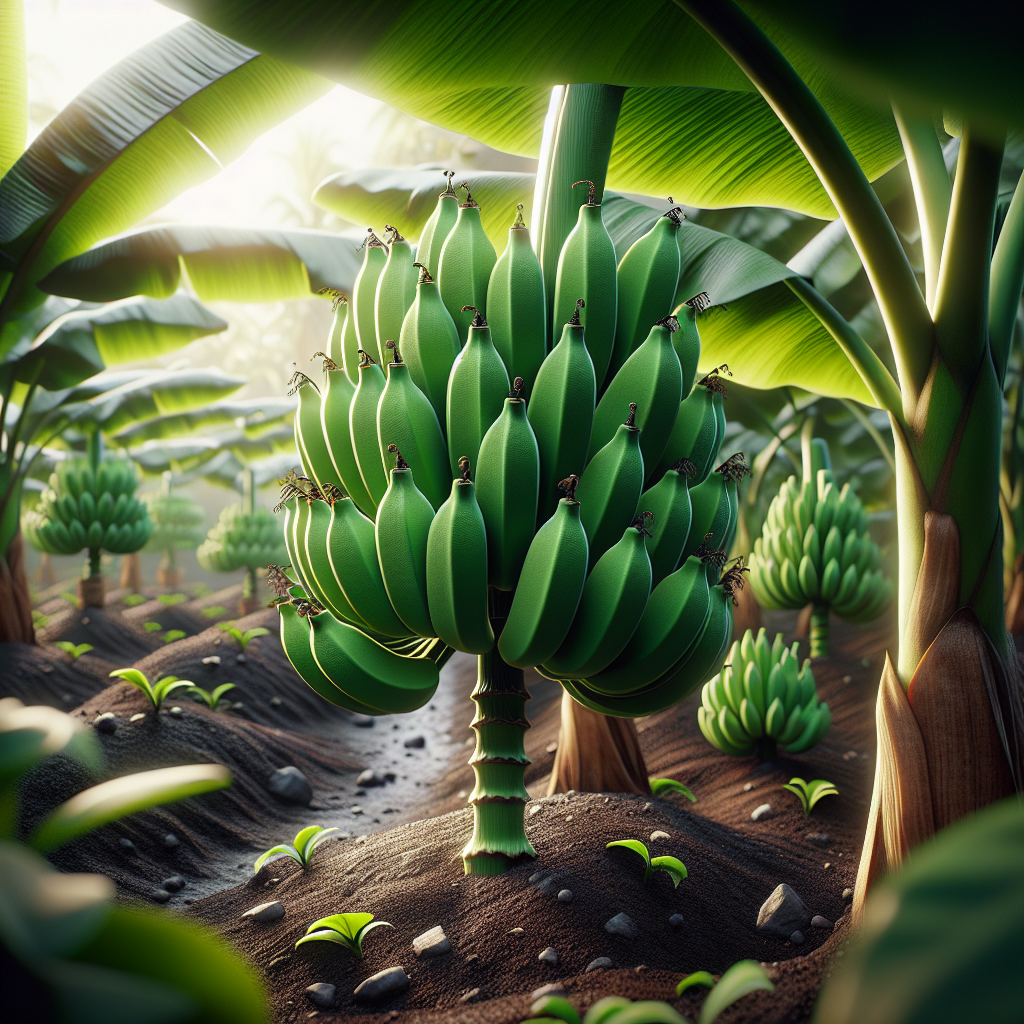
Introduction to Dwarf Cavendish Banana
A compact, productive dessert banana, this cultivar is prized for its manageable height, fast growth, and ability to fruit in gardens where taller bananas would be difficult to protect or maintain. Despite the word “dwarf,” it is not a tiny plant; mature specimens commonly reach 6 to 10 feet tall, sometimes a bit more in fertile tropical settings, with broad leaves that create a dramatic canopy.
It belongs to the Cavendish group, the same broad lineage that dominates much of the global banana trade. Historically, Cavendish bananas rose to prominence after Gros Michel plantations were devastated by Fusarium wilt in the mid-20th century. Dwarf Cavendish became especially important because it combines reliable dessert-quality fruit with shorter stature, making it somewhat less prone to windthrow than taller banana cultivars. For growers, its appeal lies in high ornamental value, edible production, and suitability for both in-ground culture and very large containers in frost-free or seasonally protected regions.
Banana plants are giant perennial herbs, not trees. What looks like a trunk is a pseudostem formed by tightly packed leaf sheaths. The true stem is an underground corm or rhizomatous base, which continuously generates roots and suckers. Understanding this growth habit is essential, because management revolves around maintaining a healthy mother plant, selecting the right follower suckers, and removing excess pups so the mat remains productive rather than crowded.
Botanical Profile of Dwarf Cavendish Banana
This cultivar is generally classified under Musa acuminata within the Cavendish subgroup, though cultivated bananas have complex hybrid origins and taxonomy can be nuanced. Dwarf Cavendish is a seedless, parthenocarpic dessert banana, meaning it develops edible fruit without pollination and does not produce viable seeds under normal cultivation. Propagation therefore depends on vegetative division or tissue-cultured plants.
Leaves are large, paddle-shaped, and bright green, often with reddish to maroon blotching on juvenile foliage. Mature leaves may reach 4 to 6 feet long under vigorous conditions. Because the leaf blades are thin and easily torn by wind, ragged edges are normal and do not always indicate disease. The pseudostem is stout, often more robust relative to height than many taller bananas, which is one reason this cultivar performs well in small plantings.
The inflorescence emerges from the center of the pseudostem once the plant has accumulated enough leaf area and carbohydrate reserves. It pushes upward and then arches downward, producing hands of bananas beneath purple bracts. Fruit fingers are moderately short, plump, and sweet when fully ripe. A single pseudostem fruits only once; after harvest, that stem gradually declines and should be cut back, while selected suckers continue the cycle.
A healthy mat usually consists of three generations: the fruiting mother, one vigorous follower about half to two-thirds her size, and one younger sword sucker. This sequencing ensures continuous production. Broadly similar orchard-floor management principles used in other perennial tropical fruit systems, such as Hass avocado, also apply here: root-zone stability, mulch management, and careful water balance strongly influence long-term yield.
Soil, pH, and Climate Requirements for Dwarf Cavendish Banana
This cultivar performs best in deep, fertile, moisture-retentive but well-drained soil rich in organic matter. Ideal texture is loam to sandy loam with high humus content. Heavy clay can work only if drainage is improved, because waterlogging around the corm quickly leads to root stress, reduced nutrient uptake, and higher disease pressure. In poor soils, bananas survive but rarely achieve the rapid growth needed for timely flowering and full bunch fill.
The preferred soil pH is approximately 5.5 to 7.0, with an optimum around 6.0 to 6.5. Below pH 5.5, nutrient availability becomes less balanced and root vigor may decline unless fertility is carefully managed. Above pH 7.5, micronutrient lockout, especially iron and manganese deficiency, becomes more common, showing up as chlorosis in new leaves. Before planting, it is worth testing soil and incorporating 3 to 6 inches of well-decomposed compost into the top 12 to 18 inches if native soil is weak.
Temperature is one of the biggest success factors. Ideal growth occurs between 75 and 95°F (24 to 35°C). Growth slows markedly below 60°F (16°C), and tissue damage can begin in the upper 30s°F (around 3 to 4°C), especially on exposed leaves. A light frost can shred foliage and stall the plant; prolonged cold can kill the pseudostem and even damage the corm. In subtropical regions, fruiting is possible, but cold periods delay maturity and may reduce sweetness.
Humidity between 50% and 80% is favorable, though the plant can grow in drier air if irrigation is excellent. Wind protection is extremely important. Even though Dwarf Cavendish is shorter than many bananas, leaves tear easily and top-heavy fruiting stems can snap or topple under gusts. Planting near a windbreak, wall, or sheltered southern exposure often improves both vigor and bunch quality.
Full sun is best for maximum production, ideally 8 or more hours daily. In very hot inland climates with intense reflected heat, slight afternoon protection can reduce leaf scorch on young plants, but mature plants should still receive strong light. For site preparation and organic fertility building, practices like composting, mulching, and cover cropping are highly relevant; see soil health strategies for broader system-level ideas.
Step-by-Step Planting & Propagation
Choose planting material carefully. The best options are disease-free tissue-cultured plants from reputable nurseries or sword suckers taken from clean, vigorous mats. Sword suckers have narrow, upright leaves in youth and a stronger connection to the corm, making them superior to broad-leaved water suckers, which often establish poorly and produce weaker plants.
Select the site. Pick the warmest, sunniest, most wind-sheltered location available. Allow enough space for the mat to expand and for air movement. In ground, spacing of 8 to 12 feet between plants is suitable for home production; commercial high-density systems may plant closer, but require more aggressive nutrition and sucker management.
Prepare the planting hole. Dig a hole about 2 feet wide and 1.5 to 2 feet deep if soil is compacted, then backfill partly with loosened native soil mixed with compost. Avoid creating a sharply different “pot” of rich mix in heavy soil, which can hold water around the roots.
Inspect and trim planting stock. For suckers, remove damaged roots and any obviously rotted tissue. If dividing from a parent mat, use a clean blade and dust cut surfaces with wood ash or a biological fungicide if desired, then allow a brief drying period in shade before planting.
Plant at the correct depth. Set the corm so the soil line sits at or slightly above the previous growing depth. Planting too deep encourages rot; too shallow exposes roots and destabilizes the pseudostem.
Water thoroughly after planting. Saturate the root zone to settle soil, then allow excess water to drain. During establishment, maintain evenly moist soil, not soggy conditions.
Mulch generously. Apply 3 to 6 inches of coarse organic mulch such as shredded leaves, straw, or chopped banana leaves around the root zone, keeping mulch 3 to 4 inches away from direct contact with the pseudostem. This moderates soil temperature, conserves moisture, and slowly feeds the plant.
Support if needed. In windy areas, stake newly planted suckers or tissue-cultured plants until roots anchor firmly.
For container culture, use a pot of at least 20 to 30 gallons, with excellent drainage and a rich but airy mix. Container plants need much more frequent feeding and watering than in-ground specimens. Repot or root-prune as needed when growth slows and roots circle densely.
Propagation by division is straightforward: remove a vigorous sword sucker with a portion of corm attached once it is roughly 2 to 3 feet tall. Tissue culture offers cleaner starts and more uniformity, but young plantlets must be hardened gradually because they are often tender and humidity-adapted when first purchased.
Care & Maintenance regimes for Dwarf Cavendish Banana
Water management should be precise and consistent. Bananas have large leaves, high transpiration, and shallow, fibrous roots concentrated in the upper soil profile. They need regular moisture for uninterrupted growth, especially from warm spring through fruit development. Aim to keep the top 12 to 18 inches of soil uniformly moist. In practical terms, the soil should feel cool and slightly damp several inches down, never powder-dry and never swampy.
A mature in-ground plant in hot weather may need deep irrigation 2 to 4 times per week depending on soil type, rainfall, and mulch. Sandy soils may require smaller, more frequent applications, while loams can take heavier, less frequent soakings. Drip irrigation or a slow basin soak is preferable to brief surface sprinkling. If leaves fold inward during the hottest part of the day and recover by evening, mild heat stress may be normal; if leaves remain drooped in morning, moisture stress is likely. Persistent yellowing of lower leaves, sour-smelling soil, fungus gnats near container media, or a soft base can indicate overwatering and poor aeration.
Nutrient demand is high. Dwarf Cavendish is especially responsive to nitrogen and potassium, with secondary needs for magnesium and trace elements. A balanced fertility plan might include compost plus a granular fertilizer such as 8-10-8 or a similar fruiting-crop formulation during active growth. Young plants can be fed lightly every 4 to 6 weeks; established plants often benefit from monthly feeding through the warm growing season. Potassium becomes especially important before and during flowering to support bunch development, fruit fill, and stem strength. Pale margins or weak fruiting can reflect potassium shortage.
Organic growers can use composted manure, feather meal, fish hydrolysate, kelp, sulfate of potash, and magnesium sources like Epsom salt in moderation if deficiency is confirmed. Avoid dumping large amounts of fresh manure against the plant, which can burn tissue and create excessive soft growth.
Pruning is mostly sanitary and structural rather than ornamental. Remove dead leaves, severely shredded leaves, and spent pseudostems after harvest. Cut fruited stems down in stages rather than all at once if doing so helps avoid damage to adjacent suckers. Keep only one or two well-positioned follower suckers. Too many pups compete for water and nutrients, reducing bunch size and slowing the mat.
Propping and bunch support are often necessary once fruit starts swelling. Use bamboo poles or forked supports under heavy stems. In commercial tropical systems, bunch bagging may be used to reduce sunburn, insect damage, and cosmetic scarring, but ensure ventilation to avoid excessive humidity around fruit.
Cold protection matters in marginal climates. Before chilly weather, deepen mulch, wrap pseudostems with frost cloth, burlap, or insulating material, and reduce watering slightly as growth slows. If frost destroys leaves but the pseudostem remains firm, the plant may recover. If the pseudostem turns mushy, cut back to healthy tissue and protect the corm until warm weather returns.
Pests, Diseases & Organic Management
The most common banana problems vary by region, but vigilance is always important because rapid growth can hide early symptoms. Aphids, Spider mites, Mealybugs, Scale insects, Caterpillars, and Banana weevils are among the more frequent pests. In humid climates, Slugs and Snails may also scar young tissue.
Aphids cluster on tender growth and can transmit viral diseases such as Banana bunchy top virus in areas where that pathogen occurs. Spider mites are more likely in hot, dry conditions and cause stippling or bronzing on leaves. Mealybugs and scale weaken plants by sucking sap and excreting honeydew, which encourages Sooty mold. Organic control starts with prevention: maintain airflow, avoid excess nitrogen that causes lush pest-prone growth, wash small infestations off with water, and use insecticidal soap or horticultural oil when necessary. Always spray in cooler hours and test on a small area first.
Banana weevil borers and Nematodes are more serious in some production regions. Weevil larvae tunnel in the corm and pseudostem base, causing weakness, poor vigor, and lodging. Nematodes damage roots, reducing nutrient uptake and drought tolerance. Clean planting material is the best defense. Sanitation, removal of crop residues, and avoiding movement of infected suckers are critical.
Fungal and bacterial problems include Sigatoka leaf spot, Panama disease caused by Fusarium oxysporum f. sp. cubense, Bacterial soft rots, and Crown rots. Dwarf Cavendish, like other Cavendish bananas, has some historical significance because Cavendish cultivars replaced Gros Michel in many export systems due to resistance to earlier Fusarium races, but they are not universally immune to all modern strains, especially Tropical Race 4. Home growers should prioritize exclusion: buy certified clean stock, disinfect tools, and never move suspect corms or soil from diseased areas.
Leaf spots often begin as streaks or speckles that enlarge into necrotic lesions, reducing photosynthetic area. Remove heavily infected leaves, improve spacing, water at the base rather than overhead when possible, and avoid overcrowding mats. Soft, foul-smelling basal tissues usually indicate rot from poor drainage or secondary infection. Correct the moisture problem immediately and remove severely affected tissue.
Nutrient deficiencies can mimic disease. Magnesium deficiency often appears as yellowing on older leaves while midribs remain greener. Iron deficiency shows as yellow new growth with green veins, especially in alkaline soil. Diagnose carefully before treating.
Harvesting, Curing & Optimal Storage
Bananas are usually harvested mature-green rather than fully yellow on the plant, especially if birds, bats, squirrels, or cool weather threaten quality. Maturity is judged by fruit fullness: the fingers become more rounded, angular ridges soften, and the blossom ends dry. Depending on climate, flowering to harvest may take roughly 70 to 150 days, with faster timing in hot tropical conditions and much slower development in cooler subtropics.
To harvest, support the bunch first. Cut the pseudostem partially to bend the bunch downward gently, then sever the bunch cleanly with a sharp knife. Handle carefully because bruising shows later during ripening. If only part of the bunch is ready, some growers remove hands selectively, but whole-bunch harvest is more common.
Bananas do not require curing in the same sense as onions or garlic, but they do benefit from clean postharvest handling and controlled ripening. Keep harvested bunches in a shaded, well-ventilated area. Wash lightly only if needed, and dry surface moisture promptly to reduce rot. For ripening, hold fruit at about 58 to 68°F (14 to 20°C). Warmer conditions speed ripening; cooler than about 56°F (13°C) can cause chilling injury, dull peel color, and poor flavor. Never refrigerate unripe bananas.
Ethylene from apples, ripe bananas, or other fruit accelerates ripening. To slow ripening, separate hands and keep them cool but above chilling threshold. Once fully ripe, fruit can be refrigerated briefly if necessary, though peel darkening will occur while flesh remains usable. For best flavor, allow fruit to develop a rich yellow peel with light speckling.
A bunch harvested too early may ripen unevenly and taste starchy. Fruit left too long on the plant in wet or cold conditions may split, attract pests, or fail to sweeten properly. Timing is therefore a critical quality skill for growers.
Companion Planting for Dwarf Cavendish Banana
This cultivar creates a humid, partly shaded microclimate beneath its canopy, which can be useful if managed thoughtfully. Good companions are shallow-rooted, low-competition species that appreciate filtered light and regular irrigation, or flowering plants that attract beneficial insects without aggressively invading the banana root zone.
Excellent choices include sweet potato as a living groundcover, low-growing legumes for nitrogen contribution, marigold for beneficial insect support, comfrey at a respectful distance for chop-and-drop mulch, and culinary herbs that tolerate partial shade such as basil in bright exposures. In tropical food forests, taro, ginger, turmeric, and some leafy greens can work well around the outer drip line where moisture is dependable but airflow remains adequate. Thai basil is one useful aromatic companion in warm climates; compare habits in the Thai Basil guide.
Avoid highly competitive woody shrubs directly adjacent to the mat, and avoid planting thirsty large crops so close that irrigation becomes inconsistent. Also be careful with dense understory planting in humid regions, because excessive crowding increases leaf wetness duration and disease pressure.
The best companion-planting strategy is functional layering: mulch-producing plants at the perimeter, low insectary flowers in sunlit gaps, and living groundcovers that protect soil without smothering suckers. Keep a clear ring immediately around each pseudostem so inspections, fertilization, and pup selection remain easy. When done well, companion planting improves soil organic matter, moderates evaporation, and creates a more resilient planting system without compromising bunch size or plant health.