Introduction to Pythium spp.
Pythium spp. represents one of the most destructive soilborne pathogens in agriculture, affecting a wide array of crops from seedlings to mature plants. These oomycetes, often misidentified as fungi due to their filamentous growth, are water molds that excel in high-moisture environments. Pythium causes root rot, damping-off, and girdling rots, leading to billions in annual crop losses globally. Unlike true fungi, Pythium produces swimming zoospores that propel rapid infection under wet conditions, making it a formidable foe in greenhouses, nurseries, and fields.
Understanding Pythium is crucial for farmers, as early intervention can salvage yields. This guide provides definitive diagnostic criteria, lifecycle insights, and proven management strategies tailored for organic and sustainable farming. With climate variability increasing wet spells, proactive measures against Pythium are non-negotiable for resilient operations. For more on similar threats, explore our comprehensive Pythium wiki page.
Identifying Symptoms & Damage
Pythium infections manifest distinctly across plant growth stages, enabling precise diagnosis. In seedlings, pre-emergence damping-off appears as seeds rotting in soil without sprouting, often with a foul odor from secondary bacterial invasion. Post-emergence damping-off shows water-soaked lesions at the soil line, causing stems to collapse into a 'pinched' appearance—classic hallmark of Pythium.
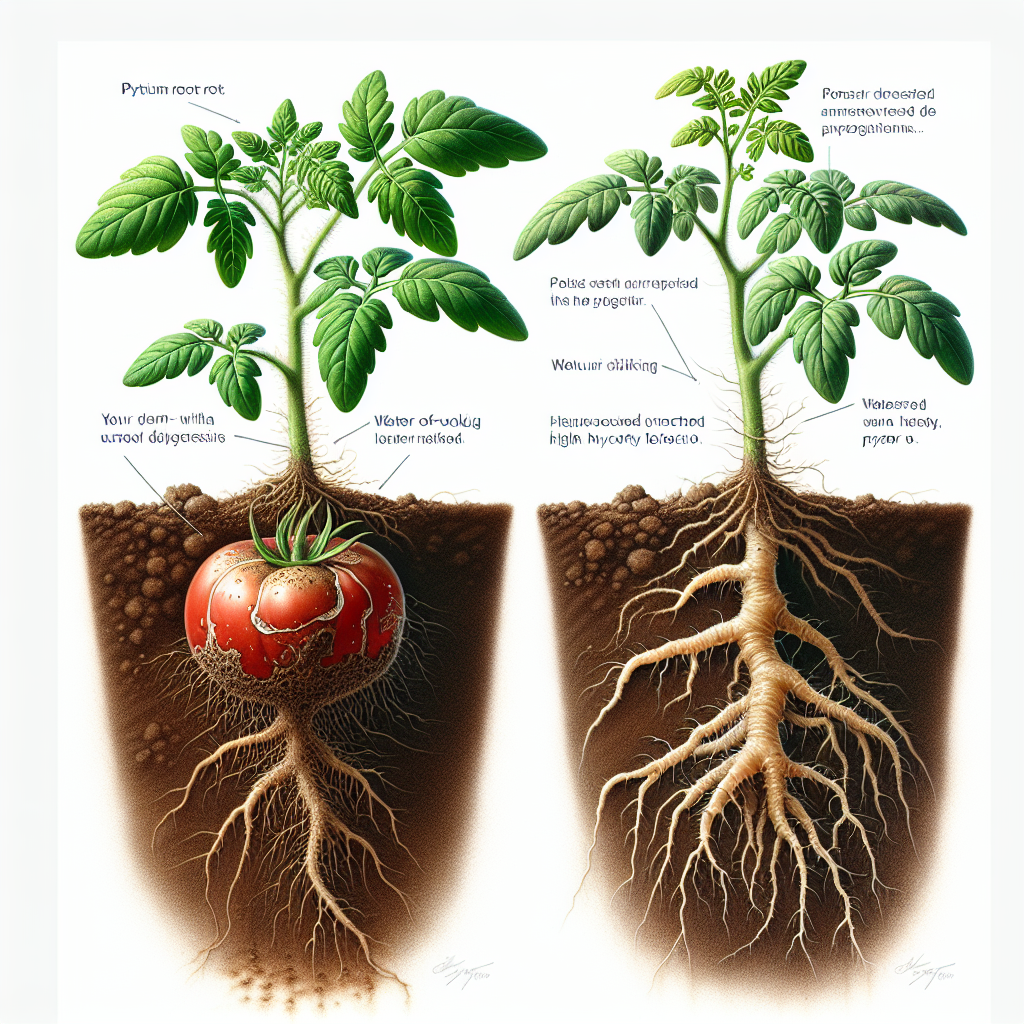
Mature plants exhibit root rot symptoms: roots turn brown, mushy, and foul-smelling, with cortical tissues easily sloughing off. Above ground, affected plants display stunting, yellowing lower leaves (chlorosis), and wilting despite adequate moisture. In advanced cases, girdling at the crown or base leads to sudden collapse. Differentiate from Phytophthora or Rhizoctonia by Pythium's sparse mycelium and oospore presence in lab tests.
Damage is most severe in compacted, poorly drained soils. In corn, expect patchy stands; in soybeans, seedling death up to 50% in wet fields. Tomatoes show blackened roots and fruitless vines. Scout early mornings when wilting is pronounced, and excavate roots for inspection. Confirm via lab plating on selective media like V8 agar, where Pythium grows rapidly at 20-30°C.
Lifecycle and Progression of Pythium spp.
Pythium's lifecycle is aquatic-adapted, fueling its explosive spread. It overwinters as thick-walled oospores or survival hyphae in soil or plant debris. Cool, wet springs (10-25°C) trigger germination, producing sporangia that release biflagellate zoospores. These motile spores swim through water films to infect root hairs or wounds, penetrating within hours.
Inside host tissue, Pythium colonizes cortex via mycelium, secreting enzymes that dissolve cell walls. Infection progresses upward, girdling hypocotyls in seedlings or crowns in mature plants. Under prolonged wetness, new sporangia form, releasing secondary zoospores for polycyclic spread—explaining epidemics in saturated fields. Sexual reproduction yields durable oospores, persisting years in soil.
Progression accelerates post-rain: Day 1-2 zoospores infect; Day 3-5 rot visible; Week 2+ plant death. In greenhouses, recycled water disseminates inoculum farm-wide. Unlike Fusarium, Pythium favors low oxygen, explaining prevalence in flooded soils. Lifecycle knowledge guides timing: avoid planting in cool, wet windows.
Environmental Triggers & Risk Factors
Pythium thrives in saturated soils with temperatures 15-25°C, low oxygen, and neutral pH (6-7). Compaction from heavy machinery creates anaerobic pockets ideal for zoospores. Over-irrigation, poor drainage, and excessive nitrogen promote lush, susceptible growth. Cool nights following warm days trigger sporulation peaks.
Risk spikes in fields with residue from prior potato or cucurbit crops, harboring oospores. Contaminated tools, floodwater, or pond irrigation introduce inoculum. Acidic amendments like peat reduce incidence, as Pythium prefers neutral soils. High clay content retains moisture, amplifying risk.
In hydroponics, pH fluctuations above 6.5 and temperatures over 24°C slow growth, but algae blooms provide alternative hosts. For detailed prevention tied to small farm optimization, check our blog on Soil Health Mastery: 5 Proven Strategies for Small Farms to Build Fertile Ground Without Breaking the Bank. Climate change extends risky windows, demanding vigilant monitoring.
Organic Control & Treatment Plans
Organic management integrates cultural, biological, and minimal chemical tactics. Immediate Response: Remove and destroy infected plants to curb spread. Solarize soil pre-planting: cover moist soil with clear plastic 4-6 weeks in summer, heating to 45°C+ kills oospores.
Biological Controls: Apply Trichoderma harzianum or Bacillus subtilis drenches (e.g., RootShield, Serenade) at 1-2 L/ha. These mycoparasites outcompete Pythium, colonizing roots. Gliocladium virens suppresses via antibiosis. Inoculate transplants pre-planting.
Organic Drenches: Hydrogen peroxide (3%, 1:10 dilution) aerates and oxidizes pathogens—apply 5-10 L/m² weekly. Potassium phosphite (0.1%) boosts defenses systemically. Cinnamon oil or garlic extracts deter zoospores.
Cultural Tactics: Use raised beds (20-30 cm) for drainage. Amend with compost for microbial competition. Plant resistant varieties like certain cucumber hybrids. Avoid overhead irrigation; drip only. Rotate with brassicas or grains breaking Pythium cycles.
Integrated Plan: Week 1: Solarize/excavate. Week 2: Biofumigate with mustard meal. Planting: Seed-treat with Trichoderma. Post-plant: Monitor EC/pH, drench at first wilt. Success rates exceed 70% in trials. For Phytophthora root rot comparisons, see related entries.
Preventing Pythium spp. in the Future
Prevention trumps cure: audit fields pre-season. Test soil drainage (dig 30 cm hole, fill with water—if drains <1 cm/hr, amend). Use gypsum (2-5 t/ha) on sodic soils for percolation. Promote biodiversity via cover crops like clover or mustard, suppressing inoculum.
Sanitize equipment with 10% bleach or quaternary ammonium. Source certified pathogen-free seed/transplants. Time planting post-soil warmup >18°C. Mulch with coarse organics to moderate moisture. Aerate compacted zones.
Long-term: Mycorrhizal inoculants enhance root vigor against invasion. Monitor with bait tests (float radish seeds in soil slurry; rotting indicates Pythium). Annual rotation (3-4 years non-hosts) depletes oospores. In greenhouses, UV-sterilize recirculated water and maintain DO >5 mg/L. These steps reduce incidence 80-90%.
Crops Most Affected by Pythium spp.
Pythium strikes indiscriminately but favors wet-loving crops. Cereals like wheat, rice, and corn suffer seedling blights, with losses up to 30% in flood-prone areas. Legumes including soybeans, peas, and chickpeas show crown rots in cool springs.
Vegetables are prime targets: lettuce, cucumber, tomato, and potato exhibit damping-off epidemics in nurseries. Turfgrasses and ornamentals face Pythium blight in saturated lawns. Perennials like strawberry and avocado endure chronic root decline.
Tropicals such as banana, ginger, and sugarcane battle in monsoon seasons. Seed crops like spinach and beets lose stands. Susceptibility ties to shallow roots and poor drainage tolerance. Tailor prevention to your rotation—e.g., avoid cucurbits post-legumes.