Introduction to Potato (Kennebec)
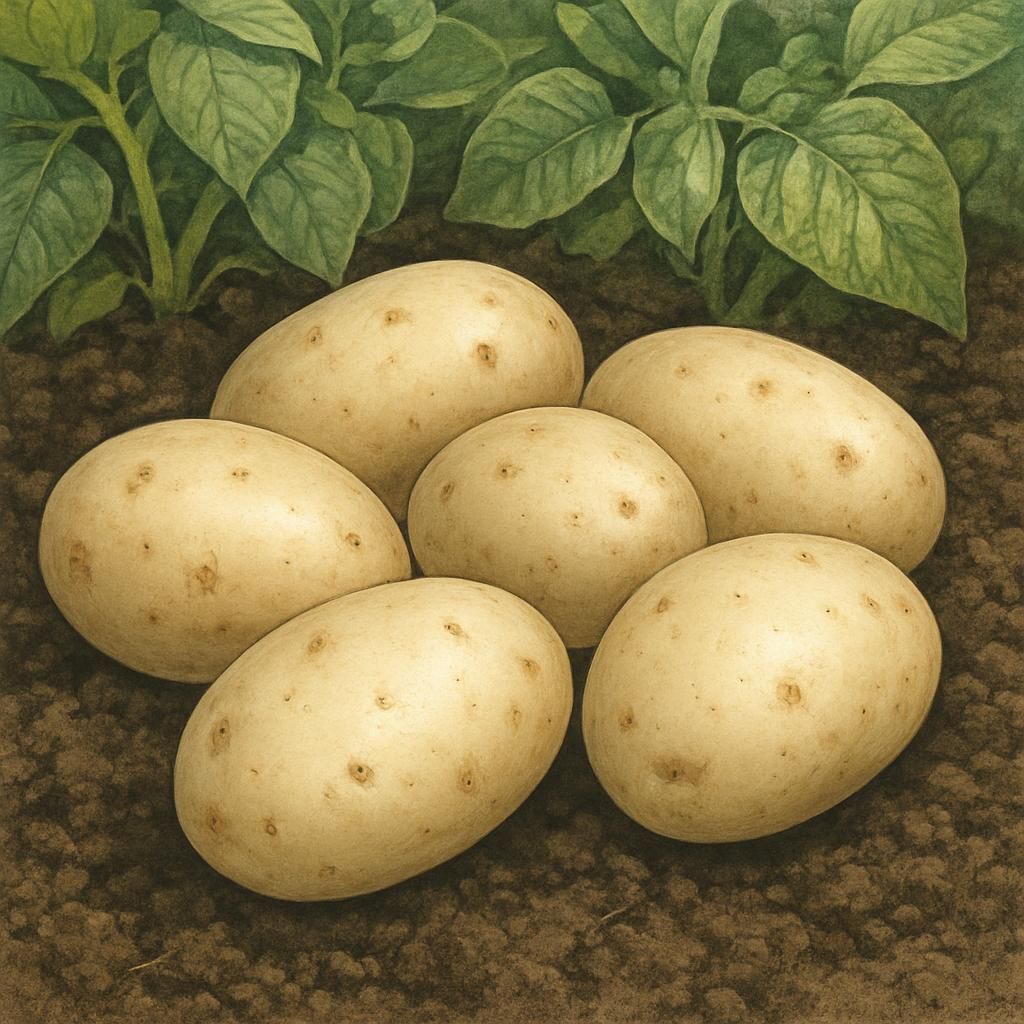
The Kennebec potato is a mid-season white variety developed in Maine and released in 1948. It quickly became one of the most widely grown potatoes in North America thanks to its high yields, strong resistance to common diseases, and reliable performance across diverse growing conditions. Its tubers are large, oval to oblong, with smooth white skin and shallow eyes, making them ideal for both fresh market sales and long-term storage. Kennebec potatoes are versatile in the kitchen, excelling in baking, boiling, frying, and processing into chips or fries.
Botanical Profile of Potato (Kennebec)
Kennebec belongs to the nightshade family, Potato (crop). Like all potatoes, it is a herbaceous perennial grown as an annual for its starchy underground tubers. The plant produces compound leaves with leaflets and small white-to-pale-purple flowers. Tubers form from stolons that develop underground and store carbohydrates produced through photosynthesis. Kennebec is noted for its vigorous vine growth, reaching 60–90 cm in height, and its ability to set large, uniform tubers even under variable moisture conditions.
Soil, pH, and Climate Requirements for Potato (Kennebec)
Kennebec potatoes thrive in well-drained, fertile soils with consistent moisture. They prefer cool temperatures during tuber development and are sensitive to both frost and extreme heat.
| Parameter | Ideal Range | Notes |
|---|---|---|
| Soil Type | Sandy loam to loam | Excellent drainage prevents rot |
| Soil pH | 5.5 – 6.5 | Slightly acidic; avoids common scab |
| Soil Temperature | 7–21 °C at planting | Warmer soils speed emergence |
| Air Temperature | 15–24 °C daytime, 10–15 °C night | Cool nights improve tuber quality |
| Frost Tolerance | None after emergence | Protect young plants from late frosts |
| Sunlight | Full sun (6–8 hours) | Maximizes photosynthesis and yield |
| Spacing | 30–38 cm between plants, 75–90 cm rows | Allows hilling and good airflow |
Step-by-Step Planting & Propagation
- Source certified seed potatoes of the Kennebec variety to avoid introducing diseases.
- Cut seed tubers into pieces with at least one or two eyes each, about 40–60 g per piece.
- Allow cut pieces to suberize (heal) for 1–2 days in a cool, dry location.
- Plant when soil temperature reaches at least 7 °C and danger of hard frost has passed.
- Place seed pieces 10–15 cm deep in prepared trenches or hills, eyes facing upward.
- Space plants 30–38 cm apart within rows spaced 75–90 cm apart.
- As plants emerge and reach 15–20 cm, begin hilling soil around stems to encourage more tuber formation and protect against greening.
Care & Maintenance regimes for Potato (Kennebec)
Consistent moisture and balanced nutrition are critical. Over-fertilization, especially with nitrogen late in the season, can reduce tuber quality.
| Growth Stage | Watering Schedule | Fertilizer Application | Pruning / Hilling Schedule |
|---|---|---|---|
| Pre-plant / Early | Keep soil moist but not waterlogged | Incorporate 5-10-10 or similar at 500–700 kg/ha | No pruning; prepare hills or ridges |
| Vegetative (4–8 wks) | 25–40 mm per week; avoid water stress | Side-dress with nitrogen at 4–6 weeks | Hill soil when plants reach 15–20 cm |
| Tuber Initiation | Maintain even moisture; critical period | Reduce nitrogen; apply potassium if needed | Second hilling 2–3 weeks later |
| Tuber Bulking | Continue 25–40 mm/week until 2 weeks before harvest | Minimal additional fertilizer | Final hilling to cover tubers; remove weeds |
| Maturation | Reduce watering 10–14 days before harvest | None | Stop hilling; allow vines to senesce naturally |
Pests, Diseases & Organic Management
Kennebec offers good resistance to late blight and some virus diseases, but remains susceptible to several common issues. Monitor regularly and use integrated pest management.
Key pests include Colorado potato beetle, aphids, cutworms, and wireworms. Diseases of concern are early blight, common scab, black scurf, and Potato virus Y. Organic controls include crop rotation with non-hosts such as corn or wheat, floating row covers for beetles, beneficial insects, and copper-based sprays for blight when conditions favor disease.
Harvesting, Curing & Optimal Storage
Harvest Kennebec potatoes when vines begin to yellow and die back, typically 80–100 days after planting. Use a garden fork to gently lift tubers, taking care not to bruise them. Allow harvested potatoes to cure in a dark, well-ventilated area at 10–15 °C and 85–90 % humidity for 10–14 days. For long-term storage, keep tubers at 4–7 °C with high humidity and good air circulation. Avoid exposure to light to prevent greening and solanine formation.
Companion Planting for Potato (Kennebec)
Plant potatoes with companions that deter pests or improve soil health. Good partners include garlic, onion, cabbage, and horseradish (when available). Aromatic herbs such as thyme and rosemary help repel insects. Avoid planting near tomato, eggplant, or pepper because they share many pests and diseases. Summer companion planting strategies can further enhance resilience and reduce pest pressure in potato plantings.