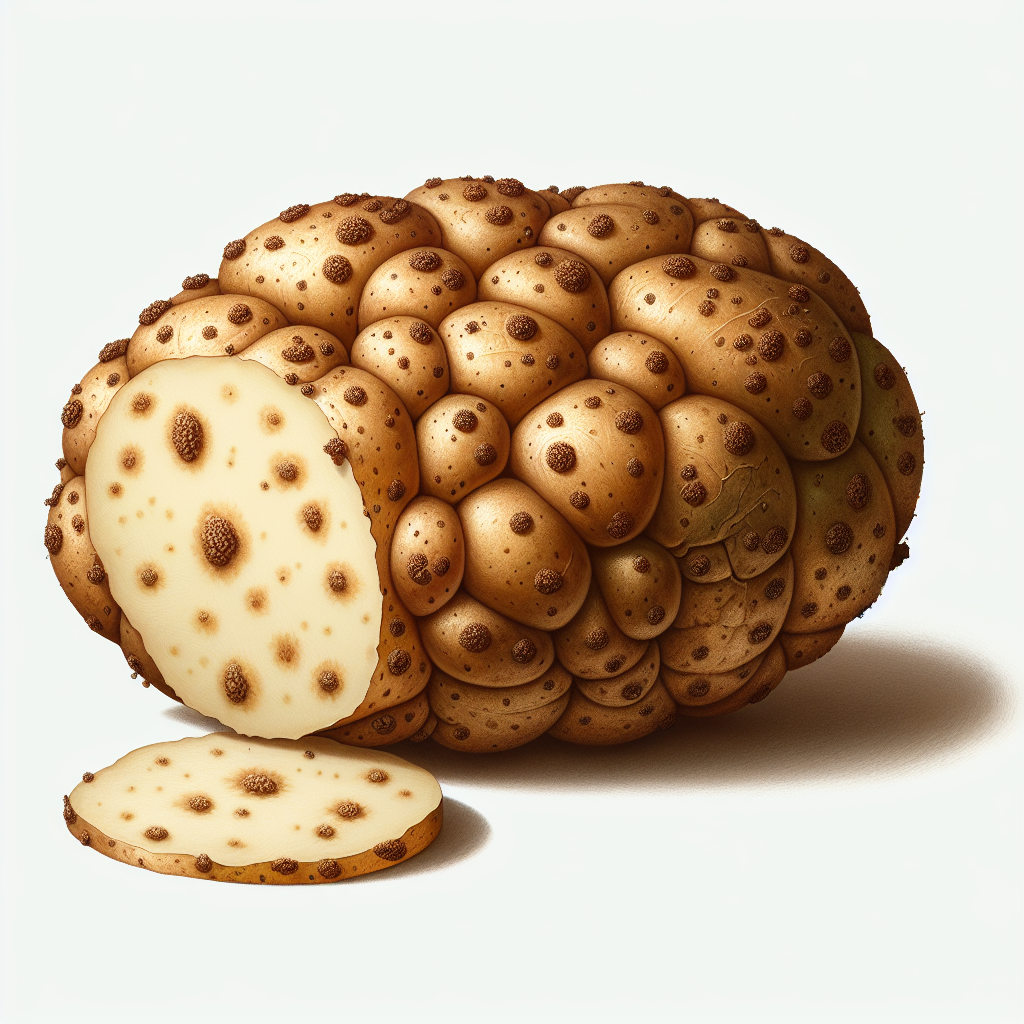
Introduction to Common scab
Common scab, caused by the soil-borne bacterium Streptomyces scabies, is one of the most prevalent and challenging diseases in potato production worldwide. This pathogen thrives in slightly alkaline, well-aerated soils and infects developing tubers, resulting in superficial to deep, russet-brown lesions that resemble cork or raised scabs. Unlike many fungal diseases, common scab does not rot the tubers or make them unedible; however, the blemishes drastically reduce their cosmetic appeal, leading to significant economic losses in fresh market sales. In severe cases, up to 90% of a crop can be downgraded or rejected by packers.
First identified in the late 19th century, common scab affects potato crops globally, from North American prairies to European fields and Asian highlands. The disease is particularly problematic in regions with sandy or light-textured soils where pH exceeds 5.2. While chemical controls are limited due to the bacterium's residence deep in soil, integrated management combining resistant cultivars, soil amendments, and precise irrigation has proven effective. Growers often overlook early symptoms, mistaking them for mechanical damage or environmental stress, which delays intervention. Understanding its biology is crucial for sustainable control, as S. scabies can persist in soil for years via mycelial fragments and spores. Recent research highlights emerging strains like Streptomyces europaeiscabiei and Streptomyces stelliscabiei, which show resistance to traditional managements and acidic soil tolerance, complicating control in diverse agroecosystems. This guide provides diagnostic tools, lifecycle insights, and proven strategies to minimize losses, empowering farmers to protect their Russet Burbank potato and other varieties.
Identifying Symptoms & Damage
Diagnosing common scab requires careful inspection of tubers during harvest or storage. Primary symptoms appear as irregularly shaped, raised, corky lesions on the tuber surface, ranging from 2-10 mm in diameter. These pits can be superficial (erumpent type), resembling rough, net-like russets, or deep and pitted (pit type), exposing underlying flesh. Lesions often have a 'rusty' brown color with defined margins, and in humid conditions, a thin, white mycelial growth may be visible. Unlike early blight or late blight, common scab does not produce concentric rings or sporulation; instead, it feels rough and corky to the touch.
Damage severity varies by cultivar susceptibility—russet types like Yukon Gold potato show superficial scabs, while smooth-skinned varieties like Red Bliss potato develop deep pits. Internal symptoms include necrotic flecks in the vascular ring, but the flesh remains firm and edible. Yield losses are minimal (under 10%), but marketability drops sharply: fresh market potatoes with >5% surface coverage are often culled. Secondary infections by soft rot bacteria (Pectobacterium spp.) can occur in pitted lesions, leading to storage decay. Field diagnosis involves digging sample plants at tuber initiation (6-8 weeks post-planting) and checking for early blemishes. Confirm via lab culture on selective media like oatmeal agar, where S. scabies produces earthy-smelling, powdery spores. Differentiate from chemical injury (e.g., ozone damage, smoother lesions) or powdery scab (fungal, with powdery spores). Early identification prevents spread via contaminated equipment or seed tubers.
Lifecycle and Progression of Common scab
Streptomyces scabies is a Gram-positive, filamentous bacterium that survives indefinitely in soil as dormant spores and mycelia on crop debris, weed roots, and even non-hosts like radish. Infection begins when hyphae germinate in response to root exudates from emerging potato sprouts, colonizing roots and stolons by mid-season. Optimal infection occurs during tuber initiation (50-75 days after planting), when skin is thin and suberization incomplete. The pathogen penetrates via wounds or directly through lenticels, producing thaxtomin A—a phytotoxin that disrupts cell walls, causing corky necrosis.
Progression peaks in dry, warm conditions (60-75°F, low humidity), with symptoms expanding as tubers enlarge. Sporulation follows lesion formation, releasing arthrospores that disperse via wind, irrigation splash, or tools. Unlike fungal pathogens, it lacks a sexual cycle, relying on fragmentation for survival. Overwintering occurs in alkaline soils (pH 5.5-8.0), with populations building over successive potato crops. Crop rotation with non-hosts like corn reduces inoculum but doesn't eradicate it, as viability exceeds 10 years. New strains produce more aggressive toxins, shortening latent periods. Monitoring soil populations via bioassays (e.g., radish baiting) tracks risk, informing rotation lengths of 3-5 years.
Environmental Triggers & Risk Factors
Common scab flourishes in cool, dry climates with neutral to alkaline soils (pH >5.2), low organic matter (<2%), and sandy textures promoting aeration. Warm days (65-75°F) followed by dry spells trigger outbreaks, as low soil moisture (<60% field capacity) stresses tubers, enhancing thaxtomin uptake. High calcium levels (>1000 ppm) exacerbate symptoms by delaying skin set, while low rainfall (<20 inches/season) concentrates soil pathogens. Risk spikes after liming or manure application raising pH, or in fields with short rotations (<3 years).
Susceptible varieties like Russet Burbank potato amplify damage; volunteer potatoes and weed hosts (e.g., nightshades) serve as reservoirs. Over-fertilization with nitrogen delays maturity, prolonging susceptibility. Irrigation mismanagement—infrequent, deep watering—creates dry-wet cycles favoring infection. Climate change may worsen outbreaks via erratic rainfall. Soil testing for pH, calcium, and S. scabies density is essential; populations >10^6 CFU/g soil predict severe scab.
Organic Control & Treatment Plans
Organic management emphasizes cultural tactics over fungicides, as no bactericides fully control S. scabies. Plant certified, scab-free seed tubers from low-risk areas. Select resistant varieties like Snowden or Defender potato. Acidify soil to pH 5.0-5.2 using elemental sulfur (200-500 lbs/acre, applied 3-6 months prior) or ammonium sulfate fertilizers, inhibiting spore germination. Maintain even soil moisture via drip irrigation (1-1.5 inches/week during tuber bulking), avoiding overhead sprinkling.
Incorporate green manures like mustard or rapeseed (rapeseed) for biofumigation, releasing isothiocyanates toxic to Streptomyces. Crop rotation (4+ years) with grasses like wheat or barley depletes inoculum. Add organic matter (compost 10-20 tons/acre) to boost microbial competition. For active infections, remove heavily scabbed tubers pre-harvest to limit soil recontamination. Post-harvest, brush and wash tubers in hot water (122°F) with organic sanitizers like peracetic acid. Biologicals like Pseudomonas spp. or Bacillus subtilis show promise in trials, reducing severity by 30-50%. Monitor via weekly digs; integrate with cover crops for long-term suppression. See our Soil Health Mastery blog post for detailed amendment protocols.
Preventing Common scab in the Future
Long-term prevention hinges on soil stewardship and vigilant planning. Conduct annual soil tests targeting pH, nutrients, and pathogen levels; adjust with acidifying amendments preemptively. Choose certified seed from northern latitudes (cooler soils limit S. scabies). Implement 4-6 year rotations incorporating non-hosts like sweet potato or cabbage. Use precision irrigation to sustain 70-80% soil moisture during critical periods, preventing stress-induced susceptibility.
Foster beneficial microbiomes via compost teas and mycorrhizal inoculants, outcompeting the pathogen. Scout fields biweekly from emergence, rogue infected plants. Avoid liming potato ground; opt for sulfate-based fertilizers. For small farms, raised beds with imported acidic soil offer refuge. Track weather via apps to irrigate during dry spells. Resistant varieties (e.g., Mountain Gem potato) reduce risk by 70%. Sanitize equipment and store tubers at 40-45°F, 95% humidity to minimize spread. Annual planning prevents recurrence, safeguarding yields.
Crops Most Affected by Common scab
Primarily a potato pathogen, common scab devastates potato crops, with all varieties susceptible but smooth-skinned types like Yukon Gold potato suffering deepest pits. It also impacts root crops including turnip, beet, radish, and carrot, causing similar corky lesions. Rarely, it affects sweet potato, parsnip, and beets in shared rotations. Non-solanaceous crops like legumes or grains are hosts for soil persistence but show no symptoms. Global potato production loses $50-100 million annually to scab; integrated practices mitigate this across affected tubers.