Introduction to Black scurf
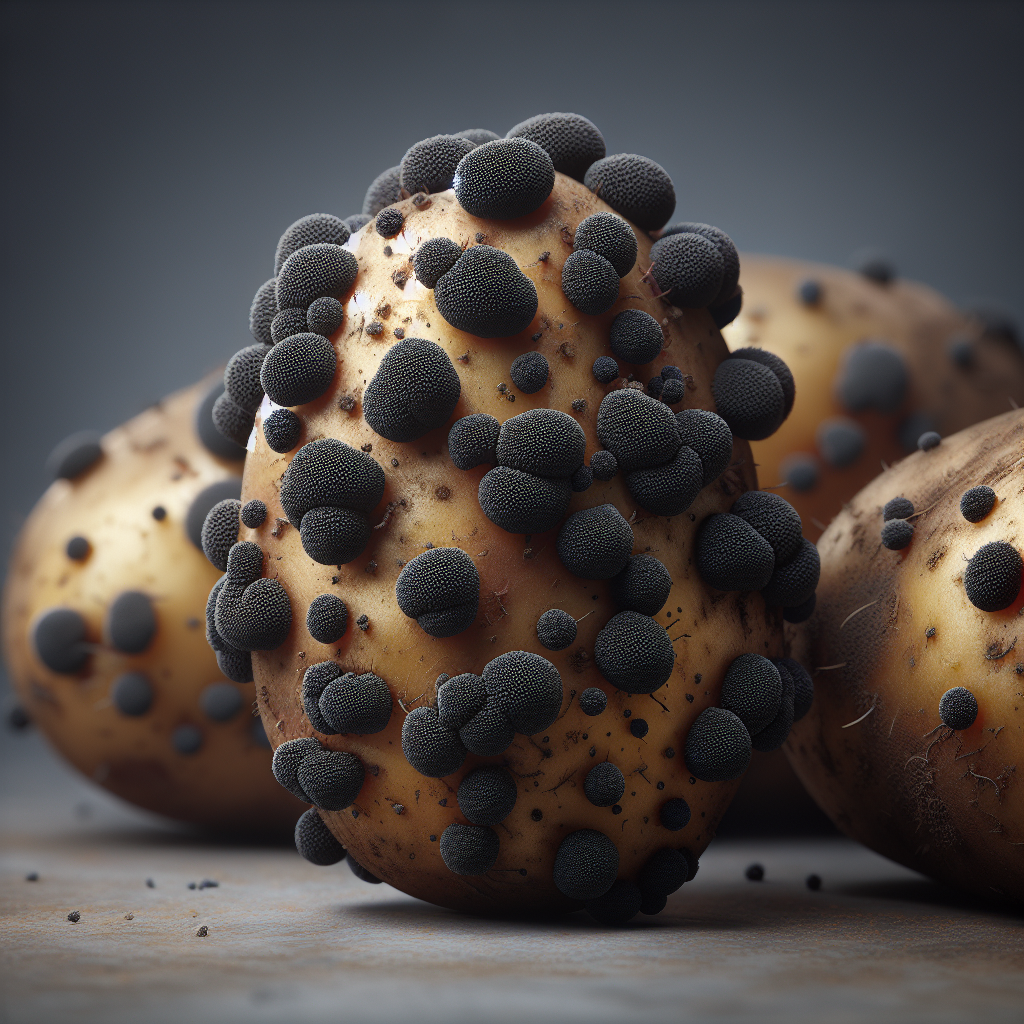
Black scurf, caused by the soilborne fungus Rhizoctonia solani (Rhizoctonia), is one of the most widespread and persistent diseases affecting potato production worldwide. This pathogen produces distinctive black, raised sclerotia—resting structures—on potato tubers, giving the disease its name and making infected tubers unappealing for fresh market sales. Though it seldom causes outright plant death, black scurf leads to substantial economic losses through reduced tuber size, skin blemishes, and secondary rots during storage.
Farmers often confuse black scurf with other tuber blemishes like common scab or net necrosis, but its irregular black pustules are diagnostic. The fungus survives indefinitely in soil as sclerotia or in plant debris, making it challenging to eradicate. In cool, moist conditions, infection rates can exceed 50% in susceptible varieties, slashing marketable yields by up to 30%. Understanding its biology and implementing integrated management is crucial for sustainable potato farming, especially in regions with intensive production like the Pacific Northwest, Idaho, and parts of Europe. Early detection and prevention form the cornerstone of control, as chemical options are limited and often ineffective post-infection.
Identifying Symptoms & Damage
Black scurf manifests primarily on underground plant parts, with symptoms appearing at different growth stages. On young sprouts and stolons, look for reddish-brown lesions that girdle stems, causing stunted growth and wire-stem symptoms where stems become tough and slender. Above ground, infected plants may show yellowing foliage, wilting, or reduced vigor, though these are nonspecific and often mimic nutrient deficiencies.
The hallmark symptom emerges at harvest: tubers covered in small (1-5 mm), black, irregular sclerotia embedded in the skin. These pustules are firmly attached, gritty to the touch, and easily distinguished from soil particles by their irregular shape and resistance to washing off. Severely infected tubers exhibit surface cracking, roughening, or shallow pits, reducing grade and market value. Internally, tubers remain firm initially, but sclerotia serve as entry points for soft rot bacteria (Erwinia spp.) in storage, leading to wet, foul-smelling decay.
Damage extends beyond cosmetics. Stem cankers reduce photosynthesis and translocation, lowering tuber numbers and size by 10-20%. In seed potato production, sclerotia contamination can spread the disease to new fields. Yield losses average 5-15% globally, but can hit 40% in wet springs. Differentiate from early blight (foliar lesions with concentric rings) or common scab (raised, corky lesions without black sclerotia). Use a hand lens to confirm sclerotia; lab culturing on potato dextrose agar yields characteristic brick-red mycelium.
Lifecycle and Progression of Black scurf
Rhizoctonia solani persists as sclerotia in soil (up to 10 years) or infected debris. In spring, as soil warms to 50-65°F (10-18°C), sclerotia germinate, producing mycelium and basidiospores that infect emerging sprouts, roots, or stolons via wounds or natural openings. Optimal infection occurs at 59-68°F (15-20°C) with moist soils; hyphae penetrate cortex cells, causing necrotic lesions.
Progression ties to potato growth. During emergence (10-20 days post-planting), stem infections form cankers. By tuber initiation (50-60 days), mycelium spreads to developing tubers, forming sclerotia under periderm within 2-3 weeks. Mature sclerotia darken and harden, ready for harvest dispersal. Infected seed tubers contribute 20-50% of field inoculum.
The fungus's anastomosis groups (AGs), especially AG-3, specialize on potato, with airborne basidiospores aiding short-distance spread via wind or tools. No sexual stage occurs in fields; sclerotia are the primary survival unit. Crop rotation interrupts the cycle, but volunteers or nearby potatoes sustain populations. In storage, sclerotia remain viable, germinating if conditions favor soft rot.
Environmental Triggers & Risk Factors
Black scurf thrives in cool (55-65°F), wet soils during early growth, with prolonged leaf wetness exacerbating stem cankers. Poor drainage, compacted soils, and high organic matter favor sclerotia survival. Acidic soils (pH <5.5) suppress antagonists, boosting pathogen activity.
Key risk factors include planting infested seed tubers, short rotations (<3 years), and cool, rainy springs delaying skin set, prolonging infection windows. Overly deep planting (>4 inches) increases stolon exposure, while shallow hilling leaves tubers vulnerable. High nitrogen delays maturity, extending susceptibility. Volunteer potatoes and weeds like nightshades harbor the fungus. In organic systems, manure additions can introduce sclerotia if contaminated.
Climate change may intensify outbreaks with erratic springs. Fields with history of Fusarium or Pythium show synergistic rots. Scout high-risk fields early; soil tests for sclerotia density (>10/g soil signals trouble).
Organic Control & Treatment Plans
Organic management emphasizes prevention over cure, as no fungicides fully eradicate established infections. Start with certified seed tubers low in black scurf (<1% surface coverage). Hot water treatment (122°F/50°C for 30 min) kills surface sclerotia without harming viability, though internal ones persist.
Crop rotation with non-hosts like corn, wheat, or soybeans for 3-4 years dilutes inoculum. Use resistant varieties like 'Defender' or 'Snowden'; avoid susceptibles like 'Russet Burbank' (Russet Burbank potato). Optimize planting: shallow (2-3 inches), warm soils (>50°F), and hilling by 6-8 inches to protect tubers.
Biological controls shine here. Trichoderma virens or Pseudomonas spp. (e.g., Bio-Fungus) colonize roots, outcompeting R. solani. Apply as seed treatments or in-furrow (1-2 gal/A). Mustard biofumigation releases isothiocyanates suppressing sclerotia; plant green manure and incorporate pre-planting.
Cultural tweaks: improve drainage with ridges or beds, avoid excess N, and promote rapid emergence. Post-harvest, cure tubers at 60°F/80% RH for 2 weeks to set skins, then store cool/dry (40°F/95% RH). Remove debris to curb volunteers. Check out this Soil Health Mastery guide for enhancing beneficial microbes.
Integrated plans yield 70-90% control: seed treatment + rotation + bioagent + timing. Monitor with bait tests; thresholds >5% incidence warrant action.
Preventing Black scurf in the Future
Long-term prevention builds resilient systems. Select fields with low history; solarize soil in summer (6 weeks under plastic) to kill sclerotia. Use green manures like sudangrass, which allelochemicals inhibit germination.
Resistant varieties and certified seed are non-negotiable. Time planting for soil >55°F; use black plastic mulch for warmth. Balanced fertility: lime to pH 6.0-6.5, moderate N (120-150 lb/A). Scout weekly from emergence; rogue infected hills.
Post-harvest sanitation: harvest dry, minimize cuts, bury cull piles deep. Rotate machinery to avoid spread. Biofumigants like mustard or broccoli release volatiles reducing populations 50-80%. Cover crops build suppressive soils; incorporate clover or rye pre-potato.
Farm-wide IPM integrates these: annual rotation, seed health, biology, and monitoring. Yields stabilize at 90% marketable with diligence.
Crops Most Affected by Black scurf
Potato reigns as the primary host, with all varieties susceptible but processing types hit hardest due to skin quality demands. Seed crops suffer most, as sclerotia render tubers unplantable.
Other Solanaceae like tomato, eggplant, and bell pepper show minor symptoms—root lesions or damping-off—but rarely economic loss. Cereals like barley host different anastomosis groups, not potato AG-3. Root crops such as sweet potato or carrot occasionally report cankers.
In rotations, avoid consecutive Solanaceae; pair with peas or brassicas for suppression. Global potato acreage (50M ha) makes it the $100B hotspot for black scurf losses.