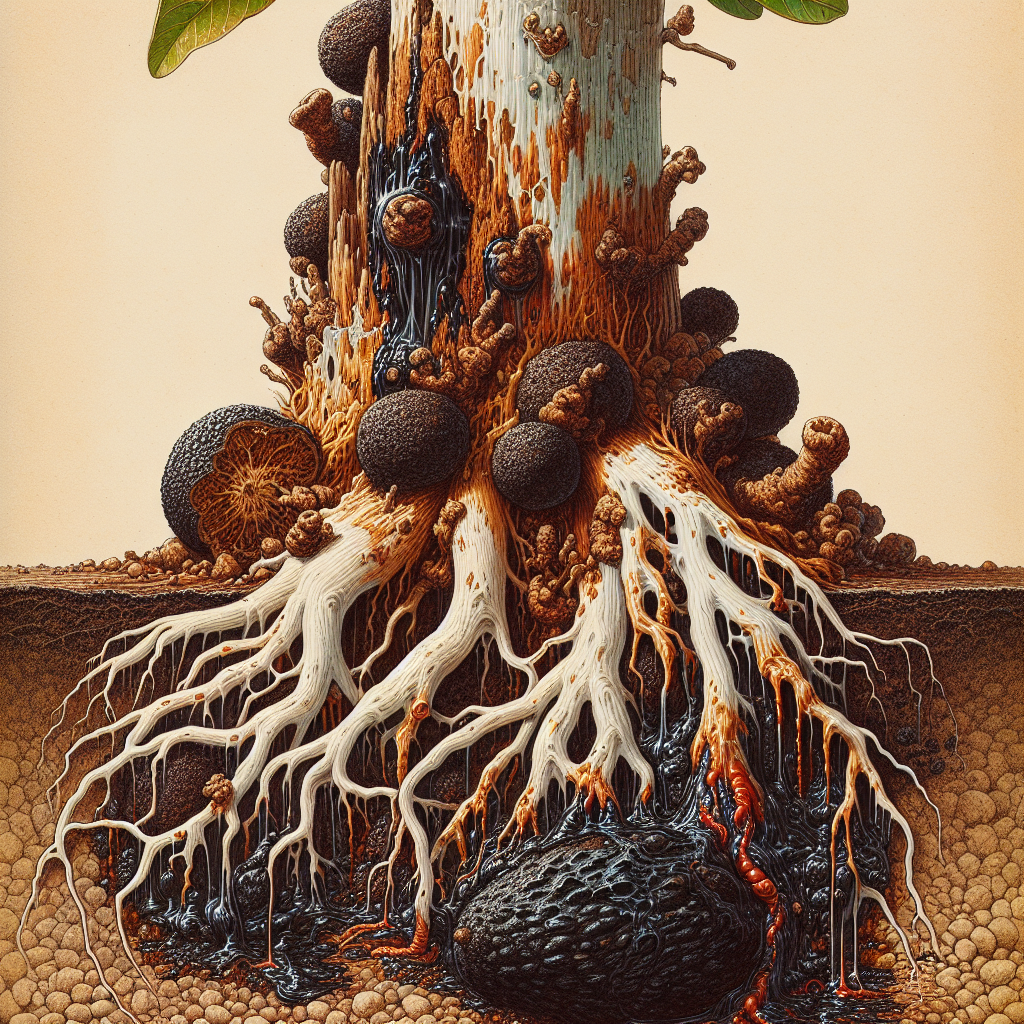
Introduction to Phytophthora root/crown rot
Phytophthora root/crown rot represents one of the most destructive soilborne diseases confronting modern agriculture, caused by various species of the oomycete genus Phytophthora. Unlike true fungi, these pathogens are water molds that require moist conditions to infect plants, primarily targeting the root system and crown—the critical junction between roots and stem. First identified in the early 20th century, this disease has since become a global threat, costing growers billions annually in lost yields and control measures. Species like P. cinnamomi, P. cryptogea, and P. drechsleri are the most notorious culprits, with P. cinnamomi alone responsible for widespread devastation in perennial crops.
The disease's stealthy nature lies in its soil persistence; once introduced via contaminated water, soil, or infected plants, Phytophthora can survive for years as thick-walled oospores or chlamydospores. Symptoms often mimic drought stress or nutrient deficiencies, delaying diagnosis until it's too late for recovery. In commercial settings, outbreaks can wipe out entire fields, particularly in high-value orchards and nurseries. Understanding its biology is crucial for effective management, as chemical controls are limited and resistance is nonexistent in most crops. This comprehensive guide equips agricultural professionals with diagnostic tools, organic strategies, and prevention protocols to safeguard yields. For deeper insights into related pathogens, see the Phytophthora wiki page.
Identifying Symptoms & Damage
Accurate diagnosis begins with recognizing the telltale signs of Phytophthora root/crown rot, which progress from subtle to severe. Early foliar symptoms include stunting, yellowing of lower leaves (chlorosis), and wilting during the day, with partial recovery at night—mimicking water stress. As the disease advances, affected plants exhibit rapid decline: leaves turn brown and drop, branches die back, and the canopy thins dramatically. In severe cases, plants collapse entirely, resembling sudden death.
Root and crown inspection reveals the hallmark damage: roots appear dark brown to black, water-soaked, and rotten, often shredding easily when pulled. Healthy roots are firm and white; infected ones lack vigor and secondary rootlets. The crown shows distinct lesions—dark, sunken, girdling cankers with sharp margins, sometimes exuding reddish gum in woody species. Cutting through infected tissue exposes a reddish-brown discoloration extending into the vascular system.
Damage varies by crop and pathogen species. In annuals like tomato, seedlings succumb to pre-emergence damping-off, while mature plants show stunted growth and fruitless stems. Perennials like avocado display tree decline over seasons, with gum bleeding from the trunk base. Secondary invaders like root-knot nematodes or Pythium often complicate symptoms, leading to misdiagnosis. Laboratory confirmation via baiting soil samples or PCR testing is recommended for precision. Field scouts should sample at the disease edge, as symptomatic plants may already be unsalvageable.
Lifecycle and Progression of Phytophthora root/crown rot
Phytophthora's lifecycle is adapted for survival and rapid spread in wet environments. The pathogen produces three main propagules: zoospores (motile, biflagellate spores that swim in soil water to infect roots), sporangia (asexual spores that release zoospores), and oospores (thick-walled sexual resting spores for long-term survival). Infection occurs when free water allows zoospores to encyst and penetrate root tips or wounds. Inside the plant, mycelium colonizes cortex tissues, causing rot while producing more sporangia.
Progression unfolds in phases: initial root infection leads to girdling and reduced water/nutrient uptake, triggering foliar symptoms within weeks. Under cool, wet conditions (15-25°C), epidemics accelerate as sporangia splash onto crowns via rain or irrigation. Oospores germinate after dormancy, perpetuating the cycle. In dry periods, chlamydospores endure in soil for 5+ years. Disease fronts expand via contaminated runoff, equipment, or nursery stock, often forming irregular patches that coalesce.
Crop-specific progression varies; susceptible Hass Avocado trees decline over 1-3 years, while potato tubers rot in storage. Understanding this cycle informs timing interventions, such as avoiding overhead watering during sporulation peaks.
Environmental Triggers & Risk Factors
Phytophthora thrives where waterlogged soils persist, with optimal infection at soil moisture above 60% and temperatures of 18-24°C. Poor drainage, heavy clay soils, and low-lying fields are prime hotspots. Over-irrigation, especially flood or furrow methods, disperses zoospores over wide areas. Compaction from machinery reduces aeration, exacerbating oxygen starvation that weakens roots.
Risk factors include planting susceptible varieties in infested fields, introducing pathogen via unsterilized potting media or runoff from nearby streams. High nitrogen fertilizers promote lush growth vulnerable to infection, while root damage from nematodes or cultivation opens entry points. Climate change intensifies risks with heavier rains and warmer soils. In greenhouses, high humidity and recycled water amplify spread. Soil pH extremes (below 5.5 or above 7.5) stress plants, indirectly favoring disease.
Organic Control & Treatment Plans
Organic management emphasizes cultural practices over curative sprays, as no fungicide fully eradicates established infections. For confirmed outbreaks, remove and destroy infected plants promptly, avoiding composting to prevent oospore survival. Solarization—covering moist soil with clear plastic for 4-6 weeks in summer—kills propagules via heat (above 45°C).
Biological controls include Trichoderma and Bacillus subtilis strains, applied as soil drenches to outcompete Phytophthora. Phosphonate products (e.g., potassium phosphite) boost plant defenses via induced systemic resistance, sprayed foliarly or drenched at 2-4 week intervals. Mulching with compost suppresses splash dispersal and improves drainage.
Soil amendments like gypsum in sodic clays or organic matter enhance structure. For high-value crops, metalaxyl alternatives like mefenoxam (if organic-certified) offer short-term suppression, but rotation with non-hosts like grasses is key. Monitor with soil bait tests quarterly. Integrated plans combining drainage improvements, resistant rootstocks, and sanitation yield best results. Check out this Soil Health Mastery blog post for complementary strategies.
Preventing Phytophthora root/crown rot in the Future
Prevention hinges on exclusion and site preparation. Use certified disease-free planting stock and quarantine new introductions. Improve drainage with raised beds, tile systems, or contour planting—aim for percolation rates above 1 inch/hour. Avoid overhead irrigation; drip systems minimize leaf wetness and soil saturation.
Rotate crops with non-hosts like corn or onions for 3-5 years to starve propagules. Select resistant varieties where available, such as Dusa avocado rootstock. Sanitize tools with 10% bleach or quaternary ammonium between uses. Test irrigation water and treat with UV or chlorination if contaminated. Maintain soil calcium levels above 1000 ppm to strengthen cell walls.
Cover crops like mustard biofumigate soil upon incorporation, releasing antimicrobial compounds. Scout weekly during wet seasons, using remote sensing for early stress detection. Long-term, mycorrhizal inoculants enhance root resilience. These proactive steps can reduce incidence by 80-90% in managed systems.
Crops Most Affected by Phytophthora root/crown rot
This disease plagues diverse crops, with perennials suffering chronic losses. Woody species like avocado (especially Hass and Fuerte), citrus, mango, apple, and peach face tree decline and reduced productivity. Nursery stock including rhododendrons and oaks is highly vulnerable.
Annuals and vegetables impacted include tomato, potato, peppers, eggplant, cucurbits like squash, and legumes such as soybeans. Strawberry crowns rot in matted rows, while raspberry and blackberry primocanes girdle. Turfgrasses and ornamentals round out the host list exceeding 200 species. Susceptibility varies; consult local extension for region-specific threats.