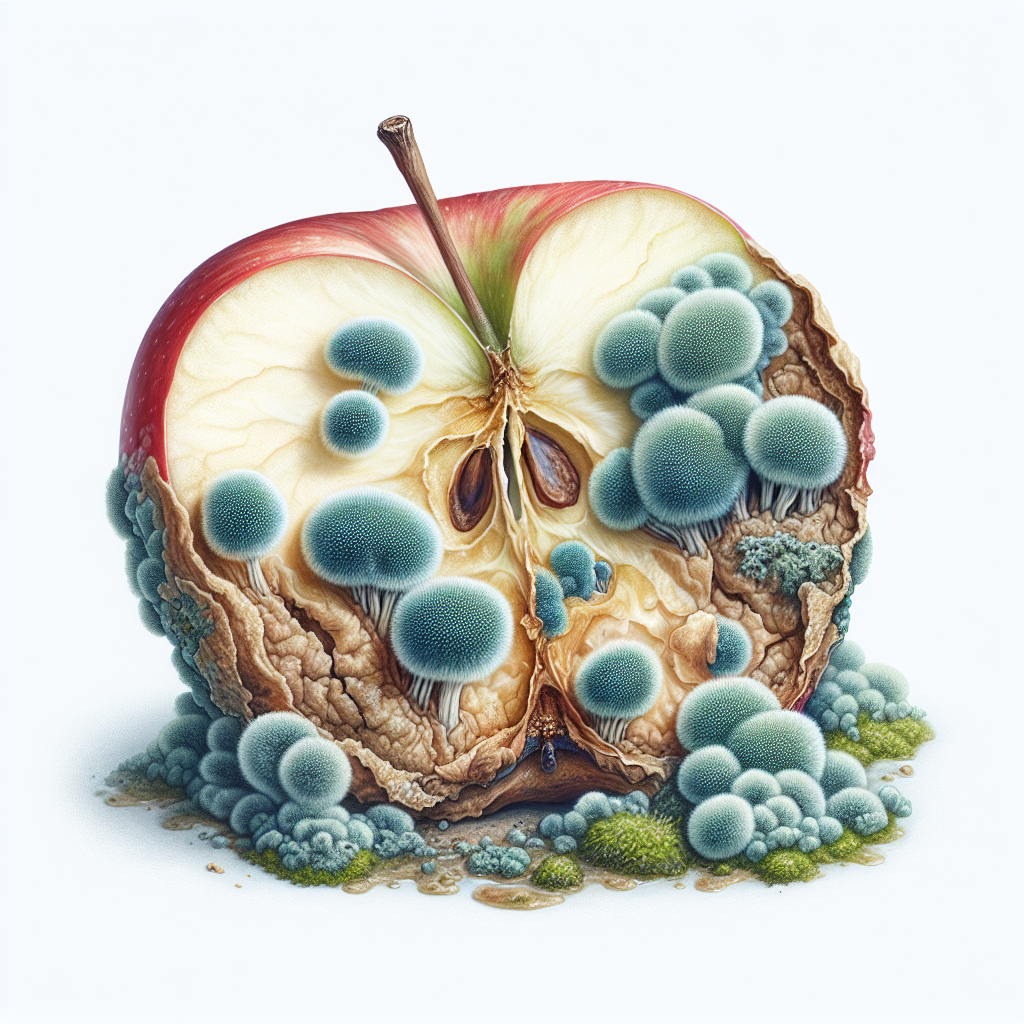
Introduction to Penicillium decay
Penicillium decay, commonly known as blue mold or green mold rot, is one of the most destructive post-harvest diseases affecting fruits and vegetables worldwide. Caused primarily by fungi in the genus Penicillium, such as Penicillium digitatum on citrus and Penicillium expansum on apples, this pathogen leads to soft, watery rots that render produce unsellable. In commercial agriculture and small-scale farming alike, Penicillium decay can wipe out 20-50% of harvested crops if not managed properly, making it a top concern for post-harvest handling.
The disease spreads rapidly through wounds, bruises, or contaminated surfaces during storage and transit. Spores are ubiquitous in soil, air, and decaying plant matter, germinating quickly under favorable conditions. This guide provides professional-grade diagnostic tools, lifecycle insights, organic management strategies, and prevention tactics tailored for farmers dealing with apple, citrus, and other susceptible crops. Early detection and intervention are key to preserving yields and profitability. Understanding environmental triggers allows growers to implement targeted controls, reducing losses without synthetic chemicals. For small farms, integrating these practices with tools like hyper-local weather monitoring can prevent outbreaks—check out Why 80% of Small Farms Battle Weather Disasters - And How Hyper-Local AI Forecasts Can Save Your Harvest for more on predictive strategies.
Identifying Symptoms & Damage
Recognizing Penicillium decay early is crucial for containment. Initial symptoms appear as small, water-soaked spots on fruit or vegetable surfaces, often at injury sites like cuts, abrasions, or stem ends. Within 2-5 days, these lesions expand rapidly, becoming soft and sunken with a musty odor.
The hallmark sign is the velvety blue-green mold sporulating on the lesion surface, especially under high humidity. In orange and other citrus, P. digitatum causes green mold with white mycelium turning olive-green. On Hass Avocado, decay starts as dark, leathery patches progressing to fuzzy green mold. Apples show 'blue rot' with firm, brown decayed areas and concentric rings of blue sporulation.
Affected tissues leak juices, fostering secondary invasions by bacteria or other fungi like Botrytis. In storage, 'nesting' occurs—one infected fruit contaminates neighbors via mycelial spread or spore dispersal. Yield losses manifest as market rejection: soft, moldy produce fetches zero value. Economic impact is severe; a single outbreak in a 10-ton apple shipment can cost thousands. Differentiate from bacterial rots (slimy, no mold) or Phytophthora (darker, firmer rot). Use a hand lens to confirm Penicillium's brush-like conidiophores under magnification.
Lifecycle and Progression of Penicillium decay
Penicillium spp. are opportunistic saprophytes with a rapid lifecycle adapted to post-harvest environments. The fungus produces abundant asexual conidia (spores) measuring 3-5 μm, dispersed by air currents, splashing water, or handling equipment. Spores germinate within 12-24 hours on moist, wounded plant tissue at 20-25°C (68-77°F).
Hyphae penetrate through breaks in the cuticle, colonizing rapidly. Mycelium ramifies internally, producing enzymes that dissolve cell walls, causing softening. After 3-7 days, sporulation occurs on the surface, releasing billions of conidia per lesion. Sexual reproduction is rare; the fungus overwinters as dormant spores or mycelium in soil, debris, or on packing materials.
Progression varies by host: on mango, decay spreads stem-to-fruit in 48 hours; on potatoes, it causes dry rot internally before external mold. Under cool storage (0-5°C), development slows but resumes upon warming. High ethylene from ripening fruits accelerates infection. In advanced stages, mycotoxins like patulin (in P. expansum) contaminate produce, posing health risks. Lifecycle completion takes 5-10 days, enabling explosive epidemics in poorly ventilated bins.
Environmental Triggers & Risk Factors
Penicillium decay flourishes in warm (15-30°C), humid (>85% RH) conditions, optimal for spore germination and growth. Poor airflow in storage exacerbates issues, as does mechanical injury during harvest—bruised lemon or grapes are prime entry points. Contaminated bins, crates, or wash water serve as reservoirs.
Risk factors include delayed cooling post-harvest, allowing spore activation. Over-mature fruits with thinned skins are vulnerable, as are crops stored near decaying matter harboring Fusarium or Rhizoctonia, which predispose tissues. High nitrogen fertilizers weaken cell walls, increasing susceptibility. In tropical regions, year-round humidity drives chronic losses; temperate zones see peaks in poorly managed cold storage.
Climate change intensifies risks with warmer nights and erratic rains promoting spore dispersal. Integrated management starts here: monitor humidity and temperature to stay below thresholds.
Organic Control & Treatment Plans
Organic management emphasizes cultural, biological, and approved natural fungicides. Cull infected produce immediately to prevent sporulation—remove and destroy at least 10 cm around lesions. Disinfect surfaces with 10% bleach, hydrogen peroxide (3%), or vinegar solutions (5% acetic acid).
Biological controls include Bacillus subtilis or Pseudomonas syringae biofungicides, applied as pre-harvest sprays or post-harvest dips (1-2x10^9 CFU/ml). These antagonize Penicillium via competition and antibiotics. Chitosan (1-2%) coatings induce plant defenses and create antifungal barriers on fruits.
Essential oils like thyme or cinnamon (0.1-0.5% emulsions) inhibit spore germination—test on small batches. For active infections, hot water dips (45-52°C for 2-4 min) kill surface spores without residue, effective on citrus and tomatoes. UV-C light (254 nm, 1-5 kJ/m²) post-harvest reduces decay by 50-80%.
Step-by-step plan: 1) Harvest gently into clean bins. 2) Pre-cool to 0-4°C within 6 hours. 3) Apply biofungicide dip. 4) Store at <85% RH with ventilation. 5) Monitor weekly, removing suspects. Rotate with Thyme companion planting to suppress soil spores pre-harvest. Track progress with simple logs for refinement.
Preventing Penicillium decay in the Future
Prevention is 90% of control. Implement strict sanitation: clean harvest tools, bins, and facilities annually. Use new or sterilized packaging—avoid wood pallets harboring spores. Harvest at optimal maturity to minimize wounds; train pickers on gentle handling.
Maintain storage at 0-10°C with 85-90% RH and good airflow (fans, vents). Wax coatings or modified atmosphere packaging (low O2, high CO2) extend shelf life. Scout fields for early stress predisposing to decay, like powdery mildew. Crop rotation and cover crops reduce soil inoculum.
Resistant varieties where available: choose firmer-skinned strawberry cultivars. Educate supply chain partners on hygiene. Long-term, build soil health with compost to boost plant resilience—see Soil Health Mastery: 5 Proven Strategies for Small Farms to Build Fertile Ground Without Breaking the Bank. Annual audits cut recurrence by 70%.
Crops Most Affected by Penicillium decay
Penicillium decay strikes a wide range of crops, especially fleshy fruits and bulbs. Top victims include apple (P. expansum blue rot), citrus like orange, lemon, and lime (P. digitatum green mold), Hass Avocado (stem-end rot), mango, peach, pear, and grapes. Vegetables like onion, garlic, potato, and tomato suffer neck or bulb rots.
Stored commodities such as sweet potato and carrot are prone in humid warehouses. Losses peak in export chains; e.g., 30% citrus rejection globally. Lesser impacts on berries like blueberry or strawberry, but still significant. Tailor prevention to your rotation.