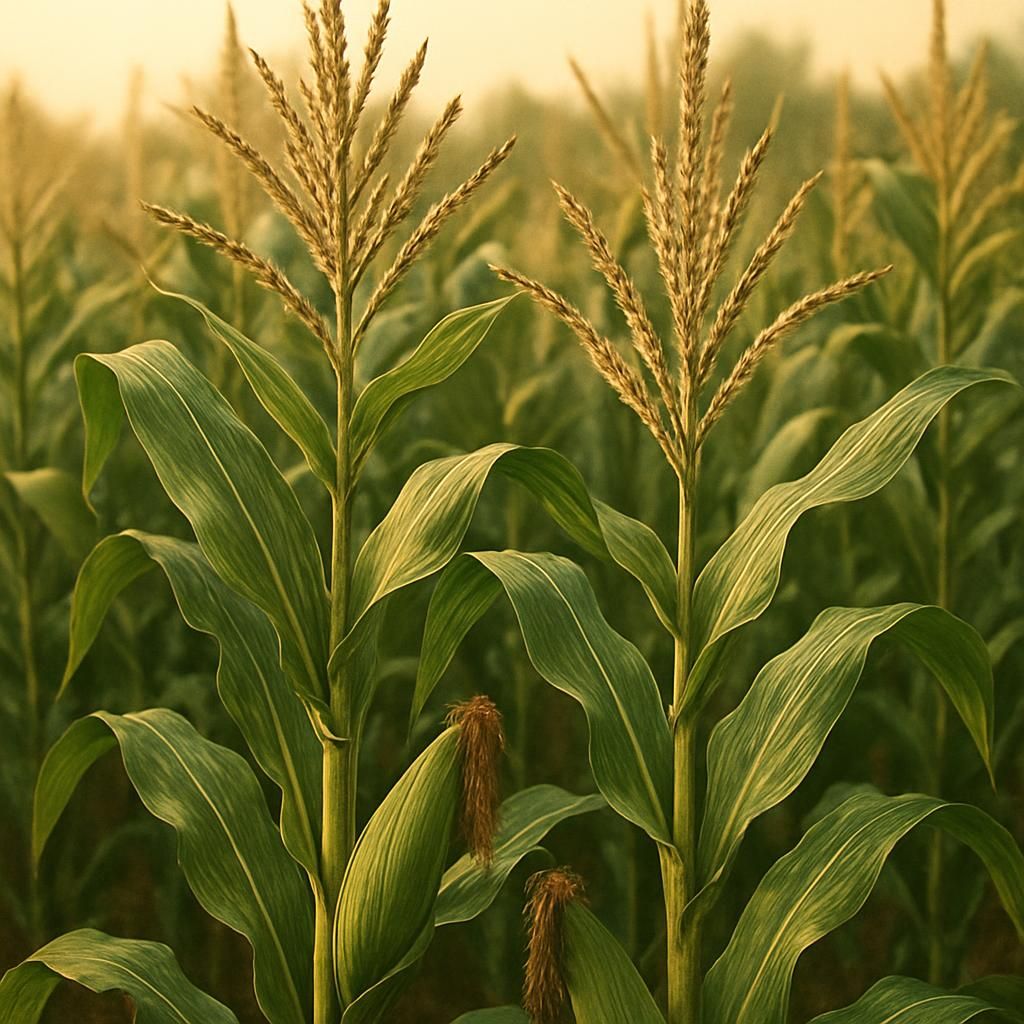
Introduction to Maize
Maize (Zea mays) is a foundational global crop that feeds billions directly and indirectly through livestock and processed products. Its rapid growth cycle, high biomass production, and genetic diversity make it adaptable across temperate, subtropical, and tropical regions. Whether grown for grain, silage, sweet corn, or industrial uses, maize demands precise management of soil fertility, water, and pest pressure to achieve commercial yields.
Successful maize production begins with selecting the right hybrid or variety for your climate and market, followed by rigorous attention to planting timing, nutrient balance, and integrated pest management. This guide delivers professional-grade, field-tested recommendations that maximize both yield and sustainability.
Botanical Profile of Maize
Maize is an annual grass in the Poaceae family with a C4 photosynthetic pathway that enables exceptional efficiency in warm, high-light environments. Plants develop a single main stalk that can reach 1.5–3.5 m in height, bearing 8–20 leaves arranged alternately. The reproductive structures are monoecious: the male tassel at the apex releases pollen, while one or more female ears develop along the stalk, each protected by husks and silk.
Modern cultivars range from dent, flint, flour, and sweet types to high-oil and waxy hybrids. Kernel composition typically includes 70–75% starch, 8–10% protein, and 4–5% oil. The fibrous root system penetrates 1–2 m deep under favorable conditions, providing both anchorage and nutrient scavenging capacity.
Soil, pH, and Climate Requirements for Maize
Maize performs best on deep, well-drained loam or sandy loam soils with high organic matter. It tolerates a wide pH range but yields decline sharply below 5.5 or above 8.0. Optimal temperature for germination is 10–12 °C soil temperature at 5 cm depth, while vegetative growth peaks at 24–30 °C daytime air temperatures.
| Parameter | Ideal Range | Notes |
|---|---|---|
| Soil Type | Loam, sandy loam, clay loam | Avoid compacted or waterlogged soils |
| Soil pH | 5.8 – 7.0 | Lime if below 5.5; sulfur if above 7.5 |
| Organic Matter | 2.5 – 5.0 % | Improves water and nutrient retention |
| Minimum Germination Temp | 10 °C soil at 5 cm depth | Plant when 50 % probability of frost passes |
| Optimal Day Temp | 24 – 30 °C | Heat stress above 35 °C reduces pollination |
| Night Temp | 14 – 20 °C | Cool nights slow growth |
| Annual Rainfall | 500 – 800 mm well-distributed | Supplemental irrigation needed in dry spells |
| Frost Tolerance | None after emergence | Plant after last spring frost |
Step-by-Step Planting & Propagation
- Site Selection & Preparation: Choose fields with full sun and good drainage. Conduct soil tests and incorporate 2–4 t/ha well-rotted manure or compost 4–6 weeks before planting.
- Variety Selection: Match maturity group (early, medium, late) to your growing season length and target market (grain, silage, sweet corn).
- Seed Treatment: Use fungicide- and insecticide-treated seed to protect against seedling damping-off and soil insects.
- Planting Window: Plant when soil temperature reaches 10 °C and rising. In temperate zones this is typically 7–14 days after the average last frost.
- Seeding Rate & Depth: Target 60,000–85,000 plants/ha for grain maize; sow 3–5 cm deep. Use precision planters for uniform spacing.
- Row Spacing: Standard 76 cm rows allow mechanical cultivation; narrower 50–60 cm rows can increase yields in high-fertility systems.
- Starter Fertilizer: Band 20–30 kg N, 30–40 kg P₂O₅, and 20–30 kg K₂O per hectare 5 cm beside and 5 cm below the seed.
Care & Maintenance regimes for Maize
Consistent moisture and timely nutrient applications are critical. Maize requires 500–700 mm of water during the season, with peak demand during tasseling and grain fill. Nitrogen is the most limiting nutrient; split applications improve uptake efficiency.
| Growth Stage | Water Requirement | Fertilizer Application | Pruning / Thinning |
|---|---|---|---|
| Pre-plant / Planting | 25–30 mm/week | 30–50 kg N + full P & K starter | None |
| V4–V6 (4–6 leaves) | 30–40 mm/week | 40–60 kg N sidedress | Thin to final stand if >10 % doubles |
| V8–V10 | 40–50 mm/week | 40–60 kg N (if split program) | Scout and rogue off-types |
| Tasseling (VT) | 50–60 mm/week | Final N if needed; micronutrients if deficient | Remove suckers only if excessive |
| Grain Fill (R1–R5) | 50–60 mm/week | None unless tissue tests indicate deficiency | None |
| Maturity (R6) | Reduce to 20 mm/week | None | None |
Pests, Diseases & Organic Management
Major insect pests include corn earworm, European corn borer, fall armyworm, and corn rootworm. Scout weekly from V4 through R3. Bacillus thuringiensis (Bt) hybrids or foliar sprays of Bt, spinosad, or neem provide organic control.
Diseases of concern are common rust, northern corn leaf blight, southern rust, gray leaf spot, and corn smut. Crop rotation with soybeans or wheat, residue management, and resistant hybrids are the foundation of organic disease control. Copper-based fungicides or biologicals containing Bacillus subtilis can suppress foliar pathogens when applied at first sign of infection.
Harvesting, Curing & Optimal Storage
Harvest grain maize when black layer forms at the kernel base and moisture drops to 20–25 %. For sweet corn, pick when silks brown and kernels exude milky sap. Use combine harvesters with appropriate header settings to minimize losses.
Dry grain to 13–14 % moisture using forced-air dryers at 35–40 °C to preserve quality. Store in clean, aerated bins at <14 % moisture and <15 °C. Monitor regularly for storage beetles and moisture migration.
Companion Planting for Maize
The classic “Three Sisters” system pairs maize with beans (nitrogen fixation) and squash (weed suppression and soil cover). Additional beneficial companions include sunflower for pollinator support and marigold to deter nematodes. Avoid planting near sorghum or millet in rotation due to shared pests and diseases. For more companion strategies, see Summer Companion Planting: 10 Organic Pairings to Boost Small Farm Resilience.