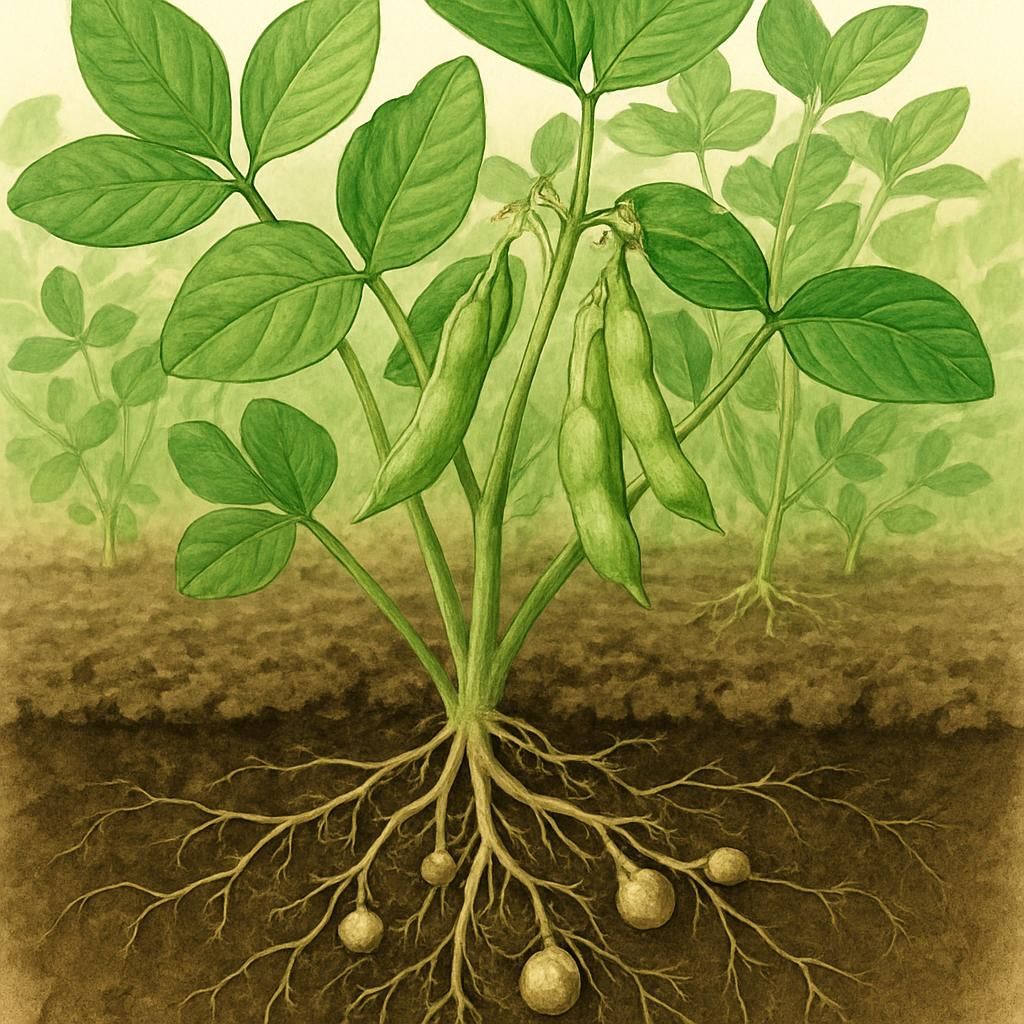
Introduction to legumes
Legumes belong to the Fabaceae family and represent one of the most economically and ecologically important crop groups. These plants are cultivated for their edible seeds, pods, and foliage, and they play a critical role in global food security, livestock feed, and soil health management. Because they form symbiotic relationships with Rhizobium bacteria, legumes naturally enrich the soil with nitrogen, reducing the need for synthetic fertilizers and supporting regenerative agriculture practices.
From smallholder farms in Africa and Asia to large-scale commercial operations in the Americas, legumes are valued for their resilience, nutritional density, and versatility. Common examples include Soybeans, Chickpeas, Lentils, Peas, and Peanuts. Their ability to thrive in diverse climates and improve subsequent crop yields makes them foundational in crop rotation systems.
Botanical Profile of legumes
Legumes are characterized by compound leaves, typically pinnate or trifoliate, and distinctive flowers with five petals arranged in a papilionaceous structure. The fruit is a pod (legume) that splits along two seams when mature, releasing seeds. Most species are annuals, though some, like certain clovers, are perennials.
The root systems develop nodules housing nitrogen-fixing bacteria, a defining botanical trait. This symbiosis converts atmospheric nitrogen into plant-available forms, benefiting both the legume and neighboring crops. Seed morphology varies widely—from the large, kidney-shaped seeds of Kidney Bean to the small, round seeds of lentils.
Soil, pH, and Climate Requirements for legumes
Legumes generally prefer well-drained, loamy soils with moderate fertility. Heavy clay soils should be amended with organic matter to improve aeration and drainage. Most species perform best in slightly acidic to neutral conditions.
| Parameter | Ideal Range | Notes |
|---|---|---|
| Soil Type | Loam to sandy loam | Avoid waterlogged or compacted soils |
| Soil pH | 6.0 – 7.5 | Some species tolerate 5.5; avoid >8.0 |
| Temperature (day) | 18–30 °C | Cool-season types prefer 15–25 °C |
| Temperature (night) | 10–18 °C | Frost-sensitive after emergence |
| Annual Rainfall | 400–800 mm | Supplemental irrigation in dry periods |
| Altitude | 0–2,500 m | High-altitude varieties exist for peas |
Step-by-Step Planting & Propagation
- Select certified, disease-free seed adapted to your region and intended use (dry grain, fresh pod, or green manure).
- Perform a soil test and apply lime if pH is below 6.0; inoculate seed with the appropriate Rhizobium strain for the legume species.
- Prepare a fine, firm seedbed free of weeds. For large-seeded types like Fava Bean (Broad Bean), plant 3–5 cm deep; smaller seeds such as lentils are sown 2–3 cm deep.
- Use row spacing of 30–60 cm and in-row spacing of 5–15 cm depending on species and growth habit (bush vs. vining).
- Sow when soil temperature reaches the minimum threshold (usually 10–15 °C) and moisture is adequate. Early planting of cool-season legumes maximizes yield potential.
- For climbing varieties, install trellises or poles at planting to support vertical growth and improve air circulation.
Care & Maintenance regimes for legumes
Consistent moisture during flowering and pod fill is critical. Overwatering during early vegetative stages can promote disease. Most legumes require little supplemental nitrogen once nodules are established, but phosphorus and potassium should be balanced according to soil tests.
| Growth Stage | Watering Schedule | Fertilizer Application | Pruning / Training |
|---|---|---|---|
| Pre-emergence | Maintain even moisture | Incorporate P & K; no N needed | None |
| Vegetative | 25–30 mm/week if rainfall low | Side-dress K if deficiency symptoms | Remove weeds; stake vining types |
| Flowering | Increase to 35–40 mm/week | Foliar micronutrients (B, Mo) if needed | Pinch growing tips on indeterminate |
| Pod Fill | Consistent moisture critical | Avoid excess N; monitor K levels | Remove diseased foliage |
| Maturity | Reduce irrigation 2 weeks prior | None | None |
Pests, Diseases & Organic Management
Common insect pests include Aphids, Bean leaf beetles, and Pod borers. Fungal diseases such as Fusarium wilt, Anthracnose, and Powdery mildew can reduce yields if humidity is high. Cultural practices such as crop rotation, resistant varieties, and proper spacing are the first line of defense.
Organic options include neem oil or insecticidal soaps for aphids, and Bacillus thuringiensis products for lepidopteran larvae. Copper-based fungicides or sulfur dust can manage early fungal outbreaks when used preventively. Encourage beneficial insects by planting flowering strips of Marigold or Nasturtium.
Harvesting, Curing & Optimal Storage
Harvest timing depends on end use. Green pods are picked when seeds are fully formed but still tender. Dry grain legumes are harvested when pods turn brown and seeds rattle inside. Pull entire plants or use a combine when moisture content reaches 13–15 %.
Cure harvested material in thin layers under shade with good airflow for 5–10 days. Store cleaned seed in cool, dry conditions (below 15 °C and 65 % RH) in airtight containers or silos. Monitor regularly for Bruchids and other storage pests; diatomaceous earth provides effective organic protection.
Companion Planting for legumes
Legumes are excellent companions because they fix nitrogen and attract beneficial insects. Pair bush beans with Corn and Squash in the classic “Three Sisters” system. Tall, vining peas can be grown alongside Tomato or Cucumber on shared trellises.
Avoid planting legumes near Onion or Garlic families, as alliums can inhibit Rhizobium activity. Clover or Hairy vetch grown as living mulches suppress weeds and provide additional nitrogen. For more detailed pairing strategies, see Summer Companion Planting: 10 Organic Pairings to Boost Small Farm Resilience.