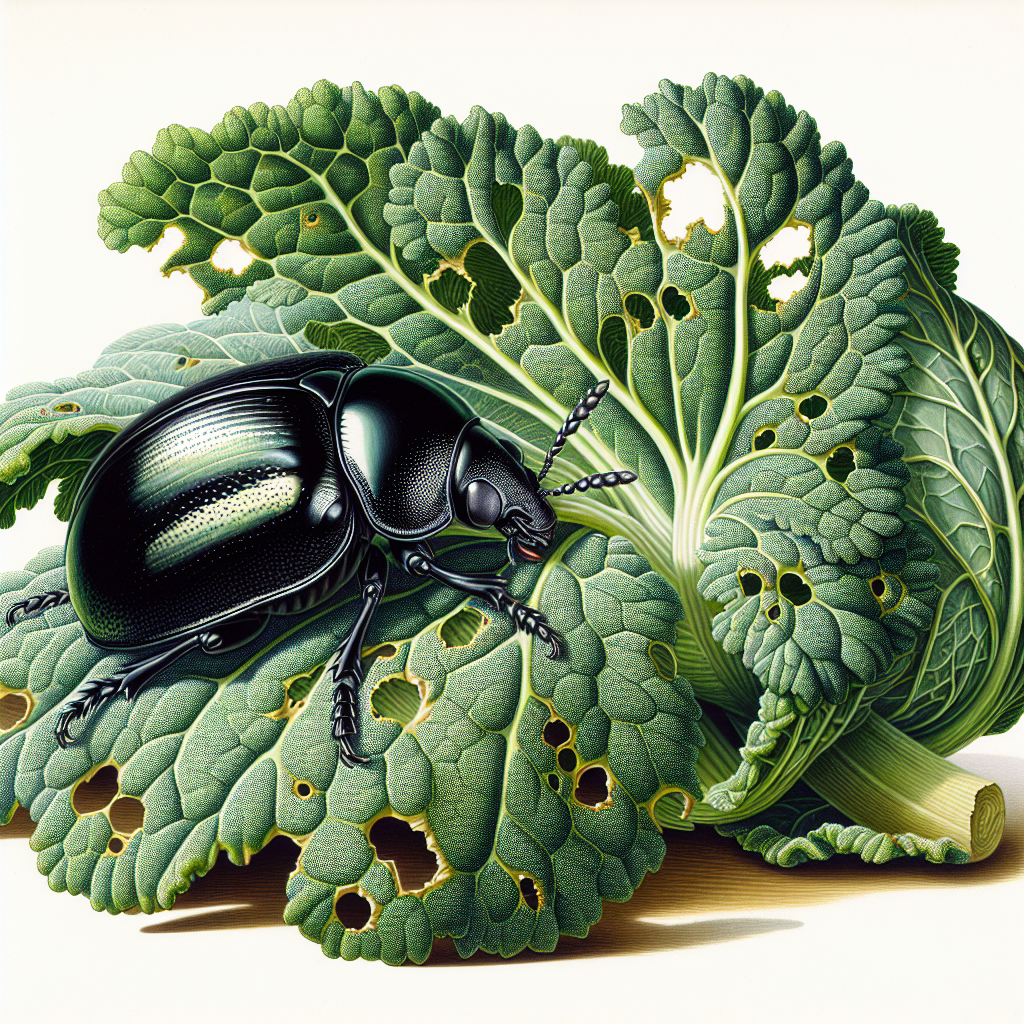
Introduction to flea beetle
Flea beetles (Phyllotreta spp. and Psylliodes spp.) represent one of the most persistent and damaging pests in vegetable and brassica production worldwide. These tiny, metallic or black beetles, measuring just 1/16 to 1/8 inch long, earn their name from their remarkable jumping ability—propelling themselves several inches into the air when threatened, much like fleas. This evasive behavior makes them challenging to control, particularly in organic systems where chemical options are limited.
Adult flea beetles overwinter in crop residues, soil, or nearby weeds, emerging in early spring to feed on emerging seedlings. They chew characteristic small, round 'shot-hole' damage on leaves, which can stunt growth, reduce photosynthesis, and open wounds for secondary infections like Alternaria leaf spot or bacterial leaf spots. In severe infestations, entire plantings can be lost, especially for crops like broccoli, kale, and radish. This guide provides professional-grade diagnostics, lifecycle insights, organic treatments, and prevention strategies optimized for small farms and home gardens. Understanding flea beetle biology is key to breaking their cycle and protecting yields.
Identifying Symptoms & Damage
Diagnosing flea beetle damage is straightforward once you know the signs. The hallmark symptom is pinpoint-sized holes (0.5-2 mm) scattered across leaf surfaces, resembling buckshot patterns—hence the 'shot-hole' moniker. Unlike chewing from larger pests like caterpillars, flea beetle holes are uniform and do not feature irregular edges or frass. Damage is most severe on cotyledons and young true leaves of seedlings, where it can defoliate plants entirely, leading to stunted growth or death.
Inspect undersides of leaves for shiny, metallic adults (often black, bronze, or striped) that jump when approached. Larvae, less commonly seen, are slender, white grubs feeding on roots, causing wilting or poor vigor. Differentiate from similar damage: thrips leave silvery trails, while leafminers create winding tunnels. In brassicas like cabbage or kale, watch for rapid defoliation during cool springs. Use a 10x hand lens to confirm: flea beetles have enlarged hind legs for jumping. Early detection via yellow sticky traps or sweep nets prevents escalation. Yield losses can exceed 50% without intervention, underscoring the need for vigilant scouting.
Lifecycle and Progression of flea beetle
Flea beetles undergo complete metamorphosis: egg, larva, pupa, adult. Adults overwinter in leaf litter, hedgerows, or soil, emerging when soil temperatures hit 50°F (10°C). Females lay 200-800 tiny, orange eggs at the soil surface near host plants over 4-6 weeks. Eggs hatch in 7-10 days into hook-shaped larvae that burrow into soil, feeding on roots for 2-4 weeks before pupating.
New adults emerge 1-2 weeks later, continuing the feeding frenzy. There are 1-3 generations per year, depending on climate—more in warmer regions. Peak activity aligns with seedling emergence: first generation in spring, second in summer. Adults live 4-8 weeks, dispersing via jumping or wind. Lifecycle duration: 30-45 days. This rapid progression demands timed interventions. Monitor with traps; populations build quickly from low levels. In northern climates, a single overwintering female can spawn infestations.
Environmental Triggers & Risk Factors
Flea beetles thrive in cool, moist springs (50-70°F, 60-80% humidity), when seedlings are most vulnerable. Direct-seeded crops in bare soil face highest risk—no transplant protection. Poor soil drainage exacerbates larval root feeding. Weeds like mustard, shepherd's purse, and wild radish serve as reservoirs, harboring beetles near fields. Crop rotation gaps allow buildup; monocultures amplify damage.
Risk spikes after mild winters, reducing natural die-off. Sandy or light soils favor larval survival. Companion pests like aphids indicate stressed plants, compounding issues. Over-fertilization with nitrogen promotes tender foliage. Early planting exposes crops to peak adult flights. Climate change extends seasons, potentially adding generations. Scout high-risk fields: brassica nurseries, new plots near weedy margins. Mitigate by delaying planting 1-2 weeks post-beetle emergence.
Organic Control & Treatment Plans
Organic management integrates multiple tactics for 80-95% control. Cultural: Use row covers (lightweight Agribon-AG 19) from planting until flowering—blocks adults entirely. Till crop residues post-harvest to expose pupae to predators. Rotate with non-hosts like corn or peas for 2-3 years.
Biological: Release beneficial nematodes (Heterorhabditis bacteriophora) against larvae; apply evenings at 75-85°F soil temps. Encourage ground beetles and parasitic wasps via mulch. Trap Crops: Plant mustard or radish borders to lure beetles away from mains. Organic Sprays: Neem oil (0.5-1%) or spinosad (e.g., Entrust) at first sign—reapply every 5-7 days, evenings to spare pollinators. Pyrethrins work but are less persistent. Insecticidal soaps disrupt feeding.
Treatment Plan: Week 1: Scout, deploy covers/traps. Week 2: Apply neem if >5 beetles/plant. Week 3: Release nematodes. Monitor thresholds: 10% seedling loss triggers action. For more on organic pest timing, see Spring Pest Patrol: Organic AI Strategies to Shield Your Crops from Common Invaders. Combine for synergy; single tactics fail.
Preventing flea beetle in the Future
Prevention trumps reaction. Select resistant varieties: 'Protector' kale, 'Carousel' radish, or 'Beltsville' broccoli withstand 50% more damage. Delay seeding until soil >55°F, post-peak flights. Use transplants over direct seed—harden off under covers. Mulch with straw (3-4 inches) to deter egg-laying.
Crop rotation disrupts cycles: avoid brassicas in same spot for 3 years. Destroy weeds promptly. Border traps (yellow sticky cards, 1/acre) reduce influx 40%. Interplant with repellents: thyme, yarrow, or nasturtium. Enhance biodiversity for predators. Fall tillage buries pupae. Long-term: soil solarization kills soil stages. Track via apps for flight predictions. Consistent practices yield beetle-free seasons.
Crops Most Affected by flea beetle
Brassicas top the list: broccoli, cauliflower (cauliflower), cabbage (cabbage), kale (kale), collards, and turnips (turnip) suffer 70% of attacks. Radishes (radish), arugula, and mustards are magnets. Crucifers like broccoli and Asian greens highly susceptible. Nightshades like eggplant (eggplant) and potato (potato) see moderate damage. Less common: corn (corn) seedlings, beets (beet). For details on potato flea beetles, see /wiki/flea-beetles. Focus protection on these high-value targets.